

Resources for
Birds
Funding
: Aug 1 – Sep 15, 2026
$1,000 - $4,000
Grow Grants Program
The New England Grassroots Environment Fund awards small grants in support of grassroots efforts and community-based environmental work in New England. The GROW GRANTS program is actively accepting applications from grassroots groups across New England. These grants fund small, volunteer-driven groups in New England working on issues including food access, immigrant support, climate resilience, youth work, mutual aid, and more. This program is geared toward groups with experience organizing in their community and have at least THREE leaders who are actively involved in group decision-making. Grants support groups to deepen their work by further developing a community vision, lowering barriers to participation, identifying new stakeholders, and working to bring more voices and lived experiences into core decision-making processes.
Grow grants prioritize support for community groups who represent a broad range of voices in their community and who are not being reached by other funders. The Grassroots Fund interprets the word 'environment' broadly and provides funding for a wide range of activities.
Funding
: Aug 1 – Sep 15, 2026
$1,000 - $4,000
Grow Grants Program
The New England Grassroots Environment Fund awards small grants in support of grassroots efforts and community-based environmental work in New England. The GROW GRANTS program is actively accepting applications from grassroots groups across New England. These grants fund small, volunteer-driven groups in New England working on issues including food access, immigrant support, climate resilience, youth work, mutual aid, and more. This program is geared toward groups with experience organizing in their community and have at least THREE leaders who are actively involved in group decision-making. Grants support groups to deepen their work by further developing a community vision, lowering barriers to participation, identifying new stakeholders, and working to bring more voices and lived experiences into core decision-making processes.
Funding
: Apr 25 – Jun 26, 2025
$75,000 - $300,000
Northeast Forest and Rivers Fund 2025 Request for Proposals
NFWF is soliciting proposals for the Northeast Forests and Rivers Fund to restore and sustain healthy rivers, forests, and grasslands that provide habitat for diverse fish and wildlife populations.
Within the Long Island Sound and Connecticut River watershed, NEFRF will only consider projects to sustain and restore healthy forests, grasslands and fish passage projects. All other projects should apply to the Long Island Sound Futures Fund (LISFF).
Funding
: Apr 25 – Jun 26, 2025
$75,000 - $300,000
Northeast Forest and Rivers Fund 2025 Request for Proposals
NFWF is soliciting proposals for the Northeast Forests and Rivers Fund to restore and sustain healthy rivers, forests, and grasslands that provide habitat for diverse fish and wildlife populations.
Funding
: Oct 19, 2026
up to $1,000
Seed Grants Program
Awards small grants in support of grassroots efforts and community-based environmental work in New England. The Grassroots Fund utilizes participatory grantmaking to move resources to New England grassroots groups. Seed grants prioritize support for community groups who represent a broad range of voices in their community and who are not being reached by other funders.
The Seed grant program is geared towards groups launching new projects or starting to significantly change the direction of an existing project. Most often, groups have been working on the project less than a year and usually don't yet have much direct experience with implementing the idea. The Grassroots Fund interprets the word 'environment' broadly and provides funding for a wide range of activities.
Funding
: Oct 19, 2026
up to $1,000
Seed Grants Program
Awards small grants in support of grassroots efforts and community-based environmental work in New England. The Grassroots Fund utilizes participatory grantmaking to move resources to New England grassroots groups. Seed grants prioritize support for community groups who represent a broad range of voices in their community and who are not being reached by other funders.
Funding
: Jan 1 – Apr 15, 2023
~$1,500
EPOC 2022 Environmental Grant Program
The EPOC Grant Program provides non-profit and not-for-profit environmental advocacy groups, community based groups and environmental education organizations funding for local projects that benefit the environment.
Funding
: Jan 1 – Apr 15, 2023
~$1,500
EPOC 2022 Environmental Grant Program
The EPOC Grant Program provides non-profit and not-for-profit environmental advocacy groups, community based groups and environmental education organizations funding for local projects that benefit the environment.
Funding
: Oct 19, 2026
Up to $6,000
Community Match Fund
Sustainable CT’s Community Match Fund is an innovative program that provides fast, flexible funding and support for engaging your community on wide-ranging sustainability projects. Eligible projects receive dollar-for-dollar matching funds from Sustainable CT.
The Community Match Fund is organized into three funding focus areas: (1) The Environmental Fund; (2) The Vibrant Communities Fund; and (3) The Social Change Amplifier Fund.
Funding
: Oct 19, 2026
Up to $6,000
Community Match Fund
Sustainable CT’s Community Match Fund is an innovative program that provides fast, flexible funding and support for engaging your community on wide-ranging sustainability projects. Eligible projects receive dollar-for-dollar matching funds from Sustainable CT.
Funding
: Oct 19 – Feb 27, 2024
up to $2,000
The Connecticut Society for Women Environmental Professionals Grant Program
The Connecticut Society for Women Environmental Professionals Grant Program provides funding for local projects in Connecticut that benefit the environment. Grants of up to $2,000 will be awarded. Any application meeting the grant guidelines that is not successful in one cycle may reapply during any following cycle. The applications will be judged based on the environmental benefits of each project, in comparison to others. “Environmental benefits” can vary widely and successful applications have ranged from property clean-ups to environmental education.
The applications will be judged based on the environmental benefits of each project, in comparison to others. “Environmental benefits” can vary widely and successful applications have ranged from property clean-ups to environmental education.
Funding
: Oct 19 – Feb 27, 2024
up to $2,000
The Connecticut Society for Women Environmental Professionals Grant Program
The Connecticut Society for Women Environmental Professionals Grant Program provides funding for local projects in Connecticut that benefit the environment. Grants of up to $2,000 will be awarded. Any application meeting the grant guidelines that is not successful in one cycle may reapply during any following cycle. The applications will be judged based on the environmental benefits of each project, in comparison to others. “Environmental benefits” can vary widely and successful applications have ranged from property clean-ups to environmental education.
Funding
: Apr 15 – Jul 11, 2024
$75,000 - $300,000
Northeast Forest and Rivers Fund 2024 Request for Proposals
The Northeast Forests and Rivers Fund (formerly known as the New England Forests and Rivers Fund) provides grants to restore and sustain healthy rivers, forests, and grasslands that provide habitat for diverse fish and wildlife populations.
Within the Long Island Sound and Connecticut River watershed, NEFRF will only consider projects to sustain and restore healthy forests, grasslands and fish passage projects. All other projects should apply to the Long Island Sound Futures Fund (LISFF).
Funding
: Apr 15 – Jul 11, 2024
$75,000 - $300,000
Northeast Forest and Rivers Fund 2024 Request for Proposals
The Northeast Forests and Rivers Fund (formerly known as the New England Forests and Rivers Fund) provides grants to restore and sustain healthy rivers, forests, and grasslands that provide habitat for diverse fish and wildlife populations.
Funding
: Apr 19 – Jul 11, 2024
$250K-$3M
North American Wetlands Conservation Act Grants: U.S. Standard
The U.S. Standard Grants Program is a competitive, matching grants program that supports public-private partnerships carrying out projects in the United States that further the goals of the North American Wetlands Conservation Act (NAWCA). These projects must involve long-term protection, restoration, and/or enhancement of wetlands and associated uplands habitats for the benefit of all wetlands-associated migratory birds.
It is recommend that you contact the coordinator of the joint venture region in which your project is located early in the process for guidance on developing your project and proposal. Joint venture coordinators' prioritization of NAWCA proposals from their geographic region is a key element in the selection process.
Funding
: Apr 19 – Jul 11, 2024
$250K-$3M
North American Wetlands Conservation Act Grants: U.S. Standard
The U.S. Standard Grants Program is a competitive, matching grants program that supports public-private partnerships carrying out projects in the United States that further the goals of the North American Wetlands Conservation Act (NAWCA). These projects must involve long-term protection, restoration, and/or enhancement of wetlands and associated uplands habitats for the benefit of all wetlands-associated migratory birds.
Case Study
Project
Sunken Meadow State Park Restoration
Increased development and the historic construction of a dam on Sunken Meadow Creek in the 1950’s led to reduced tidal exchange, increased water levels in the creek, poor water quality, and the proliferation of invasive species. In 2008 a number of partners (NYS OPRHP, NOAA, NYSDEC, LISS, TNC, Save the Sound, USFWS, LI Botanical Society) came together to work to restore the degraded marsh habitat around Sunken Meadow Creek, increase tidal flow, improve aquatic organism passage, limit invasives, and improve water quality. A restoration feasibility study was completed in 2010. In 2012 Superstorm Sandy blew out the dam on Sunken Meadow Creek, naturally kick-starting restoration. Following Superstorm Sandy, the project partners were able to quickly capitalize on available funding and grants, due to their prior planning efforts. A bridge was built across the Creek where the dam blew out, salt marsh habitat was restored at three locations, green infrastructure was installed in one of the parking areas to capture and treat stormwater runoff, fish passage feasibility on the creek was investigated, and education and outreach was conducted to thousands of people. These projects were completed in 2019. Now, with funding through Long Island Sound Futures Fund, Audubon NY is leading a large-scale marsh restoration project at Sunken Meadow Creek to restore important high-marsh habitat for at risk species, like the Saltmarsh Sparrow, and to increase the resilience of the marsh in the face of rising sea levels. Audubon will be working to finalize the designs and secure permits over the next two years, with on-the-ground restoration expected in 2026.
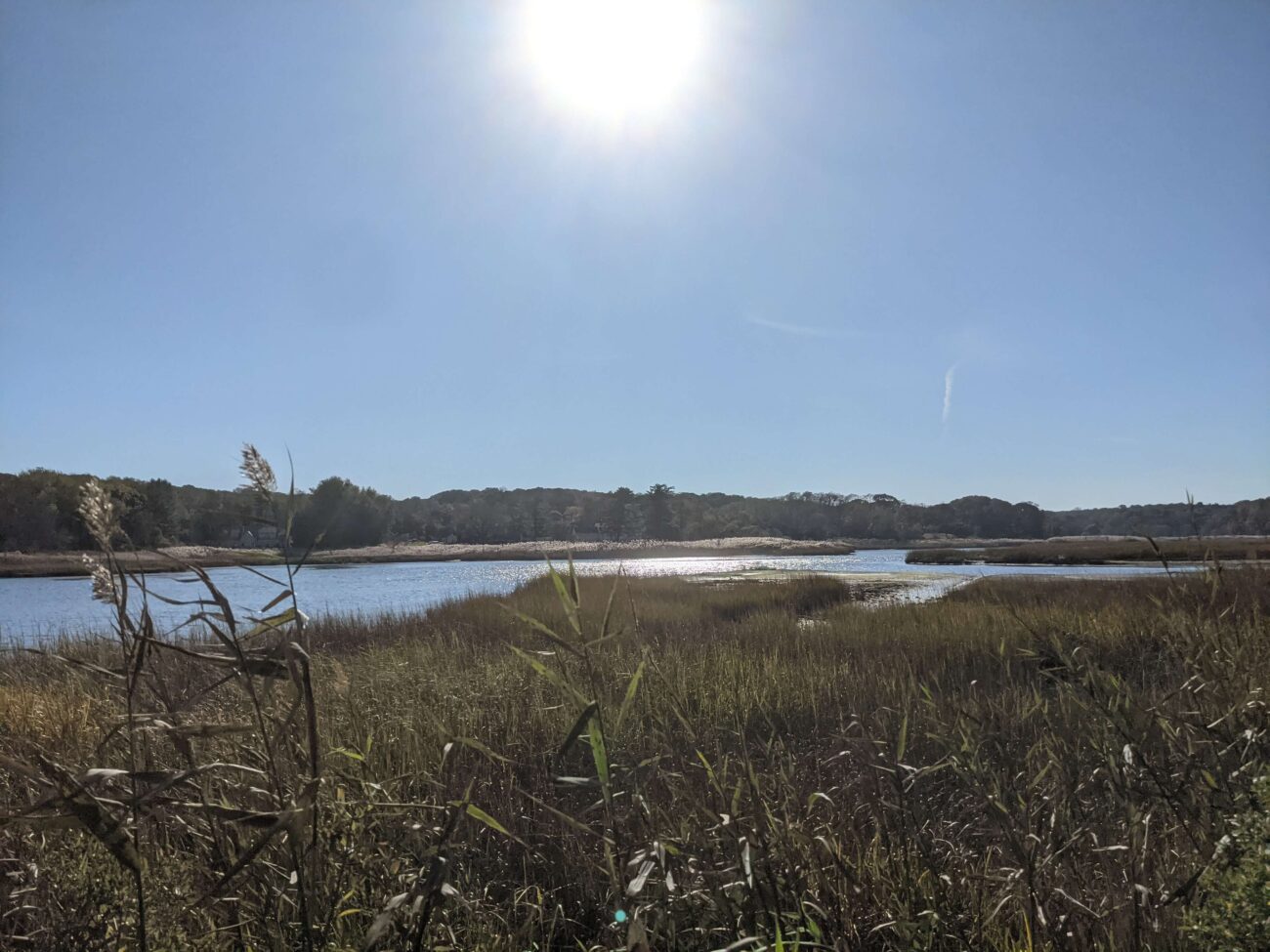


Overall the project has been highly successful, reducing flooding, polluted runoff, and invasives, as well as increasing the recreational value and beauty of the Park. There has been positive feedback from the public following the restoration projects. Some challenges remain with dealing with invasive species. It was determined that proceeding with the fish passage plans was not worthwhile, following the feasibility assessment.
Sean Cruickshank Sean.Cruickshank@parks.ny.gov, Jon Vander Werff jvanderwerff@savethesound.org, Phoebe Clark phoebe.clark@audubon.org, Vicky O’Neill victoria.oneill@audubon.org
Case Study
Project
Sunken Meadow State Park Restoration
Increased development and the historic construction of a dam on Sunken Meadow Creek in the 1950’s led to reduced tidal exchange, increased water levels in the creek, poor water quality, and the proliferation of invasive species. In 2008 a number of partners (NYS OPRHP, NOAA, NYSDEC, LISS, TNC, Save the Sound, USFWS, LI Botanical Society) came together to work to restore the degraded marsh habitat around Sunken Meadow Creek, increase tidal flow, improve aquatic organism passage, limit invasives, and improve water quality. A restoration feasibility study was completed in 2010. In 2012 Superstorm Sandy blew out the dam on Sunken Meadow Creek, naturally kick-starting restoration. Following Superstorm Sandy, the project partners were able to quickly capitalize on available funding and grants, due to their prior planning efforts. A bridge was built across the Creek where the dam blew out, salt marsh habitat was restored at three locations, green infrastructure was installed in one of the parking areas to capture and treat stormwater runoff, fish passage feasibility on the creek was investigated, and education and outreach was conducted to thousands of people. These projects were completed in 2019. Now, with funding through Long Island Sound Futures Fund, Audubon NY is leading a large-scale marsh restoration project at Sunken Meadow Creek to restore important high-marsh habitat for at risk species, like the Saltmarsh Sparrow, and to increase the resilience of the marsh in the face of rising sea levels. Audubon will be working to finalize the designs and secure permits over the next two years, with on-the-ground restoration expected in 2026.
Case Study
Project
Stratford, CT
Restoration of the Great Meadows Marsh
This project restored 46 acres of the Great Meadows Marsh in Connecticut that was degraded from dredge material that was dumped on site, poor drainage, and sea level rise. The marsh was also overrun with invasive plants and mosquitoes. A controlled fire was started to kill the invasive reeds growing in the marsh. Then a construction crew removed invasive plants and the dumped dredge material. Lastly, channels were carefully dug for tidal flushing which will allow the marsh to keep pace with sea level rise. Soil hummocks were constructed for Salt Marsh Sparrow habitat. Now the area continues to be monitored, assessed for resiliency, and provides a field for innovative solutions to be tested in.
Partners
Trustees: USFWS, NOAA, State of Connecticut; Project Partners: Audubon Connecticut, Town of Stratford
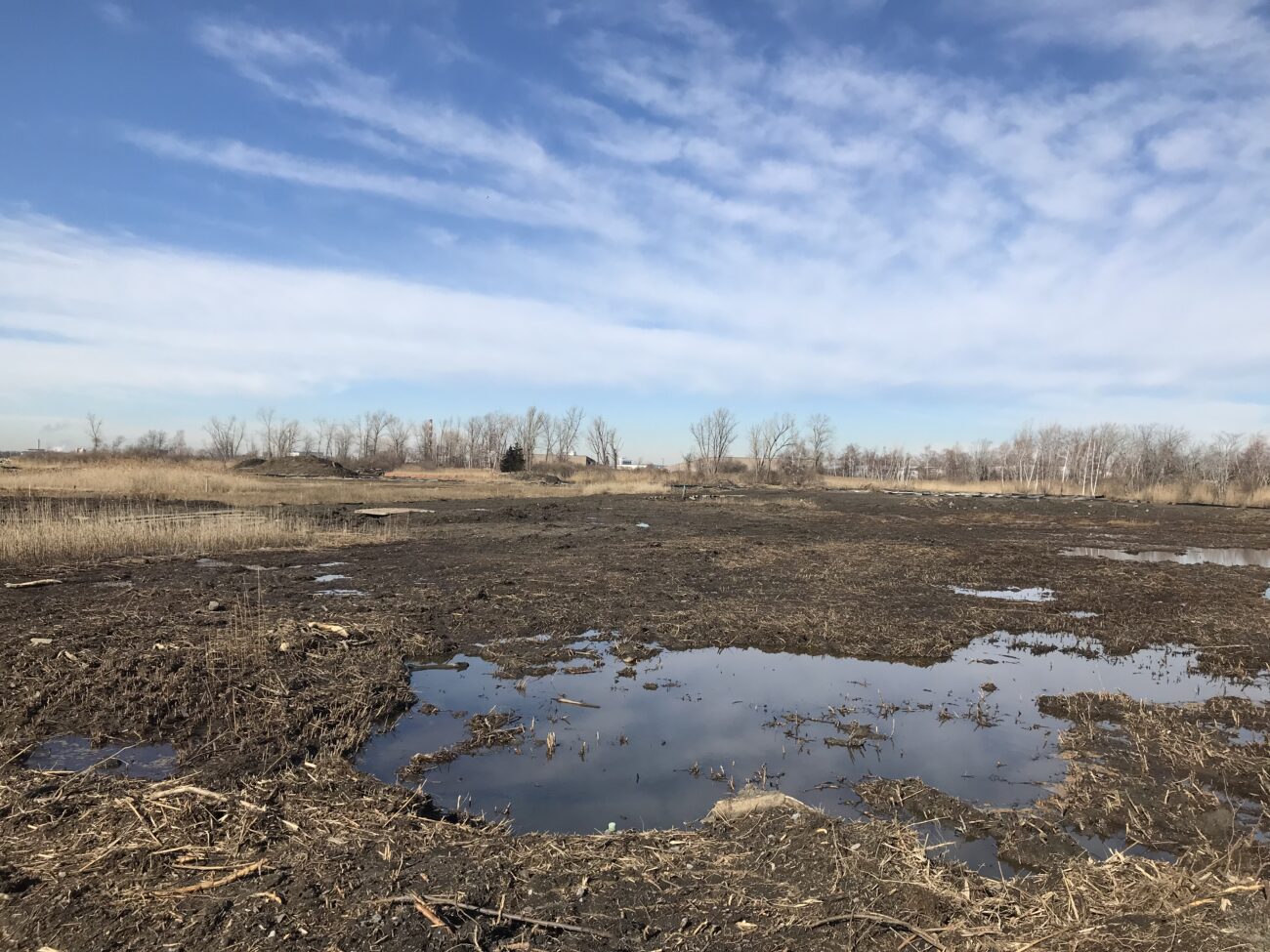


Monitoring immediately following the restoration revealed at least 12 saltmarsh sparrows returned to their annual nesting areas near the experimental hummocks, despite the disruptive activities taking place earlier in the year. University students will survey vegetation on the hummocks and throughout the restoration area, measuring and counting individual plants to see how different species grow at different elevations and in different types of soil, and to determine if additional plantings are needed. Audubon Connecticut will manage and control invasive plant species across the restoration area for three years, periodically removing and chemically treating the ever-persistent common reed. The project team will also monitor saltwater flooding of the marsh and carve runnels (short channels), if needed, to connect more areas to saltwater.
Molly Sperduto at molly_sperduto@fws.gov;
Corrie Folsom-O’Keefe cfolsom.okeefe@audubon.org;
Jack Matthias jack.matthias@audubon.org
Case Study
Project
Stratford, CT
Restoration of the Great Meadows Marsh
This project restored 46 acres of the Great Meadows Marsh in Connecticut that was degraded from dredge material that was dumped on site, poor drainage, and sea level rise. The marsh was also overrun with invasive plants and mosquitoes. A controlled fire was started to kill the invasive reeds growing in the marsh. Then a construction crew removed invasive plants and the dumped dredge material. Lastly, channels were carefully dug for tidal flushing which will allow the marsh to keep pace with sea level rise. Soil hummocks were constructed for Salt Marsh Sparrow habitat. Now the area continues to be monitored, assessed for resiliency, and provides a field for innovative solutions to be tested in.
Partners
Trustees: USFWS, NOAA, State of Connecticut; Project Partners: Audubon Connecticut, Town of Stratford