

Resources for
Dam removal
Funding
: Feb 6 – Mar 17, 2026
$1,000 - $4,000
Grow Grants Program
The New England Grassroots Environment Fund awards small grants in support of grassroots efforts and community-based environmental work in New England. The GROW GRANTS program is actively accepting applications from grassroots groups across New England. These grants fund small, volunteer-driven groups in New England working on issues including food access, immigrant support, climate resilience, youth work, mutual aid, and more. This program is geared toward groups with experience organizing in their community and have at least THREE leaders who are actively involved in group decision-making. Grants support groups to deepen their work by further developing a community vision, lowering barriers to participation, identifying new stakeholders, and working to bring more voices and lived experiences into core decision-making processes.
Grow grants prioritize support for community groups who represent a broad range of voices in their community and who are not being reached by other funders. The Grassroots Fund interprets the word 'environment' broadly and provides funding for a wide range of activities.
Funding
: Feb 6 – Mar 17, 2026
$1,000 - $4,000
Grow Grants Program
The New England Grassroots Environment Fund awards small grants in support of grassroots efforts and community-based environmental work in New England. The GROW GRANTS program is actively accepting applications from grassroots groups across New England. These grants fund small, volunteer-driven groups in New England working on issues including food access, immigrant support, climate resilience, youth work, mutual aid, and more. This program is geared toward groups with experience organizing in their community and have at least THREE leaders who are actively involved in group decision-making. Grants support groups to deepen their work by further developing a community vision, lowering barriers to participation, identifying new stakeholders, and working to bring more voices and lived experiences into core decision-making processes.
Funding
: Apr 17 – Apr 27, 2025
FY26 Congressionally Directed Spending / Community Project Funding (Sen. Blumenthal & Sen. Murphy)
Congressionally Directed Spending requests, also known as Community Project Funding or Earmarks, are funding requests for high-impact, Connecticut-based projects that can be completed with assistance from the federal government. The project must meet the eligibility requirements for at least one of the accounts listed.
Please note, you only need to submit one application for each project and it will be sent to both offices. Requests may be made for the following bills: 1) Agriculture, Rural Development, Food and Drug Administration, and Related Agencies; 2) Commerce, Justice, Science and Related Agencies; 3) Energy and Water Development, and Related Agencies; 4) Financial Services and General Government; 5) Homeland Security; 6) Interior, Environment, and Related Agencies; 7) Labor, Health, and Human Services, Education, and Related Agencies; 8) Transportation, Housing and Urban Development, and Related Agencies; 9) Military Construction and Veteran Affairs.
Funding
: Apr 17 – Apr 27, 2025
FY26 Congressionally Directed Spending / Community Project Funding (Sen. Blumenthal & Sen. Murphy)
Congressionally Directed Spending requests, also known as Community Project Funding or Earmarks, are funding requests for high-impact, Connecticut-based projects that can be completed with assistance from the federal government. The project must meet the eligibility requirements for at least one of the accounts listed.
Funding
: Mar 26, 2026
$500 - $1,000
Seed Grants Program
Awards small grants in support of grassroots efforts and community-based environmental work in New England. The Grassroots Fund utilizes participatory grantmaking to move resources to New England grassroots groups working at the intersections of Environmental Justice. The program is geared toward groups who have some experience implementing a project in their community. Grants support groups to deepen their work by further developing a community vision, lowering barriers to participation, identifying new stakeholders, and working to bring more voices and lived experiences into core decision-making processes.
The Seed grant program is geared towards groups launching new projects or starting to significantly change the direction of an existing project. Most often, groups have been working on the project less than a year and usually don't yet have much direct experience with implementing the idea. The Grassroots Fund interprets the word 'environment' broadly and provides funding for a wide range of activities.
Funding
: Mar 26, 2026
$500 - $1,000
Seed Grants Program
Awards small grants in support of grassroots efforts and community-based environmental work in New England. The Grassroots Fund utilizes participatory grantmaking to move resources to New England grassroots groups working at the intersections of Environmental Justice. The program is geared toward groups who have some experience implementing a project in their community. Grants support groups to deepen their work by further developing a community vision, lowering barriers to participation, identifying new stakeholders, and working to bring more voices and lived experiences into core decision-making processes.
Funding
: Mar 11 – Apr 14, 2024
FY25 Congressionally Directed Spending / Community Project Funding (Sen. Blumenthal & Sen. Murphy)
Congressionally Directed Spending requests, also known as Community Project Funding or Earmarks, are funding requests for high-impact, Connecticut-based projects that can be completed with assistance from the federal government. The project must meet the eligibility requirements for at least one of the accounts listed.
Please note, you only need to submit one application for each project and it will be sent to both offices. Requests may be made for the following bills: 1) Agriculture, Rural Development, Food and Drug Administration, and Related Agencies; 2) Commerce, Justice, Science and Related Agencies; 3) Energy and Water Development, and Related Agencies; 4) Financial Services and General Government; 5) Homeland Security; 6) Interior, Environment, and Related Agencies; 7) Labor, Health, and Human Services, Education, and Related Agencies; 8) Transportation, Housing and Urban Development, and Related Agencies.
Funding
: Mar 11 – Apr 14, 2024
FY25 Congressionally Directed Spending / Community Project Funding (Sen. Blumenthal & Sen. Murphy)
Congressionally Directed Spending requests, also known as Community Project Funding or Earmarks, are funding requests for high-impact, Connecticut-based projects that can be completed with assistance from the federal government. The project must meet the eligibility requirements for at least one of the accounts listed.
Funding
: May 19 – Jul 31, 2025
$50K-$2M
NYSDOS Local Waterfront Revitalization Program
The NYS Department of State (NYSDOS) is soliciting applications from eligible villages, towns, cities located along New York’s coasts or designated inland waterways, counties, or regional planning councils to advance the preparation or implementation of strategies for community and waterfront revitalization through the following grant categories: Preparing or Updating a Local Waterfront Revitalization Program (LWRP), including Updating an LWRP to be More Resilient to Climate Risks; Preparing an LWRP Component, including a Watershed Management Plan; Implementing an LWRP or a completed LWRP Component.
For project-specific planning, feasibility, design, and/or construction needed to advance eligible activities, an eligible applicant must be currently preparing or have an approved LWRP or LWRP Component. The proposed project must be located within the LWRP waterfront revitalization area boundary or LWRP Component boundary. Applications are accepted annually through the Consolidated Funding Application (CFA).
Funding
: May 19 – Jul 31, 2025
$50K-$2M
NYSDOS Local Waterfront Revitalization Program
The NYS Department of State (NYSDOS) is soliciting applications from eligible villages, towns, cities located along New York’s coasts or designated inland waterways, counties, or regional planning councils to advance the preparation or implementation of strategies for community and waterfront revitalization through the following grant categories: Preparing or Updating a Local Waterfront Revitalization Program (LWRP), including Updating an LWRP to be More Resilient to Climate Risks; Preparing an LWRP Component, including a Watershed Management Plan; Implementing an LWRP or a completed LWRP Component.
Funding
: May 19 – Jul 31, 2025
NYSDEC Water Quality Improvement Project (WQIP) Program
The NYS Department of Environmental Conservation (NYSDEC) WQIP funds implementation projects to improve water quality or habitat, promote flood risk reduction, restoration, and enhanced flood and climate resiliency, or protect a drinking water source.
Applications are accepted annually through the Consolidated Funding Application (CFA). Municipalities* (including Indian Nations) are eligible for all project types. Soil and Water Conservation Districts are eligible for all project types except Dam Safety Repair/Rehabilitation. Not-for-Profit Corporations are eligible for Aquatic Connectivity Restoration, Marine District Habitat Restoration, and Land Acquisition for Source Water Protection only.
Funding
: May 19 – Jul 31, 2025
NYSDEC Water Quality Improvement Project (WQIP) Program
The NYS Department of Environmental Conservation (NYSDEC) WQIP funds implementation projects to improve water quality or habitat, promote flood risk reduction, restoration, and enhanced flood and climate resiliency, or protect a drinking water source.
Funding
: Mar 26 – Feb 27, 2024
up to $2,000
The Connecticut Society for Women Environmental Professionals Grant Program
The Connecticut Society for Women Environmental Professionals Grant Program provides funding for local projects in Connecticut that benefit the environment. Grants of up to $2,000 will be awarded. Any application meeting the grant guidelines that is not successful in one cycle may reapply during any following cycle. The applications will be judged based on the environmental benefits of each project, in comparison to others. “Environmental benefits” can vary widely and successful applications have ranged from property clean-ups to environmental education.
The applications will be judged based on the environmental benefits of each project, in comparison to others. “Environmental benefits” can vary widely and successful applications have ranged from property clean-ups to environmental education.
Funding
: Mar 26 – Feb 27, 2024
up to $2,000
The Connecticut Society for Women Environmental Professionals Grant Program
The Connecticut Society for Women Environmental Professionals Grant Program provides funding for local projects in Connecticut that benefit the environment. Grants of up to $2,000 will be awarded. Any application meeting the grant guidelines that is not successful in one cycle may reapply during any following cycle. The applications will be judged based on the environmental benefits of each project, in comparison to others. “Environmental benefits” can vary widely and successful applications have ranged from property clean-ups to environmental education.
Funding
: Mar 20 – Sep 17, 2024
$1,000 - $4,000
Grow Grants Program
Awards small grants in support of grassroots efforts and community-based environmental work in New England. The Grassroots Fund utilizes participatory grantmaking to move resources to New England grassroots groups working at the intersections of Environmental Justice. The program is geared toward groups who have some experience implementing a project in their community. Grants support groups to deepen their work by further developing a community vision, lowering barriers to participation, identifying new stakeholders, and working to bring more voices and lived experiences into core decision-making processes.
Grow grants prioritize support for community groups who represent a broad range of voices in their community and who are not being reached by other funders. The Grassroots Fund interprets the word 'environment' broadly and provides funding for a wide range of activities.
Funding
: Mar 20 – Sep 17, 2024
$1,000 - $4,000
Grow Grants Program
Awards small grants in support of grassroots efforts and community-based environmental work in New England. The Grassroots Fund utilizes participatory grantmaking to move resources to New England grassroots groups working at the intersections of Environmental Justice. The program is geared toward groups who have some experience implementing a project in their community. Grants support groups to deepen their work by further developing a community vision, lowering barriers to participation, identifying new stakeholders, and working to bring more voices and lived experiences into core decision-making processes.
Funding
: Mar 26, 2026
Up to $6,000
Community Match Fund
Sustainable CT’s Community Match Fund is an innovative program that provides fast, flexible funding and support for engaging your community on wide-ranging sustainability projects. Eligible projects receive dollar-for-dollar matching funds from Sustainable CT.
The Community Match Fund is organized into three funding focus areas: (1) The Environmental Fund; (2) The Vibrant Communities Fund; and (3) The Social Change Amplifier Fund.
Funding
: Mar 26, 2026
Up to $6,000
Community Match Fund
Sustainable CT’s Community Match Fund is an innovative program that provides fast, flexible funding and support for engaging your community on wide-ranging sustainability projects. Eligible projects receive dollar-for-dollar matching funds from Sustainable CT.
Funding
: Mar 10 – May 5, 2023
$75,000 - $250,000 (~$800,000 total available- projected around 4-10 projects total)
National Estuary Program Coastal Watersheds Grant
The NEP Coastal Watersheds Grant Program is a nationally competitive grants program designed to support projects that address urgent and challenging issues threatening the well-being of coastal and estuarine areas within determined estuaries of national significance.
Funding
: Mar 10 – May 5, 2023
$75,000 - $250,000 (~$800,000 total available- projected around 4-10 projects total)
National Estuary Program Coastal Watersheds Grant
The NEP Coastal Watersheds Grant Program is a nationally competitive grants program designed to support projects that address urgent and challenging issues threatening the well-being of coastal and estuarine areas within determined estuaries of national significance.
Funding
: Mar 26 – Apr 12, 2023
$100,000 - $1,000,000
National Fish and Wildlife Foundation’s (NFWF) National Coastal Resilience Fund (NCRF)
NFWF will award up to $140 million in grants to create and restore natural systems in order to increase protection for communities from coastal hazards, such as storms, sea- and lake-level changes, inundation, and coastal erosion, while improving habitats for fish and wildlife species. NFWF prioritizes projects that are community led or incorporate direct community engagement and benefit underserved communities facing disproportionate harm from climate impacts.
Funding
: Mar 26 – Apr 12, 2023
$100,000 - $1,000,000
National Fish and Wildlife Foundation’s (NFWF) National Coastal Resilience Fund (NCRF)
NFWF will award up to $140 million in grants to create and restore natural systems in order to increase protection for communities from coastal hazards, such as storms, sea- and lake-level changes, inundation, and coastal erosion, while improving habitats for fish and wildlife species. NFWF prioritizes projects that are community led or incorporate direct community engagement and benefit underserved communities facing disproportionate harm from climate impacts.
Funding
: Dec 6 – Apr 16, 2025
typically $4M-6M
NOAA Transformational Habitat Restoration and Coastal Resilience Grants
NOAA is seeking proposals for transformational projects that will restore coastal habitat and strengthen community resilience under the Bipartisan Infrastructure Law.
This funding will prioritize habitat restoration actions that rebuild productive and sustainable fisheries, contribute to the recovery and conservation of threatened and endangered species, use natural infrastructure to reduce damage from flooding and storms, promote resilient ecosystems and communities, and yield socioeconomic benefits. This funding opportunity will invest in projects that have the greatest potential to provide holistic benefits, through habitat-based approaches that strengthen both ecosystem and community resilience.
Projects selected through this funding opportunity will have a transformative impact for coastal communities and tribes across the country. They will help sustain our nation’s fisheries, make significant strides in the recovery of threatened and endangered species, and help protect coastal communities and ecosystems from the impacts of climate change. They will support efforts such as reconnecting rivers to their historic floodplains, outplanting corals to rebuild reefs, building living shorelines that protect coasts from erosion and sea level rise, and more.
Funding
: Dec 6 – Apr 16, 2025
typically $4M-6M
NOAA Transformational Habitat Restoration and Coastal Resilience Grants
NOAA is seeking proposals for transformational projects that will restore coastal habitat and strengthen community resilience under the Bipartisan Infrastructure Law.
This funding will prioritize habitat restoration actions that rebuild productive and sustainable fisheries, contribute to the recovery and conservation of threatened and endangered species, use natural infrastructure to reduce damage from flooding and storms, promote resilient ecosystems and communities, and yield socioeconomic benefits. This funding opportunity will invest in projects that have the greatest potential to provide holistic benefits, through habitat-based approaches that strengthen both ecosystem and community resilience.
Funding
: Mar 26 – Jan 31, 2024
no maximum
FY2024 Atlantic Coastal Fish Habitat Partnership Funding Cycle
The Atlantic Coastal Fish Habitat Partnership (ACFHP) is requesting project applications to restore and conserve habitat necessary to support coastal, estuarine-dependent, and diadromous fish species along the U.S. Atlantic Coast. Federal funding available through the National Fish Habitat Partnership (NFHP) program will be used to support the top ranked proposals. To ensure available funding is being directed most effectively, projects should be geared toward meeting ACFHP’s conservation objectives described in its Conservation Strategic Plan.
These funds can only be used for land acquisition or on-the-ground habitat conservation and restoration projects and associated design and monitoring activities. They may not be used for projects required as part of a regulatory action. At this time, ACFHP is not soliciting applications for research projects that do not include on-the-ground habitat restoration.
Funding
: Mar 26 – Jan 31, 2024
no maximum
FY2024 Atlantic Coastal Fish Habitat Partnership Funding Cycle
The Atlantic Coastal Fish Habitat Partnership (ACFHP) is requesting project applications to restore and conserve habitat necessary to support coastal, estuarine-dependent, and diadromous fish species along the U.S. Atlantic Coast. Federal funding available through the National Fish Habitat Partnership (NFHP) program will be used to support the top ranked proposals. To ensure available funding is being directed most effectively, projects should be geared toward meeting ACFHP’s conservation objectives described in its Conservation Strategic Plan.
Funding
: Mar 26 – Apr 15, 2024
up to ~$75,000
Increasing Recreational Fisheries Engagement through Fish Habitat Partnerships (FY24)
The goals of this funding opportunity are to enhance collaboration with recreational, subsistence, cultural, and non-commercial fishing communities, and to protect and restore habitat. Healthy habitat leads to more fishing opportunities and increased climate resilience, and there are numerous opportunities to advance habitat conservation by working together.
Projects must: 1) Be located in and coordinated with a Fish Habitat Partnership (FHP). 2) Actively engage recreational fishing partners in habitat protection or restoration. 3) Focus on habitat restoration or protection for recreationally important salt water or diadromous species.
Funding
: Mar 26 – Apr 15, 2024
up to ~$75,000
Increasing Recreational Fisheries Engagement through Fish Habitat Partnerships (FY24)
The goals of this funding opportunity are to enhance collaboration with recreational, subsistence, cultural, and non-commercial fishing communities, and to protect and restore habitat. Healthy habitat leads to more fishing opportunities and increased climate resilience, and there are numerous opportunities to advance habitat conservation by working together.
Funding
: Mar 26 – Feb 14, 2025
General Atlantic Coastal Fish Habitat Partnership Habitat Conservation Project
In order to respond promptly to funding opportunities from various sources, ACFHP is soliciting applications for habitat conservation projects in need of funding that align with ACFHP’s objectives and priority habitats. The Request for Proposals is not linked to a specific funding source. Instead, newly submitted projects reviewed and approved by ACFHP will be added to our project database and recommended as funding becomes available.
ACFHP Habitat Conservation Objectives Conservation Objective 1: Work with partners to protect, restore, or maintain resilient Subregional Priority Habitats (using strategies outside of fish passage) to optimize ecosystem functions and services to benefit fish and wildlife. Conservation Objective 2: Work with partners to support the maintenance of water quality and hydrology standards for functional priority habitats and improvement of water quality in degraded priority habitat areas. Conservation Objective 3: Coordinate with partners to restore, enhance, and maintain adequate and effective fish passage to ensure connectivity within and among required Subregional Priority Habitats.
Funding
: Mar 26 – Feb 14, 2025
General Atlantic Coastal Fish Habitat Partnership Habitat Conservation Project
In order to respond promptly to funding opportunities from various sources, ACFHP is soliciting applications for habitat conservation projects in need of funding that align with ACFHP’s objectives and priority habitats. The Request for Proposals is not linked to a specific funding source. Instead, newly submitted projects reviewed and approved by ACFHP will be added to our project database and recommended as funding becomes available.
$500-$2M; Awards typically around $50K
National Fish Passage Funds
The National Fish Passage Program is a voluntary program that provides direct technical and financial assistance to partners. Activities that restore fish passage also support the modernization of the country’s infrastructure such as road culverts, bridges and water diversions.
Example project types include dam removals, culvert replacements and the installation of fishways. FAC staff coordinate with project partners, stakeholders and other Service programs to identify and collaboratively implement projects within Regional priority areas. Project work plans are developed strategically, in coordination with partners, and with substantial involvement from FAC staff. FAC and Service strategic plans inform the types of projects funded under this opportunity. Applicants seeking funding under this program should review the program strategic plan and also contact the regional NFPP Coordinator that corresponds to the location of the project for additional regional priorities prior to submitting an application for funding.
$500-$2M; Awards typically around $50K
National Fish Passage Funds
The National Fish Passage Program is a voluntary program that provides direct technical and financial assistance to partners. Activities that restore fish passage also support the modernization of the country’s infrastructure such as road culverts, bridges and water diversions.
Case Study
Plan
East Haddam, CT
East Haddam Community Resilience Building Summary of Findings
With support from the Nature Conservancy and Sustainable CT, East Haddam organized a Community Resilience Building process and workshop, the results of which were compiled into this summary. The team engaged with community members to determine the present hazards and vulnerabilities and identify resilient solutions.
Case Study
Plan
East Haddam, CT
East Haddam Community Resilience Building Summary of Findings
With support from the Nature Conservancy and Sustainable CT, East Haddam organized a Community Resilience Building process and workshop, the results of which were compiled into this summary. The team engaged with community members to determine the present hazards and vulnerabilities and identify resilient solutions.
Case Study
Project
Wilton, CT
Strong Pond Dam Removal at Merwin Meadows
Dana Dam (aka Strong Pond Dam) at Merwin Meadows Park in Wilton, CT was the first barrier to upstream fish migration from Long Island Sound on the Norwalk River. A series of dams along the Norwalk River (historically, and presently) prevented fish from reaching their historic spawning grounds, have posed safety risks, and disconnected the river from its natural floodplain. On September 11, 2023, demolition of this dam began! In addition to restoring habitat and allowing fish passage, the removal restored natural floodplain connectivity, realigned 200 feet of river channel away from an active railroad embankment, and removed a known safety hazard.
Partners
- Save the Sound, CT DEEP, Trout Unlimited, Town of Wilton


The project was designed to restore aquatic connectivity on the Norwalk River, particularly for diadromous fish species (such as river herring, American eel, and sea lamprey) that migrate upstream from Long Island Sound. Nearly 10 upstream miles have been reopened for aquatic organism passage, creating a 20+ mile stretch of free-flowing river from Long Island Sound. The project restored 1,400 feet of natural flow, reconstructed 800 feet of pool-riffle channel, and restored 1 acre of riparian floodplains, wetlands, and vegetated upland. The project improved habitat for riverine fish including brook trout, as well as birds, mammals, amphibians and other wildlife. Removal of Dana Dam improves water quality (primarily temperature and dissolved oxygen), protects 200-foot section of railroad embankment, and eliminates a public safety hazard.
Alex Krofta, akrofta@savethesound.org
Case Study
Project
Wilton, CT
Strong Pond Dam Removal at Merwin Meadows
Dana Dam (aka Strong Pond Dam) at Merwin Meadows Park in Wilton, CT was the first barrier to upstream fish migration from Long Island Sound on the Norwalk River. A series of dams along the Norwalk River (historically, and presently) prevented fish from reaching their historic spawning grounds, have posed safety risks, and disconnected the river from its natural floodplain. On September 11, 2023, demolition of this dam began! In addition to restoring habitat and allowing fish passage, the removal restored natural floodplain connectivity, realigned 200 feet of river channel away from an active railroad embankment, and removed a known safety hazard.
Partners
- Save the Sound, CT DEEP, Trout Unlimited, Town of Wilton
Case Study
Project
Sunken Meadow State Park Restoration
Increased development and the historic construction of a dam on Sunken Meadow Creek in the 1950’s led to reduced tidal exchange, increased water levels in the creek, poor water quality, and the proliferation of invasive species. In 2008 a number of partners (NYS OPRHP, NOAA, NYSDEC, LISS, TNC, Save the Sound, USFWS, LI Botanical Society) came together to work to restore the degraded marsh habitat around Sunken Meadow Creek, increase tidal flow, improve aquatic organism passage, limit invasives, and improve water quality. A restoration feasibility study was completed in 2010. In 2012 Superstorm Sandy blew out the dam on Sunken Meadow Creek, naturally kick-starting restoration. Following Superstorm Sandy, the project partners were able to quickly capitalize on available funding and grants, due to their prior planning efforts. A bridge was built across the Creek where the dam blew out, salt marsh habitat was restored at three locations, green infrastructure was installed in one of the parking areas to capture and treat stormwater runoff, fish passage feasibility on the creek was investigated, and education and outreach was conducted to thousands of people. These projects were completed in 2019. Now, with funding through Long Island Sound Futures Fund, Audubon NY is leading a large-scale marsh restoration project at Sunken Meadow Creek to restore important high-marsh habitat for at risk species, like the Saltmarsh Sparrow, and to increase the resilience of the marsh in the face of rising sea levels. Audubon will be working to finalize the designs and secure permits over the next two years, with on-the-ground restoration expected in 2026.
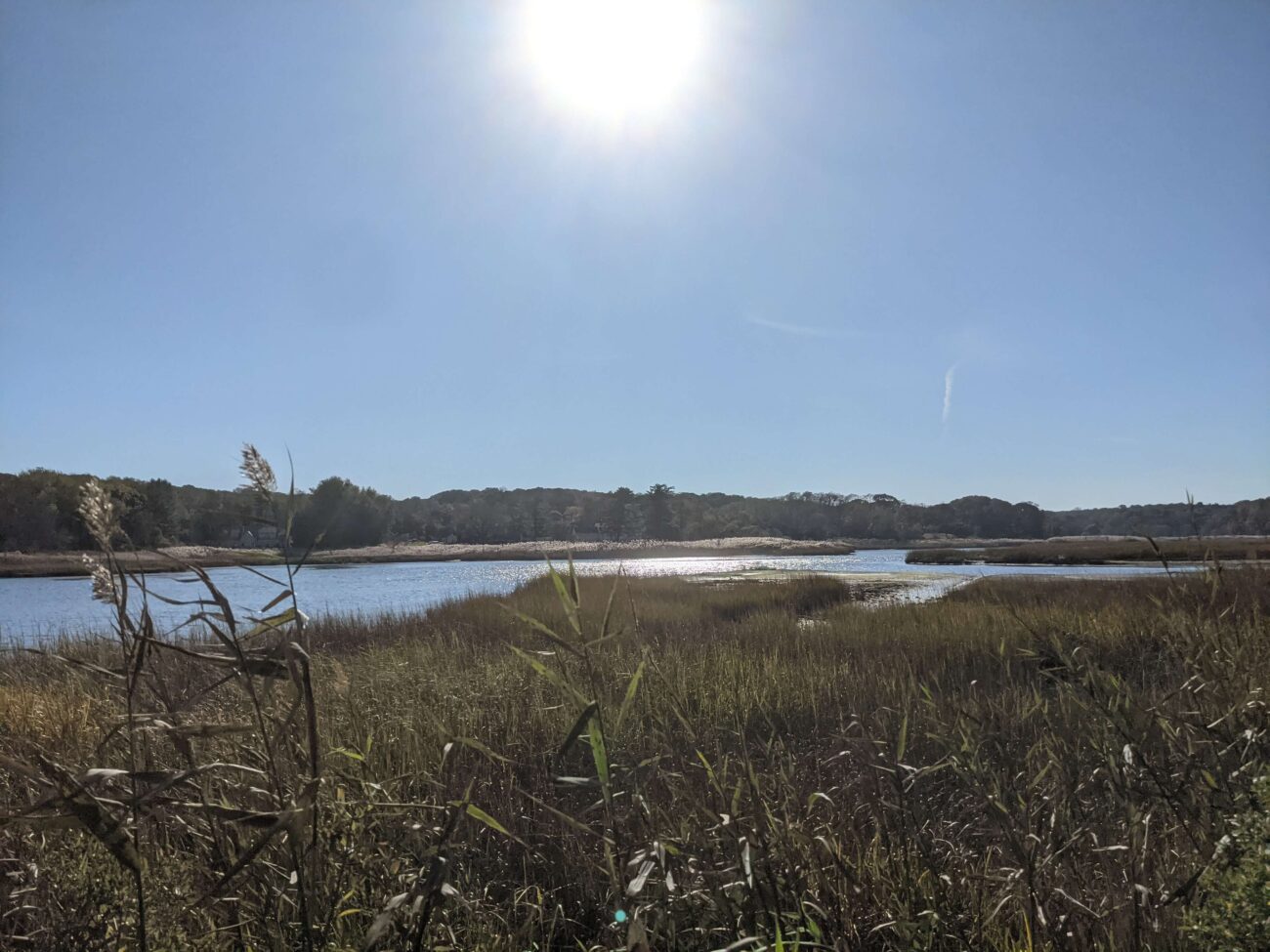


Overall the project has been highly successful, reducing flooding, polluted runoff, and invasives, as well as increasing the recreational value and beauty of the Park. There has been positive feedback from the public following the restoration projects. Some challenges remain with dealing with invasive species. It was determined that proceeding with the fish passage plans was not worthwhile, following the feasibility assessment.
Sean Cruickshank Sean.Cruickshank@parks.ny.gov, Jon Vander Werff jvanderwerff@savethesound.org, Phoebe Clark phoebe.clark@audubon.org, Vicky O’Neill victoria.oneill@audubon.org
Case Study
Project
Sunken Meadow State Park Restoration
Increased development and the historic construction of a dam on Sunken Meadow Creek in the 1950’s led to reduced tidal exchange, increased water levels in the creek, poor water quality, and the proliferation of invasive species. In 2008 a number of partners (NYS OPRHP, NOAA, NYSDEC, LISS, TNC, Save the Sound, USFWS, LI Botanical Society) came together to work to restore the degraded marsh habitat around Sunken Meadow Creek, increase tidal flow, improve aquatic organism passage, limit invasives, and improve water quality. A restoration feasibility study was completed in 2010. In 2012 Superstorm Sandy blew out the dam on Sunken Meadow Creek, naturally kick-starting restoration. Following Superstorm Sandy, the project partners were able to quickly capitalize on available funding and grants, due to their prior planning efforts. A bridge was built across the Creek where the dam blew out, salt marsh habitat was restored at three locations, green infrastructure was installed in one of the parking areas to capture and treat stormwater runoff, fish passage feasibility on the creek was investigated, and education and outreach was conducted to thousands of people. These projects were completed in 2019. Now, with funding through Long Island Sound Futures Fund, Audubon NY is leading a large-scale marsh restoration project at Sunken Meadow Creek to restore important high-marsh habitat for at risk species, like the Saltmarsh Sparrow, and to increase the resilience of the marsh in the face of rising sea levels. Audubon will be working to finalize the designs and secure permits over the next two years, with on-the-ground restoration expected in 2026.
Mapper
Level of Effort:
Seatuck River Revival Map
The River Revival Project Map is a GIS-based map that identifies every river and stream in Nassau and Suffolk Counties. It also identifies the tributaries where river herring runs are known to exist, and shows all existing, planned or proposed connectivity projects on the island. The map is intended to be a tool to engage citizens in the restoration of rivers and streams in their communities.
Mapper
Level of Effort:
Seatuck River Revival Map
The River Revival Project Map is a GIS-based map that identifies every river and stream in Nassau and Suffolk Counties. It also identifies the tributaries where river herring runs are known to exist, and shows all existing, planned or proposed connectivity projects on the island. The map is intended to be a tool to engage citizens in the restoration of rivers and streams in their communities.
Mapper
Level of Effort:
Northeast Ocean Data Portal
User-friendly access to expert-reviewed interactive maps on key topics such as marine life and habitat, marine-based industry, use and resources in the northeastern United States. The Data Explorer allows the user to define and view any combination of data hosted on the Portal on one map.
Mapper
Level of Effort:
Northeast Ocean Data Portal
User-friendly access to expert-reviewed interactive maps on key topics such as marine life and habitat, marine-based industry, use and resources in the northeastern United States. The Data Explorer allows the user to define and view any combination of data hosted on the Portal on one map.