

Resources for
Environmental justice
Funding
: Sep 1, 2026
up to $250,000
DEEP CERCLA 128(a) Brownfield Grant Program – Round 4
DEEP was awarded this funding from the EPA under the Infrastructure Investment and Jobs Act (IIJA) to administer to brownfield sites in Connecticut to perform environmental assessment and cleanup activities.
DEEP encourages applicants whose projects will enable the creation, preservation, or addition of park space, greenways or other recreational space, or other property used for nonprofit or municipal purposes, to apply for this pool of funding.
Funding
: Sep 1, 2026
up to $250,000
DEEP CERCLA 128(a) Brownfield Grant Program – Round 4
DEEP was awarded this funding from the EPA under the Infrastructure Investment and Jobs Act (IIJA) to administer to brownfield sites in Connecticut to perform environmental assessment and cleanup activities.
Funding
: Feb 3 – Mar 26, 2026
typically $150,000-350,000
DEEP Clean Water Act Section 319 Nonpoint Source Grants
The Connecticut Department of Energy and Environmental Protection (DEEP) is now accepting proposals for fiscal year 2025 Clean Water Section 319 grants. Section 319 of the Federal Clean Water Act (Section 319) is a Federal program to control nonpoint sources (NPS) of water pollution. Connecticut receives funds from EPA for Section 319 grants that can be passed onto communities, local conservation groups, and other organizations for NPS implementation projects, plans, and statewide NPS management efforts.
Priority projects for FY26 include: Watershed Based Plan Implementation Projects, Watershed Based Plan (WBP) Development, Natural Hazards, and Advancing the Connecticut NPS Management Program Plan.
Funding
: Feb 3 – Mar 26, 2026
typically $150,000-350,000
DEEP Clean Water Act Section 319 Nonpoint Source Grants
The Connecticut Department of Energy and Environmental Protection (DEEP) is now accepting proposals for fiscal year 2025 Clean Water Section 319 grants. Section 319 of the Federal Clean Water Act (Section 319) is a Federal program to control nonpoint sources (NPS) of water pollution. Connecticut receives funds from EPA for Section 319 grants that can be passed onto communities, local conservation groups, and other organizations for NPS implementation projects, plans, and statewide NPS management efforts.
Funding
: Aug 1 – Sep 15, 2026
$1,000 - $4,000
Grow Grants Program
The New England Grassroots Environment Fund awards small grants in support of grassroots efforts and community-based environmental work in New England. The GROW GRANTS program is actively accepting applications from grassroots groups across New England. These grants fund small, volunteer-driven groups in New England working on issues including food access, immigrant support, climate resilience, youth work, mutual aid, and more. This program is geared toward groups with experience organizing in their community and have at least THREE leaders who are actively involved in group decision-making. Grants support groups to deepen their work by further developing a community vision, lowering barriers to participation, identifying new stakeholders, and working to bring more voices and lived experiences into core decision-making processes.
Grow grants prioritize support for community groups who represent a broad range of voices in their community and who are not being reached by other funders. The Grassroots Fund interprets the word 'environment' broadly and provides funding for a wide range of activities.
Funding
: Aug 1 – Sep 15, 2026
$1,000 - $4,000
Grow Grants Program
The New England Grassroots Environment Fund awards small grants in support of grassroots efforts and community-based environmental work in New England. The GROW GRANTS program is actively accepting applications from grassroots groups across New England. These grants fund small, volunteer-driven groups in New England working on issues including food access, immigrant support, climate resilience, youth work, mutual aid, and more. This program is geared toward groups with experience organizing in their community and have at least THREE leaders who are actively involved in group decision-making. Grants support groups to deepen their work by further developing a community vision, lowering barriers to participation, identifying new stakeholders, and working to bring more voices and lived experiences into core decision-making processes.
Funding
: Jan 23 – Mar 25, 2026
max $200,000 to $6M, depending on grant type
Office of Brownfield Remediation and Development – Round 23
The Connecticut Department of Economic and Community Development (DECD) Office of Brownfield Remediation and Development (OBRD) announced multiple funding availability notices of the Brownfields Program. The following programs are included:
- Brownfield Municipal Grant Program – Remediation & Limited-Assessment (up to $6M)
- Brownfield Municipal Grant Program – Assessment-Only (up to $200K)
- Targeted Brownfield Development Loan Program (up to $6M)
- Brownfield Area-wide Revitalization Grant Program (up to $200K)
The total funding available across all Round 23 programs is $25 million.
Eligible uses of funds include: Costs associated with the investigation, assessment, remediation and development of a brownfield, including but not limited to: soil, groundwater and infrastructure investigation; assessment; remediation; abatement; hazardous materials or waste disposal; long-term groundwater monitoring or monitoring for natural attenuation; other forms of institutional controls; attorneys’ fees (non-DECD contract related), planning, engineering and environmental consulting; building and structural issues (including demolition, asbestos abatement, PCB removal, contaminated wood or paint removal and other infrastructure remedial activities). Public-Private Partnership: DECD hopes to encourage public-private partnerships with this NOFA offering.
Funding
: Jan 23 – Mar 25, 2026
max $200,000 to $6M, depending on grant type
Office of Brownfield Remediation and Development – Round 23
The Connecticut Department of Economic and Community Development (DECD) Office of Brownfield Remediation and Development (OBRD) announced multiple funding availability notices of the Brownfields Program. The following programs are included:
- Brownfield Municipal Grant Program – Remediation & Limited-Assessment (up to $6M)
- Brownfield Municipal Grant Program – Assessment-Only (up to $200K)
- Targeted Brownfield Development Loan Program (up to $6M)
- Brownfield Area-wide Revitalization Grant Program (up to $200K)
The total funding available across all Round 23 programs is $25 million.
Funding
: Oct 15 – Dec 15, 2025
min $250,000 (no max)
Community Investment Fund (CIF) 2030 – Round 8
The Community Investment Fund 2030 (CIF) will foster economic development in historically underserved communities across Connecticut. CIF will provide a total of up to $875 million to eligible municipalities as well as not-for-profit organizations and community development corporations that operate within them.
Grants are available for: 1) Capital improvement programs, such as brownfield remediation, affordable housing, infrastructure, clean energy development, and home or public facility rehabilitation; or 2) Planning for capital projects including activities such as community engagement processes, feasibility studies, development of project plan and construction budget.
Funding
: Oct 15 – Dec 15, 2025
min $250,000 (no max)
Community Investment Fund (CIF) 2030 – Round 8
The Community Investment Fund 2030 (CIF) will foster economic development in historically underserved communities across Connecticut. CIF will provide a total of up to $875 million to eligible municipalities as well as not-for-profit organizations and community development corporations that operate within them.
Funding
: Jul 15 – Sep 10, 2025
max $200,000 to $6M, depending on grant type
Office of Brownfield Remediation and Development – Round 22
The Connecticut Department of Economic and Community Development’s (DECD) Office of Brownfield Remediation and Development (OBRD) announced multiple funding availability notices under Round 22:
- Brownfield Municipal Grant Program – Remediation & Limited-Assessment (up to $6M)
- Brownfield Municipal Grant Program – Assessment-Only (up to $200K)
- Targeted Brownfield Development Loan Program (up to $6M)
- Brownfield Area-wide Revitalization Grant Program (up to $200K)
The total funding amount available for all Round 22 notices is $25 million.
Eligible uses of funds include: Costs associated with the investigation, assessment, remediation and development of a brownfield, including but not limited to: soil, groundwater and infrastructure investigation; assessment; remediation; abatement; hazardous materials or waste disposal; long-term groundwater monitoring or monitoring for natural attenuation; other forms of institutional controls; attorneys’ fees (non-DECD contract related), planning, engineering and environmental consulting; building and structural issues (including demolition, asbestos abatement, PCB removal, contaminated wood or paint removal and other infrastructure remedial activities). Public-Private Partnership: DECD hopes to encourage public-private partnerships with this NOFA offering.
Funding
: Jul 15 – Sep 10, 2025
max $200,000 to $6M, depending on grant type
Office of Brownfield Remediation and Development – Round 22
The Connecticut Department of Economic and Community Development’s (DECD) Office of Brownfield Remediation and Development (OBRD) announced multiple funding availability notices under Round 22:
- Brownfield Municipal Grant Program – Remediation & Limited-Assessment (up to $6M)
- Brownfield Municipal Grant Program – Assessment-Only (up to $200K)
- Targeted Brownfield Development Loan Program (up to $6M)
- Brownfield Area-wide Revitalization Grant Program (up to $200K)
The total funding amount available for all Round 22 notices is $25 million.
Funding
: Dec 26 – Jun 1, 2025
~$300K to $15M
Outdoor Recreation Legacy Partnership Program – Recurring Notice 5 Year
The Outdoor Recreation Legacy Partnership (ORLP) program was established in 2014 and is funded through the Land and Water Conservation Fund. ORLP is a nationally competitive, dollar-for-dollar matching grant program. It was created to aid disadvantaged, urban communities that lack access to close-by outdoor recreation. Funds can be used for the acquisition and/or development of, or substantial renovation of, public parks and other outdoor recreation spaces.
Entities interested in seeking funding under the ORLP program should contact their State’s Lead Agency (Department of Energy and Environmental Protection for Connecticut; Office of Parks, Recreation, and Historic Preservation for New York) to get details about their state’s process for selecting and submitting projects to the NPS’ national competition.
Acquisition of lands, wetlands, and waters for public outdoor recreation may be eligible for assistance. Projects could involve a combination of land acquisition and site development. These projects can cater to a diverse range of public outdoor recreation activities and facilities required to enhance the use and enjoyment for the public. These include, and are not limited to: • Community Parks • Campgrounds • Playgrounds • Sport fields and Courts • Picnic Areas and Open-air Pavilions • Trails and Tracks for Hiking, Walking, Skating, or Biking • Water based Recreation Facilities for Swimming or Boating • Fishing and Hunting Facilities • Pools and Splash Pads • Publicly Accessible Nature Preserves or Conservation Areas • Community Gardens • Spectator Facilities such as Amphitheaters or Bandstands • Renovations of Existing Facilities • Interpretive Signage
Funding
: Dec 26 – Jun 1, 2025
~$300K to $15M
Outdoor Recreation Legacy Partnership Program – Recurring Notice 5 Year
The Outdoor Recreation Legacy Partnership (ORLP) program was established in 2014 and is funded through the Land and Water Conservation Fund. ORLP is a nationally competitive, dollar-for-dollar matching grant program. It was created to aid disadvantaged, urban communities that lack access to close-by outdoor recreation. Funds can be used for the acquisition and/or development of, or substantial renovation of, public parks and other outdoor recreation spaces.
Entities interested in seeking funding under the ORLP program should contact their State’s Lead Agency (Department of Energy and Environmental Protection for Connecticut; Office of Parks, Recreation, and Historic Preservation for New York) to get details about their state’s process for selecting and submitting projects to the NPS’ national competition.
Funding
: Jan 10 – Mar 7, 2025
max $200,000 to $4M, depending on grant type
Office of Brownfield Remediation and Development – Round 21
The Connecticut Department of Economic and Community Development’s (DECD) Office of Brownfield Remediation and Development (OBRD) announced multiple funding availability notices under Round 21:
- Brownfield Municipal Grant Program – Remediation & Limited-Assessment (up to $4M)
- Brownfield Municipal Grant Program – Assessment-Only (up to $200K)
- Targeted Brownfield Development Loan Program (up to $4M)
- Brownfield Area-wide Revitalization Grant Program (up to $200K)
The total funding amount available for all Round 21 notices is $25 million.
Eligible uses of funds include: Costs associated with the investigation, assessment, remediation and development of a brownfield, including but not limited to: soil, groundwater and infrastructure investigation; assessment; remediation; abatement; hazardous materials or waste disposal; long-term groundwater monitoring or monitoring for natural attenuation; other forms of institutional controls; attorneys’ fees (non-DECD contract related), planning, engineering and environmental consulting; building and structural issues (including demolition, asbestos abatement, PCB removal, contaminated wood or paint removal and other infrastructure remedial activities). Public-Private Partnership: DECD hopes to encourage public-private partnerships with this NOFA offering.
Funding
: Jan 10 – Mar 7, 2025
max $200,000 to $4M, depending on grant type
Office of Brownfield Remediation and Development – Round 21
The Connecticut Department of Economic and Community Development’s (DECD) Office of Brownfield Remediation and Development (OBRD) announced multiple funding availability notices under Round 21:
- Brownfield Municipal Grant Program – Remediation & Limited-Assessment (up to $4M)
- Brownfield Municipal Grant Program – Assessment-Only (up to $200K)
- Targeted Brownfield Development Loan Program (up to $4M)
- Brownfield Area-wide Revitalization Grant Program (up to $200K)
The total funding amount available for all Round 21 notices is $25 million.
$75,000 - $350,000
Environmental Justice Thriving Communities Grantmaking Program
EPA has selected Environmental Justice for New England to serve as pass-through entity for the Environmental Justice Thriving Communities Grants for CT, ME, MA, NH, RI, and VT. Thriving Communities subgrants will be distributed to support capacity building in communities affected by environmental or public health issues to eligible applicants. The program aims to reduce the burden of the federal grants application process and distribute federal funds to potential applicants working to address environmental justice issues.
Tier 1 will consist of grants for $150,000 for assessment (one-year project period), Tier 2 will consist of grants for $250,000 for planning (1-2 year project period), and Tier 3 will consist of grants for $350,000 for project development (two-year project period). Preference will be given to projects in which the majority of the funds are going to capacity-limited organizations and groups. Additionally, noncompetitive awards, or "Seed Funds" will be made to capacity-constrained communities and CBOs in a fixed amount of $75,000 each.
$75,000 - $350,000
Environmental Justice Thriving Communities Grantmaking Program
EPA has selected Environmental Justice for New England to serve as pass-through entity for the Environmental Justice Thriving Communities Grants for CT, ME, MA, NH, RI, and VT. Thriving Communities subgrants will be distributed to support capacity building in communities affected by environmental or public health issues to eligible applicants. The program aims to reduce the burden of the federal grants application process and distribute federal funds to potential applicants working to address environmental justice issues.
Mapper
Level of Effort:
Rebuild by Design Atlas of Accountability
Interactive map with county-level disaster declaration information and Congressional Districts for 2011-2023. Also includes a fact sheet and tables.
Mapper
Level of Effort:
Rebuild by Design Atlas of Accountability
Interactive map with county-level disaster declaration information and Congressional Districts for 2011-2023. Also includes a fact sheet and tables.
Plan
Level of Effort:
Rebuild by Design Atlas of Disaster: New York
National Report with State-based County-level data detailing the experiences of communities as a result of climate change. State reports include eight maps that show where major disasters have occurred, where post-disaster support has been given, where the most socially vulnerable populations reside, and the energy reliability by utility area. It also provides county-level disaster data within State Assembly, Senate, and Congressional district boundaries.
Plan
Level of Effort:
Rebuild by Design Atlas of Disaster: New York
National Report with State-based County-level data detailing the experiences of communities as a result of climate change. State reports include eight maps that show where major disasters have occurred, where post-disaster support has been given, where the most socially vulnerable populations reside, and the energy reliability by utility area. It also provides county-level disaster data within State Assembly, Senate, and Congressional district boundaries.
Funding
: Jul 1 – Aug 30, 2024
$250K - $500K
Environmental Justice Data Fund
The second round of grantmaking for the Environmental Justice Data Fund (EJDF) will be supported by a $4 million fund. The EJDF aims to help frontline communities historically underserved and disproportionately impacted by climate change and environmental injustice in the United States use data to address environmental hazards, with special attention to matters regarding air and water quality. The EJDF will support eligible organizations to unlock resources, increase their access to federal infrastructure funding, and advocate for new policies that empower communities to address past environmental harm and pave the way to a more sustainable, climate-resilient future.
The fund aims to provide one-time flexible project support for data projects that: 1) range from building organizational capacity for data work to implementing research and data; 2) may involve research planning, scenario planning, data collection, data analysis, and/or data visualization, or other activities; 3) will use data work to mitigate past environmental harm and promote climate resilience (preference will be given to projects that work on air and water quality); and 4) serve communities that have been historically underserved and disproportionately impacted by climate change and environmental injustice, including Black, Latino/a/x/e, Indigenous, Tribal, Southern, rural, and low-income communities.
Funding
: Jul 1 – Aug 30, 2024
$250K - $500K
Environmental Justice Data Fund
The second round of grantmaking for the Environmental Justice Data Fund (EJDF) will be supported by a $4 million fund. The EJDF aims to help frontline communities historically underserved and disproportionately impacted by climate change and environmental injustice in the United States use data to address environmental hazards, with special attention to matters regarding air and water quality. The EJDF will support eligible organizations to unlock resources, increase their access to federal infrastructure funding, and advocate for new policies that empower communities to address past environmental harm and pave the way to a more sustainable, climate-resilient future.
Funding
: Jul 18 – Sep 30, 2024
$2,000 - $50,000
Climate & Equity Grants 2024
In collaboration with CT Department of Energy and Environmental Protection (DEEP), the Connecticut Institute for Resilience and Climate Adaptation (CIRCA) requests grant proposals for projects that increase the capacity of vulnerable communities to mitigate, plan for, and respond to climate change impacts. This funding supports the recommendations of the Governor’s Council on Climate Change (GC3).
Funds can be used for planning, capacity-building, or education projects that advance community-scale climate adaptation and/or climate mitigation efforts. This year, for the first time, additional funding is available to support participation from community-based organizations in state climate planning meetings.
Funding
: Jul 18 – Sep 30, 2024
$2,000 - $50,000
Climate & Equity Grants 2024
In collaboration with CT Department of Energy and Environmental Protection (DEEP), the Connecticut Institute for Resilience and Climate Adaptation (CIRCA) requests grant proposals for projects that increase the capacity of vulnerable communities to mitigate, plan for, and respond to climate change impacts. This funding supports the recommendations of the Governor’s Council on Climate Change (GC3).
Funding
: Jul 12 – Sep 27, 2024
max $200,000 or max $4M
Office of Brownfield Remediation and Development – Round 20
The Connecticut Department of Economic and Community Development’s (DECD) Office of Brownfield Remediation and Development (OBRD) announced multiple funding availability notices under Round 20:
- Municipal Grant Program – Remediation & Limited-Assessment (up to $4M)
- Municipal Grant Program – Assessment-Only (up to $200K)
- Targeted Brownfield Development Loan Program (up to $4M)
The total funding amount available for all Round 20 notices is $25 million.
Eligible uses of funds include: Costs associated with the investigation, assessment, remediation and development of a brownfield, including but not limited to: soil, groundwater and infrastructure investigation; assessment; remediation; abatement; hazardous materials or waste disposal; long-term groundwater monitoring or monitoring for natural attenuation; other forms of institutional controls; attorneys’ fees (non-DECD contract related), planning, engineering and environmental consulting; building and structural issues (including demolition, asbestos abatement, PCB removal, contaminated wood or paint removal and other infrastructure remedial activities). Public-Private Partnership: DECD hopes to encourage public-private partnerships with this NOFA offering.
Funding
: Jul 12 – Sep 27, 2024
max $200,000 or max $4M
Office of Brownfield Remediation and Development – Round 20
The Connecticut Department of Economic and Community Development’s (DECD) Office of Brownfield Remediation and Development (OBRD) announced multiple funding availability notices under Round 20:
- Municipal Grant Program – Remediation & Limited-Assessment (up to $4M)
- Municipal Grant Program – Assessment-Only (up to $200K)
- Targeted Brownfield Development Loan Program (up to $4M)
The total funding amount available for all Round 20 notices is $25 million.
The New York Community Trust: Westchester Ongoing Competitive Grants
The New York Community Trust, which brings together the New York Community Trust, The Long Island Community Foundation, and Westchester Community Foundation offers competitive grants to nonprofits to support projects in a number of areas across New York City, Westchester, Long Island and beyond. For work on Westchester, proposals are accepted from nonprofits during the specified timeframes.
The New York Community Trust: Westchester Ongoing Competitive Grants
The New York Community Trust, which brings together the New York Community Trust, The Long Island Community Foundation, and Westchester Community Foundation offers competitive grants to nonprofits to support projects in a number of areas across New York City, Westchester, Long Island and beyond. For work on Westchester, proposals are accepted from nonprofits during the specified timeframes.
The New York Community Trust: Long Island Ongoing Competitive Grants
The New York Community Trust, which brings together the New York Community Trust, The Long Island Community Foundation, and Westchester Community Foundation offers competitive grants to nonprofits to support projects in a number of areas across New York City, Westchester, Long Island and beyond. For work on Long Island, proposals are accepted from nonprofits during the specified timeframes.
The New York Community Trust: Long Island Ongoing Competitive Grants
The New York Community Trust, which brings together the New York Community Trust, The Long Island Community Foundation, and Westchester Community Foundation offers competitive grants to nonprofits to support projects in a number of areas across New York City, Westchester, Long Island and beyond. For work on Long Island, proposals are accepted from nonprofits during the specified timeframes.
Funding
: Nov 1 – Mar 31, 2025
$75,000 - $350,000
Thriving Communities Grantmaker Program
EPA has selected Fordham University to serve as pass-through entity for the Thriving Communities Grants for New York, New Jersey, Puerto Rico, and the US Virgin Islands. Thriving Communities subgrants will be distributed to support capacity building in communities affected by environmental or public health issues to eligible applicants. Applications will be accepted on a rolling basis until March 31, 2025.
Grants are available for funding in the following phases: Phase I = Assessment projects for up to $150,000 for a one-year project period Phase II = Planning projects for up to $250,000 for a 1-2 year project period, and Phase III = Project Development projects for up to $350,000 for a two-year project period. $150,000 awards may be made to organizations that offer a plan for engagement, capacity building, or assessment but do not provide a fully itemized budget (fixed amount awards). $250,000 and $350,000 awards must provide an itemized budget as well as a timeline for spending. Preference will be given to projects in which the majority of the funds are going to capacity-limited organizations and groups. Additionally, noncompetitive awards will be made to capacity-constrained communities and CBOs without the submission of an application to the competitive review process. These noncompetitive small subawards will be made in a fixed amount of $75,000 each, designed for ease of access, with a streamlined process that does not require participation in the competitive review process. Awardees will be selected through a participatory process, with fewer reporting requirements compared to competitive grants. Any person or organization in Region 2 may submit a nomination, including self-nominations.
Funding
: Nov 1 – Mar 31, 2025
$75,000 - $350,000
Thriving Communities Grantmaker Program
EPA has selected Fordham University to serve as pass-through entity for the Thriving Communities Grants for New York, New Jersey, Puerto Rico, and the US Virgin Islands. Thriving Communities subgrants will be distributed to support capacity building in communities affected by environmental or public health issues to eligible applicants. Applications will be accepted on a rolling basis until March 31, 2025.
Website
Level of Effort:
New York State Climate Impacts Assessment: Understanding and Preparing for Our Changing Climate
The New York State Climate Impacts Assessment explores current and future climate change impacts to New York State communities, ecosystems, and economy. The New York State Energy Research and Development Authority (NYSERDA) assembled more than 250 New York–based, national, and Indigenous climate science experts and representatives from diverse communities and industries across the state to contribute to this assessment. The findings are intended to help residents, businesses, and decision-makers across the state plan and prepare for climate change impacts.
Website
Level of Effort:
New York State Climate Impacts Assessment: Understanding and Preparing for Our Changing Climate
The New York State Climate Impacts Assessment explores current and future climate change impacts to New York State communities, ecosystems, and economy. The New York State Energy Research and Development Authority (NYSERDA) assembled more than 250 New York–based, national, and Indigenous climate science experts and representatives from diverse communities and industries across the state to contribute to this assessment. The findings are intended to help residents, businesses, and decision-makers across the state plan and prepare for climate change impacts.
Funding
: Sep 27, 2026
up to $1,000
Seed Grants Program
Awards small grants in support of grassroots efforts and community-based environmental work in New England. The Grassroots Fund utilizes participatory grantmaking to move resources to New England grassroots groups. Seed grants prioritize support for community groups who represent a broad range of voices in their community and who are not being reached by other funders.
The Seed grant program is geared towards groups launching new projects or starting to significantly change the direction of an existing project. Most often, groups have been working on the project less than a year and usually don't yet have much direct experience with implementing the idea. The Grassroots Fund interprets the word 'environment' broadly and provides funding for a wide range of activities.
Funding
: Sep 27, 2026
up to $1,000
Seed Grants Program
Awards small grants in support of grassroots efforts and community-based environmental work in New England. The Grassroots Fund utilizes participatory grantmaking to move resources to New England grassroots groups. Seed grants prioritize support for community groups who represent a broad range of voices in their community and who are not being reached by other funders.
Funding
: Feb 28 – May 28, 2024
$200,000 - $3,000,000
Clean Ports Program: Climate and Air Quality Planning Competition
The Inflation Reduction Act of 2022 provides EPA with $3 billion to fund zero-emission port equipment and infrastructure as well as climate and air quality planning at U.S. ports. This new funding program will build on EPA’s Ports Initiative that helps our nation’s ports, a critical part of our infrastructure and supply chain, address public health and environmental impacts on surrounding communities. EPA has announced two separate Notices of Funding Opportunities to disburse the allocated $3 billion – the Zero-Emission Technology Deployment Competition AND the Climate and Air Quality Planning Competition.
The Climate and Air Quality Planning Competition is poised to fund climate and air quality planning activities at U.S. ports; including emissions inventories, strategy analysis, community engagement, and resiliency measure identification, all of which will build the capacity of port stakeholders to continue to reduce pollution and transition to zero-emissions operations over time.
Funding
: Feb 28 – May 28, 2024
$200,000 - $3,000,000
Clean Ports Program: Climate and Air Quality Planning Competition
The Inflation Reduction Act of 2022 provides EPA with $3 billion to fund zero-emission port equipment and infrastructure as well as climate and air quality planning at U.S. ports. This new funding program will build on EPA’s Ports Initiative that helps our nation’s ports, a critical part of our infrastructure and supply chain, address public health and environmental impacts on surrounding communities. EPA has announced two separate Notices of Funding Opportunities to disburse the allocated $3 billion – the Zero-Emission Technology Deployment Competition AND the Climate and Air Quality Planning Competition.
Funding
: Feb 27 – Apr 15, 2024
$1,000-$5,000
Connecticut Botanical Society Small Grants Program
The Small Grants Program provides funding for land conservation projects that provide protection of rare or uncommon native plant species or natural communities, or areas of high native diversity. We will also consider habitat improvement projects, protection of open space in low-income and urban communities, and assistance with fund-raising for projects that meet the above criteria.
Note that applicants must be a member of CBS to apply.
Funding
: Feb 27 – Apr 15, 2024
$1,000-$5,000
Connecticut Botanical Society Small Grants Program
The Small Grants Program provides funding for land conservation projects that provide protection of rare or uncommon native plant species or natural communities, or areas of high native diversity. We will also consider habitat improvement projects, protection of open space in low-income and urban communities, and assistance with fund-raising for projects that meet the above criteria.
Funding
: Feb 12 – Mar 8, 2024
No pre-defined funding range
Working Lands Climate Corps
The Working Lands Climate Corps will provide technical training and career pathway opportunities for young people, helping them deliver economic benefits through climate-smart agriculture solutions for farmers and ranchers across the country, now and in the future. The Working Lands Climate Corps is part of the American Climate Corps, a workforce training and service initiative that is working to ensure more young people have access to the skills-based training needed for good paying careers in the clean energy and climate resilience economy.
Eligible organizations may apply to host one or several WLCC members. Awarded organizations will work collaboratively with state and/or county-level NRCS staff to facilitate and track the climate work of WLCC members. This project aims to engage at least 100 Working Lands Climate Corps members with host organizations across the country. Requested projects should begin no later than September 30, 2024.
Funding
: Feb 12 – Mar 8, 2024
No pre-defined funding range
Working Lands Climate Corps
The Working Lands Climate Corps will provide technical training and career pathway opportunities for young people, helping them deliver economic benefits through climate-smart agriculture solutions for farmers and ranchers across the country, now and in the future. The Working Lands Climate Corps is part of the American Climate Corps, a workforce training and service initiative that is working to ensure more young people have access to the skills-based training needed for good paying careers in the clean energy and climate resilience economy.
Mapper
Level of Effort:
Connecticut Environmental Justice Screening Tool
Connecticut EJ Screening Tool is an interactive resource that combines both community and data-driven approach that incorporates environmental burdens and demographic indicators. This map allows users to explore the environmental health and the conditions (socioeconomic and or other distinguishing community characteristics) within a specific region, town, city, and or entire state.
The data included in this map finalize into a score that allows users to understand the relationship between the community and environmental justice. Through the presentation of this information, citizens and policymakers alike can understand what communities are experiencing and form policies that reshape these matters.
Mapper
Level of Effort:
Connecticut Environmental Justice Screening Tool
Connecticut EJ Screening Tool is an interactive resource that combines both community and data-driven approach that incorporates environmental burdens and demographic indicators. This map allows users to explore the environmental health and the conditions (socioeconomic and or other distinguishing community characteristics) within a specific region, town, city, and or entire state.
The data included in this map finalize into a score that allows users to understand the relationship between the community and environmental justice. Through the presentation of this information, citizens and policymakers alike can understand what communities are experiencing and form policies that reshape these matters.
Guidance Tool
Level of Effort:
EPA Equitable Resilience Builder (ERB)
The Equitable Resilience Builder (ERB) is an application that supports communities in resilience planning with a focus on equity. It engages users in a guided process to inclusively assess local hazards, equity, and the resilience of built, natural, and social environment systems. Results can be used to collaboratively prioritize actions to build community resilience in an equitable way.
Guidance Tool
Level of Effort:
EPA Equitable Resilience Builder (ERB)
The Equitable Resilience Builder (ERB) is an application that supports communities in resilience planning with a focus on equity. It engages users in a guided process to inclusively assess local hazards, equity, and the resilience of built, natural, and social environment systems. Results can be used to collaboratively prioritize actions to build community resilience in an equitable way.
Mapper
Level of Effort:
Potential Environmental Justice Area (PEJA) Communities
Data shows polygon locations of Potential Environmental Justice Areas (PEJA). PEJA’s have been identified based on data from the 2014-2018 5-year American Community Survey (ACS), conducted by the US Census Bureau. Environmental justice efforts focus on improving the environment in communities, specifically minority and low-income communities, and addressing disproportionate adverse environmental impacts that may exist in those communities. The designated areas are considered for additional outreach within the permitting process, for grant eligibility, and for targeted enforcement of Environmental Conservation Law violations.
Mapper
Level of Effort:
Potential Environmental Justice Area (PEJA) Communities
Data shows polygon locations of Potential Environmental Justice Areas (PEJA). PEJA’s have been identified based on data from the 2014-2018 5-year American Community Survey (ACS), conducted by the US Census Bureau. Environmental justice efforts focus on improving the environment in communities, specifically minority and low-income communities, and addressing disproportionate adverse environmental impacts that may exist in those communities. The designated areas are considered for additional outreach within the permitting process, for grant eligibility, and for targeted enforcement of Environmental Conservation Law violations.
Funding
: Apr 24 – Jul 26, 2023
$100,000-$500,000
Disadvantaged Community Air Quality Monitoring Opportunity
$2.1 million was made available through NYSDEC for community-based not-for-profit organizations working in disadvantaged communities to support community-driven projects to improve air quality and help advance the goals of the Climate Leadership and Community Protection Act. The grants will advance local efforts to obtain air quality data tailored to issues identified by community residents.
Funding
: Apr 24 – Jul 26, 2023
$100,000-$500,000
Disadvantaged Community Air Quality Monitoring Opportunity
$2.1 million was made available through NYSDEC for community-based not-for-profit organizations working in disadvantaged communities to support community-driven projects to improve air quality and help advance the goals of the Climate Leadership and Community Protection Act. The grants will advance local efforts to obtain air quality data tailored to issues identified by community residents.
Funding
: Jan 6 – Aug 5, 2024
Average award is $20,000
The Long Island Unitarian Universalist Fund (LIUUF)
For more than 30 years, our Long Island Unitarian Universalist Fund (LIUUF), a field-of-interest advised fund at The New York Community Trust, has worked to address education and racial equity, environmental justice, and immigrant rights. The fund also focuses on LGBTQ+ advocacy, women’s rights, leadership development, legal and legislative advocacy, and community organizing. The fund was established by the Veatch Program at Shelter Rock.
LIUUF grantmaking reflects Unitarian Universalist principles and the Fund’s overarching mission is to build and energize a community of progressive social change activists, and to support prophetic voices in vulnerable communities who speak out against injustices—often in unsafe environments and at personal risk and sacrifice.
Guided by an advisory committee that represents Unitarian Universalist congregations throughout Long Island, the LIUUF has awarded millions of dollars to nonprofits in Nassau and Suffolk counties to advance grassroots progressive social change.
Funding
: Jan 6 – Aug 5, 2024
Average award is $20,000
The Long Island Unitarian Universalist Fund (LIUUF)
For more than 30 years, our Long Island Unitarian Universalist Fund (LIUUF), a field-of-interest advised fund at The New York Community Trust, has worked to address education and racial equity, environmental justice, and immigrant rights. The fund also focuses on LGBTQ+ advocacy, women’s rights, leadership development, legal and legislative advocacy, and community organizing. The fund was established by the Veatch Program at Shelter Rock.
LIUUF grantmaking reflects Unitarian Universalist principles and the Fund’s overarching mission is to build and energize a community of progressive social change activists, and to support prophetic voices in vulnerable communities who speak out against injustices—often in unsafe environments and at personal risk and sacrifice.
Guided by an advisory committee that represents Unitarian Universalist congregations throughout Long Island, the LIUUF has awarded millions of dollars to nonprofits in Nassau and Suffolk counties to advance grassroots progressive social change.
Funding
: Sep 27, 2026
The New York Community Trust: New York City Ongoing Competitive Grants
The New York Community Trust, which brings together the New York Community Trust, The Long Island Community Foundation, and Westchester Community Foundation offers competitive grants to nonprofits to support projects in a number of areas across New York City, Westchester, Long Island and beyond. For work in New York City, proposals are accepted from nonprofits anytime through the ongoing competitive grants proposal process.
Funding
: Sep 27, 2026
The New York Community Trust: New York City Ongoing Competitive Grants
The New York Community Trust, which brings together the New York Community Trust, The Long Island Community Foundation, and Westchester Community Foundation offers competitive grants to nonprofits to support projects in a number of areas across New York City, Westchester, Long Island and beyond. For work in New York City, proposals are accepted from nonprofits anytime through the ongoing competitive grants proposal process.
Funding
: Oct 30 – Jan 31, 2024
$10,000-$500,000
Community Forest Management Plan Implementation and Ash Tree Management in Disadvantaged Communities
The NYS DEC’s Urban and Community Forestry (UCF) Program works with communities to manage their community forests and develop self-sustaining local community forestry programs. $12.9 million is available through Inflation Reduction Act Urban and Community Forestry Grants for urban forestry work in disadvantaged communities across New York State for the following two categories: 1) Community Forest Management Plan Implementation in Disadvantaged Communities ($10 million) and 2) Ash Tree Management in Disadvantaged Communities ($2.9 million)
Funding
: Oct 30 – Jan 31, 2024
$10,000-$500,000
Community Forest Management Plan Implementation and Ash Tree Management in Disadvantaged Communities
The NYS DEC’s Urban and Community Forestry (UCF) Program works with communities to manage their community forests and develop self-sustaining local community forestry programs. $12.9 million is available through Inflation Reduction Act Urban and Community Forestry Grants for urban forestry work in disadvantaged communities across New York State for the following two categories: 1) Community Forest Management Plan Implementation in Disadvantaged Communities ($10 million) and 2) Ash Tree Management in Disadvantaged Communities ($2.9 million)
Funding
: May 2 – Oct 4, 2023
NYS DEC Municipal Funding for Food Scraps Recycling Initiatives
The goal of this funding program is to assist municipalities in starting or expanding municipal food scraps recycling programs. Approximately $2.75 million is available. To ensure equitable access and development of food scraps recycling opportunities for all New Yorkers, this year’s opportunity will prioritize the first half of available funds for eligible projects serving Environmental Justice and Disadvantaged communities.
Funding
: May 2 – Oct 4, 2023
NYS DEC Municipal Funding for Food Scraps Recycling Initiatives
The goal of this funding program is to assist municipalities in starting or expanding municipal food scraps recycling programs. Approximately $2.75 million is available. To ensure equitable access and development of food scraps recycling opportunities for all New Yorkers, this year’s opportunity will prioritize the first half of available funds for eligible projects serving Environmental Justice and Disadvantaged communities.
Funding
: Jun 1 – Jul 31, 2026
$35K-$2M for implementation grants, $10K-200K for certification grants
NYSDEC Climate Smart Communities Grant Program
The Climate Smart Communities (CSC) Grant program provides grants to cities, towns, villages, counties, Indian Nations, local public authorities, and local public benefit corporations of the State of New York for eligible climate change mitigation, adaptation, and planning and assessment projects.
Funds are available for two broad project categories – implementation and certification. The first project category supports implementation projects related to the reduction of greenhouse gas emissions (mainly outside the power sector), climate change adaptation, and engineering feasibility studies for flood mitigation and Hydrofluorocarbons. The second supports planning and assessment projects aligned with Climate Smart Communities certification actions.
Applications are accepted annually through the Consolidated Funding Application (CFA). Municipalities need not be a registered or certified as a Climate Smart Community to apply for a grant.
Funding
: Jun 1 – Jul 31, 2026
$35K-$2M for implementation grants, $10K-200K for certification grants
NYSDEC Climate Smart Communities Grant Program
The Climate Smart Communities (CSC) Grant program provides grants to cities, towns, villages, counties, Indian Nations, local public authorities, and local public benefit corporations of the State of New York for eligible climate change mitigation, adaptation, and planning and assessment projects.
Funds are available for two broad project categories – implementation and certification. The first project category supports implementation projects related to the reduction of greenhouse gas emissions (mainly outside the power sector), climate change adaptation, and engineering feasibility studies for flood mitigation and Hydrofluorocarbons. The second supports planning and assessment projects aligned with Climate Smart Communities certification actions.
Funding
: Jun 1 – Jul 31, 2026
$100-400K
NYSDOS Brownfield Opportunity Area Program
The NYS Department of State (NYSDOS) is soliciting applications from eligible municipalities, community-based not-for-profit organizations, and NYC Community Boards for Brownfield Opportunity Area Program funding. The Brownfield Opportunity Area (BOA) Program provides communities grant funding and technical assistance to develop area-wide, community-based plans to effectively redevelop brownfields and other vacant and abandoned sites, transforming them into catalytic properties that facilitate community investment and improvement.
Applications are accepted annually through the Consolidated Funding Application (CFA).
Funding
: Jun 1 – Jul 31, 2026
$100-400K
NYSDOS Brownfield Opportunity Area Program
The NYS Department of State (NYSDOS) is soliciting applications from eligible municipalities, community-based not-for-profit organizations, and NYC Community Boards for Brownfield Opportunity Area Program funding. The Brownfield Opportunity Area (BOA) Program provides communities grant funding and technical assistance to develop area-wide, community-based plans to effectively redevelop brownfields and other vacant and abandoned sites, transforming them into catalytic properties that facilitate community investment and improvement.
Funding
: May 7 – Aug 13, 2025
$50,000-$200,000
NYSDEC Community Impact Grant Program
$5.9 million is now available for community-based organizations for projects that address exposure of communities to multiple environmental harms and risks. Eligible applicants are Tribal Organizations and not-for-profit community-based organizations having 501(c)(3) status, or a community-based organization may partner with a NFP that will serve as their fiscal sponsor. Eligible projects must address a community’s exposure to multiple environmental harms and risks and include a new research component that will be used to expand the knowledge of the affected community.
Funding
: May 7 – Aug 13, 2025
$50,000-$200,000
NYSDEC Community Impact Grant Program
$5.9 million is now available for community-based organizations for projects that address exposure of communities to multiple environmental harms and risks. Eligible applicants are Tribal Organizations and not-for-profit community-based organizations having 501(c)(3) status, or a community-based organization may partner with a NFP that will serve as their fiscal sponsor. Eligible projects must address a community’s exposure to multiple environmental harms and risks and include a new research component that will be used to expand the knowledge of the affected community.
Funding
: Jul 8 – Nov 1, 2024
$40,000
Healthy Communities Grant Program for New England
The Healthy Communities Grant Program is EPA New England’s main competitive grant program to work directly with communities to reduce environmental risks to protect and improve human health and the quality of life. he Healthy Communities Grant Program will achieve this through identifying and funding projects that:
– Target resources to benefit communities at risk.
– Assess, understand, and reduce environmental and human health risks.
– Increase collaboration through partnerships and community-based projects.
– Build institutional and community capacity to understand and solve environmental and human health problems.
– Achieve measurable environmental and human health benefits.
To qualify as eligible projects under the Healthy Communities Grant Program, proposed projects must: (1) be located in and/or directly benefit one or more of the Target Investment Areas; and (2) identify how the proposed project will achieve measurable environmental and/or public health results in one or more of the Target Program Areas. Target Investment Areas include: (1) areas near New England Ports that are being redeveloped to support offshore wind and related industries; (2) environmental justice areas of potential concern; (3) geographic priority areas or sectors in Northern & Southern New England; and (4) sensitive populations. Detailed descriptions of the target areas can be found in the annual RFA.
Funding
: Jul 8 – Nov 1, 2024
$40,000
Healthy Communities Grant Program for New England
The Healthy Communities Grant Program is EPA New England’s main competitive grant program to work directly with communities to reduce environmental risks to protect and improve human health and the quality of life. he Healthy Communities Grant Program will achieve this through identifying and funding projects that:
– Target resources to benefit communities at risk.
– Assess, understand, and reduce environmental and human health risks.
– Increase collaboration through partnerships and community-based projects.
– Build institutional and community capacity to understand and solve environmental and human health problems.
– Achieve measurable environmental and human health benefits.
Funding
: Jan 1 – Apr 15, 2023
~$1,500
EPOC 2022 Environmental Grant Program
The EPOC Grant Program provides non-profit and not-for-profit environmental advocacy groups, community based groups and environmental education organizations funding for local projects that benefit the environment.
Funding
: Jan 1 – Apr 15, 2023
~$1,500
EPOC 2022 Environmental Grant Program
The EPOC Grant Program provides non-profit and not-for-profit environmental advocacy groups, community based groups and environmental education organizations funding for local projects that benefit the environment.
Funding
: Jul 26 – Sep 22, 2023
up to $250,000
DEEP CERCLA 128(a) Brownfield Grant Program – Round 1
DEEP was awarded this funding from the EPA under the Infrastructure Investment and Jobs Act (IIJA) to administer to brownfield sites in Connecticut to perform environmental assessment and cleanup activities.
DEEP encourages applicants whose projects will enable the creation, preservation, or addition of park space, greenways or other recreational space, or other property used for nonprofit or municipal purposes, to apply for this pool of funding. DEEP is also committed to promoting the remediation and redevelopment of brownfield sites located in Environmental Justice (EJ) communities.
Funding
: Jul 26 – Sep 22, 2023
up to $250,000
DEEP CERCLA 128(a) Brownfield Grant Program – Round 1
DEEP was awarded this funding from the EPA under the Infrastructure Investment and Jobs Act (IIJA) to administer to brownfield sites in Connecticut to perform environmental assessment and cleanup activities.
Funding
: Jul 26 – Sep 22, 2023
$200,000-$4M
Office of Brownfield Remediation and Development – Round 18
The Connecticut Department of Economic and Community Development’s (DECD) Office of Brownfield Remediation and Development (OBRD) announced funding availability under Round 18. The purpose of the Municipal Grant Program as per C.G.S Section 32-763, is to provide grants for brownfield remediation and redevelopment. OBRD has also simultaneously announced the availability of funding under the Targeted Brownfield Development Loan and the Assessment-only Grant Program.
Eligible uses of funds include: Costs associated with the investigation, assessment, remediation and development of a brownfield, including but not limited to: soil, groundwater and infrastructure investigation; assessment; remediation; abatement; hazardous materials or waste disposal; long-term groundwater monitoring or monitoring for natural attenuation; other forms of institutional controls; attorneys’ fees (non-DECD contract related), planning, engineering and environmental consulting; building and structural issues (including demolition, asbestos abatement, PCB removal, contaminated wood or paint removal and other infrastructure remedial activities). Public-Private Partnership: DECD hopes to encourage public-private partnerships with this NOFA offering.
Funding
: Jul 26 – Sep 22, 2023
$200,000-$4M
Office of Brownfield Remediation and Development – Round 18
The Connecticut Department of Economic and Community Development’s (DECD) Office of Brownfield Remediation and Development (OBRD) announced funding availability under Round 18. The purpose of the Municipal Grant Program as per C.G.S Section 32-763, is to provide grants for brownfield remediation and redevelopment. OBRD has also simultaneously announced the availability of funding under the Targeted Brownfield Development Loan and the Assessment-only Grant Program.
Funding
: Aug 22 – Dec 2, 2024
Urban Green and Community Gardens Grant Program
The Department’s Urban Green and Community Gardens Grant Program provides funding assistance to develop or enhance urban open spaces for public enjoyment and/or environmental education.
Promotion of open space in an urban setting may include, but may not be limited to, the development of a community garden or reclaiming and enhancing existing open space for the public's use. Grants are awarded to projects that demonstrate the highest ability to benefit urban communities in close proximity to population centers. The UGCG opportunity is available to distressed municipalities, targeted investment communities, registered non-profit organizations, and municipalities that are an environmental justice community. Grant Program Eligibility Requirements: - Applicants must be a municipality; - Projects must take place within the territorial limits of a “Distressed Municipality” (CGS Sec. 32-9p) or a “Targeted Investment Community” (CGS Sec. 32-70); - Projects must take place on publicly-owned land; - This is a match share reimbursement program. Applicants must have funds available or funding sources available for 50% of the anticipated total project cost; - Projects must create, enhance, or restore a public urban community garden or green space; - Applicants must clearly show how the public will access and enjoy the project. If public access is not clearly shown, the project will not be evaluated or awarded a grant; - Projects cannot be for commercial activities (i.e., use of property for sale of goods or productions of goods for sale that generate a profit) or for active recreation development (i.e., dog parks, turf athletic fields, washing facilities, bathrooms, indoor recreational facilities, swimming pools); and - Projects cannot take place on land that was acquired by eminent domain.
Funding
: Aug 22 – Dec 2, 2024
Urban Green and Community Gardens Grant Program
The Department’s Urban Green and Community Gardens Grant Program provides funding assistance to develop or enhance urban open spaces for public enjoyment and/or environmental education.
$2,500-$65,000
Urban and Community Forestry Planning Grant
The Urban and Community Forestry Planning Grant Program offers funding to support projects that will help municipalities and nonprofit organizations collect baseline data that can be used to inform future management decisions.
Projects may include, but are not limited to, conducting inventories of street and/or park trees, creating urban and community forest management plans, developing monitoring programs to document tree condition, and surveys of urban forested natural areas. Funds can be used to generate new materials and resources or to update existing ones such as previous inventories or out-of-date management plans. All applicants will need to articulate how such projects will be used to promote data-driven forest management in their respective cities in the future.
$2,500-$65,000
Urban and Community Forestry Planning Grant
The Urban and Community Forestry Planning Grant Program offers funding to support projects that will help municipalities and nonprofit organizations collect baseline data that can be used to inform future management decisions.
Funding
: Nov 14 – Feb 2, 2024
up to $10,000
The Green Fund
The Green Fund seeks innovative proposals from committed organizations and individuals for activities that advance our mission which is to promote environmental quality, public health and equity in our community by providing grants and other incentives that contribute to a more environmentally sustainable future and reduce air, water and land pollution.
Our areas of interest include, but are not limited to: - Organizing, advocacy and community engagement for environmental justice, including education about adverse health effects from pollution and tools to improve health outcomes. - Climate change resiliency and mitigation strategies. - Environmental / conservation / sustainability-oriented educational programs. - Sustainability initiatives, including but not limited to creating better community tools for households, businesses, organizations, etc. to integrate sustainability practices into their daily routines. - Increased public access to natural resources. - Air and water cleanup initiatives. - Innovative technology or processes to advance sustainability, climate resiliency and decrease pollution. - Applied research in environmental and public health areas that addresses community issues. - Community planning and advocacy activities contributing to healthier neighborhoods. - Small and Micro Grants for mission support and capacity building. We encourage collaborative projects between environmental organizations and outreach organizations.
Funding
: Nov 14 – Feb 2, 2024
up to $10,000
The Green Fund
The Green Fund seeks innovative proposals from committed organizations and individuals for activities that advance our mission which is to promote environmental quality, public health and equity in our community by providing grants and other incentives that contribute to a more environmentally sustainable future and reduce air, water and land pollution.
Funding
: Sep 27 – Feb 27, 2024
up to $2,000
The Connecticut Society for Women Environmental Professionals Grant Program
The Connecticut Society for Women Environmental Professionals Grant Program provides funding for local projects in Connecticut that benefit the environment. Grants of up to $2,000 will be awarded. Any application meeting the grant guidelines that is not successful in one cycle may reapply during any following cycle. The applications will be judged based on the environmental benefits of each project, in comparison to others. “Environmental benefits” can vary widely and successful applications have ranged from property clean-ups to environmental education.
The applications will be judged based on the environmental benefits of each project, in comparison to others. “Environmental benefits” can vary widely and successful applications have ranged from property clean-ups to environmental education.
Funding
: Sep 27 – Feb 27, 2024
up to $2,000
The Connecticut Society for Women Environmental Professionals Grant Program
The Connecticut Society for Women Environmental Professionals Grant Program provides funding for local projects in Connecticut that benefit the environment. Grants of up to $2,000 will be awarded. Any application meeting the grant guidelines that is not successful in one cycle may reapply during any following cycle. The applications will be judged based on the environmental benefits of each project, in comparison to others. “Environmental benefits” can vary widely and successful applications have ranged from property clean-ups to environmental education.
typically $150,000-350,000
DEEP Clean Water Act Section 319 Nonpoint Source Grants
Grants are awarded for projects that address Nonpoint Source impacts in surface waters including creation and implementation of approved Watershed Based Plans.
Priority projects for FY25 include: Environmental Justice and Environmental Equity, Adapting to Climate Change, Watershed Based Plan Implementation Projects, Watershed Based Plan Development
typically $150,000-350,000
DEEP Clean Water Act Section 319 Nonpoint Source Grants
Grants are awarded for projects that address Nonpoint Source impacts in surface waters including creation and implementation of approved Watershed Based Plans.
Funding
: Sep 27, 2026
Up to $6,000
Community Match Fund
Sustainable CT’s Community Match Fund is an innovative program that provides fast, flexible funding and support for engaging your community on wide-ranging sustainability projects. Eligible projects receive dollar-for-dollar matching funds from Sustainable CT.
The Community Match Fund is organized into three funding focus areas: (1) The Environmental Fund; (2) The Vibrant Communities Fund; and (3) The Social Change Amplifier Fund.
Funding
: Sep 27, 2026
Up to $6,000
Community Match Fund
Sustainable CT’s Community Match Fund is an innovative program that provides fast, flexible funding and support for engaging your community on wide-ranging sustainability projects. Eligible projects receive dollar-for-dollar matching funds from Sustainable CT.
none specified
Urban Act Grant Program
The Urban Act grant program is open to all Connecticut municipalities designated as economically distressed, public investment communities or urban centers. Funds are provided to improve and expand state activities which promote community conservation and development and improve the quality of life for urban residents of the state.
Urban Act funds may be used to finance a wide range of projects, including: economic and community development, transportation, housing, recreation development, solid waste disposal, public safety, and social-services-related projects. The funds may be used either for grants to eligible municipalities or for projects in eligible municipalities.
none specified
Urban Act Grant Program
The Urban Act grant program is open to all Connecticut municipalities designated as economically distressed, public investment communities or urban centers. Funds are provided to improve and expand state activities which promote community conservation and development and improve the quality of life for urban residents of the state.
Funding
: Dec 4 – Jan 30, 2025
$15,000-$200,000
Long Island Sound Stewardship Fund
The Long Island Sound Stewardship Fund (LISSF) is a competitive grant program seeking proposals to restore and protect the health and living resources of Long Island Sound. LISSF is interested in empowering communities of all kinds (including communities typically underrepresented in environmental programs and projects) to access, improve, and benefit from Long Island Sound, its waterways, and surrounding lands. Up to $400,000 is expected to be available for grants in 2025. The most competitive proposals will incorporate multiple values including sustainability, resilience, diversity, equity, and inclusion.
At the link, scroll down to Additional Requests for Proposals – look for Long Island Sound Stewardship Fund – click on Download Instructions before applying. Program priorities for 2025 include: (1) Capacity Building to increase the effectiveness of organizations that focus on restoration and protection of the health and living resources of Long Island Sound. Capacity building can occur in every part of an organization, including programs, management, operations, technology, governance, fundraising, and communications. (2) New Collaboration to foster organizations working together for the first time or in new ways to accomplish a common goal and to achieve greater impact focused on improving the health and living resources of Long Island Sound. More competitive proposals will focus on innovative ways of collaborating. (3) Piloting & Planning to increase environmental and natural resource impact, or to foster the “next best step” for applicability or scalability across the Sound. Activities may include scoping and design to set the stage for large, multiyear projects.
Funding
: Dec 4 – Jan 30, 2025
$15,000-$200,000
Long Island Sound Stewardship Fund
The Long Island Sound Stewardship Fund (LISSF) is a competitive grant program seeking proposals to restore and protect the health and living resources of Long Island Sound. LISSF is interested in empowering communities of all kinds (including communities typically underrepresented in environmental programs and projects) to access, improve, and benefit from Long Island Sound, its waterways, and surrounding lands. Up to $400,000 is expected to be available for grants in 2025. The most competitive proposals will incorporate multiple values including sustainability, resilience, diversity, equity, and inclusion.
Funding
: Sep 27 – Jun 1, 2023
$100,000 - $50,000,000
Urban & Community Forestry Inflation Reduction Act Grants
Under the Inflation Reduction Act, the Forest Service received a historic $1.5 billion to its Urban and Community Forestry program to support tree-planting, urban forest planning and management, and related activities, particularly in disadvantaged communities. In April 2023, the U.S. Department of Agriculture’s Forest Service announced a Notice of Funding Opportunity for competitive grants for proposals that provide equitable access to trees and nature, and the benefits they provide, especially in disadvantaged urban communities.
Funding
: Sep 27 – Jun 1, 2023
$100,000 - $50,000,000
Urban & Community Forestry Inflation Reduction Act Grants
Under the Inflation Reduction Act, the Forest Service received a historic $1.5 billion to its Urban and Community Forestry program to support tree-planting, urban forest planning and management, and related activities, particularly in disadvantaged communities. In April 2023, the U.S. Department of Agriculture’s Forest Service announced a Notice of Funding Opportunity for competitive grants for proposals that provide equitable access to trees and nature, and the benefits they provide, especially in disadvantaged urban communities.
Funding
: Sep 27 – Sep 21, 2023
$100,000
Confluence Program
Each year, The Conservation Alliance awards four grants to groups led by Asian, Black, Brown, Hispanic, Indigenous, Latin American, or additional communities who identify as People of Color working to protect a natural place.
Funding
: Sep 27 – Sep 21, 2023
$100,000
Confluence Program
Each year, The Conservation Alliance awards four grants to groups led by Asian, Black, Brown, Hispanic, Indigenous, Latin American, or additional communities who identify as People of Color working to protect a natural place.
Funding
: Jun 12 – Oct 20, 2023
not specified
US Army Corps Pilot Program Water Resources Projects for Small or Disadvantaged Communities
The U.S. Army Corps of Engineers is launching a pilot program to fully fund small water resources projects for economically disadvantaged communities (based on the federal definition of disadvantaged communities (PDF)). This program was directed by Section 165 of the Water Resources Development Act (WRDA) of 2020. : Project proposals under this pilot program are for projects under the Continuing Authorities Program (CAP). Under CAP, the Corps can plan, design, and implement certain types of water resources projects without additional project specific congressional authorization. The purpose of the CAP is to plan and implement projects of limited size, cost, scope, and complexity. While CAP projects typically require a costshare with a non-Federal sponsor, this pilot program will fully fund the selected projects.
Funding
: Jun 12 – Oct 20, 2023
not specified
US Army Corps Pilot Program Water Resources Projects for Small or Disadvantaged Communities
The U.S. Army Corps of Engineers is launching a pilot program to fully fund small water resources projects for economically disadvantaged communities (based on the federal definition of disadvantaged communities (PDF)). This program was directed by Section 165 of the Water Resources Development Act (WRDA) of 2020. : Project proposals under this pilot program are for projects under the Continuing Authorities Program (CAP). Under CAP, the Corps can plan, design, and implement certain types of water resources projects without additional project specific congressional authorization. The purpose of the CAP is to plan and implement projects of limited size, cost, scope, and complexity. While CAP projects typically require a costshare with a non-Federal sponsor, this pilot program will fully fund the selected projects.
Funding
: Jan 1 – Jan 30, 2025
$30,000 - $60,000
Five Star and Urban Waters Restoration Grant Program
NFWF is soliciting proposals through the Five Star and Urban Waters Restoration Grant Program. This program seeks to develop community capacity to sustain local natural resources for future generations by providing modest financial assistance to diverse local partnerships focused on improving water quality, watersheds and the species and habitats they support. Approximately $2.5 million in grant funding is available.
Projects include a variety of ecological improvements along with targeted community outreach, education and stewardship. Ecological improvements may include one or more of the following: wetland, riparian, forest and coastal habitat restoration; wildlife conservation, community tree canopy enhancement, wildlife habitat, urban agriculture and community gardens, wildlife and water quality monitoring and green infrastructure best management practices for managing run-off. Projects should increase access to the benefits of nature, reduce the impact of environmental hazards and engage local communities, particularly underserved communities, in project planning, outreach and implementation. This program expects that applicants will represent a mixture of urban and rural communities. NFWF may use a mix of public and private funding sources to support any grant made through this program and we expect that more than half of projects awarded will engage underserved communities.
Funding
: Jan 1 – Jan 30, 2025
$30,000 - $60,000
Five Star and Urban Waters Restoration Grant Program
NFWF is soliciting proposals through the Five Star and Urban Waters Restoration Grant Program. This program seeks to develop community capacity to sustain local natural resources for future generations by providing modest financial assistance to diverse local partnerships focused on improving water quality, watersheds and the species and habitats they support. Approximately $2.5 million in grant funding is available.
Funding
: Sep 1 – Dec 19, 2023
$75,000-$3M
Coastal Habitat Restoration and Resilience Grants for Tribes and Underserved Communities
$45 million in funding is available for projects that will advance the coastal habitat restoration and climate resilience priorities of tribes and underserved communities under the Bipartisan Infrastructure Law and Inflation Reduction Act. Through this funding, NOAA will help support community-driven habitat restoration and build the capacity of tribes and underserved communities to more fully participate in restoration activities.
Funding
: Sep 1 – Dec 19, 2023
$75,000-$3M
Coastal Habitat Restoration and Resilience Grants for Tribes and Underserved Communities
$45 million in funding is available for projects that will advance the coastal habitat restoration and climate resilience priorities of tribes and underserved communities under the Bipartisan Infrastructure Law and Inflation Reduction Act. Through this funding, NOAA will help support community-driven habitat restoration and build the capacity of tribes and underserved communities to more fully participate in restoration activities.
Funding
: Jul 31 – Nov 8, 2023
$300K - $12M
Restoring Priority Tribal Fish Passage through Barrier Removal
Nearly $85 million in funding is available for fish passage and tribal capacity building under the Bipartisan Infrastructure Law and Inflation Reduction Act. This funding will support U.S. federally recognized tribes, Alaska Native Corporations, and tribal organizations in implementing fish passage work and building tribal organizational capacity.
Funding
: Jul 31 – Nov 8, 2023
$300K - $12M
Restoring Priority Tribal Fish Passage through Barrier Removal
Nearly $85 million in funding is available for fish passage and tribal capacity building under the Bipartisan Infrastructure Law and Inflation Reduction Act. This funding will support U.S. federally recognized tribes, Alaska Native Corporations, and tribal organizations in implementing fish passage work and building tribal organizational capacity.
Funding
: Jun 29 – Nov 30, 2023
$500K - $10M
2023 Inflation Reduction Act Climate Ready Workforce for Coastal States, Tribes, and Territories Competition
Sea Grant and the NOAA Climate Program Office, with support from the NOAA Office for Coastal Management, seek to establish programs aimed at placing people across the country into good jobs that advance climate resilience and assisting employers in developing a 21st century workforce that is climate literate, informed by climate resilience, and skilled at addressing consequent challenges. NOAA will assist communities in coastal and Great Lakes states and territories so they may form partnerships that train workers and place them into jobs that enhance climate resilience.
Successful applicants can receive funding for two types of activities: ● Program design for partnerships to identify the skills needed by industry and workers; develop the skills training curriculum and materials in collaboration with NOAA (see Program Priorities in Section I.B.); and secure technical expertise needed to train workers with the skills needed by employers, including providing professional development and capacity-building to trainers. ● Program implementation to deliver workforce training and wraparound services (e.g., childcare, transportation) that place workers into good jobs that enhance climate resilience through one or more sector partnerships
Funding
: Jun 29 – Nov 30, 2023
$500K - $10M
2023 Inflation Reduction Act Climate Ready Workforce for Coastal States, Tribes, and Territories Competition
Sea Grant and the NOAA Climate Program Office, with support from the NOAA Office for Coastal Management, seek to establish programs aimed at placing people across the country into good jobs that advance climate resilience and assisting employers in developing a 21st century workforce that is climate literate, informed by climate resilience, and skilled at addressing consequent challenges. NOAA will assist communities in coastal and Great Lakes states and territories so they may form partnerships that train workers and place them into jobs that enhance climate resilience.
Case Study
Project
Stratford, CT
Restoration of the Great Meadows Marsh
This project restored 46 acres of the Great Meadows Marsh in Connecticut that was degraded from dredge material that was dumped on site, poor drainage, and sea level rise. The marsh was also overrun with invasive plants and mosquitoes. A controlled fire was started to kill the invasive reeds growing in the marsh. Then a construction crew removed invasive plants and the dumped dredge material. Lastly, channels were carefully dug for tidal flushing which will allow the marsh to keep pace with sea level rise. Soil hummocks were constructed for Salt Marsh Sparrow habitat. Now the area continues to be monitored, assessed for resiliency, and provides a field for innovative solutions to be tested in.
Partners
Trustees: USFWS, NOAA, State of Connecticut; Project Partners: Audubon Connecticut, Town of Stratford
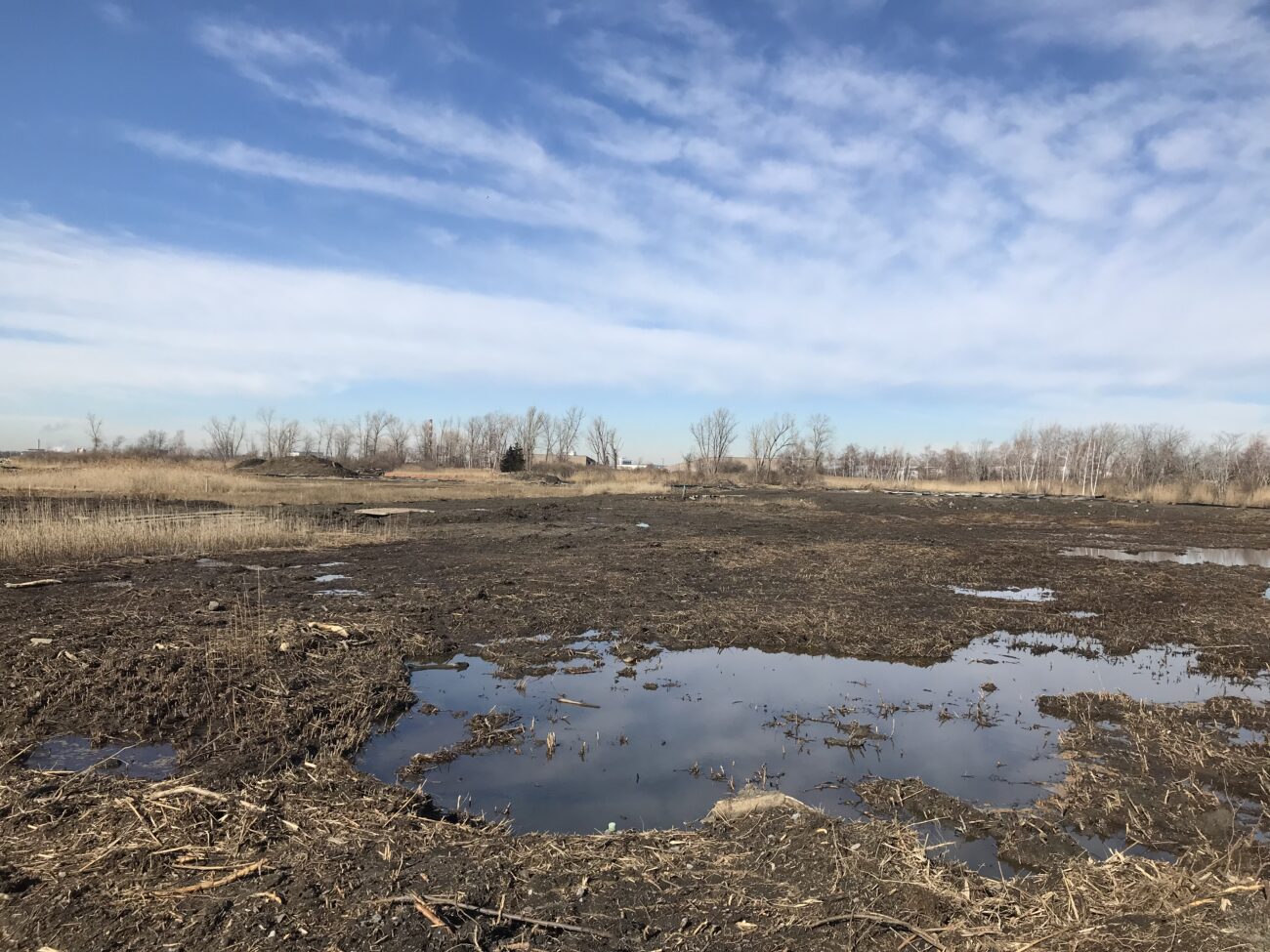


Monitoring immediately following the restoration revealed at least 12 saltmarsh sparrows returned to their annual nesting areas near the experimental hummocks, despite the disruptive activities taking place earlier in the year. University students will survey vegetation on the hummocks and throughout the restoration area, measuring and counting individual plants to see how different species grow at different elevations and in different types of soil, and to determine if additional plantings are needed. Audubon Connecticut will manage and control invasive plant species across the restoration area for three years, periodically removing and chemically treating the ever-persistent common reed. The project team will also monitor saltwater flooding of the marsh and carve runnels (short channels), if needed, to connect more areas to saltwater.
Molly Sperduto at molly_sperduto@fws.gov;
Corrie Folsom-O’Keefe cfolsom.okeefe@audubon.org;
Jack Matthias jack.matthias@audubon.org
Case Study
Project
Stratford, CT
Restoration of the Great Meadows Marsh
This project restored 46 acres of the Great Meadows Marsh in Connecticut that was degraded from dredge material that was dumped on site, poor drainage, and sea level rise. The marsh was also overrun with invasive plants and mosquitoes. A controlled fire was started to kill the invasive reeds growing in the marsh. Then a construction crew removed invasive plants and the dumped dredge material. Lastly, channels were carefully dug for tidal flushing which will allow the marsh to keep pace with sea level rise. Soil hummocks were constructed for Salt Marsh Sparrow habitat. Now the area continues to be monitored, assessed for resiliency, and provides a field for innovative solutions to be tested in.
Partners
Trustees: USFWS, NOAA, State of Connecticut; Project Partners: Audubon Connecticut, Town of Stratford
Mapper
Level of Effort:
Tree Equity Score
In cities across America, trees have historically been planted along race and class lines. Ensuring equitable tree cover across every neighborhood can help address social inequities so that all people can thrive. The map shows your city or town’s current Tree Equity Score and how it can be improved. Each score is calculated using a science-based approach and readily available data from a variety of sources.
Mapper
Level of Effort:
Tree Equity Score
In cities across America, trees have historically been planted along race and class lines. Ensuring equitable tree cover across every neighborhood can help address social inequities so that all people can thrive. The map shows your city or town’s current Tree Equity Score and how it can be improved. Each score is calculated using a science-based approach and readily available data from a variety of sources.
Plan
Level of Effort:
Rebuild by Design Atlas of Disaster: Connecticut
National Report with State-based County-level data detailing the experiences of communities as a result of climate change. State reports include eight maps that show where major disasters have occurred, where post-disaster support has been given, where the most socially vulnerable populations reside, and the energy reliability by utility area. It also provides county-level disaster data within State Assembly, Senate, and Congressional district boundaries.
Plan
Level of Effort:
Rebuild by Design Atlas of Disaster: Connecticut
National Report with State-based County-level data detailing the experiences of communities as a result of climate change. State reports include eight maps that show where major disasters have occurred, where post-disaster support has been given, where the most socially vulnerable populations reside, and the energy reliability by utility area. It also provides county-level disaster data within State Assembly, Senate, and Congressional district boundaries.
Mapper
Level of Effort:
NYS Disadvantaged Communities Map
This mapper, developed through the New York Climate Act, was developed by the State Climate Justice Working Group to identify disadvantaged communities to ensure that frontline and otherwise underserved communities benefit from the state’s historic transition to cleaner, greener sources of energy, reduced pollution and cleaner air, and economic opportunities. The interactive map identifies areas throughout the State that meet the disadvantaged community Criteria as defined by the Climate Justice Working Group.
Mapper
Level of Effort:
NYS Disadvantaged Communities Map
This mapper, developed through the New York Climate Act, was developed by the State Climate Justice Working Group to identify disadvantaged communities to ensure that frontline and otherwise underserved communities benefit from the state’s historic transition to cleaner, greener sources of energy, reduced pollution and cleaner air, and economic opportunities. The interactive map identifies areas throughout the State that meet the disadvantaged community Criteria as defined by the Climate Justice Working Group.
Guidance Tool
Level of Effort:
Climate Change and Extreme Heat
This booklet from the EPA and CDC summarizes why extreme heat is on the rise, how it might affect people, and outlines steps to prepare for extreme heat events to reduce health risks.
Guidance Tool
Level of Effort:
Climate Change and Extreme Heat
This booklet from the EPA and CDC summarizes why extreme heat is on the rise, how it might affect people, and outlines steps to prepare for extreme heat events to reduce health risks.
Mapper
Level of Effort:
Climate Change Vulnerability Index (CIRCA)
The CCVI combines built, social, and ecological factors to identify areas that are vulnerable to flooding and heat related impacts of climate change. These mapping tools can be used to view vulnerability at both a regional scale and at specific sites to see how factors are contributing.
Mapper
Level of Effort:
Climate Change Vulnerability Index (CIRCA)
The CCVI combines built, social, and ecological factors to identify areas that are vulnerable to flooding and heat related impacts of climate change. These mapping tools can be used to view vulnerability at both a regional scale and at specific sites to see how factors are contributing.
Mapper
Level of Effort:
FEMA Resilience Analysis and Planning Tool (RAPT)
RAPT provides access to important data and analysis tools to support your community before, during and after a disaster.
Mapper
Level of Effort:
FEMA Resilience Analysis and Planning Tool (RAPT)
RAPT provides access to important data and analysis tools to support your community before, during and after a disaster.
Mapper
Level of Effort:
Neighborhoods At Risk
Neighborhoods at Risk is an easy-to-use website with interactive maps, charts, and resources to help communities identify neighborhoods that may be more impacted by climate change. It shows where people may experience unequal impacts from flooding and extreme heat.
Mapper
Level of Effort:
Neighborhoods At Risk
Neighborhoods at Risk is an easy-to-use website with interactive maps, charts, and resources to help communities identify neighborhoods that may be more impacted by climate change. It shows where people may experience unequal impacts from flooding and extreme heat.
Guidance Tool
Level of Effort:
NOAA Digital Coast – Ecosystem Services
Healthy ecosystems provide a wide range of benefits, from recreational opportunities to storm surge protection. These benefits are often referred to as ecosystem services. Understanding how changes to the ecosystem may affect these benefits should play a role in the community’s decision making process. This page provides a guide to learning more and key NOAA Digital Coast resources useful for this task.
Guidance Tool
Level of Effort:
NOAA Digital Coast – Ecosystem Services
Healthy ecosystems provide a wide range of benefits, from recreational opportunities to storm surge protection. These benefits are often referred to as ecosystem services. Understanding how changes to the ecosystem may affect these benefits should play a role in the community’s decision making process. This page provides a guide to learning more and key NOAA Digital Coast resources useful for this task.
Mapper
Level of Effort:
NOAA Sea Level Rise Viewer
Use this web mapping tool to visualize community-level impacts from coastal flooding or sea level rise (up to 10 feet above average high tides). Photo simulations of how future flooding might impact local landmarks are also provided, as well as data related to water depth, connectivity, flood frequency, socio-economic vulnerability, wetland loss and migration, and mapping confidence.
Mapper
Level of Effort:
NOAA Sea Level Rise Viewer
Use this web mapping tool to visualize community-level impacts from coastal flooding or sea level rise (up to 10 feet above average high tides). Photo simulations of how future flooding might impact local landmarks are also provided, as well as data related to water depth, connectivity, flood frequency, socio-economic vulnerability, wetland loss and migration, and mapping confidence.
Guidance Tool
Level of Effort:
NYS Climate Smart Communities – Inclusive Community Engagement Primer
Inclusive community engagement is essential for successful environmental decision-making. The New York State Climate Smart Communities Program seeks to guide local governments in their community engagement efforts, particularly for inclusion of Disadvantaged Communities (DAC). Only through the leadership of those most affected by the climate crisis and environmental pollution can environmental and climate justice be achieved.
Guidance Tool
Level of Effort:
NYS Climate Smart Communities – Inclusive Community Engagement Primer
Inclusive community engagement is essential for successful environmental decision-making. The New York State Climate Smart Communities Program seeks to guide local governments in their community engagement efforts, particularly for inclusion of Disadvantaged Communities (DAC). Only through the leadership of those most affected by the climate crisis and environmental pollution can environmental and climate justice be achieved.
Guidance Tool
Level of Effort:
An Extreme Heat Toolkit for Connecticut Municipalities
Provides resources that help Connecticut’s municipal leaders fill gaps in local
extreme heat planning including
1. Communication templates
2. Cooling center best practices
3. A diverse collection of policy and planning actions
4. Advice on creating a heat response plan
Also provides Connecticut-specific information on how extreme heat impacts the
health of residents, especially vulnerable people, and extreme heat safety tips.
Guidance Tool
Level of Effort:
An Extreme Heat Toolkit for Connecticut Municipalities
Provides resources that help Connecticut’s municipal leaders fill gaps in local
extreme heat planning including
1. Communication templates
2. Cooling center best practices
3. A diverse collection of policy and planning actions
4. Advice on creating a heat response plan
Also provides Connecticut-specific information on how extreme heat impacts the
health of residents, especially vulnerable people, and extreme heat safety tips.
Website
Level of Effort:
Brownfield Coalition of the Northeast
A platform with resources by state for brownfield remediation, resilience, and sustainable redevelopment.
Website
Level of Effort:
Brownfield Coalition of the Northeast
A platform with resources by state for brownfield remediation, resilience, and sustainable redevelopment.
Guidance Tool
Level of Effort:
American Planning Association (APA) Equity in Zoning Policy Guide
This policy guide identifies specific ways in which the drafting, public engagement, application, mapping, and enforcement of zoning regulations can be changed to dismantle the barriers that perpetuate the separation of historically disadvantaged and vulnerable communities.
Guidance Tool
Level of Effort:
American Planning Association (APA) Equity in Zoning Policy Guide
This policy guide identifies specific ways in which the drafting, public engagement, application, mapping, and enforcement of zoning regulations can be changed to dismantle the barriers that perpetuate the separation of historically disadvantaged and vulnerable communities.
SRC Training
SRC Annual Bi-State Workshop 2023
The second annual Long Island Sound Bi-State Sustainable and Resilient Communities Workshop brought together nearly 200 people virtually on Dec. 7, 2023 to learn about a new Long Island Sound Resilience Resource Hub (launching in early 2024), hear from communities and groups around the Sound working on resilience planning, and consider pathways for updating codes and ordinances. Videos of the workshop’s six sessions are available on YouTube. They can be accessed below along with supporting documents.


SRC Training
SRC Annual Bi-State Workshop 2023
The second annual Long Island Sound Bi-State Sustainable and Resilient Communities Workshop brought together nearly 200 people virtually on Dec. 7, 2023 to learn about a new Long Island Sound Resilience Resource Hub (launching in early 2024), hear from communities and groups around the Sound working on resilience planning, and consider pathways for updating codes and ordinances. Videos of the workshop’s six sessions are available on YouTube. They can be accessed below along with supporting documents.
SRC Training
SRC Annual Bi-State Workshop 2022
The first annual Long Island Sound Bi-State Sustainable and Resilient Communities Workshop brought together more than 260 people virtually on Dec. 1, 2022 to learn about opportunities to increase the resilience of the Sound’s communities to climate change and other environmental threats. Interactive sessions included opportunities to learn more about the SRC Extension Professionals’ needs assessment findings and recommendations, the newly released Long Island Sound Resilience Grant Writing Assistance Program, and tips for success with Long Island Sound funding opportunities. Concurrent breakout sessions highlighted the work of partners related to shoreline planning and implementation, using green infrastructure for stormwater management, sustainable climate planning for relocation, and new sustainability/resilience tools available in both New York and Connecticut. Videos of the workshop’s six sessions are available on YouTube. They can be accessed below along with supporting documents.
SRC Training
SRC Annual Bi-State Workshop 2022
The first annual Long Island Sound Bi-State Sustainable and Resilient Communities Workshop brought together more than 260 people virtually on Dec. 1, 2022 to learn about opportunities to increase the resilience of the Sound’s communities to climate change and other environmental threats. Interactive sessions included opportunities to learn more about the SRC Extension Professionals’ needs assessment findings and recommendations, the newly released Long Island Sound Resilience Grant Writing Assistance Program, and tips for success with Long Island Sound funding opportunities. Concurrent breakout sessions highlighted the work of partners related to shoreline planning and implementation, using green infrastructure for stormwater management, sustainable climate planning for relocation, and new sustainability/resilience tools available in both New York and Connecticut. Videos of the workshop’s six sessions are available on YouTube. They can be accessed below along with supporting documents.
SRC Training
Steps to Resilience
This online information session held Sept. 19, and repeated Sept. 21, provides an introduction to resilience planning in the Long Island Sound region. It includes discussions on local climate impacts and projections, resilience planning strategies, and climate certification programs for both New York and Connecticut municipalities. In addition to the main presentation, videos of the Connecticut and New York breakout sessions can be accessed below. The presentations and other resource materials are available here.


SRC Training
Steps to Resilience
This online information session held Sept. 19, and repeated Sept. 21, provides an introduction to resilience planning in the Long Island Sound region. It includes discussions on local climate impacts and projections, resilience planning strategies, and climate certification programs for both New York and Connecticut municipalities. In addition to the main presentation, videos of the Connecticut and New York breakout sessions can be accessed below. The presentations and other resource materials are available here.