Resources for
garden
Case Study
Project
Hamden, CT
Town of Hamden’s Bioretention Project
The Town of Hamden’s Bioretention Project is the largest municipally owned rain garden in the state! Save the Sound, in partnership with the Town of Hamden, completed this large-scale rain garden project at Hamden Town Center Park to improve local water quality, restore habitat, and enhance community resilience. The project transformed approximately 2.5 acres of lawn into a functioning green infrastructure system that now manages runoff from an 88-acre urban watershed draining Dixwell Avenue and surrounding neighborhoods. Prior to the project, stormwater often overflowed directly into Pardee Brook and the Mill River, carrying pollutants and inundating the park.
The newly constructed rain garden was engineered with layers of soil, sand, and rock, and planted with more than 7,000 native grasses, flowers, and shrubs thanks to additional support from the Land Trust of Hamden. These plantings naturally filter pollutants such as fertilizers, road salt, and chemicals. Community volunteers helped complete the planting, strengthening local stewardship in the Town of Hamden.
A 40,000 sq ft rain garden was installed and included restoration of an acre of park land. The system now treats over 20 million gallons of stormwater annually, reducing flooding and restoring more natural hydrology to Shepard Brook and the Mill River. Beyond its environmental benefits, the project created valuable wildlife habitat and a welcoming green space for residents to enjoy. Adaptive management, more planting, and stewardship is planned for 2025 and 2026.
Nicole Davis, Save the Sound
Jim Sirch, Hamden Land Conservation Trust
Stephen White, PE, Town of Hamden Engineer/LTA
Case Study
Project
Hamden, CT
Town of Hamden’s Bioretention Project
The Town of Hamden’s Bioretention Project is the largest municipally owned rain garden in the state! Save the Sound, in partnership with the Town of Hamden, completed this large-scale rain garden project at Hamden Town Center Park to improve local water quality, restore habitat, and enhance community resilience. The project transformed approximately 2.5 acres of lawn into a functioning green infrastructure system that now manages runoff from an 88-acre urban watershed draining Dixwell Avenue and surrounding neighborhoods. Prior to the project, stormwater often overflowed directly into Pardee Brook and the Mill River, carrying pollutants and inundating the park.
The newly constructed rain garden was engineered with layers of soil, sand, and rock, and planted with more than 7,000 native grasses, flowers, and shrubs thanks to additional support from the Land Trust of Hamden. These plantings naturally filter pollutants such as fertilizers, road salt, and chemicals. Community volunteers helped complete the planting, strengthening local stewardship in the Town of Hamden.
Funding
: Jul 17 – Dec 17, 2025
Urban Green and Community Gardens Grant Program
The Urban Green and Community Gardens Grant Program provides funding assistance to develop or enhance urban green spaces for public enjoyment and/or environmental education. Promotion of open space in an urban setting may include, but may not be limited to, the development of a community garden or reclaiming and enhancing existing open space for the public’s use. Grants are awarded to projects that demonstrate the highest ability to benefit urban communities in close proximity to population centers.
Please review the Grant Program Eligibility Requirements. For questions on UGCG, contact Steven Perry: Steven.perry@ct.gov
Funding
: Jul 17 – Dec 17, 2025
Urban Green and Community Gardens Grant Program
The Urban Green and Community Gardens Grant Program provides funding assistance to develop or enhance urban green spaces for public enjoyment and/or environmental education. Promotion of open space in an urban setting may include, but may not be limited to, the development of a community garden or reclaiming and enhancing existing open space for the public’s use. Grants are awarded to projects that demonstrate the highest ability to benefit urban communities in close proximity to population centers.
Resource
Level of Effort:
Sound Ideas for Clean Water
Municipalities are encouraged to use the Sound Ideas for Clean Water brochure in their outreach efforts. The website and brochure outline steps that residents can take to reduce stormwater runoff that can cause pollution and flooding. For more information about this campaign, contact the outreach coordinator for your area (listed here).
Resource
Level of Effort:
Sound Ideas for Clean Water
Municipalities are encouraged to use the Sound Ideas for Clean Water brochure in their outreach efforts. The website and brochure outline steps that residents can take to reduce stormwater runoff that can cause pollution and flooding. For more information about this campaign, contact the outreach coordinator for your area (listed here).
Urban Green and Community Gardens Grant Program
The Department’s Urban Green and Community Gardens Grant Program provides funding assistance to develop or enhance urban open spaces for public enjoyment and/or environmental education.
Promotion of open space in an urban setting may include, but may not be limited to, the development of a community garden or reclaiming and enhancing existing open space for the public's use. Grants are awarded to projects that demonstrate the highest ability to benefit urban communities in close proximity to population centers. The UGCG opportunity is available to distressed municipalities, targeted investment communities, registered non-profit organizations, and municipalities that are an environmental justice community. Grant Program Eligibility Requirements: - Applicants must be a municipality; - Projects must take place within the territorial limits of a “Distressed Municipality” (CGS Sec. 32-9p) or a “Targeted Investment Community” (CGS Sec. 32-70); - Projects must take place on publicly-owned land; - This is a match share reimbursement program. Applicants must have funds available or funding sources available for 50% of the anticipated total project cost; - Projects must create, enhance, or restore a public urban community garden or green space; - Applicants must clearly show how the public will access and enjoy the project. If public access is not clearly shown, the project will not be evaluated or awarded a grant; - Projects cannot be for commercial activities (i.e., use of property for sale of goods or productions of goods for sale that generate a profit) or for active recreation development (i.e., dog parks, turf athletic fields, washing facilities, bathrooms, indoor recreational facilities, swimming pools); and - Projects cannot take place on land that was acquired by eminent domain.
Urban Green and Community Gardens Grant Program
The Department’s Urban Green and Community Gardens Grant Program provides funding assistance to develop or enhance urban open spaces for public enjoyment and/or environmental education.
Case Study
Project
Norwalk, CT
Webster Street Parking Lot Green Infrastructure Project
In 2019, the City of Norwalk secured a LIS Future Fund grant to install green infrastructure in the Webster Street Parking to reduce the impacts of stormwater on the Norwalk River and Harbor and mitigate local flooding of surrounding businesses through the installation of four different types of infiltration and bio-retention structures:
1) Underground infiltration systems.
2) Retention basins and curb inlet planters in eight different areas.
3) Porous pavement with storage in two areas.
4) Infiltration gutters and tree filters in two other areas.
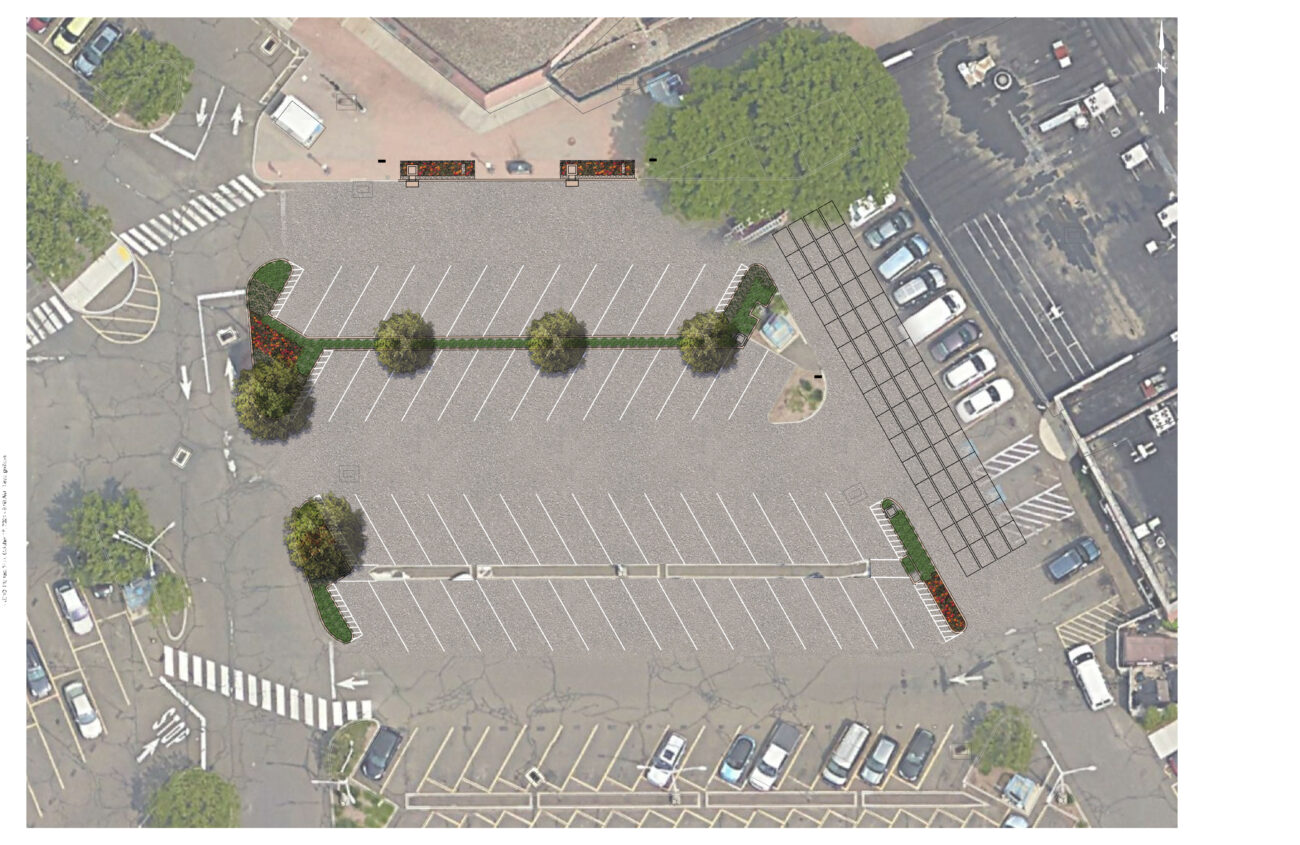
The project is estimated to remove 12 lbs. of nitrogen and preventing over 6 million gallons of stormwater from entering Norwalk Harbor annually. Since it's installation, the site has not experienced any flooding incidents (as of 2024), indicating that it seems to be functioning well.
Bryan Lutz
Assistant Director of Parking
blutz@norwalkct.gov; 203-854-7253
Case Study
Project
Norwalk, CT
Webster Street Parking Lot Green Infrastructure Project
In 2019, the City of Norwalk secured a LIS Future Fund grant to install green infrastructure in the Webster Street Parking to reduce the impacts of stormwater on the Norwalk River and Harbor and mitigate local flooding of surrounding businesses through the installation of four different types of infiltration and bio-retention structures:
1) Underground infiltration systems.
2) Retention basins and curb inlet planters in eight different areas.
3) Porous pavement with storage in two areas.
4) Infiltration gutters and tree filters in two other areas.