

Resources for
Rain gardens
Funding
: Feb 6 – Mar 17, 2026
$1,000 - $4,000
Grow Grants Program
The New England Grassroots Environment Fund awards small grants in support of grassroots efforts and community-based environmental work in New England. The GROW GRANTS program is actively accepting applications from grassroots groups across New England. These grants fund small, volunteer-driven groups in New England working on issues including food access, immigrant support, climate resilience, youth work, mutual aid, and more. This program is geared toward groups with experience organizing in their community and have at least THREE leaders who are actively involved in group decision-making. Grants support groups to deepen their work by further developing a community vision, lowering barriers to participation, identifying new stakeholders, and working to bring more voices and lived experiences into core decision-making processes.
Grow grants prioritize support for community groups who represent a broad range of voices in their community and who are not being reached by other funders. The Grassroots Fund interprets the word 'environment' broadly and provides funding for a wide range of activities.
Funding
: Feb 6 – Mar 17, 2026
$1,000 - $4,000
Grow Grants Program
The New England Grassroots Environment Fund awards small grants in support of grassroots efforts and community-based environmental work in New England. The GROW GRANTS program is actively accepting applications from grassroots groups across New England. These grants fund small, volunteer-driven groups in New England working on issues including food access, immigrant support, climate resilience, youth work, mutual aid, and more. This program is geared toward groups with experience organizing in their community and have at least THREE leaders who are actively involved in group decision-making. Grants support groups to deepen their work by further developing a community vision, lowering barriers to participation, identifying new stakeholders, and working to bring more voices and lived experiences into core decision-making processes.
Funding
: Oct 1 – Dec 16, 2025
$100K - $1.5M
CT DEEP Long Island Sound Ecosystems Grant
The Connecticut Department of Energy and Environmental Protection’s (DEEP’s) Land and Water Resources Division requests proposals for the new CT DEEP Long Island Sound Ecosystems Grant, made possible by financial support provided by the Long Island Sound Partnership from the U.S. EPA. There are two primary goals of the program: 1) to promote large-scale habitat restoration and enhance restoration planning, while also helping coastal communities and ecosystems adapt to changing environmental conditions; and 2) to further promote the application of green stormwater infrastructure techniques to reduce nonpoint source pollution, improving water resource quality.
There is approximately $7 million available, and no match is required. Eligible projects include: 1) Habitat Restoration (planning/engineering/design and construction for habitat restoration projects); and 2) Green Stormwater Infrastructure (planning/engineering/design and construction for green stormwater infrastructure projects).
Funding
: Oct 1 – Dec 16, 2025
$100K - $1.5M
CT DEEP Long Island Sound Ecosystems Grant
The Connecticut Department of Energy and Environmental Protection’s (DEEP’s) Land and Water Resources Division requests proposals for the new CT DEEP Long Island Sound Ecosystems Grant, made possible by financial support provided by the Long Island Sound Partnership from the U.S. EPA. There are two primary goals of the program: 1) to promote large-scale habitat restoration and enhance restoration planning, while also helping coastal communities and ecosystems adapt to changing environmental conditions; and 2) to further promote the application of green stormwater infrastructure techniques to reduce nonpoint source pollution, improving water resource quality.
Urban Green and Community Gardens Grant Program
The Urban Green and Community Gardens Grant Program provides funding assistance to develop or enhance urban green spaces for public enjoyment and/or environmental education. Promotion of open space in an urban setting may include, but may not be limited to, the development of a community garden or reclaiming and enhancing existing open space for the public’s use. Grants are awarded to projects that demonstrate the highest ability to benefit urban communities in close proximity to population centers.
Please review the Grant Program Eligibility Requirements. For questions on UGCG, contact Cameron Clegg: Cameron.clegg@ct.gov
Urban Green and Community Gardens Grant Program
The Urban Green and Community Gardens Grant Program provides funding assistance to develop or enhance urban green spaces for public enjoyment and/or environmental education. Promotion of open space in an urban setting may include, but may not be limited to, the development of a community garden or reclaiming and enhancing existing open space for the public’s use. Grants are awarded to projects that demonstrate the highest ability to benefit urban communities in close proximity to population centers.
Resource
Level of Effort:
Green Stormwater Infrastructure Workbook
This workbook made by Groundwork Bridgeport provides a thorough but accessible introduction to green stormwater infrastructure. The workbook explains the issues that green infrastructure can help solve, introduces several green infrastructure methods, and then provides definitions, explains why each is uses, and details how to build them.
Resource
Level of Effort:
Green Stormwater Infrastructure Workbook
This workbook made by Groundwork Bridgeport provides a thorough but accessible introduction to green stormwater infrastructure. The workbook explains the issues that green infrastructure can help solve, introduces several green infrastructure methods, and then provides definitions, explains why each is uses, and details how to build them.
Funding
: Jul 28, 2026
$500 - $1,000
Seed Grants Program
Awards small grants in support of grassroots efforts and community-based environmental work in New England. The Grassroots Fund utilizes participatory grantmaking to move resources to New England grassroots groups working at the intersections of Environmental Justice. The program is geared toward groups who have some experience implementing a project in their community. Grants support groups to deepen their work by further developing a community vision, lowering barriers to participation, identifying new stakeholders, and working to bring more voices and lived experiences into core decision-making processes.
The Seed grant program is geared towards groups launching new projects or starting to significantly change the direction of an existing project. Most often, groups have been working on the project less than a year and usually don't yet have much direct experience with implementing the idea. The Grassroots Fund interprets the word 'environment' broadly and provides funding for a wide range of activities.
Funding
: Jul 28, 2026
$500 - $1,000
Seed Grants Program
Awards small grants in support of grassroots efforts and community-based environmental work in New England. The Grassroots Fund utilizes participatory grantmaking to move resources to New England grassroots groups working at the intersections of Environmental Justice. The program is geared toward groups who have some experience implementing a project in their community. Grants support groups to deepen their work by further developing a community vision, lowering barriers to participation, identifying new stakeholders, and working to bring more voices and lived experiences into core decision-making processes.
Funding
: Oct 12 – Dec 15, 2023
$800M total available
FY23 Flood Mitigation Assistance Grant Program – New York
The Flood Mitigation Assistance grant program is a competitive program that provides funding to states, federally recognized Tribal governments, U.S. territories, and local governments. Since the National Flood Insurance Reform Act of 1994 was signed into law, funds are used for projects that reduce or eliminate the risk of repetitive flood damage to buildings insured by the National Flood Insurance Program.
The Flood Mitigation Assistance grant program funds activities and projects, including: - Capability and Capacity Building Activities - Mitigation Plans - Technical Assistance by States to Communities - Project Scoping - Localized Flood Risk Reduction Projects - Individual Flood Mitigation Projects - Management Costs Additional capability and capacity building activities also may be funded, including: - Partnership Development to Conduct Eligible Mitigation Activities - Enhancing Local Floodplain Management - Severe Repetitive Loss/Repetitive Loss Strategy Development - Other Capability and Capacity Building Activities
Funding
: Oct 12 – Dec 15, 2023
$800M total available
FY23 Flood Mitigation Assistance Grant Program – New York
The Flood Mitigation Assistance grant program is a competitive program that provides funding to states, federally recognized Tribal governments, U.S. territories, and local governments. Since the National Flood Insurance Reform Act of 1994 was signed into law, funds are used for projects that reduce or eliminate the risk of repetitive flood damage to buildings insured by the National Flood Insurance Program.
Funding
: Mar 9 – May 1, 2026
$2,000-$15,000
Nassau County Soil and Water Conservation District – Part C Funding
The Nassau County Soil and Water Conservation District (the District) is seeking to fund a limited number of mission-aligned projects during 2026. Eligible applicants include local governments in Nassau County and not-for-profit organizations. Applications are due by May 01, 2026, and awards are expected to be made in May 2026. Projects must be completed by May 31, 2027. While these dates and the below amounts are not expected to change, funding amounts and timelines are subject to the District’s own receipt of funding from the New York State Soil and Water Conservation Committee.
Projects must meet one or more of the following criteria in Nassau County:
-
- Conserve or improve soils
- Improve water quality of our groundwater and/or surface water
- Control and prevent soil erosion and/or prevent floodwater and sediment damages
- Conservation, development, utilization, and disposal of water
- Preserve, increase, or improve natural resources including trees and plants
- Control or eliminate invasive plants or wildlife
- Control and abate NPS water pollution
- Preserve wildlife
Funding
: Mar 9 – May 1, 2026
$2,000-$15,000
Nassau County Soil and Water Conservation District – Part C Funding
The Nassau County Soil and Water Conservation District (the District) is seeking to fund a limited number of mission-aligned projects during 2026. Eligible applicants include local governments in Nassau County and not-for-profit organizations. Applications are due by May 01, 2026, and awards are expected to be made in May 2026. Projects must be completed by May 31, 2027. While these dates and the below amounts are not expected to change, funding amounts and timelines are subject to the District’s own receipt of funding from the New York State Soil and Water Conservation Committee.
Projects must meet one or more of the following criteria in Nassau County:
-
- Conserve or improve soils
- Improve water quality of our groundwater and/or surface water
- Control and prevent soil erosion and/or prevent floodwater and sediment damages
- Conservation, development, utilization, and disposal of water
- Preserve, increase, or improve natural resources including trees and plants
- Control or eliminate invasive plants or wildlife
- Control and abate NPS water pollution
- Preserve wildlife
Funding
: Apr 20 – Jun 12, 2026
$200,000-$500,000
Suffolk County Water Quality Protection and Restoration Program and Land Stewardship Initiative (WQPRP)
The Water Quality Protection and Restoration Program and Land Stewardship Initiatives (WQPRP) is a grant program funded under the Suffolk County ¼% Drinking Water Protection Program. Grant funding is available to municipalities and non-profit organizations for both planning/design and implementation projects to protect and restore the County’s groundwater and surface water resources. The following categories of projects are eligible for funding under the WQPRP: 1) Nonpoint Source Abatement and Control & Pollution Prevention Initiatives, 2) Habitat Restoration, Reclamation, and Connectivity, 3) Land Stewardship Initiatives, 4) No-Discharge Zone Implementation, and 5) Education and Outreach.
Priority project types for the 2026 funding round include: 1) Conventional or innovative structural or nonstructural stormwater abatement or prevention, 2) Planning and implementation of surface water outfall reduction initiatives, 3) Establishment and/or testing of innovative and alternative on-site sanitary waste disposal systems, 4) Wetlands preservation and restoration/integrated marsh management, 5) Nonstructural shore stabilization and restoration projects including native plantings and other nearshore vegetation preservation/restoration, 6) Upgrading undersized culverts and restoring stream corridors to provide passage for eel, alewife, and river otters, 7) Preservation and restoration initiatives targeted at protection of rare, threatened, or endangered species, or other priority species or critical natural resource areas, and 8) Best management practice implementation to prevent pollution at commercial, industrial, and/or residential sites.
Funding
: Apr 20 – Jun 12, 2026
$200,000-$500,000
Suffolk County Water Quality Protection and Restoration Program and Land Stewardship Initiative (WQPRP)
The Water Quality Protection and Restoration Program and Land Stewardship Initiatives (WQPRP) is a grant program funded under the Suffolk County ¼% Drinking Water Protection Program. Grant funding is available to municipalities and non-profit organizations for both planning/design and implementation projects to protect and restore the County’s groundwater and surface water resources. The following categories of projects are eligible for funding under the WQPRP: 1) Nonpoint Source Abatement and Control & Pollution Prevention Initiatives, 2) Habitat Restoration, Reclamation, and Connectivity, 3) Land Stewardship Initiatives, 4) No-Discharge Zone Implementation, and 5) Education and Outreach.
Funding
: May 7 – Aug 13, 2025
$50,000-$200,000
NYSDEC Community Impact Grant Program
$5.9 million is now available for community-based organizations for projects that address exposure of communities to multiple environmental harms and risks. Eligible applicants are Tribal Organizations and not-for-profit community-based organizations having 501(c)(3) status, or a community-based organization may partner with a NFP that will serve as their fiscal sponsor. Eligible projects must address a community’s exposure to multiple environmental harms and risks and include a new research component that will be used to expand the knowledge of the affected community.
Funding
: May 7 – Aug 13, 2025
$50,000-$200,000
NYSDEC Community Impact Grant Program
$5.9 million is now available for community-based organizations for projects that address exposure of communities to multiple environmental harms and risks. Eligible applicants are Tribal Organizations and not-for-profit community-based organizations having 501(c)(3) status, or a community-based organization may partner with a NFP that will serve as their fiscal sponsor. Eligible projects must address a community’s exposure to multiple environmental harms and risks and include a new research component that will be used to expand the knowledge of the affected community.
Funding
: Jun 1 – Jul 31, 2026
$75K-$2M
NYSDOS Local Waterfront Revitalization Program (LWRP)
The NYS Department of State (NYSDOS) Local Waterfront Revitalization Program (LWRP) offers local governments the opportunity to participate in the State’s Coastal Management Program on a voluntary basis. Municipalities are encouraged to prepare, adopt, and implement Local Waterfront Revitalization Programs which refine and implement the State’s Coastal Management Program. Preparing or Updating a Local Waterfront Revitalization Program (LWRP), including Updating an LWRP to be More Resilient to Climate Risks; Preparing an LWRP Component, including a Watershed Management Plan; Implementing an LWRP or a completed LWRP Component.
For general planning, such as preparation of an LWRP or Watershed Management Plan, an applicant must be a village, town, city located along New York’s coast or a designated inland waterway, or a county or regional planning council with the written consent and acting on behalf of one or more eligible villages, towns, or cities. For project-specific planning, feasibility, design, and/or marketing, the eligible applicant must be currently preparing or have an approved LWRP or LWRP Component and the proposed project must be located within the plan boundary. For construction projects, the eligible applicant must have an approved or substantially complete LWRP or relevant completed LWRP Component and the proposed project must be located within the plan boundary. Applications are accepted annually through the Consolidated Funding Application (CFA). Priority will be given to implementation projects that prioritize in their design accessibility for people of all ages and physical, cognitive, and sensory abilities. 2026 Program Priorities – Accessible Waterfronts. Projects may include ADA-accessible: •Entryways •Walkways •Comfort stations •Boat launches •Site furnishings such as seating and tables that accommodate wheelchair users •Age-friendly features •Amenities appropriate to the varied capabilities of all uses including individuals with cognitive, communicative, social/emotional and sensory disabilities, and multi-lingual or pictorial wayfinding. •For more background, see DOS’ “ADA Compliance & Beyond in Community Design”
Funding
: Jun 1 – Jul 31, 2026
$75K-$2M
NYSDOS Local Waterfront Revitalization Program (LWRP)
The NYS Department of State (NYSDOS) Local Waterfront Revitalization Program (LWRP) offers local governments the opportunity to participate in the State’s Coastal Management Program on a voluntary basis. Municipalities are encouraged to prepare, adopt, and implement Local Waterfront Revitalization Programs which refine and implement the State’s Coastal Management Program. Preparing or Updating a Local Waterfront Revitalization Program (LWRP), including Updating an LWRP to be More Resilient to Climate Risks; Preparing an LWRP Component, including a Watershed Management Plan; Implementing an LWRP or a completed LWRP Component.
Funding
: Jun 1 – Jul 31, 2026
NYSDEC Water Quality Improvement Project (WQIP) Program
The NYS Department of Environmental Conservation (NYSDEC) WQIP funds implementation projects to improve water quality or habitat, promote flood risk reduction, restoration, and enhanced flood and climate resiliency, or protect a drinking water source.
Applications are accepted annually through the Consolidated Funding Application (CFA). Municipalities* (including Indian Nations) are eligible for all project types. Soil and Water Conservation Districts are eligible for all project types except Wastewater Treatment Improvement, Dam Safety Repair/Rehabilitation and Removal, and Landfill Leachate Treatment. 501 (c)(3) Not-for-Profit Corporations are eligible for Land Acquisition for Source Water Protection, Dam Safety Repair/Rehabilitation and Removal, Aquatic Connectivity, Marine District Habitat Restoration, and Fish and Wildlife Habitat Restoration and Enhancement only.
Funding
: Jun 1 – Jul 31, 2026
NYSDEC Water Quality Improvement Project (WQIP) Program
The NYS Department of Environmental Conservation (NYSDEC) WQIP funds implementation projects to improve water quality or habitat, promote flood risk reduction, restoration, and enhanced flood and climate resiliency, or protect a drinking water source.
Funding
: Jun 1 – Jul 31, 2026
Max award of $50-75K
NYSDEC Non-Agricultural Nonpoint Source Planning and Municipal Separate Storm Sewer System (MS4) Mapping Grant (NPG)
The Non-Agricultural Nonpoint Source and MS4 Planning Grant (NPG) is a competitive, reimbursement grant program that funds planning reports for nonpoint source water quality improvement projects and mapping of Municipal Separate Storm Sewer Systems (MS4s). The program aims to prepare nonpoint source projects for construction and application for implementation funding. Grant funding will also be available for regulated MS4 Operators to complete comprehensive stormwater system maps and stormwater management program planning.
Applications are accepted annually through the Consolidated Funding Application (CFA). Nonpoint Source Planning Reports: Municipalities*; including Indian Nations; Soil and Water Conservation Districts (except for Decentralized Wastewater Treatment Facilities for Failing On-Site Treatment Systems) MS4 Mapping and Stormwater Management Program Planning: Municipalities regulated by the MS4 General Permit; Soil and Water Conservation Districts on behalf of regulated MS4 Operators *For the purposes of this grant, "municipality" means a local public authority or public benefit corporation, a county, city, town, village, school district, supervisory district, district corporation, improvement district within a county, city, town or village, or Indian nation or tribe recognized by the state or the United States with a reservation wholly or partly within the boundaries of New York State, or any combination thereof.
Funding
: Jun 1 – Jul 31, 2026
Max award of $50-75K
NYSDEC Non-Agricultural Nonpoint Source Planning and Municipal Separate Storm Sewer System (MS4) Mapping Grant (NPG)
The Non-Agricultural Nonpoint Source and MS4 Planning Grant (NPG) is a competitive, reimbursement grant program that funds planning reports for nonpoint source water quality improvement projects and mapping of Municipal Separate Storm Sewer Systems (MS4s). The program aims to prepare nonpoint source projects for construction and application for implementation funding. Grant funding will also be available for regulated MS4 Operators to complete comprehensive stormwater system maps and stormwater management program planning.
Funding
: Jul 28 – May 20, 2025
$500
Long Island Garden Rewards Program
This program provides financial rewards for homeowners on Long Island who add green alternatives to their properties that reduce stormwater and nitrogen pollution entering Long Island Sound. Homeowners can be reimbursed for installing rain barrels, rain gardens, or native plantings on their properties. Application opened April 22nd, 2025 for this current season. Funds are limited and available on a first come, first serve basis.
Due to the high participation in the program, as of May 20, 2025 the Long Island Garden Rewards Program is closed. Thank you to all who participated. Check back for when applications open again!
Funding
: Jul 28 – May 20, 2025
$500
Long Island Garden Rewards Program
This program provides financial rewards for homeowners on Long Island who add green alternatives to their properties that reduce stormwater and nitrogen pollution entering Long Island Sound. Homeowners can be reimbursed for installing rain barrels, rain gardens, or native plantings on their properties. Application opened April 22nd, 2025 for this current season. Funds are limited and available on a first come, first serve basis.
Due to the high participation in the program, as of May 20, 2025 the Long Island Garden Rewards Program is closed. Thank you to all who participated. Check back for when applications open again!
Funding
: Jan 1 – Apr 15, 2023
~$1,500
EPOC 2022 Environmental Grant Program
The EPOC Grant Program provides non-profit and not-for-profit environmental advocacy groups, community based groups and environmental education organizations funding for local projects that benefit the environment.
Funding
: Jan 1 – Apr 15, 2023
~$1,500
EPOC 2022 Environmental Grant Program
The EPOC Grant Program provides non-profit and not-for-profit environmental advocacy groups, community based groups and environmental education organizations funding for local projects that benefit the environment.
Funding
: Nov 20 – Jan 17, 2025
varies by grant type
CT DEEP Clean Water Fund Priority List
Through the Clean Water Fund, CT DEEP is able to provide grants and low-interest loans for infrastructure projects to meet clean water needs such as addressing combined sewer overflows, nutrient pollution, wastewater collection infrastructure needs, and projects using green infrastructure and addressing resiliency. See the Priority List Memo and Project Request Form for updates.
DEEP is preparing the Clean Water Fund Priority List for FY 2026 and FY 2027 (7/1/25 – 6/30/27) and is requesting information on any planning, design, or construction projects you intend to start during the time period listed above. For FY26-27, note that there is a Green Components section for identifying components that will either provide a reduction in energy consumption, reduce inflow and infiltration, or install various types of green infrastructure.
Funding
: Nov 20 – Jan 17, 2025
varies by grant type
CT DEEP Clean Water Fund Priority List
Through the Clean Water Fund, CT DEEP is able to provide grants and low-interest loans for infrastructure projects to meet clean water needs such as addressing combined sewer overflows, nutrient pollution, wastewater collection infrastructure needs, and projects using green infrastructure and addressing resiliency. See the Priority List Memo and Project Request Form for updates.
Funding
: Aug 22 – Dec 2, 2024
Urban Green and Community Gardens Grant Program
The Department’s Urban Green and Community Gardens Grant Program provides funding assistance to develop or enhance urban open spaces for public enjoyment and/or environmental education.
Promotion of open space in an urban setting may include, but may not be limited to, the development of a community garden or reclaiming and enhancing existing open space for the public's use. Grants are awarded to projects that demonstrate the highest ability to benefit urban communities in close proximity to population centers. The UGCG opportunity is available to distressed municipalities, targeted investment communities, registered non-profit organizations, and municipalities that are an environmental justice community. Grant Program Eligibility Requirements: - Applicants must be a municipality; - Projects must take place within the territorial limits of a “Distressed Municipality” (CGS Sec. 32-9p) or a “Targeted Investment Community” (CGS Sec. 32-70); - Projects must take place on publicly-owned land; - This is a match share reimbursement program. Applicants must have funds available or funding sources available for 50% of the anticipated total project cost; - Projects must create, enhance, or restore a public urban community garden or green space; - Applicants must clearly show how the public will access and enjoy the project. If public access is not clearly shown, the project will not be evaluated or awarded a grant; - Projects cannot be for commercial activities (i.e., use of property for sale of goods or productions of goods for sale that generate a profit) or for active recreation development (i.e., dog parks, turf athletic fields, washing facilities, bathrooms, indoor recreational facilities, swimming pools); and - Projects cannot take place on land that was acquired by eminent domain.
Funding
: Aug 22 – Dec 2, 2024
Urban Green and Community Gardens Grant Program
The Department’s Urban Green and Community Gardens Grant Program provides funding assistance to develop or enhance urban open spaces for public enjoyment and/or environmental education.
Funding
: Mar 20 – Sep 17, 2024
$1,000 - $4,000
Grow Grants Program
Awards small grants in support of grassroots efforts and community-based environmental work in New England. The Grassroots Fund utilizes participatory grantmaking to move resources to New England grassroots groups working at the intersections of Environmental Justice. The program is geared toward groups who have some experience implementing a project in their community. Grants support groups to deepen their work by further developing a community vision, lowering barriers to participation, identifying new stakeholders, and working to bring more voices and lived experiences into core decision-making processes.
Grow grants prioritize support for community groups who represent a broad range of voices in their community and who are not being reached by other funders. The Grassroots Fund interprets the word 'environment' broadly and provides funding for a wide range of activities.
Funding
: Mar 20 – Sep 17, 2024
$1,000 - $4,000
Grow Grants Program
Awards small grants in support of grassroots efforts and community-based environmental work in New England. The Grassroots Fund utilizes participatory grantmaking to move resources to New England grassroots groups working at the intersections of Environmental Justice. The program is geared toward groups who have some experience implementing a project in their community. Grants support groups to deepen their work by further developing a community vision, lowering barriers to participation, identifying new stakeholders, and working to bring more voices and lived experiences into core decision-making processes.
Funding
: Dec 3 – Jul 17, 2026
up to $600M available
FY24 FEMA Flood Mitigation Assistance Grant Program – Connecticut
The Flood Mitigation Assistance (FMA) is an annual Hazard Mitigation Grant Program that provides funds for projects to reduce or eliminate risk of flood damage to buildings that are insured under the National Flood Insurance Program (NFIP).
All sub-applications must be submitted to the Connecticut Division of Emergency Management and Homeland Security (CT DEMHS) via the FEMA GO system no later than July 17, 2026.
Eligible Federal Activities include: 1) Community Flood Mitigation Projects; 2) Plans that focus on reducing impacts of flooding (max of $25,000 per local plan); 3) Mitigation of Severe Repetitive Loss (SRL) properties as defined by FEMA; 4) Mitigation of Repetitive Loss (RL) properties as defined by FEMA. Sub-applicants must have a FEMA approved Hazard Mitigation Plan in place
Funding
: Dec 3 – Jul 17, 2026
up to $600M available
FY24 FEMA Flood Mitigation Assistance Grant Program – Connecticut
The Flood Mitigation Assistance (FMA) is an annual Hazard Mitigation Grant Program that provides funds for projects to reduce or eliminate risk of flood damage to buildings that are insured under the National Flood Insurance Program (NFIP).
All sub-applications must be submitted to the Connecticut Division of Emergency Management and Homeland Security (CT DEMHS) via the FEMA GO system no later than July 17, 2026.
Funding
: Mar 10 – May 19, 2026
$50K - $2M
Long Island Sound Futures Fund 2026
The Long Island Sound Futures Fund (LISFF) is seeking proposals to restore the health and living resources of Long Island Sound (Sound). The program is managed by National Fish and Wildlife Foundation (NFWF) in collaboration with the U.S. Environmental Protection Agency (EPA) and the Long Island Sound Partnership (LIS Partnership). Major funding is from EPA through the LIS Partnership.
There are multiple funding categories under the LISFF each with a different range of grant funding. 1) Implementation Projects: $50,000 to $2 million for projects with particularly high environmental community benefit relative to cost, including: a) Water quality, habitat restoration and resilience projects; b) Projects with the greatest promise to demonstrate, influence, pilot, innovate and/or provide a proof of concept with the aim of accelerating local and regional water quality improvements, natural resource restoration, coastal resilience and/or community and public outreach/engagement. 2) Design/Planning Projects: $50,000 to $500,000 for: a) Water quality or habitat restoration projects; b) Watershed plans; c) Community resilience/sustainability/natural hazard mitigation plans. 3) Outreach, Education and Public Participation Projects: $50,000 to $500,000.
Funding
: Mar 10 – May 19, 2026
$50K - $2M
Long Island Sound Futures Fund 2026
The Long Island Sound Futures Fund (LISFF) is seeking proposals to restore the health and living resources of Long Island Sound (Sound). The program is managed by National Fish and Wildlife Foundation (NFWF) in collaboration with the U.S. Environmental Protection Agency (EPA) and the Long Island Sound Partnership (LIS Partnership). Major funding is from EPA through the LIS Partnership.
$5M min (small communities) or $20M min (large communities)
Water Infrastructure Finance and Innovation Act (WIFIA)
The WIFIA program accelerates investment in our nation’s water infrastructure by providing long-term, low-cost supplemental loans for regionally and nationally significant projects. Managed out of USEPA Headquarters. Projects eligible for CWSRF would also be eligible for this loan.
Like a bank, the WIFIA program has funding available on an ongoing basis. This allows prospective borrowers to request financing on their schedule. A rolling selection process allows EPA to provide year-round access to WIFIA funding and quicker selection decisions to prospective borrowers. In addition, under this iterative, rolling selection process, the WIFIA program can provide technical assistance to prospective borrowers, particularly disadvantaged and small communities, that need support to complete their Letter of Interest (LOI) package. The WIFIA program can fund development and implementation activities for a wide variety of drinking water, wastewater, and stormwater infrastructure projects, including: - Drinking water and wastewater treatment plant projects - Drinking water, wastewater, and stormwater distribution and conveyance system projects - Nonpoint source management and national estuary program projects - Construction, repair, and replacement of decentralized wastewater treatment systems - Stormwater management projects - Green infrastructure projects - Source water protection projects - Enhanced energy efficiency projects at drinking water and wastewater facilities - Brackish or seawater desalination, aquifer recharge, alternative water supply, and water recycling projects - Drought prevention, reduction, or mitigation projects - Acquisition of property if it is integral to the project or will mitigate the environmental impact of a project - A combination of eligible projects secured by a common security pledge or submitted under one application by an SRF program
$5M min (small communities) or $20M min (large communities)
Water Infrastructure Finance and Innovation Act (WIFIA)
The WIFIA program accelerates investment in our nation’s water infrastructure by providing long-term, low-cost supplemental loans for regionally and nationally significant projects. Managed out of USEPA Headquarters. Projects eligible for CWSRF would also be eligible for this loan.
Case Study
Plan
East Haddam, CT
East Haddam Community Resilience Building Summary of Findings
With support from the Nature Conservancy and Sustainable CT, East Haddam organized a Community Resilience Building process and workshop, the results of which were compiled into this summary. The team engaged with community members to determine the present hazards and vulnerabilities and identify resilient solutions.
Case Study
Plan
East Haddam, CT
East Haddam Community Resilience Building Summary of Findings
With support from the Nature Conservancy and Sustainable CT, East Haddam organized a Community Resilience Building process and workshop, the results of which were compiled into this summary. The team engaged with community members to determine the present hazards and vulnerabilities and identify resilient solutions.
Case Study
Project
Rain Gardens on Western Waterfront
Friends of the Bay installed two raingardens at the Western Waterfront, which was done in October 2021 with the help of volunteers.


The main ways Friends of the Bay measured outcomes was by observing the absorption of water into the gardens after rain storms and seeing pollinators just a day or two after planting. The biggest benefit though was the engagement by the Town of Oyster Bay in fixing another rain garden at the Western Waterfront with help from a grant they received as well as plans to install more rain gardens in the area. Friends of the Bay was also able to engage a corps. of dedicated volunteers from the community. The long-term impact of the work is the continuation of stormwater runoff mitigation to the bay.
Friends of the Bay, info@friendsofthebay.org
Case Study
Project
Rain Gardens on Western Waterfront
Friends of the Bay installed two raingardens at the Western Waterfront, which was done in October 2021 with the help of volunteers.
Case Study
Project
New Haven, CT
New Haven Bioswales
The City of New Haven has installed 286 right-of-way bioswales throughout the city as part of a multifaceted approach to reducing flooding in the downtown area. Right-of-way bioswales are engineered planted areas that are located on sidewalks. They are designed to capture and infiltrate stormwater into the ground that would otherwise directly enter a storm drain. These bioswales were installed as the result of various partnerships and funding opportunities related to flood prevention, localized drainage solutions, combined sewer overflow mitigation, research, and traffic calming projects.
Project Lead
City of New Haven, Dept of Engineering
Project Partners
Urban Resources Initiative, EMERGE Inc., Save the Sound, Yale School of the Environment, and Quinnipiac University, among others.

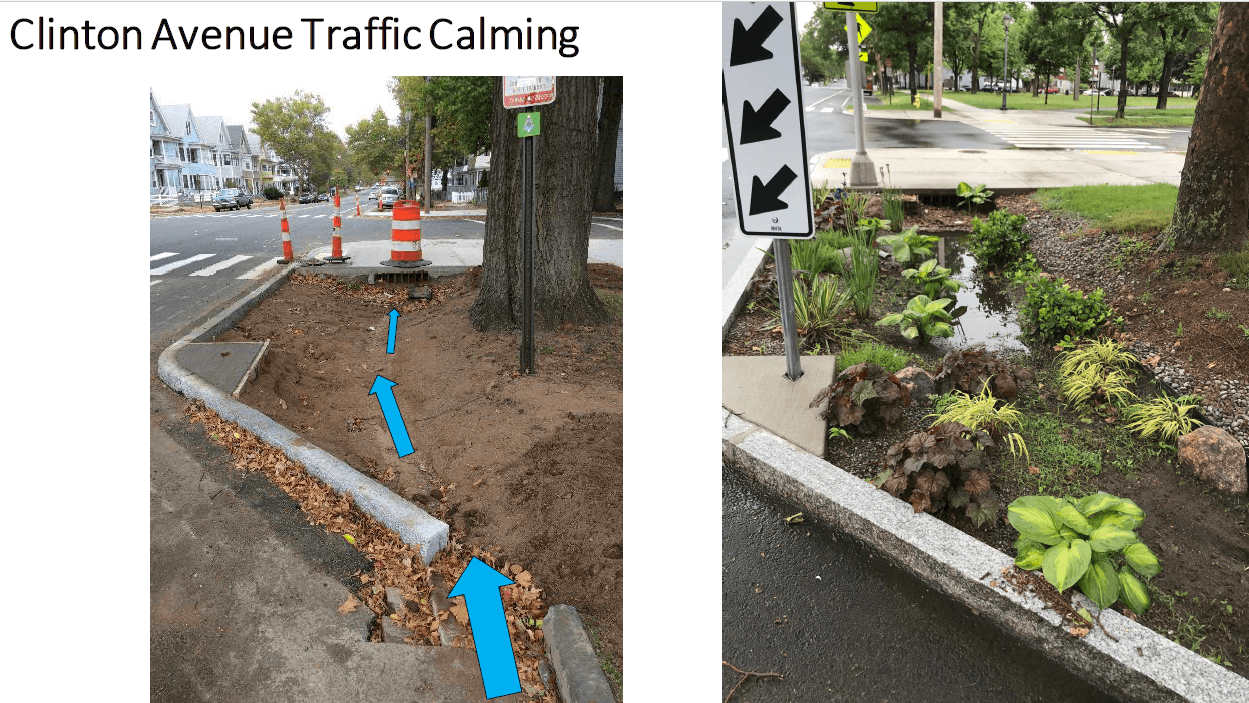

Monitoring performed by Yale School of the Environment researchers (led by Prof. Gaboury Benoit) have demonstrated that the bioswales have captured 70-75% of stormwater runoff in two locations. These results indicate that the bioswales are highly effective in diverting stormwater and thus, preventing pollution.
Dawn Henning
dhenning@newhavenct.gov
475-434-1643
Case Study
Project
New Haven, CT
New Haven Bioswales
The City of New Haven has installed 286 right-of-way bioswales throughout the city as part of a multifaceted approach to reducing flooding in the downtown area. Right-of-way bioswales are engineered planted areas that are located on sidewalks. They are designed to capture and infiltrate stormwater into the ground that would otherwise directly enter a storm drain. These bioswales were installed as the result of various partnerships and funding opportunities related to flood prevention, localized drainage solutions, combined sewer overflow mitigation, research, and traffic calming projects.
Project Lead
City of New Haven, Dept of Engineering
Project Partners
Urban Resources Initiative, EMERGE Inc., Save the Sound, Yale School of the Environment, and Quinnipiac University, among others.
Case Study
Project
Norwalk, CT
Webster Street Parking Lot Green Infrastructure Project
In 2019, the City of Norwalk secured a LIS Future Fund grant to install green infrastructure in the Webster Street Parking to reduce the impacts of stormwater on the Norwalk River and Harbor and mitigate local flooding of surrounding businesses through the installation of four different types of infiltration and bio-retention structures:
1) Underground infiltration systems.
2) Retention basins and curb inlet planters in eight different areas.
3) Porous pavement with storage in two areas.
4) Infiltration gutters and tree filters in two other areas.
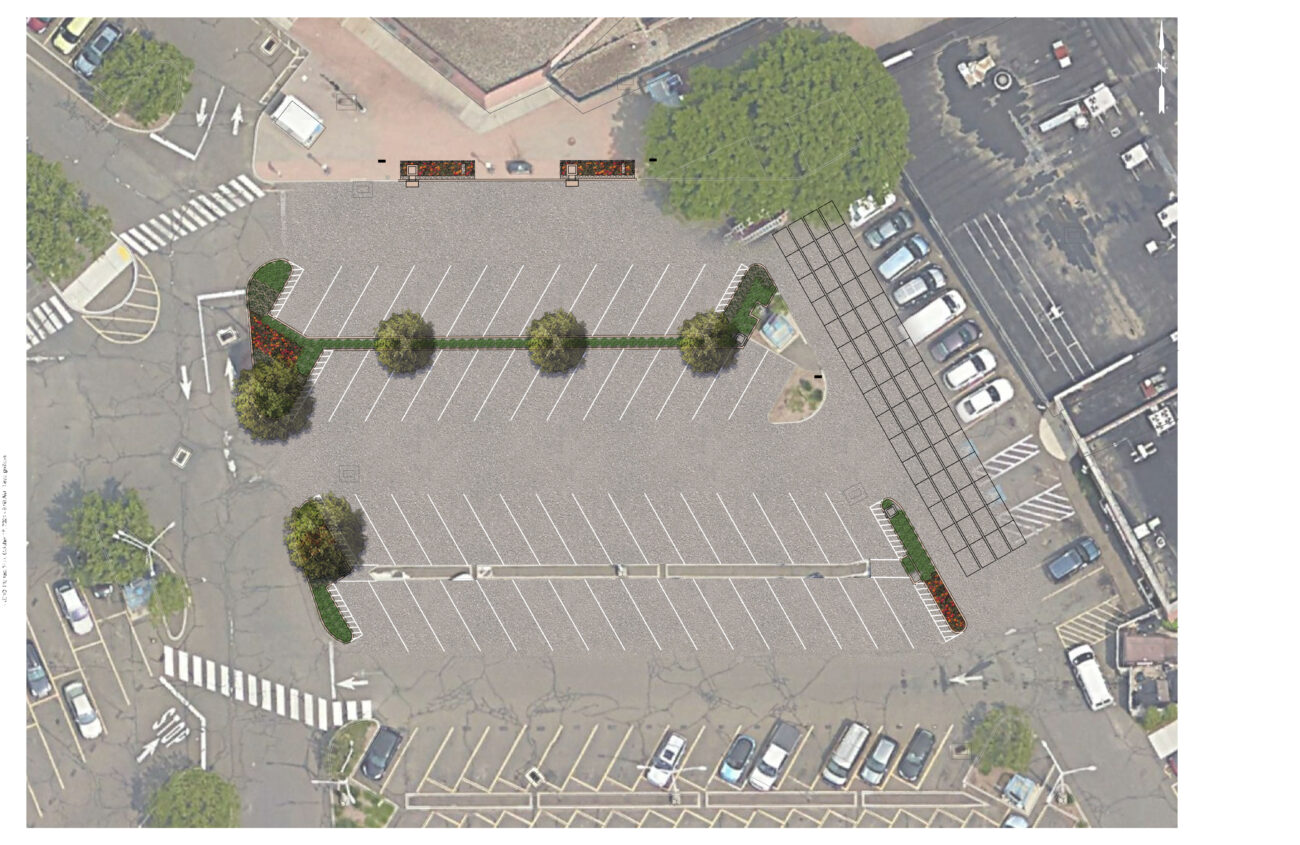

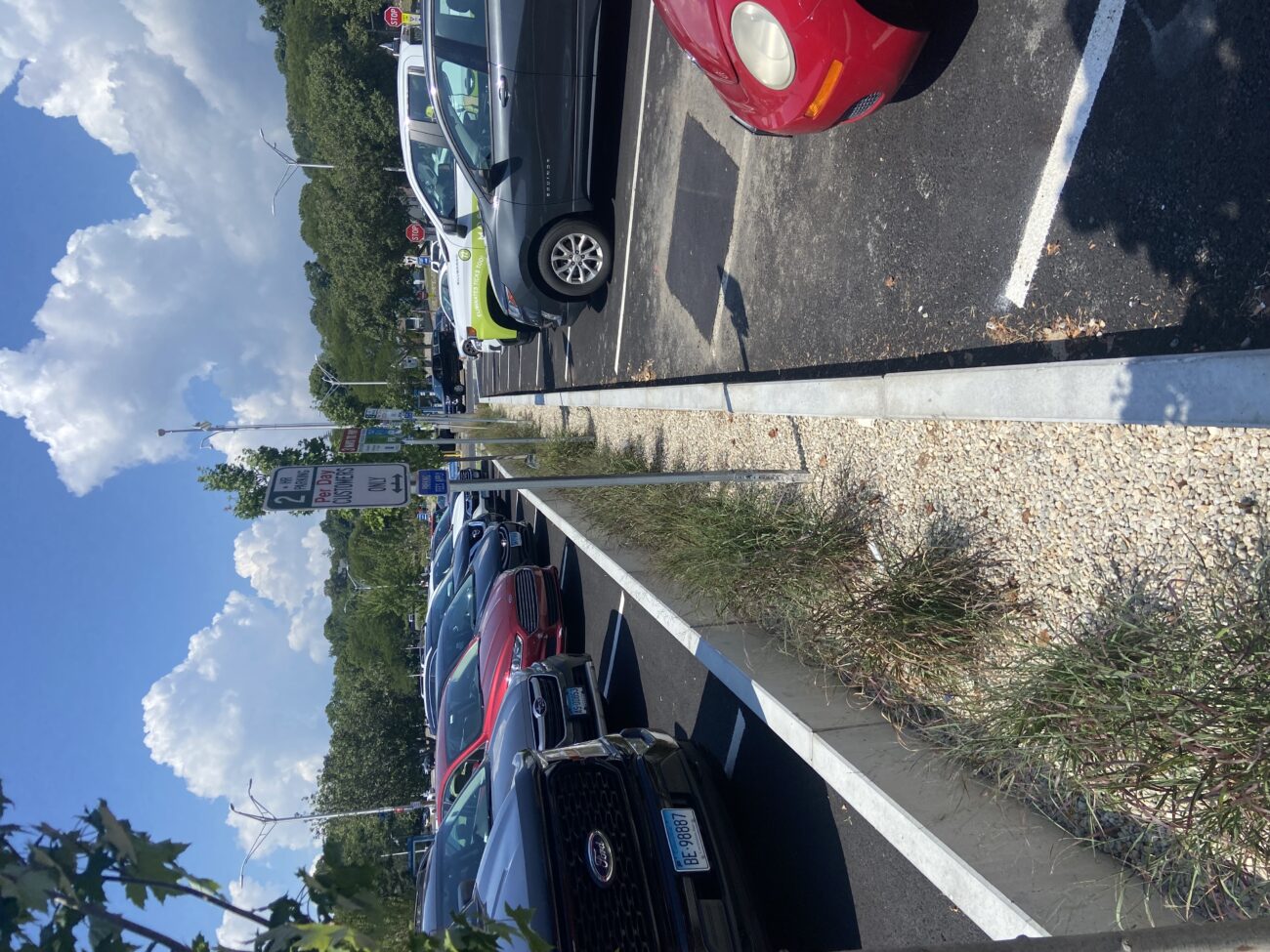


The project is estimated to remove 12 lbs. of nitrogen and preventing over 6 million gallons of stormwater from entering Norwalk Harbor annually. Since it's installation, the site has not experienced any flooding incidents (as of 2024), indicating that it seems to be functioning well.
Bryan Lutz
Assistant Director of Parking
blutz@norwalkct.gov; 203-854-7253
Case Study
Project
Norwalk, CT
Webster Street Parking Lot Green Infrastructure Project
In 2019, the City of Norwalk secured a LIS Future Fund grant to install green infrastructure in the Webster Street Parking to reduce the impacts of stormwater on the Norwalk River and Harbor and mitigate local flooding of surrounding businesses through the installation of four different types of infiltration and bio-retention structures:
1) Underground infiltration systems.
2) Retention basins and curb inlet planters in eight different areas.
3) Porous pavement with storage in two areas.
4) Infiltration gutters and tree filters in two other areas.