


Resilience Steps
Find support and resources tailored to your project needs. Select your Planning Phase, Location, and/or Topic of interest to access a filtered selection of our curated resources and tools.

Learn
Learn about the environmental threats and climate risks in your community

Plan
Identify strategies to help mitigate risks and develop ways to adapt to a changing climate

Implement
Find funding and guidance to help put your plans into action

Sustain
Monitor, maintain, and adaptively-manage your project to sustain success
Filters
Select one or more of the filters below to find relevant tools and resources for your needs

Need help deciding where to start?
Learn how to identify, prioritize, and implement high-impact projects
Report
A Regional Needs Assessment to Help Build a Sustainable & Resilient Long Island Sound
This factsheet summarizes the findings of a 2022 informal needs assessment of coastal Long Island Sound communities conducted by the Long Island Sound Study’s Sustainable & Resilient Communities (SRC) Working Group Extension Professionals Team. The goal of the needs assessment was to guide future SRC work and to understand: 1) which environmental threats communities are most concerned about, 2) what communities are already doing to address these threats (including their goals and priority projects), 3) what barriers are preventing actions, and 4) what support is needed to overcome those barriers.
Report
A Regional Needs Assessment to Help Build a Sustainable & Resilient Long Island Sound
This factsheet summarizes the findings of a 2022 informal needs assessment of coastal Long Island Sound communities conducted by the Long Island Sound Study’s Sustainable & Resilient Communities (SRC) Working Group Extension Professionals Team. The goal of the needs assessment was to guide future SRC work and to understand: 1) which environmental threats communities are most concerned about, 2) what communities are already doing to address these threats (including their goals and priority projects), 3) what barriers are preventing actions, and 4) what support is needed to overcome those barriers.
Guidance Tool
CTDEEP Tidal Wetlands Guidance Document
The CTDEEP document provides information about the many ways individuals, property owners, and communities can help protect Connecticut’s tidal wetlands.
Guidance Tool
CTDEEP Tidal Wetlands Guidance Document
The CTDEEP document provides information about the many ways individuals, property owners, and communities can help protect Connecticut’s tidal wetlands.
Plan
Superstorm Sandy Review Task Force Report to the Legislature: Looking to the Past to Prepare for the Future
The Superstorm Sandy Review Task Force conducted an in-depth review of the preparation for and response to Superstorm Sandy in Suffolk County by government agencies, first responders, nonprofits and private sector entities to determine which measures were effective and what actions must be taken in the future to increase resiliency and improve response to extreme weather events.
Plan
Superstorm Sandy Review Task Force Report to the Legislature: Looking to the Past to Prepare for the Future
The Superstorm Sandy Review Task Force conducted an in-depth review of the preparation for and response to Superstorm Sandy in Suffolk County by government agencies, first responders, nonprofits and private sector entities to determine which measures were effective and what actions must be taken in the future to increase resiliency and improve response to extreme weather events.
Guidance Tool
Level of Effort:
Climate Action Tool
The 2025 expansion of the Climate Action Tool (CAT) allows you to:
1) Access information on climate impacts and vulnerability of species and habitats; and
2) Explore adaptation strategies and actions, related to connectivity, conservation planning, and forestry, among other relevant areas.
This tool was developed by the Northeast Climate Adaptation Science Center and the University of Massachusetts Amherst (UMass) Center for Agriculture, Food, and the Environment.
Guidance Tool
Level of Effort:
Climate Action Tool
The 2025 expansion of the Climate Action Tool (CAT) allows you to:
1) Access information on climate impacts and vulnerability of species and habitats; and
2) Explore adaptation strategies and actions, related to connectivity, conservation planning, and forestry, among other relevant areas.
This tool was developed by the Northeast Climate Adaptation Science Center and the University of Massachusetts Amherst (UMass) Center for Agriculture, Food, and the Environment.
Resource
Level of Effort:
NYSDEC Living Shoreline Map
Check out our interactive map to learn about living shoreline projects located in the marine district of New York.
More information about living shorelines and their benefits can be found on the NYSDEC Living Shorelines webpage.
Resource
Level of Effort:
NYSDEC Living Shoreline Map
Check out our interactive map to learn about living shoreline projects located in the marine district of New York.
More information about living shorelines and their benefits can be found on the NYSDEC Living Shorelines webpage.
Mapper
Level of Effort:
NYC Stormwater Flood Maps
The NYC Stormwater Flood Maps show areas in New York City that are at risk of flooding during heavy rain. The tool provides interactive maps that let users explore neighborhood-level flood risk and understand how stormwater might affect streets, homes, and critical infrastructure. It helps residents, planners, and local organizations identify vulnerable areas and make decisions about preparedness, emergency planning, and long-term resilience.
These maps also bring together important environmental and social data, making it easier to compare neighborhoods, see patterns, and understand which communities may face the greatest challenges during extreme weather.
Mapper
Level of Effort:
NYC Stormwater Flood Maps
The NYC Stormwater Flood Maps show areas in New York City that are at risk of flooding during heavy rain. The tool provides interactive maps that let users explore neighborhood-level flood risk and understand how stormwater might affect streets, homes, and critical infrastructure. It helps residents, planners, and local organizations identify vulnerable areas and make decisions about preparedness, emergency planning, and long-term resilience.
These maps also bring together important environmental and social data, making it easier to compare neighborhoods, see patterns, and understand which communities may face the greatest challenges during extreme weather.
Resource
Level of Effort:
Adapting to Flood and Erosion Risk
A start guide for addressing flooding and erosion in coastal communities. Learn about the steps communities can take to adapt along with different adaptation strategies.
Resource
Level of Effort:
Adapting to Flood and Erosion Risk
A start guide for addressing flooding and erosion in coastal communities. Learn about the steps communities can take to adapt along with different adaptation strategies.
Data
Level of Effort:
Climate Central: Local Climate Information Tool
Search your city or state to learn the many ways a warming world is affecting your place now.
Explore these pages to learn how people in your local area are at risk in a warming world.
Find local data regarding temperatures, precipitation, sea level rise, storms, and more.
Browse climate-related graphics for all seasons localized for your area, that are available for download.
Data
Level of Effort:
Climate Central: Local Climate Information Tool
Search your city or state to learn the many ways a warming world is affecting your place now.
Explore these pages to learn how people in your local area are at risk in a warming world.
Find local data regarding temperatures, precipitation, sea level rise, storms, and more.
Browse climate-related graphics for all seasons localized for your area, that are available for download.
Plan
Level of Effort:
Suffolk County Hazard Mitigation Plan
Suffolk County and the local governments within Suffolk County developed a FEMA approved Hazard Mitigation Plan, which documents risks from natural hazards and strategies to mitigate hazards.
Plan
Level of Effort:
Suffolk County Hazard Mitigation Plan
Suffolk County and the local governments within Suffolk County developed a FEMA approved Hazard Mitigation Plan, which documents risks from natural hazards and strategies to mitigate hazards.
Story Map
Level of Effort:
Westchester County Hazard Mitigation Plan Story Map
This Story Map was developed to provide an overview of the Westchester County Multi-Jurisdictional Hazard Mitigation Plan (HMP) to facilitate county-wide access to the plan. The Westchester County HMP was developed to provide a roadmap to resilience by identifying hazards affecting the county and its communities.
Story Map
Level of Effort:
Westchester County Hazard Mitigation Plan Story Map
This Story Map was developed to provide an overview of the Westchester County Multi-Jurisdictional Hazard Mitigation Plan (HMP) to facilitate county-wide access to the plan. The Westchester County HMP was developed to provide a roadmap to resilience by identifying hazards affecting the county and its communities.
Website
Level of Effort:
MyCoast New York
MyCoast NY collects and catalogs photos provided by volunteers that document changing water levels, shorelines, and hazardous weather impacts across New York’s varied coasts and water bodies. Photos are linked to real-time environmental conditions to create flooding and storm impact reports that help stakeholders like government agencies, business owners, and residents understand our changing environment and make informed decisions.
Website
Level of Effort:
MyCoast New York
MyCoast NY collects and catalogs photos provided by volunteers that document changing water levels, shorelines, and hazardous weather impacts across New York’s varied coasts and water bodies. Photos are linked to real-time environmental conditions to create flooding and storm impact reports that help stakeholders like government agencies, business owners, and residents understand our changing environment and make informed decisions.
Data
Level of Effort:
NOAA Digital Coast – Coastal County Snapshots
Assess your county’s exposure and resilience to flooding and the potential economic impacts.
Data
Level of Effort:
NOAA Digital Coast – Coastal County Snapshots
Assess your county’s exposure and resilience to flooding and the potential economic impacts.
Website
Level of Effort:
NOAA State Climate Summaries
The 2022 State Climate Summaries provide new information on assessment topics directly related to NOAA’s mission, specifically historical climate variations and trends, future climate model projections of climate conditions during the 21st century, and past and future conditions of sea level and coastal flooding. Select your state to find state-level information for observed changes in climate, including both long-term trends and extreme weather events.
Website
Level of Effort:
NOAA State Climate Summaries
The 2022 State Climate Summaries provide new information on assessment topics directly related to NOAA’s mission, specifically historical climate variations and trends, future climate model projections of climate conditions during the 21st century, and past and future conditions of sea level and coastal flooding. Select your state to find state-level information for observed changes in climate, including both long-term trends and extreme weather events.
Story Map
Level of Effort:
NY Sea Grant Long Island Dynamic Shorelines
This story map examines the coastal processes and hazards of Long Island and provides options for sustainable and resilient shoreline management. Information is useful for coastal managers, planners and coastal property owners.
Story Map
Level of Effort:
NY Sea Grant Long Island Dynamic Shorelines
This story map examines the coastal processes and hazards of Long Island and provides options for sustainable and resilient shoreline management. Information is useful for coastal managers, planners and coastal property owners.
Data
Level of Effort:
NYS Sea Level Rise Projections
New York State sea level rise projections. The New York State Department of Environmental Conservation is currently updating these projections.
Data
Level of Effort:
NYS Sea Level Rise Projections
New York State sea level rise projections. The New York State Department of Environmental Conservation is currently updating these projections.
Website
Level of Effort:
MyCoast Greenwich, Connecticut
Submit your coastal flooding photos through this website/app. Photos are linked to real-time environmental conditions to create flooding reports that help stakeholders understand our changing environment and make informed decisions.
Website
Level of Effort:
MyCoast Greenwich, Connecticut
Submit your coastal flooding photos through this website/app. Photos are linked to real-time environmental conditions to create flooding reports that help stakeholders understand our changing environment and make informed decisions.
Data
Level of Effort:
Interagency Sea Level Rise Scenario Tool
Provides the most up-to-date sea level rise projections for all U.S. states and territories, out to the year 2150. Extrapolations of available tide gauge observations are also provided. The sea level scenarios and information contained in this tool originate from 2022 technical report produced by the Sea Level Rise and Coastal Flood Hazard Scenarios and Tools Interagency Task Force.
Data
Level of Effort:
Interagency Sea Level Rise Scenario Tool
Provides the most up-to-date sea level rise projections for all U.S. states and territories, out to the year 2150. Extrapolations of available tide gauge observations are also provided. The sea level scenarios and information contained in this tool originate from 2022 technical report produced by the Sea Level Rise and Coastal Flood Hazard Scenarios and Tools Interagency Task Force.
Story Map
Level of Effort:
EPA CREAT Climate Change Scenarios Projection Map
This Story map illustrates climate change projections, considering scenarios that factor in temperature, precipitation, extreme heat, storms, and sea level.
Story Map
Level of Effort:
EPA CREAT Climate Change Scenarios Projection Map
This Story map illustrates climate change projections, considering scenarios that factor in temperature, precipitation, extreme heat, storms, and sea level.
Mapper
Level of Effort:
Climate Central’s Surging Seas Risk Zone Map
Shows areas vulnerable to near-term flooding from different combinations of sea level rise, storm surge, tides, and tsunamis, or to permanent submersion by long-term sea level rise. Within the U.S., it incorporates the latest, high-resolution, high-accuracy lidar elevation data supplied by NOAA (exceptions: see Sources), displays points of interest, and contains layers displaying social vulnerability, population density, and property value.
Mapper
Level of Effort:
Climate Central’s Surging Seas Risk Zone Map
Shows areas vulnerable to near-term flooding from different combinations of sea level rise, storm surge, tides, and tsunamis, or to permanent submersion by long-term sea level rise. Within the U.S., it incorporates the latest, high-resolution, high-accuracy lidar elevation data supplied by NOAA (exceptions: see Sources), displays points of interest, and contains layers displaying social vulnerability, population density, and property value.
Mapper
Level of Effort:
NOAA Coastal Inundation Dashboard
The Coastal Inundation Dashboard is an interactive decision-support tool that provides real-time and forecast water levels, and historic flooding information at National Ocean Service (NOS) water level stations across the U.S. and its territories. Users can access this information to understand near-term flood risks, such as impacts from tropical cyclones or nor’easters, and long-term inundation risks, such as high-tide flooding and sea level rise. The product supports coastal flood planning, response, and mitigation across timescales.
Reference this user guide to understand the full range of features and capabilities of the Coastal Inundation Dashboard.
Mapper
Level of Effort:
NOAA Coastal Inundation Dashboard
The Coastal Inundation Dashboard is an interactive decision-support tool that provides real-time and forecast water levels, and historic flooding information at National Ocean Service (NOS) water level stations across the U.S. and its territories. Users can access this information to understand near-term flood risks, such as impacts from tropical cyclones or nor’easters, and long-term inundation risks, such as high-tide flooding and sea level rise. The product supports coastal flood planning, response, and mitigation across timescales.
Reference this user guide to understand the full range of features and capabilities of the Coastal Inundation Dashboard.
Mapper
Level of Effort:
Long Island Sound Crossing Prioritization Tool
The Long Island Sound Crossing Prioritization Tool can be used to prioritize road-stream crossings (culverts and bridges) for ecological, infrastructure, and community resilience benefits in Westchester, Nassau and Suffolk County, NY. The tool helps communities plan improvements that restore habitat for diadromous fishes, strengthen infrastructure, and keep communities connected.
Developed by Save the Sound in partnership with Seatuck Environmental Association and The Nature Conservancy, the Long Island Sound Crossing Prioritization Tool was built by CivicMapper and is hosted on ArcGIS Online. It is intended to be a resource for municipalities, especially parts of municipal government that make infrastructure or environmental decisions for their communities, by making it easier to apply for grant funding. The tool is a useful resource for agency partners and fellow environmental organizations working to accelerate river restoration and protect communities from a changing climate.
Mapper
Level of Effort:
Long Island Sound Crossing Prioritization Tool
The Long Island Sound Crossing Prioritization Tool can be used to prioritize road-stream crossings (culverts and bridges) for ecological, infrastructure, and community resilience benefits in Westchester, Nassau and Suffolk County, NY. The tool helps communities plan improvements that restore habitat for diadromous fishes, strengthen infrastructure, and keep communities connected.
Developed by Save the Sound in partnership with Seatuck Environmental Association and The Nature Conservancy, the Long Island Sound Crossing Prioritization Tool was built by CivicMapper and is hosted on ArcGIS Online. It is intended to be a resource for municipalities, especially parts of municipal government that make infrastructure or environmental decisions for their communities, by making it easier to apply for grant funding. The tool is a useful resource for agency partners and fellow environmental organizations working to accelerate river restoration and protect communities from a changing climate.
Mapper
Level of Effort:
USGS Compound Flood Hazard Web Map
The USGS Long Island Sound Partnership Compound Flood Hazard Web Map Application is an interactive tool developed by the U.S. Geological Survey’s New York Water Science Center that helps users explore the combined impacts of multiple flooding drivers across the New York and Connecticut coastal regions. Drivers of compound flooding included in the assessment were precipitation, coastal (storm surge, tidal), and groundwater emergence, which when combined can lead to more severe and widespread inundation than from any single cause alone.
The map visually displays hazard rankings and spatial patterns of flood drivers so that planners, emergency managers, researchers, and the public can better understand where these flood hazards are most likely to coincide, thus supporting local decision making for flood mitigation, coastal planning, and resilience strategies. The application is based on USGS models and ongoing research into regional flood processes.
Mapper
Level of Effort:
USGS Compound Flood Hazard Web Map
The USGS Long Island Sound Partnership Compound Flood Hazard Web Map Application is an interactive tool developed by the U.S. Geological Survey’s New York Water Science Center that helps users explore the combined impacts of multiple flooding drivers across the New York and Connecticut coastal regions. Drivers of compound flooding included in the assessment were precipitation, coastal (storm surge, tidal), and groundwater emergence, which when combined can lead to more severe and widespread inundation than from any single cause alone.
The map visually displays hazard rankings and spatial patterns of flood drivers so that planners, emergency managers, researchers, and the public can better understand where these flood hazards are most likely to coincide, thus supporting local decision making for flood mitigation, coastal planning, and resilience strategies. The application is based on USGS models and ongoing research into regional flood processes.
Mapper
Level of Effort:
NYC Flood Hazard Mapper
The NYC Flood Hazard Mapper is an interactive tool created by the NYC Department of City Planning to help residents, businesses, and planners understand flood risks across New York City. It provides maps showing current coastal flood hazards, FEMA flood zones, and areas that may be affected by sea level rise in the future. By searching an address or exploring different map layers, users can see how flooding may impact specific neighborhoods today and under future climate conditions.
This resource is designed to support safer decision making as the frequency and severity of flooding increases. While the mapper offers valuable visual data and projections, it is meant for general information only and should not replace official FEMA resources or professional guidance. Users are encouraged to use this tool as a starting point to learn about local flood exposure and to explore how environmental changes may affect communities throughout the city.
Mapper
Level of Effort:
NYC Flood Hazard Mapper
The NYC Flood Hazard Mapper is an interactive tool created by the NYC Department of City Planning to help residents, businesses, and planners understand flood risks across New York City. It provides maps showing current coastal flood hazards, FEMA flood zones, and areas that may be affected by sea level rise in the future. By searching an address or exploring different map layers, users can see how flooding may impact specific neighborhoods today and under future climate conditions.
This resource is designed to support safer decision making as the frequency and severity of flooding increases. While the mapper offers valuable visual data and projections, it is meant for general information only and should not replace official FEMA resources or professional guidance. Users are encouraged to use this tool as a starting point to learn about local flood exposure and to explore how environmental changes may affect communities throughout the city.
Mapper
Level of Effort:
Resilience and Adaptation in New England (RAINE) Database
Explore a range of tools and guidance to support climate adaptation planning through EPA New England’s Resilience and Adaptation in New England (RAINE) initiative, which supports users in exploring climate resilience planning across the New England. These resources include more than 1,200 climate adaptation plans. Practitioners can use the Featured Locations Interactive Map to view climate action examples or explore additional climate visualization platforms through the Mapping Climate Change Impacts Tools page. The database also highlights Tribal Climate Adaptation Resources, featuring plans from federally recognized tribes in New England. Users can view recorded webinars and trainings for technical guidance.
Mapper
Level of Effort:
Resilience and Adaptation in New England (RAINE) Database
Explore a range of tools and guidance to support climate adaptation planning through EPA New England’s Resilience and Adaptation in New England (RAINE) initiative, which supports users in exploring climate resilience planning across the New England. These resources include more than 1,200 climate adaptation plans. Practitioners can use the Featured Locations Interactive Map to view climate action examples or explore additional climate visualization platforms through the Mapping Climate Change Impacts Tools page. The database also highlights Tribal Climate Adaptation Resources, featuring plans from federally recognized tribes in New England. Users can view recorded webinars and trainings for technical guidance.
Data
Level of Effort:
NYC Hazard Mitigation Plan
This website contains New York City’s Federal Emergency Management Agency–mandated Hazard Mitigation Plan, which identifies natural hazard risks and vulnerabilities that are common to New York City (NYC) and long-term strategies for reducing them. It also features a Mitigation Actions Database and Map that tracks and records actions that are taken to mitigate risk from the hazards profiled in the Hazard Mitigation Plan.
Data
Level of Effort:
NYC Hazard Mitigation Plan
This website contains New York City’s Federal Emergency Management Agency–mandated Hazard Mitigation Plan, which identifies natural hazard risks and vulnerabilities that are common to New York City (NYC) and long-term strategies for reducing them. It also features a Mitigation Actions Database and Map that tracks and records actions that are taken to mitigate risk from the hazards profiled in the Hazard Mitigation Plan.
Report
Level of Effort:
Averting Crisis -Zoning to Create Resilient Homes for All
This study by the Regional Plan Association assessed how flooding will threaten housing in Long Island, NYC, and Westchester County in the coming decades. It found that by 2040 as many as 1.6 million people could live in areas exposed to flooding and as many as 82,000 housing units could be lost, exacerbating housing shortages. The report includes recommendations for an integrated approach to land use planning and policy initiatives to create resilient communities.
Report
Level of Effort:
Averting Crisis -Zoning to Create Resilient Homes for All
This study by the Regional Plan Association assessed how flooding will threaten housing in Long Island, NYC, and Westchester County in the coming decades. It found that by 2040 as many as 1.6 million people could live in areas exposed to flooding and as many as 82,000 housing units could be lost, exacerbating housing shortages. The report includes recommendations for an integrated approach to land use planning and policy initiatives to create resilient communities.
Mapper
Level of Effort:
Coastal Risk Finder
A product of Climate Central’s Sea Level Program, Coastal Risk Finder allows users to get local flood projections, understand who and what is at risk in their communities, and learn about solutions for coastal states, counties, cities, towns, congressional districts, and state legislative districts in the contiguous U.S., with more to come. Users can download data and graphics to further their local adaptation and communication efforts related to coastal flooding. Coastal Risk Finder includes detailed briefs on adaptation efforts in coastal states and territories, providing insights into policies, projects, and key organizations working to mitigate flood risks. By highlighting actionable solutions, we aim to empower communities with the knowledge and tools needed to address coastal flooding challenges.
The accompanying User Guides highlight the most useful features and provide guidance on using the tool for specific applications. A recording of the Launch Webinar featuring expert insights is also available.
Mapper
Level of Effort:
Coastal Risk Finder
A product of Climate Central’s Sea Level Program, Coastal Risk Finder allows users to get local flood projections, understand who and what is at risk in their communities, and learn about solutions for coastal states, counties, cities, towns, congressional districts, and state legislative districts in the contiguous U.S., with more to come. Users can download data and graphics to further their local adaptation and communication efforts related to coastal flooding. Coastal Risk Finder includes detailed briefs on adaptation efforts in coastal states and territories, providing insights into policies, projects, and key organizations working to mitigate flood risks. By highlighting actionable solutions, we aim to empower communities with the knowledge and tools needed to address coastal flooding challenges.
The accompanying User Guides highlight the most useful features and provide guidance on using the tool for specific applications. A recording of the Launch Webinar featuring expert insights is also available.
Mapper
Level of Effort:
U.S. Sea Level Change
This site provides federally supported data visualizations coupled with explanations and science education to help communities prepare for challenges that will affect our coastal environments. By showing how sea levels are changing regionally, the site provides a foundation to inform decision-making related to coastal planning, resource management, and emergency operations.
This website is a collaborative effort from The Interagency Task Force on Sea Level Change (DOD, EPA, FEMA, NASA, NOAA, USACE, USAID, and USGS).
Mapper
Level of Effort:
U.S. Sea Level Change
This site provides federally supported data visualizations coupled with explanations and science education to help communities prepare for challenges that will affect our coastal environments. By showing how sea levels are changing regionally, the site provides a foundation to inform decision-making related to coastal planning, resource management, and emergency operations.
This website is a collaborative effort from The Interagency Task Force on Sea Level Change (DOD, EPA, FEMA, NASA, NOAA, USACE, USAID, and USGS).
Report
Level of Effort:
The Fifth National Climate Assessment
The Fifth National Climate Assessment is the US Government’s preeminent report on climate change impacts, risks, and responses. It is a congressionally mandated interagency effort that provides the scientific foundation to support informed decision-making across the United States.
Report
Level of Effort:
The Fifth National Climate Assessment
The Fifth National Climate Assessment is the US Government’s preeminent report on climate change impacts, risks, and responses. It is a congressionally mandated interagency effort that provides the scientific foundation to support informed decision-making across the United States.
Website
Level of Effort:
New York State Climate Impacts Assessment: Understanding and Preparing for Our Changing Climate
The New York State Climate Impacts Assessment explores current and future climate change impacts to New York State communities, ecosystems, and economy. The New York State Energy Research and Development Authority (NYSERDA) assembled more than 250 New York–based, national, and Indigenous climate science experts and representatives from diverse communities and industries across the state to contribute to this assessment. The findings are intended to help residents, businesses, and decision-makers across the state plan and prepare for climate change impacts.
Website
Level of Effort:
New York State Climate Impacts Assessment: Understanding and Preparing for Our Changing Climate
The New York State Climate Impacts Assessment explores current and future climate change impacts to New York State communities, ecosystems, and economy. The New York State Energy Research and Development Authority (NYSERDA) assembled more than 250 New York–based, national, and Indigenous climate science experts and representatives from diverse communities and industries across the state to contribute to this assessment. The findings are intended to help residents, businesses, and decision-makers across the state plan and prepare for climate change impacts.
Guidance Tool
Level of Effort:
Federal Highway Administration (FHWA’s) Vulnerability Assessment and Adaptation Framework
The Federal Highway Administration (FHWA’s) Vulnerability Assessment and Adaptation Framework, 3rd Edition, is a guide and collection of resources for use in analyzing the impacts of climate change and extreme weather on transportation infrastructure. Its purpose is to identify key considerations, questions, and resources that can be used to design and implement a climate change vulnerability assessment. The processes, lessons learned, and resources outlined in the framework are geared toward state departments of transportation (DOTs), metropolitan planning organizations (MPOs), and other agencies involved in planning, building, or maintaining the transportation system. It includes suggestions and examples applicable to a wide range of applications, from small qualitative studies to large, detailed, data-intensive analyses. The resources included in the framework will be added to and updated over time.
Guidance Tool
Level of Effort:
Federal Highway Administration (FHWA’s) Vulnerability Assessment and Adaptation Framework
The Federal Highway Administration (FHWA’s) Vulnerability Assessment and Adaptation Framework, 3rd Edition, is a guide and collection of resources for use in analyzing the impacts of climate change and extreme weather on transportation infrastructure. Its purpose is to identify key considerations, questions, and resources that can be used to design and implement a climate change vulnerability assessment. The processes, lessons learned, and resources outlined in the framework are geared toward state departments of transportation (DOTs), metropolitan planning organizations (MPOs), and other agencies involved in planning, building, or maintaining the transportation system. It includes suggestions and examples applicable to a wide range of applications, from small qualitative studies to large, detailed, data-intensive analyses. The resources included in the framework will be added to and updated over time.
Mapper
Level of Effort:
Road-Stream and Tidal Crossing Prioritization Tool – Suffolk County, Long Island
Developed by The Nature Conservancy, this tool identifies priority road-stream and tidal crossings in Suffolk County for replacement or upgrades. Prioritization is based on social and ecological criteria. Additionally, it includes data on current and future projected flooding and marsh extent under various sea level rise scenarios. The tool is meant to be a screening tool for planning efforts.
Mapper
Level of Effort:
Road-Stream and Tidal Crossing Prioritization Tool – Suffolk County, Long Island
Developed by The Nature Conservancy, this tool identifies priority road-stream and tidal crossings in Suffolk County for replacement or upgrades. Prioritization is based on social and ecological criteria. Additionally, it includes data on current and future projected flooding and marsh extent under various sea level rise scenarios. The tool is meant to be a screening tool for planning efforts.
Mapper
Level of Effort:
TNC Coastal Resilience Tool
Coastal Resilience is a Connecticut-based decision support tool that provides local, regional, state and national stakeholders a step-wise process to guide decisions to reduce the ecological and socio-economic risks of coastal and inland hazards.
Mapper
Level of Effort:
TNC Coastal Resilience Tool
Coastal Resilience is a Connecticut-based decision support tool that provides local, regional, state and national stakeholders a step-wise process to guide decisions to reduce the ecological and socio-economic risks of coastal and inland hazards.
Mapper
Level of Effort:
NOAA Digital Coast – Coastal Flood Exposure Mapper
Use this mapper to visualize people, infrastructure, and natural resources exposed to coastal flood hazards. You can save and share the online maps to communicate with stakeholders. Tip: watch the short video about the tool before getting started!
Mapper
Level of Effort:
NOAA Digital Coast – Coastal Flood Exposure Mapper
Use this mapper to visualize people, infrastructure, and natural resources exposed to coastal flood hazards. You can save and share the online maps to communicate with stakeholders. Tip: watch the short video about the tool before getting started!
Mapper
Level of Effort:
NOAA Digital Coast – Sea Level Calculator
This tool produces location-specific scenarios for sea level and flooding, as well as information about present-day and past conditions. Local governments and other practitioners can use the information to make informed decisions about strategic adaptation investments. The site incorporates data, maps, and visualizations and produces automated, location-specific reports.
Mapper
Level of Effort:
NOAA Digital Coast – Sea Level Calculator
This tool produces location-specific scenarios for sea level and flooding, as well as information about present-day and past conditions. Local governments and other practitioners can use the information to make informed decisions about strategic adaptation investments. The site incorporates data, maps, and visualizations and produces automated, location-specific reports.
Mapper
Level of Effort:
NOAA Sea Level Rise Viewer
Use this web mapping tool to visualize community-level impacts from coastal flooding or sea level rise (up to 10 feet above average high tides). Photo simulations of how future flooding might impact local landmarks are also provided, as well as data related to water depth, connectivity, flood frequency, socio-economic vulnerability, wetland loss and migration, and mapping confidence.
Mapper
Level of Effort:
NOAA Sea Level Rise Viewer
Use this web mapping tool to visualize community-level impacts from coastal flooding or sea level rise (up to 10 feet above average high tides). Photo simulations of how future flooding might impact local landmarks are also provided, as well as data related to water depth, connectivity, flood frequency, socio-economic vulnerability, wetland loss and migration, and mapping confidence.
Mapper
Level of Effort:
NYS Sea Level Rise Viewer
This floodplain mapper shows the estimated boundary of future coastal floodplains for different sea level rise scenarios for New York State. Customize a scenario by choosing the amount of sea level rise in inches and a coastal flood recurrence interval.
Mapper
Level of Effort:
NYS Sea Level Rise Viewer
This floodplain mapper shows the estimated boundary of future coastal floodplains for different sea level rise scenarios for New York State. Customize a scenario by choosing the amount of sea level rise in inches and a coastal flood recurrence interval.
Mapper
Level of Effort:
LIS Marsh Viewer
The purpose of the interactive viewer is to illustrate the fate of significant marsh systems on Long Island Sound under future Sea-Level Rise conditions. Model results are combined with tax-parcel information and integrated with information about marsh ecosystem services to assist municipalities and conservation groups in defining and assessing various land-management alternatives.
Mapper
Level of Effort:
LIS Marsh Viewer
The purpose of the interactive viewer is to illustrate the fate of significant marsh systems on Long Island Sound under future Sea-Level Rise conditions. Model results are combined with tax-parcel information and integrated with information about marsh ecosystem services to assist municipalities and conservation groups in defining and assessing various land-management alternatives.
Mapper
Level of Effort:
FEMA Resilience Analysis and Planning Tool (RAPT)
RAPT provides access to important data and analysis tools to support your community before, during and after a disaster.
Mapper
Level of Effort:
FEMA Resilience Analysis and Planning Tool (RAPT)
RAPT provides access to important data and analysis tools to support your community before, during and after a disaster.
Mapper
Level of Effort:
Connecticut Environmental Conditions Online (CTEco) — CTDEEP & CLEAR
Connecticut-specific site with maps, data, and visualization tools. Contains: Blue Plan, MS4 Viewer, CT Parcel Viewer, Sea Level Rise Effects on Roads & Marshes, CT DEEP Fish Community Data – Inland Waters, CT Aquaculture Mapping Atlas, CT Coastal Hazards Viewer, Carbon Stock & Land Cover Viewer
Mapper
Level of Effort:
Connecticut Environmental Conditions Online (CTEco) — CTDEEP & CLEAR
Connecticut-specific site with maps, data, and visualization tools. Contains: Blue Plan, MS4 Viewer, CT Parcel Viewer, Sea Level Rise Effects on Roads & Marshes, CT DEEP Fish Community Data – Inland Waters, CT Aquaculture Mapping Atlas, CT Coastal Hazards Viewer, Carbon Stock & Land Cover Viewer
Guidance Tool
Level of Effort:
Connecticut Coastal Hazards Management
Provides information about coastal hazard management in Connecticut including steps for developing plans and responses.
Guidance Tool
Level of Effort:
Connecticut Coastal Hazards Management
Provides information about coastal hazard management in Connecticut including steps for developing plans and responses.
Mapper
Level of Effort:
CIRCA Connecticut Sea Level Rise and Storm Surge Viewer
Shows various SLR scenarios and flood event scenarios calibrated for the Long Island Sound CT coast. Also includes FEMA Limit of Moderate Wave Action boundary for referencing building codes.
Mapper
Level of Effort:
CIRCA Connecticut Sea Level Rise and Storm Surge Viewer
Shows various SLR scenarios and flood event scenarios calibrated for the Long Island Sound CT coast. Also includes FEMA Limit of Moderate Wave Action boundary for referencing building codes.
Mapper
Level of Effort:
The Long Island Sound and Watershed Metadata Map Application
The Long Island Sound watershed is home to nearly 9 million people in parts of Connecticut, Massachusetts, New Hampshire, New York, Rhode Island, Vermont, and Canada. Government agencies, nonprofits, and Tribal Nations have overseen numerous projects to monitor and protect the water resources of this watershed and the sound. Although there is an abundance of data, there is no easy way to search them or a central place to manage this information. To help, the U.S. Geological Survey, the U.S. Environmental Protection Agency, and the Long Island Sound Study have created an interactive map to help users find and understand data about the water resources of the Long Island Sound and its watershed.
This mapping tool does not host data or maintain data repositories. Instead, it compiles and presents metadata from publicly accessible databases managed by State and other organizations.
Refer to this fact sheet for details about the application and its data sources: The Long Island Sound and Watershed Metadata map application
Mapper
Level of Effort:
The Long Island Sound and Watershed Metadata Map Application
The Long Island Sound watershed is home to nearly 9 million people in parts of Connecticut, Massachusetts, New Hampshire, New York, Rhode Island, Vermont, and Canada. Government agencies, nonprofits, and Tribal Nations have overseen numerous projects to monitor and protect the water resources of this watershed and the sound. Although there is an abundance of data, there is no easy way to search them or a central place to manage this information. To help, the U.S. Geological Survey, the U.S. Environmental Protection Agency, and the Long Island Sound Study have created an interactive map to help users find and understand data about the water resources of the Long Island Sound and its watershed.
This mapping tool does not host data or maintain data repositories. Instead, it compiles and presents metadata from publicly accessible databases managed by State and other organizations.
Refer to this fact sheet for details about the application and its data sources: The Long Island Sound and Watershed Metadata map application
Guidance Tool
Level of Effort:
Resilient Connecticut: Climate Resilient Zoning
Guidance and training modules for Connecticut Zoning changes to address climate vulnerabilities. On the website there are examples of zoning policies municipalities could modify and/or adopt to enhance local climate resilience. Where applicable, model ordinances and examples of where the policies have been adopted are included.
Guidance Tool
Level of Effort:
Resilient Connecticut: Climate Resilient Zoning
Guidance and training modules for Connecticut Zoning changes to address climate vulnerabilities. On the website there are examples of zoning policies municipalities could modify and/or adopt to enhance local climate resilience. Where applicable, model ordinances and examples of where the policies have been adopted are included.
Mapper
Level of Effort:
Connecticut Sea Level Rise Effects on Roads & Marshes
To better understand how Connecticut’s coastal area marshes and roads may respond to sea level rise (SLR), Sea Level Affecting Marshes Model (SLAMM) was applied to Connecticut’s shoreline by Warren Pinnacle Consulting, Inc. This viewer displays the model’s results for Connecticut’s 21 largest marshes and all coastal area roads. For marshes, SLAMM was run two hundred times using alternative model inputs for key model parameters, including various SLR scenarios, to produce probability based results of likely future marsh conditions. For roads, the model uses a single SLR scenario of about 4.2 feet by 2100 from the base year of 2002. The Sea Level Rise Effects on Roads and Marshes projects is a project between CT DEEP and UConn CLEAR.
Mapper
Level of Effort:
Connecticut Sea Level Rise Effects on Roads & Marshes
To better understand how Connecticut’s coastal area marshes and roads may respond to sea level rise (SLR), Sea Level Affecting Marshes Model (SLAMM) was applied to Connecticut’s shoreline by Warren Pinnacle Consulting, Inc. This viewer displays the model’s results for Connecticut’s 21 largest marshes and all coastal area roads. For marshes, SLAMM was run two hundred times using alternative model inputs for key model parameters, including various SLR scenarios, to produce probability based results of likely future marsh conditions. For roads, the model uses a single SLR scenario of about 4.2 feet by 2100 from the base year of 2002. The Sea Level Rise Effects on Roads and Marshes projects is a project between CT DEEP and UConn CLEAR.
Guidance Tool
Level of Effort:
NYSDEC Tidal Wetlands Guidance Document
The NYSDEC document is to provide guidance on the issuance of permits for living shorelines techniques in the Marine and Coastal District Waters of New York (the Marine District) and encourages the use of green or natural infrastructure.
Guidance Tool
Level of Effort:
NYSDEC Tidal Wetlands Guidance Document
The NYSDEC document is to provide guidance on the issuance of permits for living shorelines techniques in the Marine and Coastal District Waters of New York (the Marine District) and encourages the use of green or natural infrastructure.
Guidance Tool
Level of Effort:
NYSDEC/NYSDOS Model Local Laws to Increase Resilience
The New York State Department of State worked with the Department of Environmental Conservation and other partners to create model local laws to help local governments be more resilient to sea-level rise, storm surge, and flooding. Cities, towns, and villages are invited to adapt model local laws to meet the resilience needs of the community with the assistance of their municipal attorneys.
Guidance Tool
Level of Effort:
NYSDEC/NYSDOS Model Local Laws to Increase Resilience
The New York State Department of State worked with the Department of Environmental Conservation and other partners to create model local laws to help local governments be more resilient to sea-level rise, storm surge, and flooding. Cities, towns, and villages are invited to adapt model local laws to meet the resilience needs of the community with the assistance of their municipal attorneys.
Guidance Tool
Level of Effort:
NYSDEC/NYSDOS Using Natural Measures to Reduce the Risk of Flooding and Erosion
This document developed in support of the NYS Community Risk and Resiliency Act 1) Describes natural resilience measures and how they can be used to mitigate the risks of flooding and erosion, 2) Provides definitions for different types of natural resilience measures and distinguishes among conserved, restored, nature-based and hard structural approaches, 3) Provides information on the value and benefits of using natural resilience measures, along with information on the co-benefits they provide, 4) Lists key factors to consider in the restoration, design and construction of natural resilience measures, and 5) Provides background to support the development of NYS agency guidance on natural resilience measures in the future
Guidance Tool
Level of Effort:
NYSDEC/NYSDOS Using Natural Measures to Reduce the Risk of Flooding and Erosion
This document developed in support of the NYS Community Risk and Resiliency Act 1) Describes natural resilience measures and how they can be used to mitigate the risks of flooding and erosion, 2) Provides definitions for different types of natural resilience measures and distinguishes among conserved, restored, nature-based and hard structural approaches, 3) Provides information on the value and benefits of using natural resilience measures, along with information on the co-benefits they provide, 4) Lists key factors to consider in the restoration, design and construction of natural resilience measures, and 5) Provides background to support the development of NYS agency guidance on natural resilience measures in the future
Mapper
Level of Effort:
USGS Coastal Wetland Synthesis Mapper
This mapper is intended to provide federal, state, and local managers with tools to estimate the vulnerability and ecosystem service potential of wetlands. It allows you to display information on the unvegetated to vegetated ratio (UVVR), marsh elevation, tidal range, and shoreline change rates for New York’s tidal wetlands.
Mapper
Level of Effort:
USGS Coastal Wetland Synthesis Mapper
This mapper is intended to provide federal, state, and local managers with tools to estimate the vulnerability and ecosystem service potential of wetlands. It allows you to display information on the unvegetated to vegetated ratio (UVVR), marsh elevation, tidal range, and shoreline change rates for New York’s tidal wetlands.
Guidance Tool
Level of Effort:
NOAA Adapting Stormwater Management for Coastal Floods
This website and the associated tools can be used by planners and engineers to help understand how rising sea levels, more intense storms, and heavy rainfalls affect stormwater systems, and to generate reports that can be used to inform planning.
Guidance Tool
Level of Effort:
NOAA Adapting Stormwater Management for Coastal Floods
This website and the associated tools can be used by planners and engineers to help understand how rising sea levels, more intense storms, and heavy rainfalls affect stormwater systems, and to generate reports that can be used to inform planning.
Mapper
Level of Effort:
NOAA Digital Coast – Sea Level Affecting Marshes Model (SLAMM)
The Sea Level Affecting Marshes Model, or SLAMM, uses digital data and other information to simulate potential impacts of long-term sea level rise on wetlands and shorelines. Additional data related to dike locations or other protected areas, accretion rates, erosion rates, and other factors can be included within the model as optional factors. Requires ArcGIS for viewing outputs in a mapping environment and software, such as Microsoft Excel and Word, to view the text and tabular output.
Mapper
Level of Effort:
NOAA Digital Coast – Sea Level Affecting Marshes Model (SLAMM)
The Sea Level Affecting Marshes Model, or SLAMM, uses digital data and other information to simulate potential impacts of long-term sea level rise on wetlands and shorelines. Additional data related to dike locations or other protected areas, accretion rates, erosion rates, and other factors can be included within the model as optional factors. Requires ArcGIS for viewing outputs in a mapping environment and software, such as Microsoft Excel and Word, to view the text and tabular output.
Plan
Level of Effort:
CIRCA Sea Level Rise in Connecticut Final Report February 2019
Sea level preparation guidance for CT. Recommends planning for 20″ by 2050.
Plan
Level of Effort:
CIRCA Sea Level Rise in Connecticut Final Report February 2019
Sea level preparation guidance for CT. Recommends planning for 20″ by 2050.
Guidance Tool
Level of Effort:
APPLICATION GUIDE for the 2022 Sea Level Rise Technical Report
This guide is designed to assist decision makers and coastal professionals with applying and integrating the information in the 2022 Sea Level Rise Technical Report, produced by the Sea Level Rise and Coastal Flood Hazard Scenarios and Tools Interagency Task Force, into local sea level rise planning and adaptation decisions.
Guidance Tool
Level of Effort:
APPLICATION GUIDE for the 2022 Sea Level Rise Technical Report
This guide is designed to assist decision makers and coastal professionals with applying and integrating the information in the 2022 Sea Level Rise Technical Report, produced by the Sea Level Rise and Coastal Flood Hazard Scenarios and Tools Interagency Task Force, into local sea level rise planning and adaptation decisions.
SRC Training
Hammonasset Beach State Park Coastal Resilience Field Trip and Workshop
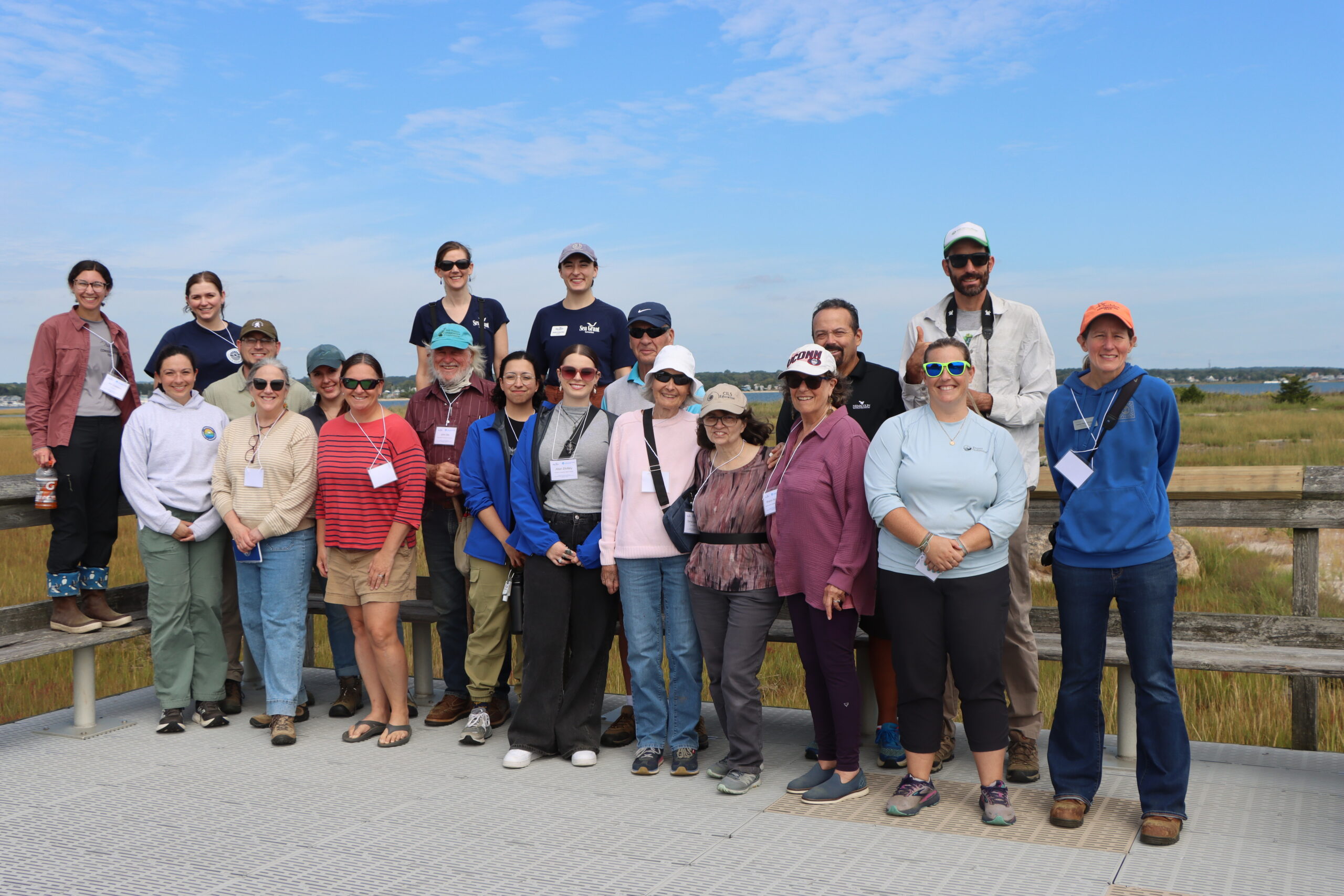
On September 16, 2026, the Sustainable and Resilient Communities (SRC) team of the Long Island Sound Partnership and Audubon Connecticut hosted a field trip to Hammonasset Beach State Park in Madison, CT, where Audubon CT and partners are advancing one of Connecticut’s largest coastal resilience and salt marsh restoration initiatives! We started the day at Meigs Point Nature Center with presentations about the science behind the restoration effort, challenges facing Hammonasset’s tidal marshes, and updates on the design of marsh restoration, living shoreline, and culvert replacement projects. After lunch and group discussions, we took a guided walk to view the marsh viewing platform and then visited an upcoming culvert replacement site.



SRC Training
Hammonasset Beach State Park Coastal Resilience Field Trip and Workshop
On September 16, 2026, the Sustainable and Resilient Communities (SRC) team of the Long Island Sound Partnership and Audubon Connecticut hosted a field trip to Hammonasset Beach State Park in Madison, CT, where Audubon CT and partners are advancing one of Connecticut’s largest coastal resilience and salt marsh restoration initiatives! We started the day at Meigs Point Nature Center with presentations about the science behind the restoration effort, challenges facing Hammonasset’s tidal marshes, and updates on the design of marsh restoration, living shoreline, and culvert replacement projects. After lunch and group discussions, we took a guided walk to view the marsh viewing platform and then visited an upcoming culvert replacement site.
SRC Training
USGS Compound Flood Hazard Assessment Mapper Webinar
This virtual webinar featured the U.S. Geological Survey’s (USGS) new Compound Flood Hazard Assessment Mapper. Municipal staff, state agencies, and other partners joined to learn how USGS developed this new tool and how they could utilize it in planning and decision-making.
This webinar was hosted by New York Sea Grant, Connecticut Sea Grant, and the U.S. Geological Survey, with funding from Long Island Sound Partnership.
For questions or more information, email Kathleen Fallon.
A recording of the webinar along with webinar slides and a Q&A and references document is available below.


SRC Training
USGS Compound Flood Hazard Assessment Mapper Webinar
This virtual webinar featured the U.S. Geological Survey’s (USGS) new Compound Flood Hazard Assessment Mapper. Municipal staff, state agencies, and other partners joined to learn how USGS developed this new tool and how they could utilize it in planning and decision-making.
This webinar was hosted by New York Sea Grant, Connecticut Sea Grant, and the U.S. Geological Survey, with funding from Long Island Sound Partnership.
For questions or more information, email Kathleen Fallon.
A recording of the webinar along with webinar slides and a Q&A and references document is available below.
SRC Training
This field trip was part of a Community Resilience Project Showcase leading up to the 2024 Annual SRC Workshop.
Edith Read Sanctuary Living Shoreline Field Trip
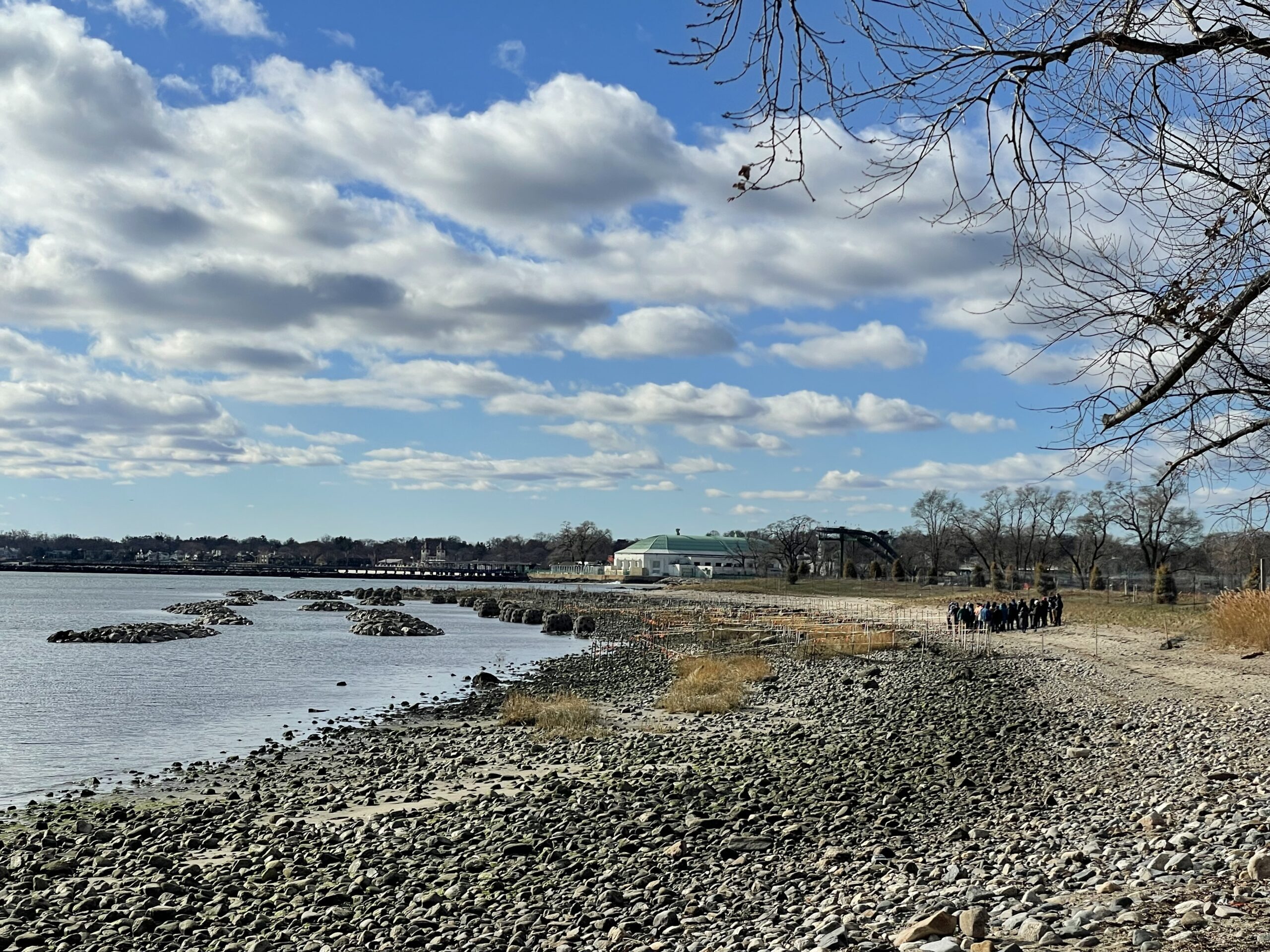
On December, 6, 2024, the Sustainable and Resilient Communities (SRC) Team hosted a field trip featuring Westchester County’s Edith Read Sanctuary living shoreline in Rye, NY. Participants got a guided tour of the recently completed living shoreline project and heard from Suzette Lopane with the Westchester County Department of Planning and Scott Williamson with the Edith Read Wildlife Sanctuary about the history of the site and how the living shoreline project came to be. Jake Dittes from Save the Sound also shared information on other living shoreline opportunities and projects in the region with the group. The tour was followed by a networking lunch and an opportunity to further explore the Sanctuary.
Special thanks to our partners: the Westchester County Department of Planning, Westchester County Department of Parks, Recreation, & Conservation/Edith G. Read Wildlife Sanctuary, Save the Sound, and Cornell Cooperative Extension of Westchester County.
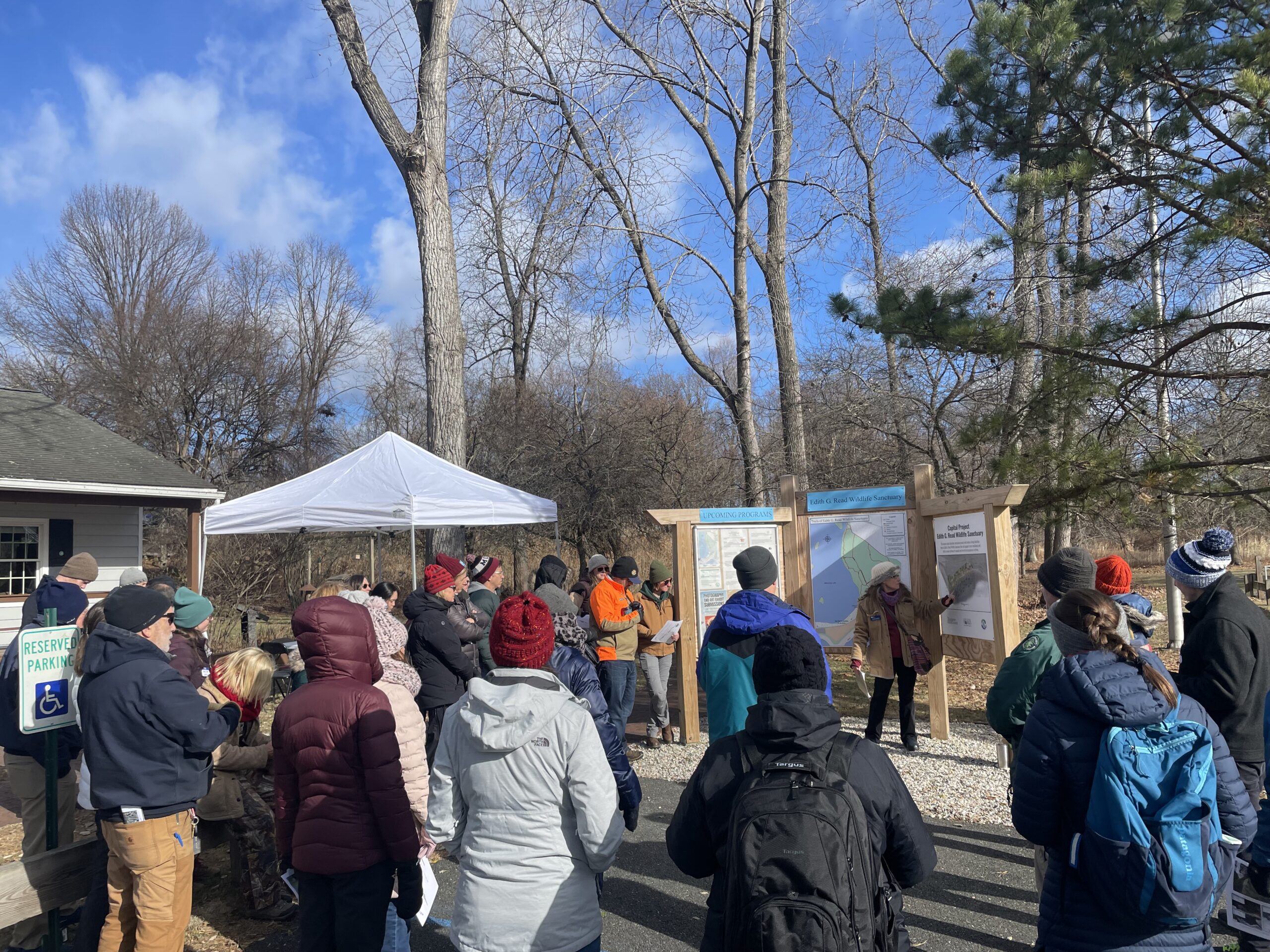
Photo credits: Sara Powell


SRC Training
This field trip was part of a Community Resilience Project Showcase leading up to the 2024 Annual SRC Workshop.
Edith Read Sanctuary Living Shoreline Field Trip
On December, 6, 2024, the Sustainable and Resilient Communities (SRC) Team hosted a field trip featuring Westchester County’s Edith Read Sanctuary living shoreline in Rye, NY. Participants got a guided tour of the recently completed living shoreline project and heard from Suzette Lopane with the Westchester County Department of Planning and Scott Williamson with the Edith Read Wildlife Sanctuary about the history of the site and how the living shoreline project came to be. Jake Dittes from Save the Sound also shared information on other living shoreline opportunities and projects in the region with the group. The tour was followed by a networking lunch and an opportunity to further explore the Sanctuary.
Special thanks to our partners: the Westchester County Department of Planning, Westchester County Department of Parks, Recreation, & Conservation/Edith G. Read Wildlife Sanctuary, Save the Sound, and Cornell Cooperative Extension of Westchester County.
Photo credits: Sara Powell
SRC Training
4th Annual SRC Workshop: Session 3 – LIS Resilience Planning Support Program
The Long Island Sound Sustainable and Resilient Communities (SRC) Team held our 2025 Annual Workshop virtually as three sessions over two days. Session topics focused on resources and tools available to help take advantage of state resilience funds, a panel discussion on why and how to incorporate nature-based solutions into resilience planning, and an overview of our available assistance programs.
Session 3 – LIS Resilience Planning Support Program: New Round Available & Showcase of Completed Projects was held on Friday, December 5, 2025. Participants learned about the newly available 3rd round of the LIS Resilience Planning Support Program and heard from three communities who received awards through the first round of the Program. Video of the session along with supporting materials is available below.
SRC Training
4th Annual SRC Workshop: Session 3 – LIS Resilience Planning Support Program
The Long Island Sound Sustainable and Resilient Communities (SRC) Team held our 2025 Annual Workshop virtually as three sessions over two days. Session topics focused on resources and tools available to help take advantage of state resilience funds, a panel discussion on why and how to incorporate nature-based solutions into resilience planning, and an overview of our available assistance programs.
Session 3 – LIS Resilience Planning Support Program: New Round Available & Showcase of Completed Projects was held on Friday, December 5, 2025. Participants learned about the newly available 3rd round of the LIS Resilience Planning Support Program and heard from three communities who received awards through the first round of the Program. Video of the session along with supporting materials is available below.
SRC Training
4th Annual SRC Workshop: Session 2 – Using Nature-Based Solutions for Resilience
The Long Island Sound Sustainable and Resilient Communities (SRC) Team held our 2025 Annual Workshop virtually as three sessions over two days. Session topics focused on resources and tools available to help take advantage of state resilience funds, a panel discussion on why and how to incorporate nature-based solutions into resilience planning, and an overview of our available assistance programs.
Session 2 – Using Nature-Based Solutions for Resilience: A Panel Discussion on Common Challenges & Strategies for Success was held on Thursday, December 4, 2025. In this interactive session, practitioners and experts discussed techniques for integrating nature-based solutions into resilience initiatives. The panel highlighted common challenges and shared successful strategies from projects in the Long Island Sound region. Video of the session along with supporting materials is available below.
SRC Training
4th Annual SRC Workshop: Session 2 – Using Nature-Based Solutions for Resilience
The Long Island Sound Sustainable and Resilient Communities (SRC) Team held our 2025 Annual Workshop virtually as three sessions over two days. Session topics focused on resources and tools available to help take advantage of state resilience funds, a panel discussion on why and how to incorporate nature-based solutions into resilience planning, and an overview of our available assistance programs.
Session 2 – Using Nature-Based Solutions for Resilience: A Panel Discussion on Common Challenges & Strategies for Success was held on Thursday, December 4, 2025. In this interactive session, practitioners and experts discussed techniques for integrating nature-based solutions into resilience initiatives. The panel highlighted common challenges and shared successful strategies from projects in the Long Island Sound region. Video of the session along with supporting materials is available below.
SRC Training
4th Annual SRC Workshop: Session 1 – Resilience 101
The Long Island Sound Sustainable and Resilient Communities (SRC) Team held our 2025 Annual Workshop virtually as three sessions over two days. Session topics focused on resources and tools available to help take advantage of state resilience funds, a panel discussion on why and how to incorporate nature-based solutions into resilience planning, and an overview of our available assistance programs.
Session 1 – Resilience 101: Helpful Tools and Strategies for Building Community Resilience was held on Thursday, December 4, 2025. Participants learned about available resilience resources and tools and then moved into breakout rooms to hear about state climate certification programs and resilience funds in both NY and CT. Videos of the main session and both breakout rooms are available below, along with supporting materials.
SRC Training
4th Annual SRC Workshop: Session 1 – Resilience 101
The Long Island Sound Sustainable and Resilient Communities (SRC) Team held our 2025 Annual Workshop virtually as three sessions over two days. Session topics focused on resources and tools available to help take advantage of state resilience funds, a panel discussion on why and how to incorporate nature-based solutions into resilience planning, and an overview of our available assistance programs.
Session 1 – Resilience 101: Helpful Tools and Strategies for Building Community Resilience was held on Thursday, December 4, 2025. Participants learned about available resilience resources and tools and then moved into breakout rooms to hear about state climate certification programs and resilience funds in both NY and CT. Videos of the main session and both breakout rooms are available below, along with supporting materials.
SRC Training
Dodge Paddock & Beal Preserve Marsh Restoration Field Trip and Workshop
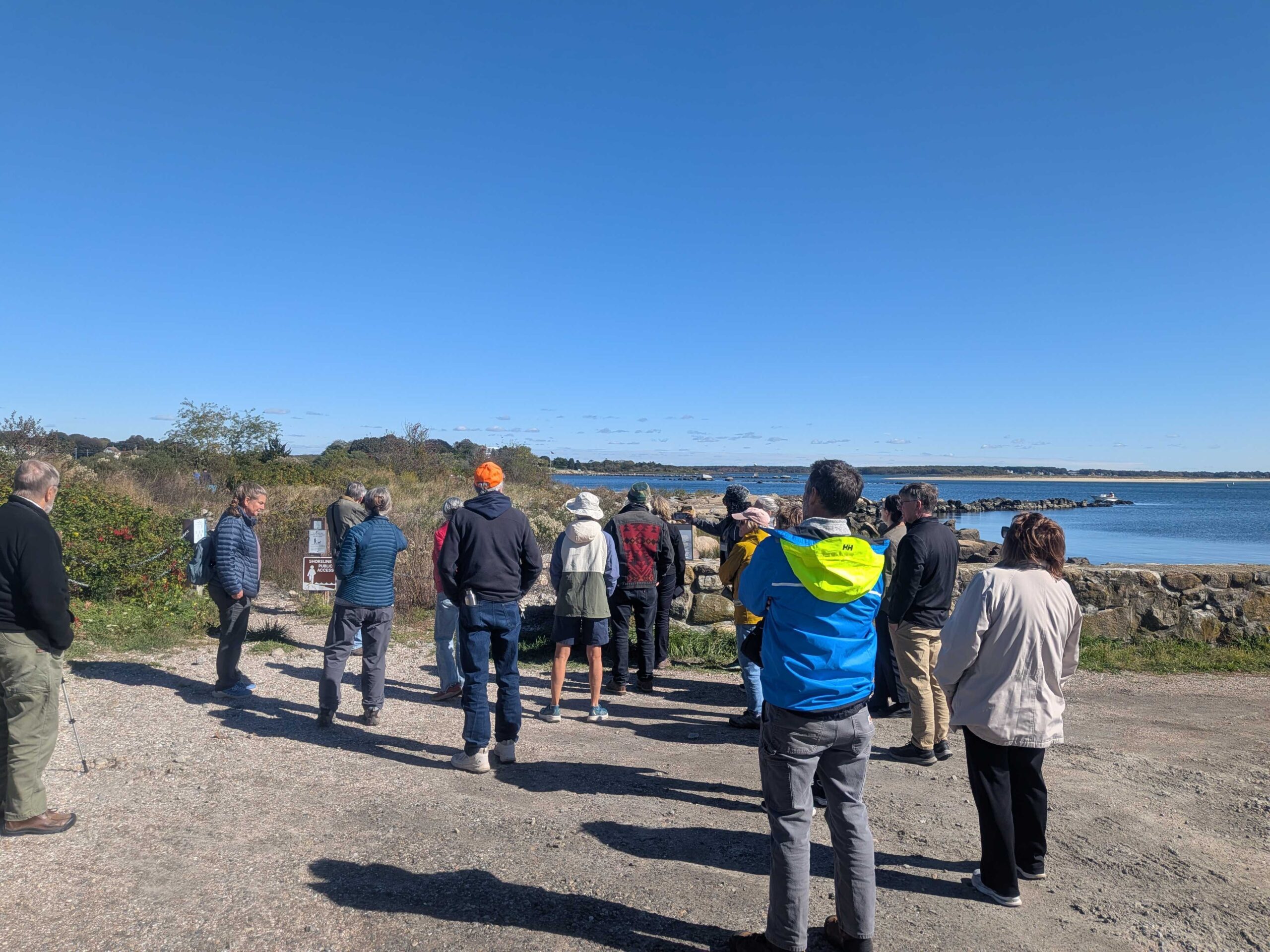
On October 16, 2025, the Sustainable and Resilient Communities (SRC) team of the Long Island Sound Partnership hosted a field trip featuring the Dodge Paddock and Beal Preserve Marsh Restoration Project in Stonington Borough. The day started with a presentation outlining the history and current state of the site, followed by a walk to Dodge Paddock and Beal Preserve where there was a guided tour led by Connecticut Sea Grant, Avalonia Land Conservancy, and local volunteers. The day included a deep dive into the invasive species removal process, plantings to accommodate marsh migration, and a close up look at what has grown since then. Special thanks to our partners with Avalonia Land Conservancy, Connecticut Sea Grant, and the Stonington Community.

SRC Training
Dodge Paddock & Beal Preserve Marsh Restoration Field Trip and Workshop
On October 16, 2025, the Sustainable and Resilient Communities (SRC) team of the Long Island Sound Partnership hosted a field trip featuring the Dodge Paddock and Beal Preserve Marsh Restoration Project in Stonington Borough. The day started with a presentation outlining the history and current state of the site, followed by a walk to Dodge Paddock and Beal Preserve where there was a guided tour led by Connecticut Sea Grant, Avalonia Land Conservancy, and local volunteers. The day included a deep dive into the invasive species removal process, plantings to accommodate marsh migration, and a close up look at what has grown since then. Special thanks to our partners with Avalonia Land Conservancy, Connecticut Sea Grant, and the Stonington Community.
SRC Training
Suffolk County Coastal Resilience Forum & Field Trip – 2025
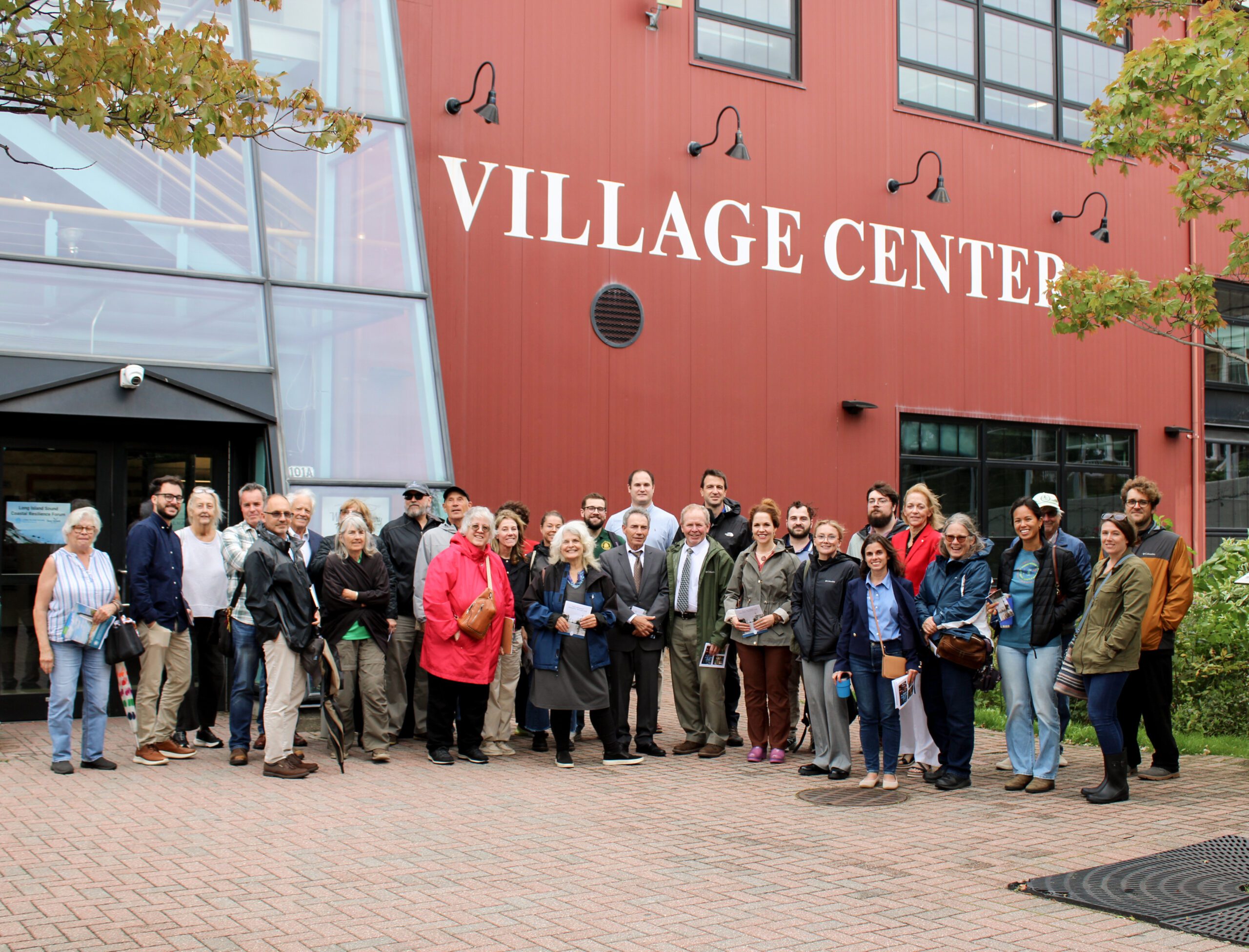
On October 8, 2025 state and local decision makers, municipal staff, and other interested parties working to address flooding, shoreline erosion and other coastal issues gathered at the Port Jefferson Village Center in Port Jefferson, NY for the 3rd Annual Suffolk County Coastal Resilience Forum. The Forum provided a chance to share information on best practices, discuss challenges, identify opportunities to increase resilience, and enhance coordination across communities. Forum attendees heard updates on State resilience initiatives from the NYS Department of Environmental Conservation and NYS Division of Homeland Security and Emergency Services, as well as presentations on new resilience tools and resources from Seatuck Environmental Association, the U.S. Geological Survey, New York Sea Grant, and Suffolk County Soil and Water Conservation District. In the afternoon, Village of Port Jefferson Mayor, Lauren Sheprow, presented on the Village’s resilience issues and initiatives and then led attendees on a walking tour of the Village highlighting flooding hotspots, challenges faced by local businesses and residents, and efforts to help mitigate flooding and increase community resilience.
The event was hosted by Long Island Sound Partnership and New York Sea Grant, in partnership with the Village of Port Jefferson and Suffolk County Soil and Water Conservation District.

SRC Training
Suffolk County Coastal Resilience Forum & Field Trip – 2025
On October 8, 2025 state and local decision makers, municipal staff, and other interested parties working to address flooding, shoreline erosion and other coastal issues gathered at the Port Jefferson Village Center in Port Jefferson, NY for the 3rd Annual Suffolk County Coastal Resilience Forum. The Forum provided a chance to share information on best practices, discuss challenges, identify opportunities to increase resilience, and enhance coordination across communities. Forum attendees heard updates on State resilience initiatives from the NYS Department of Environmental Conservation and NYS Division of Homeland Security and Emergency Services, as well as presentations on new resilience tools and resources from Seatuck Environmental Association, the U.S. Geological Survey, New York Sea Grant, and Suffolk County Soil and Water Conservation District. In the afternoon, Village of Port Jefferson Mayor, Lauren Sheprow, presented on the Village’s resilience issues and initiatives and then led attendees on a walking tour of the Village highlighting flooding hotspots, challenges faced by local businesses and residents, and efforts to help mitigate flooding and increase community resilience.
The event was hosted by Long Island Sound Partnership and New York Sea Grant, in partnership with the Village of Port Jefferson and Suffolk County Soil and Water Conservation District.
SRC Training
Nassau County Coastal Resilience Forum & Field Trip – 2025
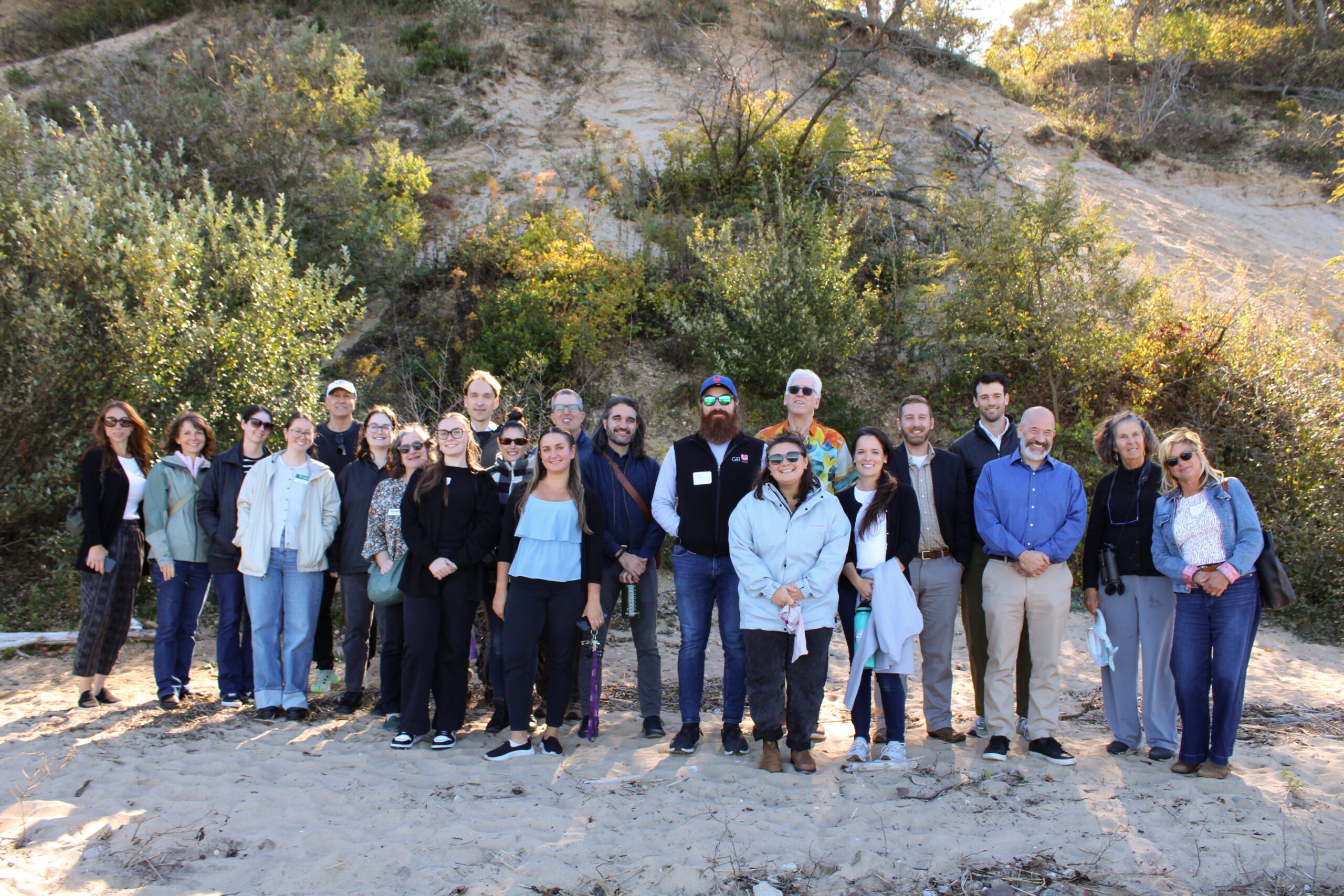
2025 Nassau Coastal Resilience Forum field trip to Sands Point Preserve. Credit: Sumayyah Uddin / NYSG
On October 9, 2025 state and local decision makers, municipal staff, and other interested parties working to address flooding, shoreline erosion and other coastal issues gathered at the Sands Point Preserve Conservancy in Sands Point, NY for the 3rd Annual Nassau County Coastal Resilience Forum. The Forum provided a chance to share information on best practices, discuss challenges, identify opportunities to increase resilience, and enhance coordination across communities. Forum attendees heard updates on State resilience initiatives from agencies like the NYS Department of Environmental Conservation and NYS Division of Homeland Security and Emergency Services, as well as presentations on new resilience tools and resources from Seatuck Environmental Association, the U.S. Geological Survey, New York Sea Grant, Cornell Cooperative Extension of Nassau County, and Nassau County Soil and Water Conservation District. In the afternoon, Forum attendees were given a guided tour of the recent expansions to the bluff stabilization project at the Preserve.
The event was hosted by Long Island Sound Partnership and New York Sea Grant, in partnership with the Sands Point Preserve Conservancy and Nassau and Suffolk County Soil and Water Conservation Districts.

SRC Training
Nassau County Coastal Resilience Forum & Field Trip – 2025
2025 Nassau Coastal Resilience Forum field trip to Sands Point Preserve. Credit: Sumayyah Uddin / NYSG
On October 9, 2025 state and local decision makers, municipal staff, and other interested parties working to address flooding, shoreline erosion and other coastal issues gathered at the Sands Point Preserve Conservancy in Sands Point, NY for the 3rd Annual Nassau County Coastal Resilience Forum. The Forum provided a chance to share information on best practices, discuss challenges, identify opportunities to increase resilience, and enhance coordination across communities. Forum attendees heard updates on State resilience initiatives from agencies like the NYS Department of Environmental Conservation and NYS Division of Homeland Security and Emergency Services, as well as presentations on new resilience tools and resources from Seatuck Environmental Association, the U.S. Geological Survey, New York Sea Grant, Cornell Cooperative Extension of Nassau County, and Nassau County Soil and Water Conservation District. In the afternoon, Forum attendees were given a guided tour of the recent expansions to the bluff stabilization project at the Preserve.
The event was hosted by Long Island Sound Partnership and New York Sea Grant, in partnership with the Sands Point Preserve Conservancy and Nassau and Suffolk County Soil and Water Conservation Districts.
SRC Training
Land Use Leadership Alliance (LULA) Training Program – Spring 2025
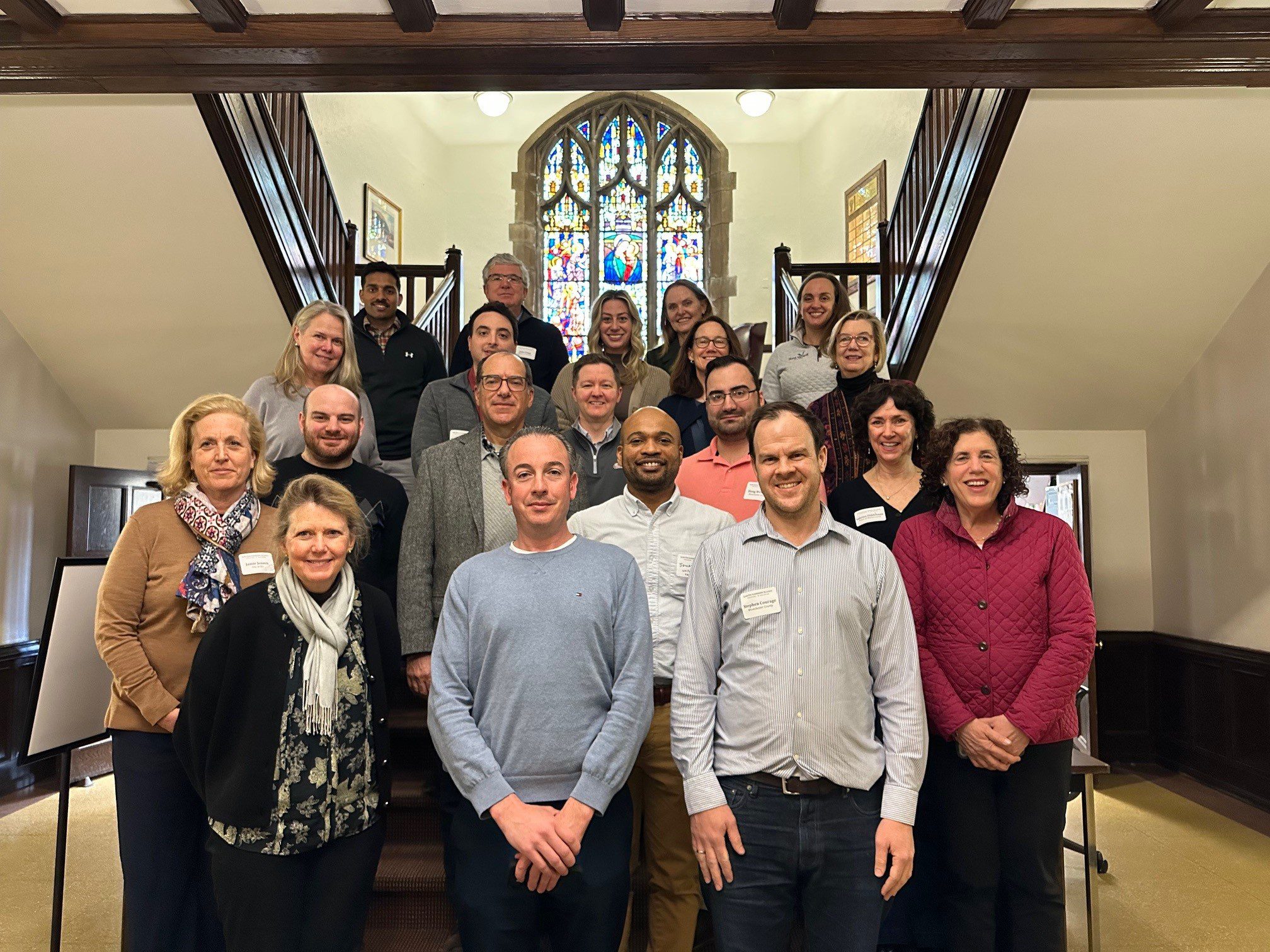
With funding from Long Island Sound Study and support from New York Sea Grant’s Sustainable and Resilient Communities Extension Professionals, Pace University’s Land Use Law Center brought its award-winning Land Use Leadership Alliance Training Program to Westchester municipalities within the Long Island Sound watershed. The training consisted of three full-day workshops held April 1, 8, and 22, 2025 in White Plains, NY to train local leaders on developing balanced strategies for effectively accomplishing policy objectives, particularly focused on land use, flood resilience, and natural resource protection to strengthen community planning and informed decision-making.
22 municipal staff and community leaders, representing 7 different Long Island Sound communities received resilience gap analyses that reviewed their municipality’s current zoning and comprehensive plan language, discussed common issues with their neighbors and built new networks of support, and graduated from the program empowered to plan for a more resilient future for their community and the Long Island Sound region.
If you are interested in learning more and participating in a future LULA training, please email lisresilience@gmail.com.
SRC Training
Land Use Leadership Alliance (LULA) Training Program – Spring 2025
With funding from Long Island Sound Study and support from New York Sea Grant’s Sustainable and Resilient Communities Extension Professionals, Pace University’s Land Use Law Center brought its award-winning Land Use Leadership Alliance Training Program to Westchester municipalities within the Long Island Sound watershed. The training consisted of three full-day workshops held April 1, 8, and 22, 2025 in White Plains, NY to train local leaders on developing balanced strategies for effectively accomplishing policy objectives, particularly focused on land use, flood resilience, and natural resource protection to strengthen community planning and informed decision-making.
22 municipal staff and community leaders, representing 7 different Long Island Sound communities received resilience gap analyses that reviewed their municipality’s current zoning and comprehensive plan language, discussed common issues with their neighbors and built new networks of support, and graduated from the program empowered to plan for a more resilient future for their community and the Long Island Sound region.
If you are interested in learning more and participating in a future LULA training, please email lisresilience@gmail.com.
SRC Training
Land Use Leadership Alliance (LULA)Training Program – Fall 2024
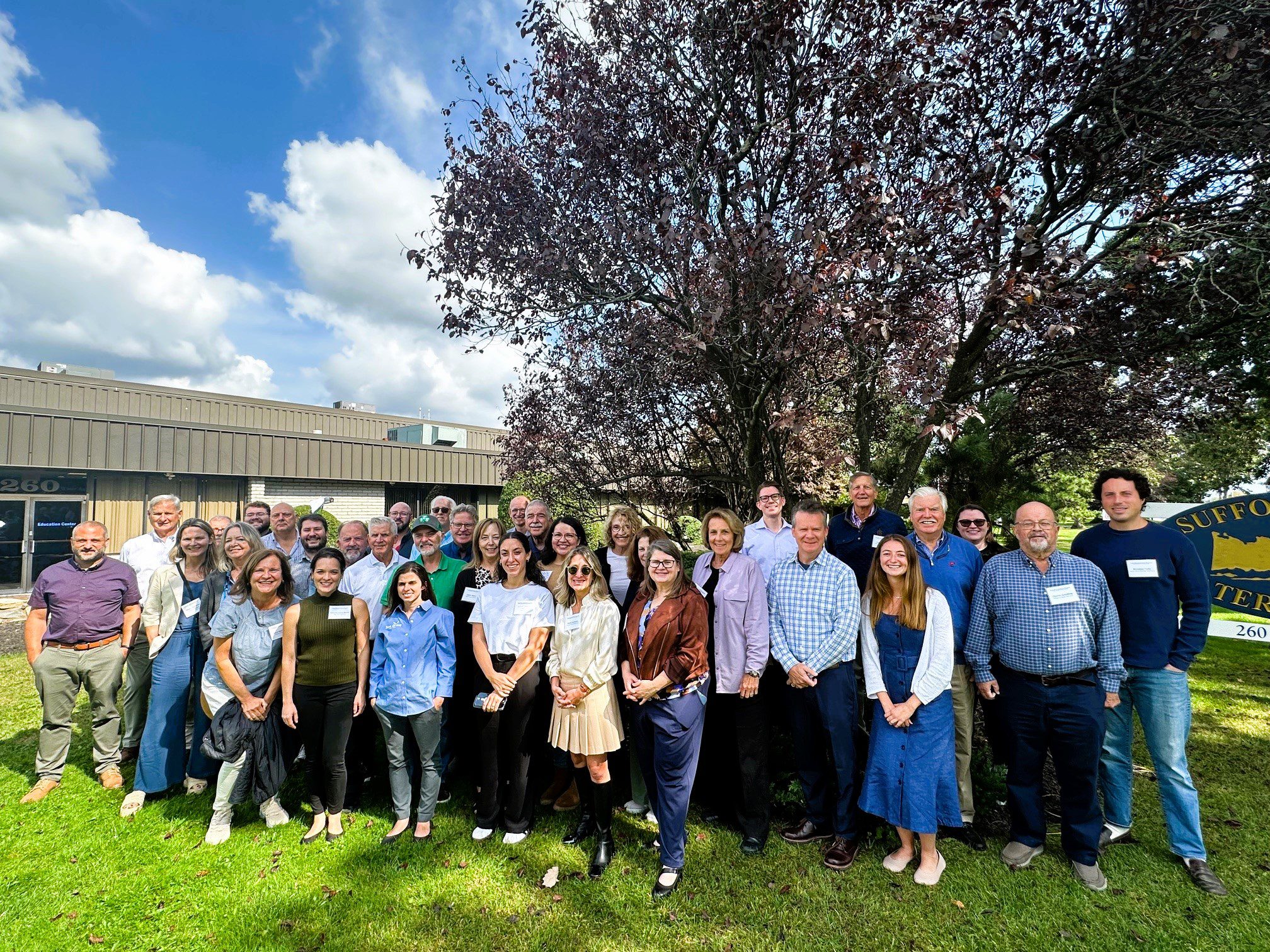
With funding from Long Island Sound Study and support from New York Sea Grant’s Sustainable and Resilient Communities Extension Professionals, Pace University’s Land Use Law Center brought its award-winning Land Use Leadership Alliance Training Program to Suffolk and Nassau municipalities within the Long Island Sound watershed. The training program consisted of three full-day workshops held in Hauppauge, NY that focused on the land use system, innovative approaches to sea level rise adaptation, hazard mitigation, and natural resource protection to strengthen community planning, regulation, and informed decision-making. 28 municipal staff and community leaders, representing 18 different Long Island Sound communities, completed the Program. Program graduates gained new networks of support, identified successful land use techniques, and developed implementation plans that will enable a more resilient future for their community and the Long Island Sound region.
The program comprised three full-day sessions on September 27, October 4, and October 18, 2024 at the Suffolk County Water Authority Education Center, 260 Motor Parkway in Hauppauge, NY.
If you are interested in learning more and participating in a future LULA training, please email lisresilience@gmail.com.
SRC Training
Land Use Leadership Alliance (LULA)Training Program – Fall 2024
With funding from Long Island Sound Study and support from New York Sea Grant’s Sustainable and Resilient Communities Extension Professionals, Pace University’s Land Use Law Center brought its award-winning Land Use Leadership Alliance Training Program to Suffolk and Nassau municipalities within the Long Island Sound watershed. The training program consisted of three full-day workshops held in Hauppauge, NY that focused on the land use system, innovative approaches to sea level rise adaptation, hazard mitigation, and natural resource protection to strengthen community planning, regulation, and informed decision-making. 28 municipal staff and community leaders, representing 18 different Long Island Sound communities, completed the Program. Program graduates gained new networks of support, identified successful land use techniques, and developed implementation plans that will enable a more resilient future for their community and the Long Island Sound region.
The program comprised three full-day sessions on September 27, October 4, and October 18, 2024 at the Suffolk County Water Authority Education Center, 260 Motor Parkway in Hauppauge, NY.
If you are interested in learning more and participating in a future LULA training, please email lisresilience@gmail.com.
SRC Training
3rd Annual SRC Workshop: Session 3 – Planning for Inundation
The Long Island Sound Sustainable and Resilient Communities (SRC) Team held our 2024 Annual Workshop virtually as three sessions over two days. Session topics focused on our assistance programs, new regional resilience resources and tools, and a discussion on planning for inundation and different considerations communities may face.
Session 3 – Planning for Inundation was held on Wednesday, December 11th from 10 AM-12 PM. Participants heard from communities and regional entities that are using or considering different aspects of planning for inundation, including buyout programs, land use policies, and community perspectives on retreat/relocation.
SRC Training
3rd Annual SRC Workshop: Session 3 – Planning for Inundation
The Long Island Sound Sustainable and Resilient Communities (SRC) Team held our 2024 Annual Workshop virtually as three sessions over two days. Session topics focused on our assistance programs, new regional resilience resources and tools, and a discussion on planning for inundation and different considerations communities may face.
Session 3 – Planning for Inundation was held on Wednesday, December 11th from 10 AM-12 PM. Participants heard from communities and regional entities that are using or considering different aspects of planning for inundation, including buyout programs, land use policies, and community perspectives on retreat/relocation.
SRC Training
3rd Annual SRC Workshop: Session 2 – Resilience Tools
The Long Island Sound Sustainable and Resilient Communities (SRC) Team held our 2024 Annual Workshop virtually as three sessions over two days. Session topics focused on our assistance programs, new regional resilience resources and tools, and a discussion on planning for inundation and different considerations communities may face.
Session 2 – Resilience Tools was held on Tuesday, December 10th from 1:30-3:30 PM. Participants learned about new Resilience Tools being developed and used throughout coastal Long Island Sound.
SRC Training
3rd Annual SRC Workshop: Session 2 – Resilience Tools
The Long Island Sound Sustainable and Resilient Communities (SRC) Team held our 2024 Annual Workshop virtually as three sessions over two days. Session topics focused on our assistance programs, new regional resilience resources and tools, and a discussion on planning for inundation and different considerations communities may face.
Session 2 – Resilience Tools was held on Tuesday, December 10th from 1:30-3:30 PM. Participants learned about new Resilience Tools being developed and used throughout coastal Long Island Sound.
SRC Training
3rd Annual SRC Workshop: Session 1 – SRC Resilience Assistance Programs
The Long Island Sound Sustainable and Resilient Communities (SRC) Team held our 2024 Annual Workshop virtually as three sessions over two days. Session topics focused on our assistance programs, new regional resilience resources and tools, and a discussion on planning for inundation and different considerations communities may face.
Session 1 – SRC Resilience Assistance Programs was held on Tuesday, December 10th from 10-11:30 AM. Participants learned about our Sustainable and Resilient Communities resilience assistance programs and heard from communities who have successfully utilized them to advance resilience project plans, build capacity, and secure competitive grant funding!
SRC Training
3rd Annual SRC Workshop: Session 1 – SRC Resilience Assistance Programs
The Long Island Sound Sustainable and Resilient Communities (SRC) Team held our 2024 Annual Workshop virtually as three sessions over two days. Session topics focused on our assistance programs, new regional resilience resources and tools, and a discussion on planning for inundation and different considerations communities may face.
Session 1 – SRC Resilience Assistance Programs was held on Tuesday, December 10th from 10-11:30 AM. Participants learned about our Sustainable and Resilient Communities resilience assistance programs and heard from communities who have successfully utilized them to advance resilience project plans, build capacity, and secure competitive grant funding!
SRC Training
Nassau County Coastal Resilience Forum & Field Trip – 2024
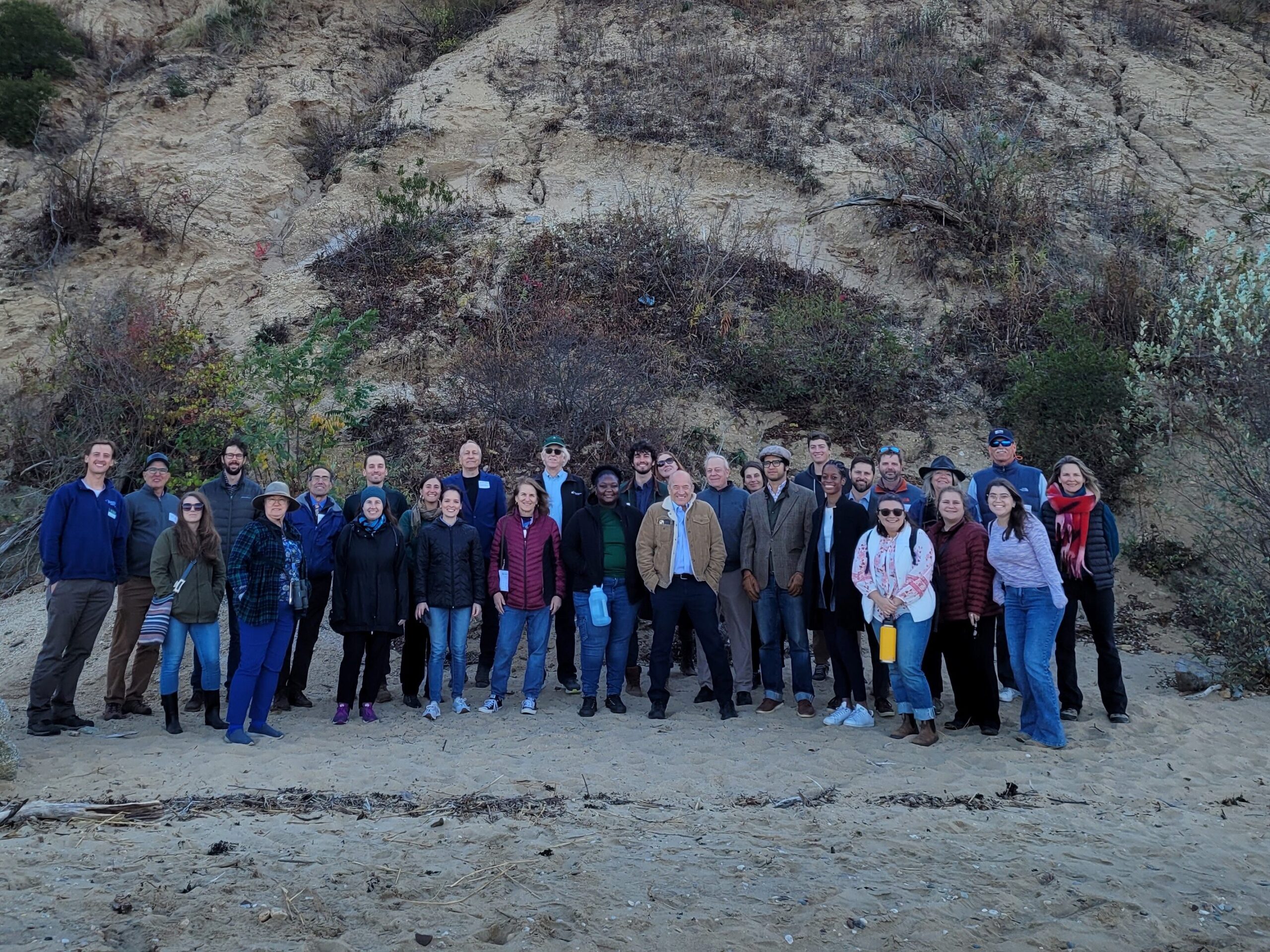
2024 Nassau Coastal Resilience Forum field trip to Sands Point Preserve. Credit: NYSG
On October 28, 2024, state and local decision makers, municipal staff, and other interested parties working to address coastal issues gathered at the Sands Point Preserve Conservancy in Sands Point, NY for the 2nd Annual Nassau County Coastal Resilience Forum to identify opportunities to increase resilience, learn about best practices, and enhance coordination across communities. There were presentations on the Long Island Sound Resilience Resource Hub & Assistance Programs, NYSDEC Office of Climate Change updates, marsh conservation planning, bluff management and restoration, and nature-based solutions to increase shoreline resilience. There was also a guided walking tour of the resilience projects at Sands Point Preserve.
The event is hosted by Long Island Sound Study and New York Sea Grant, in partnership with the Sands Point Preserve Conservancy and Nassau and Suffolk Soil and Water Conservation Districts.
SRC Training
Nassau County Coastal Resilience Forum & Field Trip – 2024
2024 Nassau Coastal Resilience Forum field trip to Sands Point Preserve. Credit: NYSG
On October 28, 2024, state and local decision makers, municipal staff, and other interested parties working to address coastal issues gathered at the Sands Point Preserve Conservancy in Sands Point, NY for the 2nd Annual Nassau County Coastal Resilience Forum to identify opportunities to increase resilience, learn about best practices, and enhance coordination across communities. There were presentations on the Long Island Sound Resilience Resource Hub & Assistance Programs, NYSDEC Office of Climate Change updates, marsh conservation planning, bluff management and restoration, and nature-based solutions to increase shoreline resilience. There was also a guided walking tour of the resilience projects at Sands Point Preserve.
The event is hosted by Long Island Sound Study and New York Sea Grant, in partnership with the Sands Point Preserve Conservancy and Nassau and Suffolk Soil and Water Conservation Districts.
SRC Training
Suffolk County Coastal Resilience Forum & Field Trip
On October 29, 2024, state and local decision makers, municipal staff, and other interested parties working to address coastal issues gathered at the Dorothy P. Flint 4-H Camp in Riverhead, NY to identify opportunities to increase resilience, learn about best practices, and enhance coordination across communities. There were presentations on the Long Island Sound Resilience Resource Hub, NYSDEC Climate Office updates, marsh conservation planning, bluff management and restoration, and nature-based solutions to increase shoreline resilience. There was also a field trip to Iron Pier Beach/Maidstone Landing to view and learn about a community bluff restoration project.
This event was hosted by Long Island Sound Study and New York Sea Grant, in partnership with Nassau and Suffolk Soil and Water Conservation Districts, Nassau CCE, and Maidstone Landing.

SRC Training
Suffolk County Coastal Resilience Forum & Field Trip
On October 29, 2024, state and local decision makers, municipal staff, and other interested parties working to address coastal issues gathered at the Dorothy P. Flint 4-H Camp in Riverhead, NY to identify opportunities to increase resilience, learn about best practices, and enhance coordination across communities. There were presentations on the Long Island Sound Resilience Resource Hub, NYSDEC Climate Office updates, marsh conservation planning, bluff management and restoration, and nature-based solutions to increase shoreline resilience. There was also a field trip to Iron Pier Beach/Maidstone Landing to view and learn about a community bluff restoration project.
This event was hosted by Long Island Sound Study and New York Sea Grant, in partnership with Nassau and Suffolk Soil and Water Conservation Districts, Nassau CCE, and Maidstone Landing.
SRC Training
SRC Annual Bi-State Workshop 2023
The second annual Long Island Sound Bi-State Sustainable and Resilient Communities Workshop brought together nearly 200 people virtually on Dec. 7, 2023 to learn about a new Long Island Sound Resilience Resource Hub (launching in early 2024), hear from communities and groups around the Sound working on resilience planning, and consider pathways for updating codes and ordinances. Videos of the workshop’s six sessions are available on YouTube. They can be accessed below along with supporting documents.
SRC Training
SRC Annual Bi-State Workshop 2023
The second annual Long Island Sound Bi-State Sustainable and Resilient Communities Workshop brought together nearly 200 people virtually on Dec. 7, 2023 to learn about a new Long Island Sound Resilience Resource Hub (launching in early 2024), hear from communities and groups around the Sound working on resilience planning, and consider pathways for updating codes and ordinances. Videos of the workshop’s six sessions are available on YouTube. They can be accessed below along with supporting documents.
SRC Training
2023 Long Island Sound Coastal Erosion Forum – Nassau County
Held at Locust Valley Library in Nassau County on May 4, 2023, this forum brought together state and local decision makers and other stakeholders, working to address coastal erosion along the Long Island Sound shoreline. Panelists highlighted strategies and options to address coastal erosion, discussed the Coastal Erosion Hazard Areas Program, local codes, updated New York State sea level rise projections and more. During small group discussions, attendees discussed challenges and identified opportunities to increase resilience, all in an effort to enhance coordination across communities. This forum was hosted by New York Sea Grant and Long Island Sound Study, in partnership with Nassau County Soil and Water Conservation District.
SRC Training
2023 Long Island Sound Coastal Erosion Forum – Nassau County
Held at Locust Valley Library in Nassau County on May 4, 2023, this forum brought together state and local decision makers and other stakeholders, working to address coastal erosion along the Long Island Sound shoreline. Panelists highlighted strategies and options to address coastal erosion, discussed the Coastal Erosion Hazard Areas Program, local codes, updated New York State sea level rise projections and more. During small group discussions, attendees discussed challenges and identified opportunities to increase resilience, all in an effort to enhance coordination across communities. This forum was hosted by New York Sea Grant and Long Island Sound Study, in partnership with Nassau County Soil and Water Conservation District.
SRC Training
Long Island Sound Coastal Erosion Forum- Suffolk County
Held at Port Jefferson Village Center in Suffolk County on May 10, 2023, this forum brought together state and local decision makers and other stakeholders, working to address coastal erosion along the Long Island Sound shoreline. Panelists highlighted strategies and options to address coastal erosion, discussed the Coastal Erosion Hazard Areas Program, local codes, updated New York State sea level rise projections and more. During small group discussions, attendees discussed challenges and identified opportunities to increase resilience, all in an effort to enhance coordination across communities. This forum was hosted by New York Sea Grant and Long Island Sound Study, in partnership with Suffolk County Soil and Water Conservation District and Suffolk County Legislators Sarah Anker, Stephanie Bontempi, Kara Hahn, and Al Krupski.
SRC Training
Long Island Sound Coastal Erosion Forum- Suffolk County
Held at Port Jefferson Village Center in Suffolk County on May 10, 2023, this forum brought together state and local decision makers and other stakeholders, working to address coastal erosion along the Long Island Sound shoreline. Panelists highlighted strategies and options to address coastal erosion, discussed the Coastal Erosion Hazard Areas Program, local codes, updated New York State sea level rise projections and more. During small group discussions, attendees discussed challenges and identified opportunities to increase resilience, all in an effort to enhance coordination across communities. This forum was hosted by New York Sea Grant and Long Island Sound Study, in partnership with Suffolk County Soil and Water Conservation District and Suffolk County Legislators Sarah Anker, Stephanie Bontempi, Kara Hahn, and Al Krupski.
Training
Developing Conservation Plans for New York’s Long Island Sound Marsh Complexes
These webinars were presented by NEIWPCC, Long Island Sound Study, and the New York State Department of Environmental Conservation. The webinars introduced the Marsh Interactive Fate Viewer, discussed the process of creating marsh conservation plans for Westchester County and Mattituck Creek (Suffolk County) in 2021, and laid the groundwork for developing additional marsh conservation plans over the course of 2023.

Training
Developing Conservation Plans for New York’s Long Island Sound Marsh Complexes
These webinars were presented by NEIWPCC, Long Island Sound Study, and the New York State Department of Environmental Conservation. The webinars introduced the Marsh Interactive Fate Viewer, discussed the process of creating marsh conservation plans for Westchester County and Mattituck Creek (Suffolk County) in 2021, and laid the groundwork for developing additional marsh conservation plans over the course of 2023.
SRC Training
Steps to Resilience
This online information session held Sept. 19, and repeated Sept. 21, provides an introduction to resilience planning in the Long Island Sound region. It includes discussions on local climate impacts and projections, resilience planning strategies, and climate certification programs for both New York and Connecticut municipalities. In addition to the main presentation, videos of the Connecticut and New York breakout sessions can be accessed below. The presentations and other resource materials are available here.


SRC Training
Steps to Resilience
This online information session held Sept. 19, and repeated Sept. 21, provides an introduction to resilience planning in the Long Island Sound region. It includes discussions on local climate impacts and projections, resilience planning strategies, and climate certification programs for both New York and Connecticut municipalities. In addition to the main presentation, videos of the Connecticut and New York breakout sessions can be accessed below. The presentations and other resource materials are available here.
SRC Training
SRC Annual Bi-State Workshop 2022
The first annual Long Island Sound Bi-State Sustainable and Resilient Communities Workshop brought together more than 260 people virtually on Dec. 1, 2022 to learn about opportunities to increase the resilience of the Sound’s communities to climate change and other environmental threats. Interactive sessions included opportunities to learn more about the SRC Extension Professionals’ needs assessment findings and recommendations, the newly released Long Island Sound Resilience Grant Writing Assistance Program, and tips for success with Long Island Sound funding opportunities. Concurrent breakout sessions highlighted the work of partners related to shoreline planning and implementation, using green infrastructure for stormwater management, sustainable climate planning for relocation, and new sustainability/resilience tools available in both New York and Connecticut. Videos of the workshop’s six sessions are available on YouTube. They can be accessed below along with supporting documents.
SRC Training
SRC Annual Bi-State Workshop 2022
The first annual Long Island Sound Bi-State Sustainable and Resilient Communities Workshop brought together more than 260 people virtually on Dec. 1, 2022 to learn about opportunities to increase the resilience of the Sound’s communities to climate change and other environmental threats. Interactive sessions included opportunities to learn more about the SRC Extension Professionals’ needs assessment findings and recommendations, the newly released Long Island Sound Resilience Grant Writing Assistance Program, and tips for success with Long Island Sound funding opportunities. Concurrent breakout sessions highlighted the work of partners related to shoreline planning and implementation, using green infrastructure for stormwater management, sustainable climate planning for relocation, and new sustainability/resilience tools available in both New York and Connecticut. Videos of the workshop’s six sessions are available on YouTube. They can be accessed below along with supporting documents.
Training
MyCoast New York
In this Coastal Resiliency Network webinar, Jess Kuonen from NY Sea Grant presents on MyCoast New York, a portal used to collect and analyze photos of changing water levels, shorelines, and hazardous weather impacts across New York’s varied coasts and water bodies. Additionally, Nelson Vaz from the National Weather Service – NY shared the National Weather Service Coastal Flood Webpage resources and the benefits of collecting local impact information from sources such as MyCoast NY. The Coastal Resilience Network, led by the New York State Association of Conservation Commissions (NYSACC) with assistance from NY Sea Grant, is a collaborative open forum for communities in coastal Westchester, Nassau, and Suffolk Counties to discuss and learn about opportunities to increase their resilience to sea level rise, flooding, and extreme events.

Training
MyCoast New York
In this Coastal Resiliency Network webinar, Jess Kuonen from NY Sea Grant presents on MyCoast New York, a portal used to collect and analyze photos of changing water levels, shorelines, and hazardous weather impacts across New York’s varied coasts and water bodies. Additionally, Nelson Vaz from the National Weather Service – NY shared the National Weather Service Coastal Flood Webpage resources and the benefits of collecting local impact information from sources such as MyCoast NY. The Coastal Resilience Network, led by the New York State Association of Conservation Commissions (NYSACC) with assistance from NY Sea Grant, is a collaborative open forum for communities in coastal Westchester, Nassau, and Suffolk Counties to discuss and learn about opportunities to increase their resilience to sea level rise, flooding, and extreme events.
Training
Living Shorelines
In this Coastal Resiliency Network webinar Suzette Lopane with Westchester County and Marian Russo with the Village of Patchogue spoke about two exciting living shoreline projects. The Coastal Resilience Network, led by the New York State Association of Conservation Commissions (NYSACC) with assistance from NY Sea Grant, is a collaborative open forum for communities in coastal Westchester, Nassau, and Suffolk Counties to discuss and learn about opportunities to increase their resilience to sea level rise, flooding, and extreme events.
Training
Living Shorelines
In this Coastal Resiliency Network webinar Suzette Lopane with Westchester County and Marian Russo with the Village of Patchogue spoke about two exciting living shoreline projects. The Coastal Resilience Network, led by the New York State Association of Conservation Commissions (NYSACC) with assistance from NY Sea Grant, is a collaborative open forum for communities in coastal Westchester, Nassau, and Suffolk Counties to discuss and learn about opportunities to increase their resilience to sea level rise, flooding, and extreme events.
Training
Local Waterfront Revitalization Programs: Challenges and Opportunities
In this Coastal Resiliency Network webinar, Barbara Kendall from the NYS Department of State provides an overview of Local Waterfront Revitalization Programs (LWRP) and then representatives from four NYS coastal communities discuss their experiences developing and implementing their LWRPs. The Coastal Resilience Network, led by the New York State Association of Conservation Commissions (NYSACC) with assistance from NY Sea Grant, is a collaborative open forum for communities in coastal Westchester, Nassau, and Suffolk Counties to discuss and learn about opportunities to increase their resilience to sea level rise, flooding, and extreme events.
Training
Local Waterfront Revitalization Programs: Challenges and Opportunities
In this Coastal Resiliency Network webinar, Barbara Kendall from the NYS Department of State provides an overview of Local Waterfront Revitalization Programs (LWRP) and then representatives from four NYS coastal communities discuss their experiences developing and implementing their LWRPs. The Coastal Resilience Network, led by the New York State Association of Conservation Commissions (NYSACC) with assistance from NY Sea Grant, is a collaborative open forum for communities in coastal Westchester, Nassau, and Suffolk Counties to discuss and learn about opportunities to increase their resilience to sea level rise, flooding, and extreme events.
Training
Developing a Coastal Assessment Resiliency Plan
In this Coastal Resiliency Network webinar, Samantha Klein, Environmental Analyst for the Town of East Hampton, discusses her experience in paving the way to a more resilient East Hampton with the development of their CARP (Coastal Assessment Resiliency Plan). She focuses on lessons learned, funding, and providing guidance on how to get started creating your own CARP. The Coastal Resilience Network, led by the New York State Association of Conservation Commissions (NYSACC) with assistance from NY Sea Grant, is a collaborative open forum for communities in coastal Westchester, Nassau, and Suffolk Counties to discuss and learn about opportunities to increase their resilience to sea level rise, flooding, and extreme events.
Training
Developing a Coastal Assessment Resiliency Plan
In this Coastal Resiliency Network webinar, Samantha Klein, Environmental Analyst for the Town of East Hampton, discusses her experience in paving the way to a more resilient East Hampton with the development of their CARP (Coastal Assessment Resiliency Plan). She focuses on lessons learned, funding, and providing guidance on how to get started creating your own CARP. The Coastal Resilience Network, led by the New York State Association of Conservation Commissions (NYSACC) with assistance from NY Sea Grant, is a collaborative open forum for communities in coastal Westchester, Nassau, and Suffolk Counties to discuss and learn about opportunities to increase their resilience to sea level rise, flooding, and extreme events.
GWA Case Study
Project
Old Saybrook, CT
Planning to Restore Chalker and Chapman Beach Marshes and Mitigate Marsh-Associated Flooding
With support from the Long Island Sound Resilience Grant Writing Assistance (GWA) Program, in December 2024 the Town of Old Saybrook was awarded $323,400 from the Long Island Sound Futures Fund to support the project: Planning to Restore Chalker and Chapman Beach Marshes and Mitigate Marsh-Associated Flooding (CT).
The project will conduct a feasibility analysis for restoring the degraded Chalker Beach Marsh and mitigate erosion of Cold Spring Brook marsh, examine potential residential neighborhood flood mitigation strategies and evaluate alternative concepts to restore the Cold Spring Brook marsh. Project will provide Chalker Beach marsh restoration plan and design alternatives, concept-level neighborhood-scale flood mitigation strategies and a concept-level Cold Spring Brook marsh erosion control/restoration practices.
LIS Resilience Grant Writing Assistance Program Details:
Grant Writing Consultant: David Kozak
Grant Writing Assistance Award: $6,375
Christina M. Costa, CZEO, CFM, Zoning Enforcement Officer/Town Planner, Town of Old Saybrook, Chris.Costa@OldSaybrookCT.gov
GWA Case Study
Project
Old Saybrook, CT
Planning to Restore Chalker and Chapman Beach Marshes and Mitigate Marsh-Associated Flooding
With support from the Long Island Sound Resilience Grant Writing Assistance (GWA) Program, in December 2024 the Town of Old Saybrook was awarded $323,400 from the Long Island Sound Futures Fund to support the project: Planning to Restore Chalker and Chapman Beach Marshes and Mitigate Marsh-Associated Flooding (CT).
The project will conduct a feasibility analysis for restoring the degraded Chalker Beach Marsh and mitigate erosion of Cold Spring Brook marsh, examine potential residential neighborhood flood mitigation strategies and evaluate alternative concepts to restore the Cold Spring Brook marsh. Project will provide Chalker Beach marsh restoration plan and design alternatives, concept-level neighborhood-scale flood mitigation strategies and a concept-level Cold Spring Brook marsh erosion control/restoration practices.
LIS Resilience Grant Writing Assistance Program Details:
Grant Writing Consultant: David Kozak
Grant Writing Assistance Award: $6,375
Case Study
Plan
East Haddam, CT
East Haddam Community Resilience Building Summary of Findings
With support from the Nature Conservancy and Sustainable CT, East Haddam organized a Community Resilience Building process and workshop, the results of which were compiled into this summary. The team engaged with community members to determine the present hazards and vulnerabilities and identify resilient solutions.
Case Study
Plan
East Haddam, CT
East Haddam Community Resilience Building Summary of Findings
With support from the Nature Conservancy and Sustainable CT, East Haddam organized a Community Resilience Building process and workshop, the results of which were compiled into this summary. The team engaged with community members to determine the present hazards and vulnerabilities and identify resilient solutions.
Case Study
Plan
Oyster Bay, NY and Cold Spring Harbor, NY
Marsh Conservation Planning for Oyster Bay & Cold Spring Harbor
In 2023, Long Island Sound Study, New York Sea Grant and Warren Pinnacle, in partnership with committed municipalities and marsh-conservation groups/organizations, developed a Plan to understand the benefits, threats and recommended conservation actions at seven focal areas across the harbors. The goal of the Plan is to inform local municipalities and marsh-conservation groups as to where they might focus their conservation efforts to maximize the conservation of marsh ecosystem services under sea-level rise conditions. This process brought together a diversity of stakeholders to develop a cohesive strategy for seven focal areas across Oyster Bay and Cold Spring Harbor: Frost Creek, Mill Neck Creek, West Shore Road, Bayville Bridge to Centre Island, Centre Island, Shore Road, and Lower Cold Spring Harbor. The partners will now work to implement the recommendations in the plan.
St. John’s Episcopal Church (lower Cold Spring Harbor) and Village of Lattingtown (Frost Creek) were 2024 LIS Resilience Planning Support Program awardees. Their projects will build off the Oyster Bay & Cold Spring Harbor marsh conservation plan and develop specific recommendations to enhance and restore marsh habitat in lower Cold Spring Harbor and Frost Creek.

Sarah Schaefer-Brown, scs292@cornell.edu
Case Study
Plan
Oyster Bay, NY and Cold Spring Harbor, NY
Marsh Conservation Planning for Oyster Bay & Cold Spring Harbor
In 2023, Long Island Sound Study, New York Sea Grant and Warren Pinnacle, in partnership with committed municipalities and marsh-conservation groups/organizations, developed a Plan to understand the benefits, threats and recommended conservation actions at seven focal areas across the harbors. The goal of the Plan is to inform local municipalities and marsh-conservation groups as to where they might focus their conservation efforts to maximize the conservation of marsh ecosystem services under sea-level rise conditions. This process brought together a diversity of stakeholders to develop a cohesive strategy for seven focal areas across Oyster Bay and Cold Spring Harbor: Frost Creek, Mill Neck Creek, West Shore Road, Bayville Bridge to Centre Island, Centre Island, Shore Road, and Lower Cold Spring Harbor. The partners will now work to implement the recommendations in the plan.
St. John’s Episcopal Church (lower Cold Spring Harbor) and Village of Lattingtown (Frost Creek) were 2024 LIS Resilience Planning Support Program awardees. Their projects will build off the Oyster Bay & Cold Spring Harbor marsh conservation plan and develop specific recommendations to enhance and restore marsh habitat in lower Cold Spring Harbor and Frost Creek.
Case Study
Project
Old Saybrook, CT
Fenwick Living Shoreline
The purpose of this project was to mitigate 450 ft of coastal erosion on the Long Island Sound. A part of Crab Creek was moved further inland, thus allowing for beach and dune migration over time. New rock sills, plants, and sand sills were also positioned along the shore.
Case Study
Project
Old Saybrook, CT
Fenwick Living Shoreline
The purpose of this project was to mitigate 450 ft of coastal erosion on the Long Island Sound. A part of Crab Creek was moved further inland, thus allowing for beach and dune migration over time. New rock sills, plants, and sand sills were also positioned along the shore.
Case Study
Project
Stonington, CT
Dodge Paddock/Beal Preserve
This public greenspace was suffering from mosquito overpopulation, invasion from Phragmites, and poor tidal/stormwater drainage. The Wetland’s Habitat and Mosquito Management Program (WHAMM) created a new drainage area and tunnels, while also eliminating invasive plants. Then organizations and volunteers banded together to remove and replace invasive plant species with native plants.


Juliana Barrett, CT Sea Grant Extension, 860-405-9106, juliana.barrett@uconn.edu
Journal of Extension Article: Moving With the Marsh: Encouraging Property Owner Adaptation to Marsh Migration
Case Study
Project
Stonington, CT
Dodge Paddock/Beal Preserve
This public greenspace was suffering from mosquito overpopulation, invasion from Phragmites, and poor tidal/stormwater drainage. The Wetland’s Habitat and Mosquito Management Program (WHAMM) created a new drainage area and tunnels, while also eliminating invasive plants. Then organizations and volunteers banded together to remove and replace invasive plant species with native plants.
Case Study
Project
Stratford, CT
Restoration of the Great Meadows Marsh
This project restored 46 acres of the Great Meadows Marsh in Connecticut that was degraded from dredge material that was dumped on site, poor drainage, and sea level rise. The marsh was also overrun with invasive plants and mosquitoes. A controlled fire was started to kill the invasive reeds growing in the marsh. Then a construction crew removed invasive plants and the dumped dredge material. Lastly, channels were carefully dug for tidal flushing which will allow the marsh to keep pace with sea level rise. Soil hummocks were constructed for Salt Marsh Sparrow habitat. Now the area continues to be monitored, assessed for resiliency, and provides a field for innovative solutions to be tested in.
Partners
Trustees: USFWS, NOAA, State of Connecticut; Project Partners: Audubon Connecticut, Town of Stratford
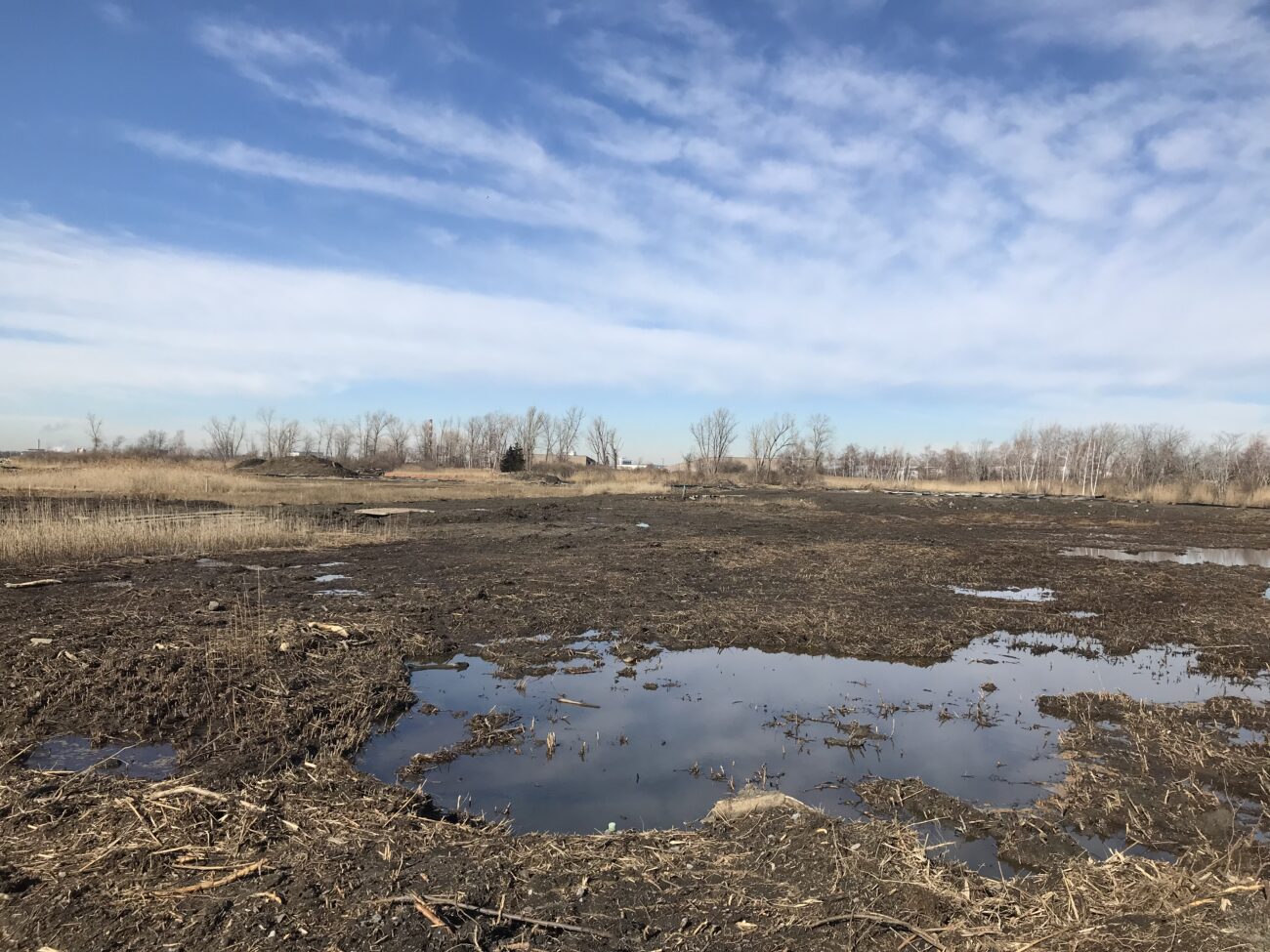


Monitoring immediately following the restoration revealed at least 12 saltmarsh sparrows returned to their annual nesting areas near the experimental hummocks, despite the disruptive activities taking place earlier in the year. University students will survey vegetation on the hummocks and throughout the restoration area, measuring and counting individual plants to see how different species grow at different elevations and in different types of soil, and to determine if additional plantings are needed. Audubon Connecticut will manage and control invasive plant species across the restoration area for three years, periodically removing and chemically treating the ever-persistent common reed. The project team will also monitor saltwater flooding of the marsh and carve runnels (short channels), if needed, to connect more areas to saltwater.
Molly Sperduto at molly_sperduto@fws.gov;
Corrie Folsom-O’Keefe cfolsom.okeefe@audubon.org;
Jack Matthias jack.matthias@audubon.org
Case Study
Project
Stratford, CT
Restoration of the Great Meadows Marsh
This project restored 46 acres of the Great Meadows Marsh in Connecticut that was degraded from dredge material that was dumped on site, poor drainage, and sea level rise. The marsh was also overrun with invasive plants and mosquitoes. A controlled fire was started to kill the invasive reeds growing in the marsh. Then a construction crew removed invasive plants and the dumped dredge material. Lastly, channels were carefully dug for tidal flushing which will allow the marsh to keep pace with sea level rise. Soil hummocks were constructed for Salt Marsh Sparrow habitat. Now the area continues to be monitored, assessed for resiliency, and provides a field for innovative solutions to be tested in.
Partners
Trustees: USFWS, NOAA, State of Connecticut; Project Partners: Audubon Connecticut, Town of Stratford
Case Study
Plan
Stony Brook, Head of Harbor and Nissequogue, NY
Marsh Conservation Planning for Stony Brook Harbor
In 2023, Long Island Sound Partnership and Warren Pinnacle, in partnership with committed municipalities and conservation groups/organizations, developed a Plan to understand the benefits, threats, and recommended conservation actions for the Stony Brook Harbor and West Meadow Creek marsh ecosystem. The goal of the Plan is to help inform conservation and restoration efforts to maximize marsh ecosystem services under rising sea levels.

This process brought together a diversity of stakeholders to develop a cohesive strategy for Stony Brook Harbor. The partners will now work to implement the recommendations in the plan.
Elizabeth Hornstein, eeh78@cornell.edu
Case Study
Plan
Stony Brook, Head of Harbor and Nissequogue, NY
Marsh Conservation Planning for Stony Brook Harbor
In 2023, Long Island Sound Partnership and Warren Pinnacle, in partnership with committed municipalities and conservation groups/organizations, developed a Plan to understand the benefits, threats, and recommended conservation actions for the Stony Brook Harbor and West Meadow Creek marsh ecosystem. The goal of the Plan is to help inform conservation and restoration efforts to maximize marsh ecosystem services under rising sea levels.
Case Study
Plan
Marsh Conservation Planning for Glen Island Park
In 2023, Long Island Sound Study and Warren Pinnacle, in partnership with Westchester County and conservation groups/organizations, have developed a Plan to understand the benefits of, threats to, and recommended conservation actions for marsh ecosystems on Glen Island Park in New Rochelle, NY. The goal of the Plan is to help inform conservation and restoration efforts to maximize marsh ecosystem services under rising sea levels.
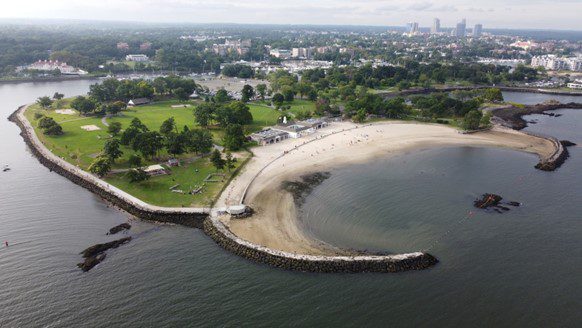
This process brought together a diversity of stakeholders to consider management strategies for Glen Island Park.
Sara Powell, slp285@cornell.edu
Case Study
Plan
Marsh Conservation Planning for Glen Island Park
In 2023, Long Island Sound Study and Warren Pinnacle, in partnership with Westchester County and conservation groups/organizations, have developed a Plan to understand the benefits of, threats to, and recommended conservation actions for marsh ecosystems on Glen Island Park in New Rochelle, NY. The goal of the Plan is to help inform conservation and restoration efforts to maximize marsh ecosystem services under rising sea levels.