

Resources for
coastal
Guidance Tool
Level of Effort:
Department of the Interior Nature-Based Solutions Roadmap
The Nature-Based Solutions Roadmap is a comprehensive resource to support anyone interested in implementing nature-based solutions (NBS), created by the Nicholas Institute in collaboration with the United States Department of the Interior in 2023-2025. Through 29 NBS strategies, 400+ case studies, and 400+ tools and resources, this interactive webpage and downloadable report can help you learn key considerations for NBS project development and ideas for integrating gray infrastructure and transitioning towards NBS.
Guidance Tool
Level of Effort:
Department of the Interior Nature-Based Solutions Roadmap
The Nature-Based Solutions Roadmap is a comprehensive resource to support anyone interested in implementing nature-based solutions (NBS), created by the Nicholas Institute in collaboration with the United States Department of the Interior in 2023-2025. Through 29 NBS strategies, 400+ case studies, and 400+ tools and resources, this interactive webpage and downloadable report can help you learn key considerations for NBS project development and ideas for integrating gray infrastructure and transitioning towards NBS.
Guidance Tool
Level of Effort:
Climate Action Tool
The 2025 expansion of the Climate Action Tool (CAT) allows you to:
1) Access information on climate impacts and vulnerability of species and habitats; and
2) Explore adaptation strategies and actions, related to connectivity, conservation planning, and forestry, among other relevant areas.
This tool was developed by the Northeast Climate Adaptation Science Center and the University of Massachusetts Amherst (UMass) Center for Agriculture, Food, and the Environment.
Guidance Tool
Level of Effort:
Climate Action Tool
The 2025 expansion of the Climate Action Tool (CAT) allows you to:
1) Access information on climate impacts and vulnerability of species and habitats; and
2) Explore adaptation strategies and actions, related to connectivity, conservation planning, and forestry, among other relevant areas.
This tool was developed by the Northeast Climate Adaptation Science Center and the University of Massachusetts Amherst (UMass) Center for Agriculture, Food, and the Environment.
Funding
: Mar 6 – Apr 6, 2026
typically $100K-$2M
FY27 Congressionally Directed Spending / Community Project Funding
Congressionally Directed Spending requests, also known as Community Project Funding or Earmarks, are funding requests for high-impact, Connecticut-based projects that can be completed with assistance from the federal government. In Connecticut, applications go through the offices of Senator Blumenthal and Senator Murphy. The project must meet the eligibility requirements for at least one of the accounts listed.
Please note, you only need to submit one application for each project and it will be sent to both offices. Requests may be made for the following bills: 1) Agriculture, Rural Development, Food and Drug Administration, and Related Agencies; 2) Commerce, Justice, Science, and Related Agencies; 3) Energy and Water Development; 4) Financial Services and General Government; 5) Homeland Security; 6) Interior, Environment, and Related Agencies; 7) Labor, Health, and Human Services, Education, and Related Agencies; 8) Transportation, Housing and Urban Development, and Related Agencies; 9) Military Construction, Veteran Affairs, and Related Agencies.
Funding
: Mar 6 – Apr 6, 2026
typically $100K-$2M
FY27 Congressionally Directed Spending / Community Project Funding
Congressionally Directed Spending requests, also known as Community Project Funding or Earmarks, are funding requests for high-impact, Connecticut-based projects that can be completed with assistance from the federal government. In Connecticut, applications go through the offices of Senator Blumenthal and Senator Murphy. The project must meet the eligibility requirements for at least one of the accounts listed.
Mapper
Level of Effort:
USGS Compound Flood Hazard Web Map
The USGS Long Island Sound Partnership Compound Flood Hazard Web Map Application is an interactive tool developed by the U.S. Geological Survey’s New York Water Science Center that helps users explore the combined impacts of multiple flooding drivers across the New York and Connecticut coastal regions. Drivers of compound flooding included in the assessment were precipitation, coastal (storm surge, tidal), and groundwater emergence, which when combined can lead to more severe and widespread inundation than from any single cause alone.
The map visually displays hazard rankings and spatial patterns of flood drivers so that planners, emergency managers, researchers, and the public can better understand where these flood hazards are most likely to coincide, thus supporting local decision making for flood mitigation, coastal planning, and resilience strategies. The application is based on USGS models and ongoing research into regional flood processes.
Mapper
Level of Effort:
USGS Compound Flood Hazard Web Map
The USGS Long Island Sound Partnership Compound Flood Hazard Web Map Application is an interactive tool developed by the U.S. Geological Survey’s New York Water Science Center that helps users explore the combined impacts of multiple flooding drivers across the New York and Connecticut coastal regions. Drivers of compound flooding included in the assessment were precipitation, coastal (storm surge, tidal), and groundwater emergence, which when combined can lead to more severe and widespread inundation than from any single cause alone.
The map visually displays hazard rankings and spatial patterns of flood drivers so that planners, emergency managers, researchers, and the public can better understand where these flood hazards are most likely to coincide, thus supporting local decision making for flood mitigation, coastal planning, and resilience strategies. The application is based on USGS models and ongoing research into regional flood processes.
Mapper
Level of Effort:
Resilience and Adaptation in New England (RAINE) Database
Explore a range of tools and guidance to support climate adaptation planning through EPA New England’s Resilience and Adaptation in New England (RAINE) initiative, which supports users in exploring climate resilience planning across the New England. These resources include more than 1,200 climate adaptation plans. Practitioners can use the Featured Locations Interactive Map to view climate action examples or explore additional climate visualization platforms through the Mapping Climate Change Impacts Tools page. The database also highlights Tribal Climate Adaptation Resources, featuring plans from federally recognized tribes in New England. Users can view recorded webinars and trainings for technical guidance.
Mapper
Level of Effort:
Resilience and Adaptation in New England (RAINE) Database
Explore a range of tools and guidance to support climate adaptation planning through EPA New England’s Resilience and Adaptation in New England (RAINE) initiative, which supports users in exploring climate resilience planning across the New England. These resources include more than 1,200 climate adaptation plans. Practitioners can use the Featured Locations Interactive Map to view climate action examples or explore additional climate visualization platforms through the Mapping Climate Change Impacts Tools page. The database also highlights Tribal Climate Adaptation Resources, featuring plans from federally recognized tribes in New England. Users can view recorded webinars and trainings for technical guidance.
SRC Training
Dodge Paddock & Beal Preserve Marsh Restoration Field Trip and Workshop
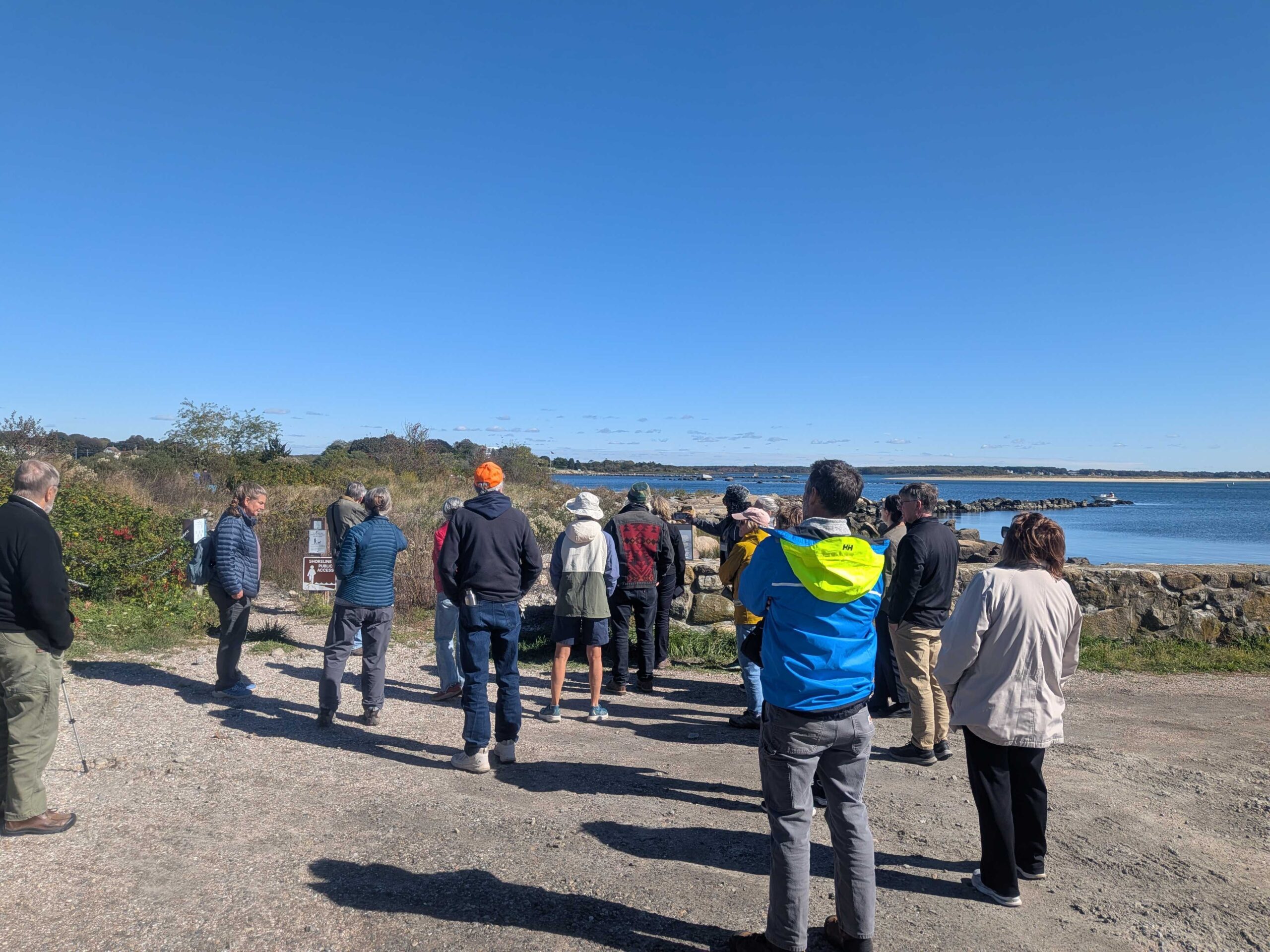
On October 16, 2025, the Sustainable and Resilient Communities (SRC) team of the Long Island Sound Partnership hosted a field trip featuring the Dodge Paddock and Beal Preserve Marsh Restoration Project in Stonington Borough. The day started with a presentation outlining the history and current state of the site, followed by a walk to Dodge Paddock and Beal Preserve where there was a guided tour led by Connecticut Sea Grant, Avalonia Land Conservancy, and local volunteers. The day included a deep dive into the invasive species removal process, plantings to accommodate marsh migration, and a close up look at what has grown since then. Special thanks to our partners with Avalonia Land Conservancy, Connecticut Sea Grant, and the Stonington Community.


SRC Training
Dodge Paddock & Beal Preserve Marsh Restoration Field Trip and Workshop
On October 16, 2025, the Sustainable and Resilient Communities (SRC) team of the Long Island Sound Partnership hosted a field trip featuring the Dodge Paddock and Beal Preserve Marsh Restoration Project in Stonington Borough. The day started with a presentation outlining the history and current state of the site, followed by a walk to Dodge Paddock and Beal Preserve where there was a guided tour led by Connecticut Sea Grant, Avalonia Land Conservancy, and local volunteers. The day included a deep dive into the invasive species removal process, plantings to accommodate marsh migration, and a close up look at what has grown since then. Special thanks to our partners with Avalonia Land Conservancy, Connecticut Sea Grant, and the Stonington Community.
Funding
: Oct 1 – Dec 16, 2025
$100K - $1.5M
CT DEEP Long Island Sound Ecosystems Grant
The Connecticut Department of Energy and Environmental Protection’s (DEEP’s) Land and Water Resources Division requests proposals for the new CT DEEP Long Island Sound Ecosystems Grant, made possible by financial support provided by the Long Island Sound Partnership from the U.S. EPA. There are two primary goals of the program: 1) to promote large-scale habitat restoration and enhance restoration planning, while also helping coastal communities and ecosystems adapt to changing environmental conditions; and 2) to further promote the application of green stormwater infrastructure techniques to reduce nonpoint source pollution, improving water resource quality.
There is approximately $7 million available, and no match is required. Eligible projects include: 1) Habitat Restoration (planning/engineering/design and construction for habitat restoration projects); and 2) Green Stormwater Infrastructure (planning/engineering/design and construction for green stormwater infrastructure projects).
Funding
: Oct 1 – Dec 16, 2025
$100K - $1.5M
CT DEEP Long Island Sound Ecosystems Grant
The Connecticut Department of Energy and Environmental Protection’s (DEEP’s) Land and Water Resources Division requests proposals for the new CT DEEP Long Island Sound Ecosystems Grant, made possible by financial support provided by the Long Island Sound Partnership from the U.S. EPA. There are two primary goals of the program: 1) to promote large-scale habitat restoration and enhance restoration planning, while also helping coastal communities and ecosystems adapt to changing environmental conditions; and 2) to further promote the application of green stormwater infrastructure techniques to reduce nonpoint source pollution, improving water resource quality.
Data
Level of Effort:
NYC Hazard Mitigation Plan
This website contains New York City’s Federal Emergency Management Agency–mandated Hazard Mitigation Plan, which identifies natural hazard risks and vulnerabilities that are common to New York City (NYC) and long-term strategies for reducing them. It also features a Mitigation Actions Database and Map that tracks and records actions that are taken to mitigate risk from the hazards profiled in the Hazard Mitigation Plan.
Data
Level of Effort:
NYC Hazard Mitigation Plan
This website contains New York City’s Federal Emergency Management Agency–mandated Hazard Mitigation Plan, which identifies natural hazard risks and vulnerabilities that are common to New York City (NYC) and long-term strategies for reducing them. It also features a Mitigation Actions Database and Map that tracks and records actions that are taken to mitigate risk from the hazards profiled in the Hazard Mitigation Plan.
Funding
: Apr 17 – Apr 27, 2025
FY26 Congressionally Directed Spending / Community Project Funding (Sen. Blumenthal & Sen. Murphy)
Congressionally Directed Spending requests, also known as Community Project Funding or Earmarks, are funding requests for high-impact, Connecticut-based projects that can be completed with assistance from the federal government. The project must meet the eligibility requirements for at least one of the accounts listed.
Please note, you only need to submit one application for each project and it will be sent to both offices. Requests may be made for the following bills: 1) Agriculture, Rural Development, Food and Drug Administration, and Related Agencies; 2) Commerce, Justice, Science and Related Agencies; 3) Energy and Water Development, and Related Agencies; 4) Financial Services and General Government; 5) Homeland Security; 6) Interior, Environment, and Related Agencies; 7) Labor, Health, and Human Services, Education, and Related Agencies; 8) Transportation, Housing and Urban Development, and Related Agencies; 9) Military Construction and Veteran Affairs.
Funding
: Apr 17 – Apr 27, 2025
FY26 Congressionally Directed Spending / Community Project Funding (Sen. Blumenthal & Sen. Murphy)
Congressionally Directed Spending requests, also known as Community Project Funding or Earmarks, are funding requests for high-impact, Connecticut-based projects that can be completed with assistance from the federal government. The project must meet the eligibility requirements for at least one of the accounts listed.
Funding
: Mar 11 – Apr 14, 2024
FY25 Congressionally Directed Spending / Community Project Funding (Sen. Blumenthal & Sen. Murphy)
Congressionally Directed Spending requests, also known as Community Project Funding or Earmarks, are funding requests for high-impact, Connecticut-based projects that can be completed with assistance from the federal government. The project must meet the eligibility requirements for at least one of the accounts listed.
Please note, you only need to submit one application for each project and it will be sent to both offices. Requests may be made for the following bills: 1) Agriculture, Rural Development, Food and Drug Administration, and Related Agencies; 2) Commerce, Justice, Science and Related Agencies; 3) Energy and Water Development, and Related Agencies; 4) Financial Services and General Government; 5) Homeland Security; 6) Interior, Environment, and Related Agencies; 7) Labor, Health, and Human Services, Education, and Related Agencies; 8) Transportation, Housing and Urban Development, and Related Agencies.
Funding
: Mar 11 – Apr 14, 2024
FY25 Congressionally Directed Spending / Community Project Funding (Sen. Blumenthal & Sen. Murphy)
Congressionally Directed Spending requests, also known as Community Project Funding or Earmarks, are funding requests for high-impact, Connecticut-based projects that can be completed with assistance from the federal government. The project must meet the eligibility requirements for at least one of the accounts listed.