

Resources for
extreme weather
SRC Training
Suffolk County Coastal Resilience Forum & Field Trip – 2025
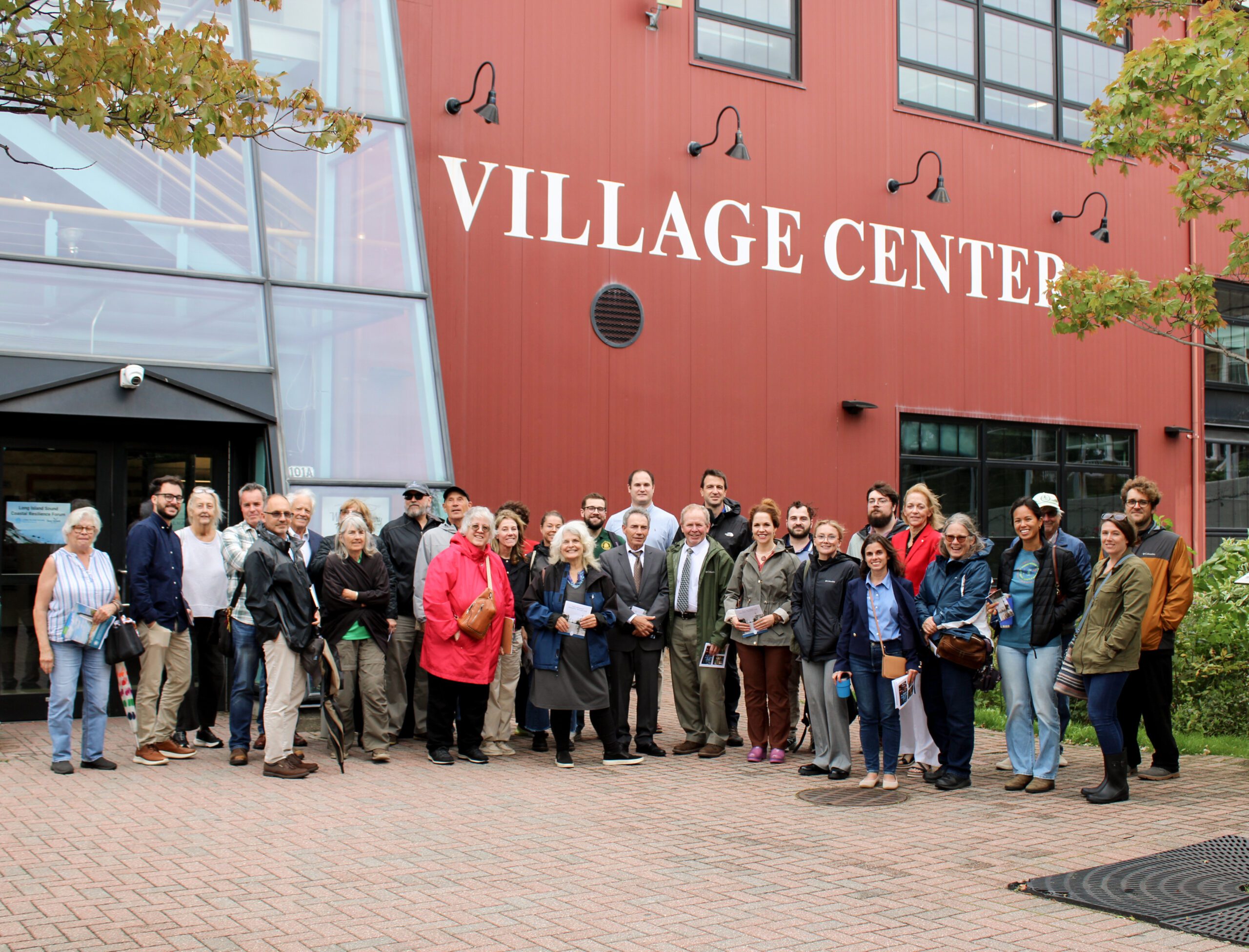
On October 8, 2025 state and local decision makers, municipal staff, and other interested parties working to address flooding, shoreline erosion and other coastal issues gathered at the Port Jefferson Village Center in Port Jefferson, NY for the 3rd Annual Suffolk County Coastal Resilience Forum. The Forum provided a chance to share information on best practices, discuss challenges, identify opportunities to increase resilience, and enhance coordination across communities. Forum attendees heard updates on State resilience initiatives from the NYS Department of Environmental Conservation and NYS Division of Homeland Security and Emergency Services, as well as presentations on new resilience tools and resources from Seatuck Environmental Association, the U.S. Geological Survey, New York Sea Grant, and Suffolk County Soil and Water Conservation District. In the afternoon, Village of Port Jefferson Mayor, Lauren Sheprow, presented on the Village’s resilience issues and initiatives and then led attendees on a walking tour of the Village highlighting flooding hotspots, challenges faced by local businesses and residents, and efforts to help mitigate flooding and increase community resilience.
The event was hosted by Long Island Sound Partnership and New York Sea Grant, in partnership with the Village of Port Jefferson and Suffolk County Soil and Water Conservation District.



SRC Training
Suffolk County Coastal Resilience Forum & Field Trip – 2025
On October 8, 2025 state and local decision makers, municipal staff, and other interested parties working to address flooding, shoreline erosion and other coastal issues gathered at the Port Jefferson Village Center in Port Jefferson, NY for the 3rd Annual Suffolk County Coastal Resilience Forum. The Forum provided a chance to share information on best practices, discuss challenges, identify opportunities to increase resilience, and enhance coordination across communities. Forum attendees heard updates on State resilience initiatives from the NYS Department of Environmental Conservation and NYS Division of Homeland Security and Emergency Services, as well as presentations on new resilience tools and resources from Seatuck Environmental Association, the U.S. Geological Survey, New York Sea Grant, and Suffolk County Soil and Water Conservation District. In the afternoon, Village of Port Jefferson Mayor, Lauren Sheprow, presented on the Village’s resilience issues and initiatives and then led attendees on a walking tour of the Village highlighting flooding hotspots, challenges faced by local businesses and residents, and efforts to help mitigate flooding and increase community resilience.
The event was hosted by Long Island Sound Partnership and New York Sea Grant, in partnership with the Village of Port Jefferson and Suffolk County Soil and Water Conservation District.
Website
Level of Effort:
New York State Climate Impacts Assessment: Understanding and Preparing for Our Changing Climate
The New York State Climate Impacts Assessment explores current and future climate change impacts to New York State communities, ecosystems, and economy. The New York State Energy Research and Development Authority (NYSERDA) assembled more than 250 New York–based, national, and Indigenous climate science experts and representatives from diverse communities and industries across the state to contribute to this assessment. The findings are intended to help residents, businesses, and decision-makers across the state plan and prepare for climate change impacts.
Website
Level of Effort:
New York State Climate Impacts Assessment: Understanding and Preparing for Our Changing Climate
The New York State Climate Impacts Assessment explores current and future climate change impacts to New York State communities, ecosystems, and economy. The New York State Energy Research and Development Authority (NYSERDA) assembled more than 250 New York–based, national, and Indigenous climate science experts and representatives from diverse communities and industries across the state to contribute to this assessment. The findings are intended to help residents, businesses, and decision-makers across the state plan and prepare for climate change impacts.
Funding
: Feb 28 – May 28, 2024
$200,000 - $3,000,000
Clean Ports Program: Climate and Air Quality Planning Competition
The Inflation Reduction Act of 2022 provides EPA with $3 billion to fund zero-emission port equipment and infrastructure as well as climate and air quality planning at U.S. ports. This new funding program will build on EPA’s Ports Initiative that helps our nation’s ports, a critical part of our infrastructure and supply chain, address public health and environmental impacts on surrounding communities. EPA has announced two separate Notices of Funding Opportunities to disburse the allocated $3 billion – the Zero-Emission Technology Deployment Competition AND the Climate and Air Quality Planning Competition.
The Climate and Air Quality Planning Competition is poised to fund climate and air quality planning activities at U.S. ports; including emissions inventories, strategy analysis, community engagement, and resiliency measure identification, all of which will build the capacity of port stakeholders to continue to reduce pollution and transition to zero-emissions operations over time.
Funding
: Feb 28 – May 28, 2024
$200,000 - $3,000,000
Clean Ports Program: Climate and Air Quality Planning Competition
The Inflation Reduction Act of 2022 provides EPA with $3 billion to fund zero-emission port equipment and infrastructure as well as climate and air quality planning at U.S. ports. This new funding program will build on EPA’s Ports Initiative that helps our nation’s ports, a critical part of our infrastructure and supply chain, address public health and environmental impacts on surrounding communities. EPA has announced two separate Notices of Funding Opportunities to disburse the allocated $3 billion – the Zero-Emission Technology Deployment Competition AND the Climate and Air Quality Planning Competition.