Funding
: Feb 20 – Mar 31, 2026
$100,000 - $7M
The National Coastal Resilience Fund (NCRF) is a national focused on reducing risks to coastal communities. The NCRF is now soliciting pre-proposals for coastal resilience projects that restore, increase, and strengthen natural infrastructure such as coastal marshes and wetlands, dune and beach systems, oyster and coral reefs, rivers and floodplains, coastal forest, and barrier islands that mitigate the impacts of storms and other coastal hazards to communities.
Funding
: Feb 20 – Mar 31, 2026
$100,000 - $7M
The National Coastal Resilience Fund (NCRF) is a national focused on reducing risks to coastal communities. The NCRF is now soliciting pre-proposals for coastal resilience projects that restore, increase, and strengthen natural infrastructure such as coastal marshes and wetlands, dune and beach systems, oyster and coral reefs, rivers and floodplains, coastal forest, and barrier islands that mitigate the impacts of storms and other coastal hazards to communities.
Funding
: Feb 3 – Mar 26, 2026
typically $150,000-350,000
The Connecticut Department of Energy and Environmental Protection (DEEP) is now accepting proposals for fiscal year 2025 Clean Water Section 319 grants. Section 319 of the Federal Clean Water Act (Section 319) is a Federal program to control nonpoint sources (NPS) of water pollution. Connecticut receives funds from EPA for Section 319 grants that can be passed onto communities, local conservation groups, and other organizations for NPS implementation projects, plans, and statewide NPS management efforts.
Funding
: Feb 3 – Mar 26, 2026
typically $150,000-350,000
The Connecticut Department of Energy and Environmental Protection (DEEP) is now accepting proposals for fiscal year 2025 Clean Water Section 319 grants. Section 319 of the Federal Clean Water Act (Section 319) is a Federal program to control nonpoint sources (NPS) of water pollution. Connecticut receives funds from EPA for Section 319 grants that can be passed onto communities, local conservation groups, and other organizations for NPS implementation projects, plans, and statewide NPS management efforts.
Funding
: Feb 6 – Mar 17, 2026
$1,000 - $4,000
The New England Grassroots Environment Fund awards small grants in support of grassroots efforts and community-based environmental work in New England. The GROW GRANTS program is actively accepting applications from grassroots groups across New England. These grants fund small, volunteer-driven groups in New England working on issues including food access, immigrant support, climate resilience, youth work, mutual aid, and more. This program is geared toward groups with experience organizing in their community and have at least THREE leaders who are actively involved in group decision-making. Grants support groups to deepen their work by further developing a community vision, lowering barriers to participation, identifying new stakeholders, and working to bring more voices and lived experiences into core decision-making processes.
Funding
: Feb 6 – Mar 17, 2026
$1,000 - $4,000
The New England Grassroots Environment Fund awards small grants in support of grassroots efforts and community-based environmental work in New England. The GROW GRANTS program is actively accepting applications from grassroots groups across New England. These grants fund small, volunteer-driven groups in New England working on issues including food access, immigrant support, climate resilience, youth work, mutual aid, and more. This program is geared toward groups with experience organizing in their community and have at least THREE leaders who are actively involved in group decision-making. Grants support groups to deepen their work by further developing a community vision, lowering barriers to participation, identifying new stakeholders, and working to bring more voices and lived experiences into core decision-making processes.
Funding
: Jan 5 – Feb 12, 2026
~50-100K
The NY-NJ Harbor & Estuary Program (HEP), housed at the Hudson River Foundation, is offering funding to help local governments and nonprofit organizations strengthen community resilience to recurring extreme weather across the Hudson Raritan Estuary watershed. This Request for Proposals supports projects that advance research, planning, and on the ground infrastructure aimed at reducing climate driven risks such as flooding, storm impacts, and related water quality challenges. A total of $350,000 will be distributed across approximately four to six grants for projects that can be completed by June 30, 2027.
Funding
: Jan 5 – Feb 12, 2026
~50-100K
The NY-NJ Harbor & Estuary Program (HEP), housed at the Hudson River Foundation, is offering funding to help local governments and nonprofit organizations strengthen community resilience to recurring extreme weather across the Hudson Raritan Estuary watershed. This Request for Proposals supports projects that advance research, planning, and on the ground infrastructure aimed at reducing climate driven risks such as flooding, storm impacts, and related water quality challenges. A total of $350,000 will be distributed across approximately four to six grants for projects that can be completed by June 30, 2027.
Funding
: Dec 12 – Feb 5, 2026
$20K - $200K
The Long Island Sound Stewardship Fund 2026 is now open and supports nonprofit work that helps protect and restore the health and living resources of Long Island Sound. Funding is available for efforts that strengthen organizations (capacity building), build new collaborations, or support piloting tools and planning that increases environmental and natural resource impact.
Funding
: Dec 12 – Feb 5, 2026
$20K - $200K
The Long Island Sound Stewardship Fund 2026 is now open and supports nonprofit work that helps protect and restore the health and living resources of Long Island Sound. Funding is available for efforts that strengthen organizations (capacity building), build new collaborations, or support piloting tools and planning that increases environmental and natural resource impact.
Website
Level of Effort:
The GSI Impact Hub is an interactive platform that provides tools, research, and data to help communities plan and evaluate green stormwater infrastructure (GSI) projects. GSI uses natural systems like plants, soil, and stone to manage stormwater on-site reducing flooding, improving water quality, and creating healthier, more resilient neighborhoods. The Hub includes a benefits calculator, educational resources, and guidance to support city planners, advocates, and policymakers in designing projects that maximize environmental, social, and economic benefits.
Explore the GSI Impact Calculator, Detailed Resource Library, and Project Background to better understand how GSI can reduce flooding, improve water quality, and build climate-resilient neighborhoods.
Website
Level of Effort:
The GSI Impact Hub is an interactive platform that provides tools, research, and data to help communities plan and evaluate green stormwater infrastructure (GSI) projects. GSI uses natural systems like plants, soil, and stone to manage stormwater on-site reducing flooding, improving water quality, and creating healthier, more resilient neighborhoods. The Hub includes a benefits calculator, educational resources, and guidance to support city planners, advocates, and policymakers in designing projects that maximize environmental, social, and economic benefits.
Explore the GSI Impact Calculator, Detailed Resource Library, and Project Background to better understand how GSI can reduce flooding, improve water quality, and build climate-resilient neighborhoods.
Training
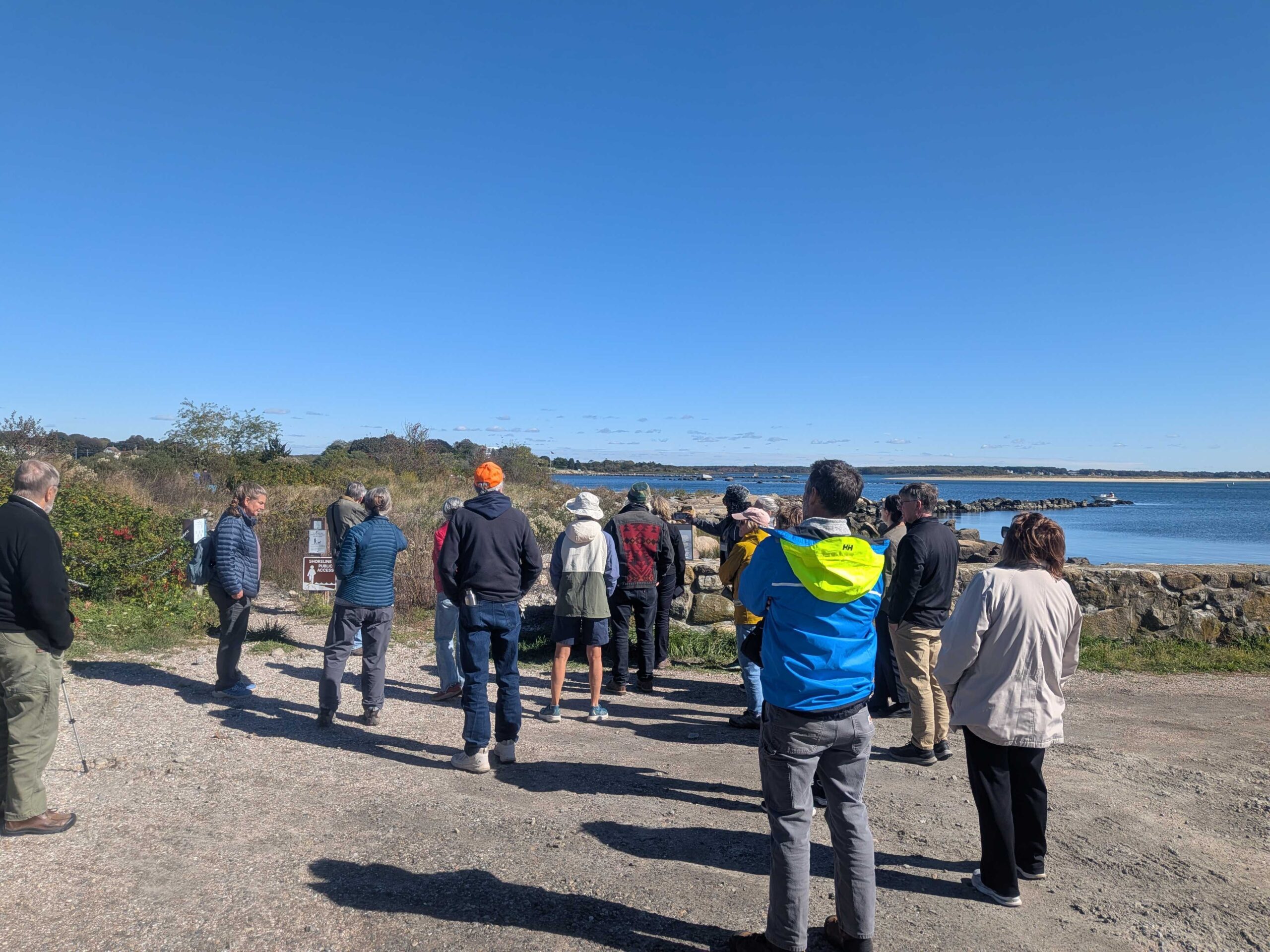
On October 16, 2025, the Sustainable and Resilient Communities (SRC) team of the Long Island Sound Partnership hosted a field trip featuring the Dodge Paddock and Beal Preserve Marsh Restoration Project in Stonington Borough. The day started with a presentation outlining the history and current state of the site, followed by a walk to Dodge Paddock and Beal Preserve where there was a guided tour led by Connecticut Sea Grant, Avalonia Land Conservancy, and local volunteers. The day included a deep dive into the invasive species removal process, plantings to accommodate marsh migration, and a close up look at what has grown since then. Special thanks to our partners with Avalonia Land Conservancy, Connecticut Sea Grant, and the Stonington Community.


Training
On October 16, 2025, the Sustainable and Resilient Communities (SRC) team of the Long Island Sound Partnership hosted a field trip featuring the Dodge Paddock and Beal Preserve Marsh Restoration Project in Stonington Borough. The day started with a presentation outlining the history and current state of the site, followed by a walk to Dodge Paddock and Beal Preserve where there was a guided tour led by Connecticut Sea Grant, Avalonia Land Conservancy, and local volunteers. The day included a deep dive into the invasive species removal process, plantings to accommodate marsh migration, and a close up look at what has grown since then. Special thanks to our partners with Avalonia Land Conservancy, Connecticut Sea Grant, and the Stonington Community.
Training
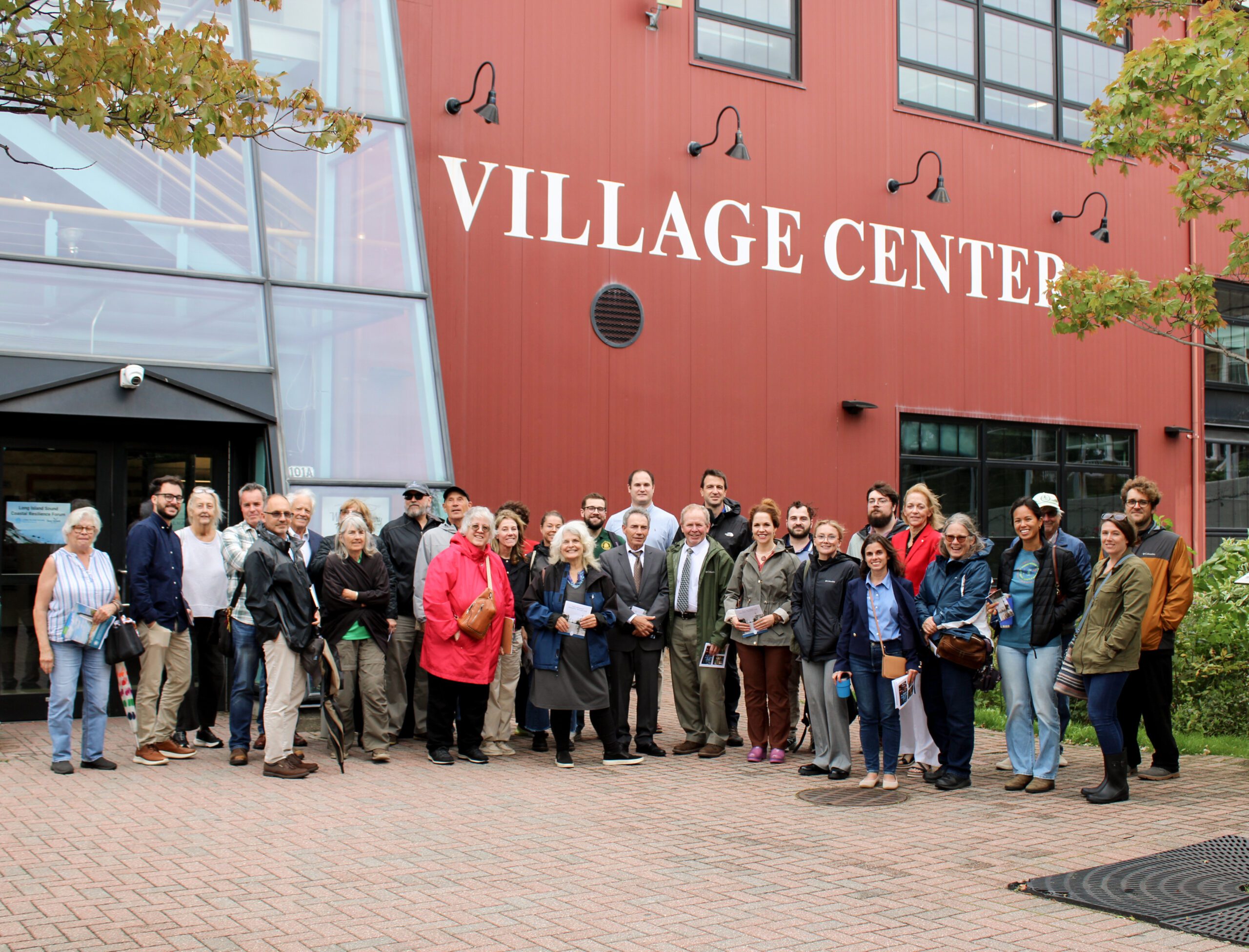
On October 8, 2025 state and local decision makers, municipal staff, and other interested parties working to address flooding, shoreline erosion and other coastal issues gathered at the Port Jefferson Village Center in Port Jefferson, NY for the 3rd Annual Suffolk County Coastal Resilience Forum. The Forum provided a chance to share information on best practices, discuss challenges, identify opportunities to increase resilience, and enhance coordination across communities. Forum attendees heard updates on State resilience initiatives from the NYS Department of Environmental Conservation and NYS Division of Homeland Security and Emergency Services, as well as presentations on new resilience tools and resources from Seatuck Environmental Association, the U.S. Geological Survey, New York Sea Grant, and Suffolk County Soil and Water Conservation District. In the afternoon, Village of Port Jefferson Mayor, Lauren Sheprow, presented on the Village’s resilience issues and initiatives and then led attendees on a walking tour of the Village highlighting flooding hotspots, challenges faced by local businesses and residents, and efforts to help mitigate flooding and increase community resilience.
The event was hosted by Long Island Sound Partnership and New York Sea Grant, in partnership with the Village of Port Jefferson and Suffolk County Soil and Water Conservation District.


Training
On October 8, 2025 state and local decision makers, municipal staff, and other interested parties working to address flooding, shoreline erosion and other coastal issues gathered at the Port Jefferson Village Center in Port Jefferson, NY for the 3rd Annual Suffolk County Coastal Resilience Forum. The Forum provided a chance to share information on best practices, discuss challenges, identify opportunities to increase resilience, and enhance coordination across communities. Forum attendees heard updates on State resilience initiatives from the NYS Department of Environmental Conservation and NYS Division of Homeland Security and Emergency Services, as well as presentations on new resilience tools and resources from Seatuck Environmental Association, the U.S. Geological Survey, New York Sea Grant, and Suffolk County Soil and Water Conservation District. In the afternoon, Village of Port Jefferson Mayor, Lauren Sheprow, presented on the Village’s resilience issues and initiatives and then led attendees on a walking tour of the Village highlighting flooding hotspots, challenges faced by local businesses and residents, and efforts to help mitigate flooding and increase community resilience.
The event was hosted by Long Island Sound Partnership and New York Sea Grant, in partnership with the Village of Port Jefferson and Suffolk County Soil and Water Conservation District.
Case Study
Project
Hamden, CT
The Town of Hamden’s Bioretention Project is the largest municipally owned rain garden in the state! Save the Sound, in partnership with the Town of Hamden, completed this large-scale rain garden project at Hamden Town Center Park to improve local water quality, restore habitat, and enhance community resilience. The project transformed approximately 2.5 acres of lawn into a functioning green infrastructure system that now manages runoff from an 88-acre urban watershed draining Dixwell Avenue and surrounding neighborhoods. Prior to the project, stormwater often overflowed directly into Pardee Brook and the Mill River, carrying pollutants and inundating the park.
The newly constructed rain garden was engineered with layers of soil, sand, and rock, and planted with more than 7,000 native grasses, flowers, and shrubs thanks to additional support from the Land Trust of Hamden. These plantings naturally filter pollutants such as fertilizers, road salt, and chemicals. Community volunteers helped complete the planting, strengthening local stewardship in the Town of Hamden.


Nicole Davis, Save the Sound
Jim Sirch, Hamden Land Conservation Trust
Stephen White, PE, Town of Hamden Engineer/LTA
Case Study
Project
Hamden, CT
The Town of Hamden’s Bioretention Project is the largest municipally owned rain garden in the state! Save the Sound, in partnership with the Town of Hamden, completed this large-scale rain garden project at Hamden Town Center Park to improve local water quality, restore habitat, and enhance community resilience. The project transformed approximately 2.5 acres of lawn into a functioning green infrastructure system that now manages runoff from an 88-acre urban watershed draining Dixwell Avenue and surrounding neighborhoods. Prior to the project, stormwater often overflowed directly into Pardee Brook and the Mill River, carrying pollutants and inundating the park.
The newly constructed rain garden was engineered with layers of soil, sand, and rock, and planted with more than 7,000 native grasses, flowers, and shrubs thanks to additional support from the Land Trust of Hamden. These plantings naturally filter pollutants such as fertilizers, road salt, and chemicals. Community volunteers helped complete the planting, strengthening local stewardship in the Town of Hamden.
Funding
: Oct 1 – Dec 16, 2025
$100K - $1.5M
The Connecticut Department of Energy and Environmental Protection’s (DEEP’s) Land and Water Resources Division requests proposals for the new CT DEEP Long Island Sound Ecosystems Grant, made possible by financial support provided by the Long Island Sound Partnership from the U.S. EPA. There are two primary goals of the program: 1) to promote large-scale habitat restoration and enhance restoration planning, while also helping coastal communities and ecosystems adapt to changing environmental conditions; and 2) to further promote the application of green stormwater infrastructure techniques to reduce nonpoint source pollution, improving water resource quality.
Funding
: Oct 1 – Dec 16, 2025
$100K - $1.5M
The Connecticut Department of Energy and Environmental Protection’s (DEEP’s) Land and Water Resources Division requests proposals for the new CT DEEP Long Island Sound Ecosystems Grant, made possible by financial support provided by the Long Island Sound Partnership from the U.S. EPA. There are two primary goals of the program: 1) to promote large-scale habitat restoration and enhance restoration planning, while also helping coastal communities and ecosystems adapt to changing environmental conditions; and 2) to further promote the application of green stormwater infrastructure techniques to reduce nonpoint source pollution, improving water resource quality.
Funding
: Jul 17 – Dec 17, 2025
The Urban Green and Community Gardens Grant Program provides funding assistance to develop or enhance urban green spaces for public enjoyment and/or environmental education. Promotion of open space in an urban setting may include, but may not be limited to, the development of a community garden or reclaiming and enhancing existing open space for the public’s use. Grants are awarded to projects that demonstrate the highest ability to benefit urban communities in close proximity to population centers.
Funding
: Jul 17 – Dec 17, 2025
The Urban Green and Community Gardens Grant Program provides funding assistance to develop or enhance urban green spaces for public enjoyment and/or environmental education. Promotion of open space in an urban setting may include, but may not be limited to, the development of a community garden or reclaiming and enhancing existing open space for the public’s use. Grants are awarded to projects that demonstrate the highest ability to benefit urban communities in close proximity to population centers.
Funding
: May 1 – Aug 15, 2025
$1 million to $10 million per project
This competitive grant program through the NYS Environmental Facilities Cooperation is designed to support flood-prone communities in implementing transformative green infrastructure projects that combat the effects of extreme weather. Eligible projects must utilize green infrastructure (GI) stormwater management practices (SMPs) and/or nature-based solutions to manage combined and/or sanitary sewer overflows and/or mitigate risks associated with extreme weather events.
Funding
: May 1 – Aug 15, 2025
$1 million to $10 million per project
This competitive grant program through the NYS Environmental Facilities Cooperation is designed to support flood-prone communities in implementing transformative green infrastructure projects that combat the effects of extreme weather. Eligible projects must utilize green infrastructure (GI) stormwater management practices (SMPs) and/or nature-based solutions to manage combined and/or sanitary sewer overflows and/or mitigate risks associated with extreme weather events.
Events
Northeast Regional Ocean Council, The Nature Conservancy, and Consensus Building Institute invite you to join us for a lunch-and-learn Living Shorelines Webinar. We look forward to sharing key insights from our recent living shorelines training workshops in Connecticut, Maine and Massachusetts, where we explored how site suitability, design, regulatory considerations, community outreach, and adaptation all contribute to the success of living shorelines in New England. This webinar is geared towards planners, engineers, consultants, and coastal practitioners.
Events
Northeast Regional Ocean Council, The Nature Conservancy, and Consensus Building Institute invite you to join us for a lunch-and-learn Living Shorelines Webinar. We look forward to sharing key insights from our recent living shorelines training workshops in Connecticut, Maine and Massachusetts, where we explored how site suitability, design, regulatory considerations, community outreach, and adaptation all contribute to the success of living shorelines in New England. This webinar is geared towards planners, engineers, consultants, and coastal practitioners.
Funding
: Mar 27 – May 6, 2025
$100,000 - $10M
The National Coastal Resilience Fund (NCRF) is a national program focused on reducing risks to coastal communities. The NCRF is now soliciting pre-proposals for projects that will create and/or restore natural systems in order to increase protection for communities from coastal hazards, such as storms, sea- and lake-level changes, inundation, and coastal erosion, while improving habitats for fish and wildlife species.
Funding
: Mar 27 – May 6, 2025
$100,000 - $10M
The National Coastal Resilience Fund (NCRF) is a national program focused on reducing risks to coastal communities. The NCRF is now soliciting pre-proposals for projects that will create and/or restore natural systems in order to increase protection for communities from coastal hazards, such as storms, sea- and lake-level changes, inundation, and coastal erosion, while improving habitats for fish and wildlife species.
Funding
: Dec 13 – May 12, 2025
$75,000-$2M
$20 million in funding is available under the Bipartisan Infrastructure Law for projects that will advance the coastal habitat restoration and climate resilience priorities of tribes and underserved communities. Through this funding, NOAA will help support community-driven habitat restoration and build the capacity of tribes and underserved communities to more fully participate in restoration activities.
Funding
: Dec 13 – May 12, 2025
$75,000-$2M
$20 million in funding is available under the Bipartisan Infrastructure Law for projects that will advance the coastal habitat restoration and climate resilience priorities of tribes and underserved communities. Through this funding, NOAA will help support community-driven habitat restoration and build the capacity of tribes and underserved communities to more fully participate in restoration activities.
Funding
: Mar 10 – Mar 31, 2025
$10,000-$50,000
This grant opportunity is open to municipalities and non-governmental organizations interested in partnering with SCSWCD to implement a variety of projects focused on improving Suffolk County and its environment. These projects focus on revitalizing and protecting Long Islands ecosystems, waterbodies, ground water and habitats. The goal of this grant is to attract new partners to develop and implement innovative and sustainable solutions for environmental issues.
Funding
: Mar 10 – Mar 31, 2025
$10,000-$50,000
This grant opportunity is open to municipalities and non-governmental organizations interested in partnering with SCSWCD to implement a variety of projects focused on improving Suffolk County and its environment. These projects focus on revitalizing and protecting Long Islands ecosystems, waterbodies, ground water and habitats. The goal of this grant is to attract new partners to develop and implement innovative and sustainable solutions for environmental issues.
Funding
: Mar 10 – Apr 11, 2025
Up to $3 million
The Green Innovation Grant Program supports projects across New York State that utilize unique EPA-designated green stormwater infrastructure design and create cutting-edge green technologies. Competitive grants are awarded to projects that implement one or more of the following green practices: green stormwater infrastructure, energy efficiency, water efficiency and environmental innovation.
Funding
: Mar 10 – Apr 11, 2025
Up to $3 million
The Green Innovation Grant Program supports projects across New York State that utilize unique EPA-designated green stormwater infrastructure design and create cutting-edge green technologies. Competitive grants are awarded to projects that implement one or more of the following green practices: green stormwater infrastructure, energy efficiency, water efficiency and environmental innovation.
Funding
: Feb 26 – Jun 6, 2025
Minimum grant amount $150,000
Through New York State’s Clean Energy, Clean Water & Green Jobs Bond Act, the Department of State (DOS) is making $15 million available for implementation projects that improve waterfront and watershed resiliency and reduce climate impacts, particularly flooding. Projects should implement a complete or substantially complete LWRP or a complete or substantially complete relevant LWRP Component (including a watershed management plan funded by Department of State). The program prioritizes projects using natural solutions to enhance community resilience while also delivering environmental, economic and social benefits. Eligible applicants are: 1) A village, town, or city located along New York’s coasts or inland waterways 2) A county with the consent and acting on behalf of one or more eligible villages, towns or cities.
Funding
: Feb 26 – Jun 6, 2025
Minimum grant amount $150,000
Through New York State’s Clean Energy, Clean Water & Green Jobs Bond Act, the Department of State (DOS) is making $15 million available for implementation projects that improve waterfront and watershed resiliency and reduce climate impacts, particularly flooding. Projects should implement a complete or substantially complete LWRP or a complete or substantially complete relevant LWRP Component (including a watershed management plan funded by Department of State). The program prioritizes projects using natural solutions to enhance community resilience while also delivering environmental, economic and social benefits. Eligible applicants are: 1) A village, town, or city located along New York’s coasts or inland waterways 2) A county with the consent and acting on behalf of one or more eligible villages, towns or cities.
Funding
: Feb 26 – Jun 6, 2025
Minimum grant amount $300,000
Through New York State’s Clean Energy, Clean Water & Green Jobs Bond Act, the Department of State (DOS) is making $20 million available for habitat restoration, climate resiliency and risk reduction, and stormwater management projects located within the New York State Coastal areas, areas draining into the New York State Coastal area, and/or areas within the Coastal Nonpoint Source boundary (see map). Projects must be identified or implement goals outlined in state, regional, or local management plans/programs/studies. The program prioritizes projects using natural solutions to enhance community resilience while also delivering environmental, economic and social benefits. Eligible applicants include Municipalities (counties, cities, towns, villages, Indian Nations or Tribes recognized by the state or United States), Not-for-Profits, Soil and Water Conservation Districts, and New York State Agencies and Authorities. Projects may include design and construction, or construction.
Funding
: Feb 26 – Jun 6, 2025
Minimum grant amount $300,000
Through New York State’s Clean Energy, Clean Water & Green Jobs Bond Act, the Department of State (DOS) is making $20 million available for habitat restoration, climate resiliency and risk reduction, and stormwater management projects located within the New York State Coastal areas, areas draining into the New York State Coastal area, and/or areas within the Coastal Nonpoint Source boundary (see map). Projects must be identified or implement goals outlined in state, regional, or local management plans/programs/studies. The program prioritizes projects using natural solutions to enhance community resilience while also delivering environmental, economic and social benefits. Eligible applicants include Municipalities (counties, cities, towns, villages, Indian Nations or Tribes recognized by the state or United States), Not-for-Profits, Soil and Water Conservation Districts, and New York State Agencies and Authorities. Projects may include design and construction, or construction.
Mapper
Level of Effort:
The US Army Corps of Engineers New England District Disposal Area Monitoring System (DAMOS) Program developed an online mapping tool to facilitate the identification of beneficial use opportunities for dredged material in New England. The tool includes all Federal Navigation Projects that the District anticipates dredging in the next five years as well as beneficial use sites that were catalogued from federal, state, and non-government sources. The tool is an interactive map to allow project proponents and stakeholders to match projects in need of sediment with a local source of available dredged material.
Mapper
Level of Effort:
The US Army Corps of Engineers New England District Disposal Area Monitoring System (DAMOS) Program developed an online mapping tool to facilitate the identification of beneficial use opportunities for dredged material in New England. The tool includes all Federal Navigation Projects that the District anticipates dredging in the next five years as well as beneficial use sites that were catalogued from federal, state, and non-government sources. The tool is an interactive map to allow project proponents and stakeholders to match projects in need of sediment with a local source of available dredged material.
Training
This field trip was part of a Community Resilience Project Showcase leading up to the 2024 Annual SRC Workshop.
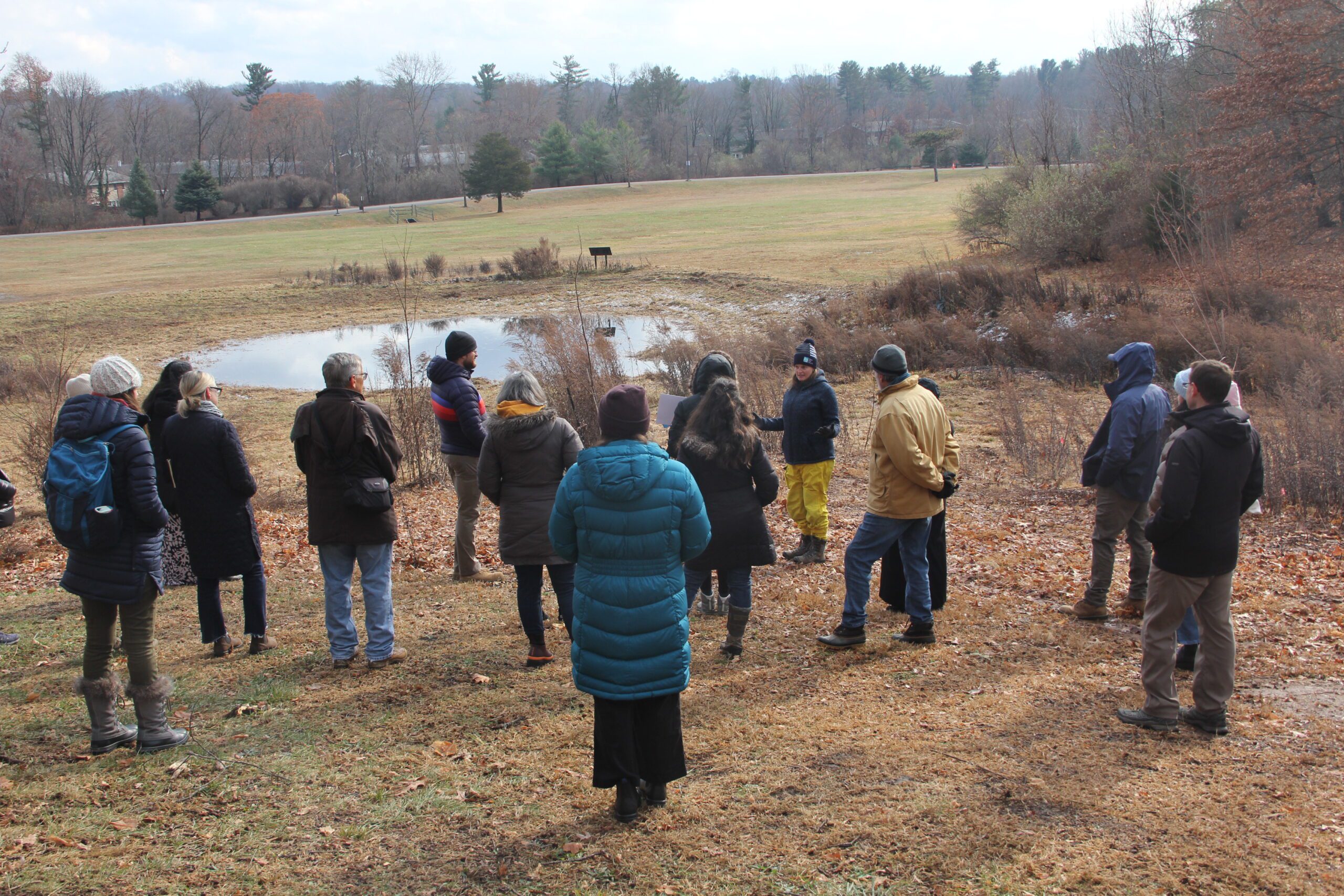 On December 5, 2024, the Sustainable and Resilient Communities (SRC) team of the Long Island Sound Study hosted a field trip featuring the Town of Hamden’s Bioretention Project – the largest municipally owned rain garden in the state! Participants began with a guided tour of the rain garden and bioretention areas at Town Center Park, where they heard from project planners and managers about its history, partnerships, challenges, and maintenance. Following this, participants gathered at the Hamden Government Center for a working lunch and presentations on topics including UConn’s Stormwater Corps, native plants, project engineering, and using nature-based solutions to advance climate resilience goals. The day concluded with a lively group discussion. Special thanks to our partners with the Town of Hamden, Save the Sound, the Hamden Land Trust, and UConn Extension.
Photo credit: Judy Benson



Training
This field trip was part of a Community Resilience Project Showcase leading up to the 2024 Annual SRC Workshop.
On December 5, 2024, the Sustainable and Resilient Communities (SRC) team of the Long Island Sound Study hosted a field trip featuring the Town of Hamden’s Bioretention Project – the largest municipally owned rain garden in the state! Participants began with a guided tour of the rain garden and bioretention areas at Town Center Park, where they heard from project planners and managers about its history, partnerships, challenges, and maintenance. Following this, participants gathered at the Hamden Government Center for a working lunch and presentations on topics including UConn’s Stormwater Corps, native plants, project engineering, and using nature-based solutions to advance climate resilience goals. The day concluded with a lively group discussion. Special thanks to our partners with the Town of Hamden, Save the Sound, the Hamden Land Trust, and UConn Extension.
Photo credit: Judy Benson
Report
Level of Effort:
The Fifth National Climate Assessment is the US Government’s preeminent report on climate change impacts, risks, and responses. It is a congressionally mandated interagency effort that provides the scientific foundation to support informed decision-making across the United States.
Report
Level of Effort:
The Fifth National Climate Assessment is the US Government’s preeminent report on climate change impacts, risks, and responses. It is a congressionally mandated interagency effort that provides the scientific foundation to support informed decision-making across the United States.
Resource
Level of Effort:
This fact sheet for Conservation Commissions in Connecticut reviews the role of these commissions for enhancing the climate resilience of their communities. The resource was developed by CIRCA and covers the authority and duties of conservation commissions as well as detailing specific strategies and approaches.
Resource
Level of Effort:
This fact sheet for Conservation Commissions in Connecticut reviews the role of these commissions for enhancing the climate resilience of their communities. The resource was developed by CIRCA and covers the authority and duties of conservation commissions as well as detailing specific strategies and approaches.
Guidance Tool
Level of Effort:
The permitting process for shoreline modification projects is complex and it can be daunting to know where to begin. Check out New York Sea Grant’s NEW Guide to Permitting Shoreline Modification Projects in New York’s Tidal Waters for an overview of the process informed by federal, state, and local perspectives. It is intended for permit applicants using the New York State Joint Application for shoreline construction or modification, ranging from major to minor projects such as construction of floating docks, installing natural and nature-based features, bulkhead repair, development near a wetland, dredging, and invasive species removal.
Guidance Tool
Level of Effort:
The permitting process for shoreline modification projects is complex and it can be daunting to know where to begin. Check out New York Sea Grant’s NEW Guide to Permitting Shoreline Modification Projects in New York’s Tidal Waters for an overview of the process informed by federal, state, and local perspectives. It is intended for permit applicants using the New York State Joint Application for shoreline construction or modification, ranging from major to minor projects such as construction of floating docks, installing natural and nature-based features, bulkhead repair, development near a wetland, dredging, and invasive species removal.
Funding
: May 1 – Aug 16, 2024
The New York State Environmental Facilities Corporation (EFC) is pleased to announce the availability of $60 million in grant funding through the inaugural round of the Green Resiliency Grant (GRG) program under the Clean Water, Clean Air and Green Jobs Environmental Bond Act of 2022 (Bond Act). The new program will prioritize grants to flood-prone communities and help them undertake innovative green infrastructure projects such as green roofs, green streets, and permeable pavement.
Funding
: May 1 – Aug 16, 2024
The New York State Environmental Facilities Corporation (EFC) is pleased to announce the availability of $60 million in grant funding through the inaugural round of the Green Resiliency Grant (GRG) program under the Clean Water, Clean Air and Green Jobs Environmental Bond Act of 2022 (Bond Act). The new program will prioritize grants to flood-prone communities and help them undertake innovative green infrastructure projects such as green roofs, green streets, and permeable pavement.
Funding
: Mar 10, 2026
$500 - $1,000
Awards small grants in support of grassroots efforts and community-based environmental work in New England. The Grassroots Fund utilizes participatory grantmaking to move resources to New England grassroots groups working at the intersections of Environmental Justice. The program is geared toward groups who have some experience implementing a project in their community. Grants support groups to deepen their work by further developing a community vision, lowering barriers to participation, identifying new stakeholders, and working to bring more voices and lived experiences into core decision-making processes.
Funding
: Mar 10, 2026
$500 - $1,000
Awards small grants in support of grassroots efforts and community-based environmental work in New England. The Grassroots Fund utilizes participatory grantmaking to move resources to New England grassroots groups working at the intersections of Environmental Justice. The program is geared toward groups who have some experience implementing a project in their community. Grants support groups to deepen their work by further developing a community vision, lowering barriers to participation, identifying new stakeholders, and working to bring more voices and lived experiences into core decision-making processes.
Up to $8,000 (Planning); Up to $50,000 (Implementation)
The Climate Smart Land Stewardship Grants is a new fund for land trusts offered by the Connecticut Land Conservation Council (CLCC) with support from the Connecticut Department of Agriculture. This program will award $500,000 over multiple years for both planning and implementation grants.
Up to $8,000 (Planning); Up to $50,000 (Implementation)
The Climate Smart Land Stewardship Grants is a new fund for land trusts offered by the Connecticut Land Conservation Council (CLCC) with support from the Connecticut Department of Agriculture. This program will award $500,000 over multiple years for both planning and implementation grants.
Funding
: Feb 22 – Apr 10, 2024
$100,000 - $10M
The NCRF is a national program with the goal of enhancing protection for coastal communities from the impacts of storms, floods, and other natural coastal hazards and to improve habitats for fish and wildlife. This year, NFWF will award approximately $140 million in grants for the planning, design, and implementation of natural and nature-based solutions.
Funding
: Feb 22 – Apr 10, 2024
$100,000 - $10M
The NCRF is a national program with the goal of enhancing protection for coastal communities from the impacts of storms, floods, and other natural coastal hazards and to improve habitats for fish and wildlife. This year, NFWF will award approximately $140 million in grants for the planning, design, and implementation of natural and nature-based solutions.
Guidance Tool
The CTDEEP document provides information about the many ways individuals, property owners, and communities can help protect Connecticut’s tidal wetlands.
Guidance Tool
The CTDEEP document provides information about the many ways individuals, property owners, and communities can help protect Connecticut’s tidal wetlands.
Funding
: Oct 12 – Dec 15, 2023
$800M total available
The Flood Mitigation Assistance grant program is a competitive program that provides funding to states, federally recognized Tribal governments, U.S. territories, and local governments. Since the National Flood Insurance Reform Act of 1994 was signed into law, funds are used for projects that reduce or eliminate the risk of repetitive flood damage to buildings insured by the National Flood Insurance Program.
Funding
: Oct 12 – Dec 15, 2023
$800M total available
The Flood Mitigation Assistance grant program is a competitive program that provides funding to states, federally recognized Tribal governments, U.S. territories, and local governments. Since the National Flood Insurance Reform Act of 1994 was signed into law, funds are used for projects that reduce or eliminate the risk of repetitive flood damage to buildings insured by the National Flood Insurance Program.
Funding
: Oct 12 – Dec 15, 2023
$1B total available
The Federal Emergency Management Agency (FEMA) Building Resilient Infrastructure and Communities (BRIC) grant program will support states, local communities, tribes and territories as they undertake hazard mitigation projects, reducing the risks they face from disasters and natural hazards. The BRIC program’s guiding principles are to support communities through capability and capacity building, encourage and enable innovation; promote partnerships, enable large projects, maintain flexibility, and provide consistency.
Funding
: Oct 12 – Dec 15, 2023
$1B total available
The Federal Emergency Management Agency (FEMA) Building Resilient Infrastructure and Communities (BRIC) grant program will support states, local communities, tribes and territories as they undertake hazard mitigation projects, reducing the risks they face from disasters and natural hazards. The BRIC program’s guiding principles are to support communities through capability and capacity building, encourage and enable innovation; promote partnerships, enable large projects, maintain flexibility, and provide consistency.
Funding
: Nov 1 – Feb 13, 2026
up to $50,000
The Nature Conservancy in New York is pleased to announce the sixth round of the Climate Resilience Grant Program (CRGP). The goal of the program is to support New York’s conservation community in protecting the lands and waters that contribute to New York’s resilience to climate change for the benefit of people and nature. Funding is available to land trusts and other conservation organizations, academic institutions, Tribal Nations, municipalities, and local agencies. Projects funded in the previous round can be found here.
Funding
: Nov 1 – Feb 13, 2026
up to $50,000
The Nature Conservancy in New York is pleased to announce the sixth round of the Climate Resilience Grant Program (CRGP). The goal of the program is to support New York’s conservation community in protecting the lands and waters that contribute to New York’s resilience to climate change for the benefit of people and nature. Funding is available to land trusts and other conservation organizations, academic institutions, Tribal Nations, municipalities, and local agencies. Projects funded in the previous round can be found here.
Funding
: Dec 19 – Aug 1, 2024
Up to $8,000 (Planning); Up to $50,000 (Implementation)
The Climate Smart Land Stewardship Grants is a new fund for land trusts offered by the Connecticut Land Conservation Council (CLCC) with support from the Connecticut Department of Agriculture. This program will award $500,000 over multiple years for both planning and implementation grants. In 2024, grants will be awarded quarterly.
Funding
: Dec 19 – Aug 1, 2024
Up to $8,000 (Planning); Up to $50,000 (Implementation)
The Climate Smart Land Stewardship Grants is a new fund for land trusts offered by the Connecticut Land Conservation Council (CLCC) with support from the Connecticut Department of Agriculture. This program will award $500,000 over multiple years for both planning and implementation grants. In 2024, grants will be awarded quarterly.
Mapper
Level of Effort:
To better understand how Connecticut’s coastal area marshes and roads may respond to sea level rise (SLR), Sea Level Affecting Marshes Model (SLAMM) was applied to Connecticut’s shoreline by Warren Pinnacle Consulting, Inc. This viewer displays the model’s results for Connecticut’s 21 largest marshes and all coastal area roads. For marshes, SLAMM was run two hundred times using alternative model inputs for key model parameters, including various SLR scenarios, to produce probability based results of likely future marsh conditions. For roads, the model uses a single SLR scenario of about 4.2 feet by 2100 from the base year of 2002. The Sea Level Rise Effects on Roads and Marshes projects is a project between CT DEEP and UConn CLEAR.
Mapper
Level of Effort:
To better understand how Connecticut’s coastal area marshes and roads may respond to sea level rise (SLR), Sea Level Affecting Marshes Model (SLAMM) was applied to Connecticut’s shoreline by Warren Pinnacle Consulting, Inc. This viewer displays the model’s results for Connecticut’s 21 largest marshes and all coastal area roads. For marshes, SLAMM was run two hundred times using alternative model inputs for key model parameters, including various SLR scenarios, to produce probability based results of likely future marsh conditions. For roads, the model uses a single SLR scenario of about 4.2 feet by 2100 from the base year of 2002. The Sea Level Rise Effects on Roads and Marshes projects is a project between CT DEEP and UConn CLEAR.
Guidance Tool
Level of Effort:
The LINAP Embayment Water Exchange Study looked at how water exchange practices could affect the nitrogen impairments in embayments. A water exchange practice changes the amount, speed, or direction of water moving through an area. The results of the study show that water exchange techniques are not effective in large waterbodies like most of Long Island’s embayments. Often, the physical size of the water exchange practice is small compared to the large waterbodies to which they are applied, which means their impact is limited. Water exchange projects may be useful, however, for smaller Long Island waterbodies, where the volume of increased water exchange approaches the volume of the overall waterbody. The goal of the study was to provide communities with basic information on water exchange practices suitable for Long Island.
Guidance Tool
Level of Effort:
The LINAP Embayment Water Exchange Study looked at how water exchange practices could affect the nitrogen impairments in embayments. A water exchange practice changes the amount, speed, or direction of water moving through an area. The results of the study show that water exchange techniques are not effective in large waterbodies like most of Long Island’s embayments. Often, the physical size of the water exchange practice is small compared to the large waterbodies to which they are applied, which means their impact is limited. Water exchange projects may be useful, however, for smaller Long Island waterbodies, where the volume of increased water exchange approaches the volume of the overall waterbody. The goal of the study was to provide communities with basic information on water exchange practices suitable for Long Island.
The Source Water Buffer Program is administered by the New York State Soil and Water Conservation Committee, in coordination with the Department. The goal of the program is to protect public drinking water and to enhance water quality of New York State’s watersheds, reservoirs, lakes, rivers, and streams. The Source Water Buffer Program funds the purchase of conservation easements and projects that establish riparian buffers on farmland that borders critical water sources.
The Source Water Buffer Program is administered by the New York State Soil and Water Conservation Committee, in coordination with the Department. The goal of the program is to protect public drinking water and to enhance water quality of New York State’s watersheds, reservoirs, lakes, rivers, and streams. The Source Water Buffer Program funds the purchase of conservation easements and projects that establish riparian buffers on farmland that borders critical water sources.
Funding
: Mar 10 – May 20, 2025
$500
This program provides financial rewards for homeowners on Long Island who add green alternatives to their properties that reduce stormwater and nitrogen pollution entering Long Island Sound. Homeowners can be reimbursed for installing rain barrels, rain gardens, or native plantings on their properties. Application opened April 22nd, 2025 for this current season. Funds are limited and available on a first come, first serve basis.
Due to the high participation in the program, as of May 20, 2025 the Long Island Garden Rewards Program is closed. Thank you to all who participated. Check back for when applications open again!
Funding
: Mar 10 – May 20, 2025
$500
This program provides financial rewards for homeowners on Long Island who add green alternatives to their properties that reduce stormwater and nitrogen pollution entering Long Island Sound. Homeowners can be reimbursed for installing rain barrels, rain gardens, or native plantings on their properties. Application opened April 22nd, 2025 for this current season. Funds are limited and available on a first come, first serve basis.
Due to the high participation in the program, as of May 20, 2025 the Long Island Garden Rewards Program is closed. Thank you to all who participated. Check back for when applications open again!
Funding
: Jan 31 – Apr 4, 2025
$2,000-$15,000
Part C funding provides direct financial and staff support to conservation projects throughout Nassau County. Projects must meet one or more of the follow criteria in Nassau County:
Funding
: Jan 31 – Apr 4, 2025
$2,000-$15,000
Part C funding provides direct financial and staff support to conservation projects throughout Nassau County. Projects must meet one or more of the follow criteria in Nassau County:
Funding
: May 19 – Jul 31, 2025
Max award of $50-75K
The Non-Agricultural Nonpoint Source Planning and MS4 Mapping Grant (NPG) is a competitive, reimbursement grant program that funds planning reports for nonpoint source water quality improvement projects and mapping of Municipal Separate Storm Sewer Systems (MS4s). The program aims to prepare nonpoint source projects for implementation funding, and to encourage and support cooperation among regulated MS4s to complete mapping of their stormwater system.
Funding
: May 19 – Jul 31, 2025
Max award of $50-75K
The Non-Agricultural Nonpoint Source Planning and MS4 Mapping Grant (NPG) is a competitive, reimbursement grant program that funds planning reports for nonpoint source water quality improvement projects and mapping of Municipal Separate Storm Sewer Systems (MS4s). The program aims to prepare nonpoint source projects for implementation funding, and to encourage and support cooperation among regulated MS4s to complete mapping of their stormwater system.
Funding
: May 19 – Jul 31, 2025
The NYS Department of Environmental Conservation (NYSDEC) WQIP funds implementation projects to improve water quality or habitat, promote flood risk reduction, restoration, and enhanced flood and climate resiliency, or protect a drinking water source.
Funding
: May 19 – Jul 31, 2025
The NYS Department of Environmental Conservation (NYSDEC) WQIP funds implementation projects to improve water quality or habitat, promote flood risk reduction, restoration, and enhanced flood and climate resiliency, or protect a drinking water source.
Funding
: May 19 – Jul 31, 2025
$50K-$2M for implementation grants, $10K-200K for certification grants
The Climate Smart Communities (CSC) Grant program was established in 2016 to provide grants to cities, towns, villages, and counties of the State of New York for eligible climate change mitigation, adaptation, and planning and assessment projects. Funds are available for two broad project categories – implementation and certification. The first project category supports implementation projects related to the reduction of greenhouse gas emissions (mainly outside the power sector), climate change adaptation, and engineering feasibility studies for flood mitigation and Hydrofluorocarbons. The second supports planning and assessment projects aligned with Climate Smart Communities certification actions.
Funding
: May 19 – Jul 31, 2025
$50K-$2M for implementation grants, $10K-200K for certification grants
The Climate Smart Communities (CSC) Grant program was established in 2016 to provide grants to cities, towns, villages, and counties of the State of New York for eligible climate change mitigation, adaptation, and planning and assessment projects. Funds are available for two broad project categories – implementation and certification. The first project category supports implementation projects related to the reduction of greenhouse gas emissions (mainly outside the power sector), climate change adaptation, and engineering feasibility studies for flood mitigation and Hydrofluorocarbons. The second supports planning and assessment projects aligned with Climate Smart Communities certification actions.
Funding
: May 19 – Jul 31, 2025
$50K-$2M
The NYS Department of State (NYSDOS) is soliciting applications from eligible villages, towns, cities located along New York’s coasts or designated inland waterways, counties, or regional planning councils to advance the preparation or implementation of strategies for community and waterfront revitalization through the following grant categories: Preparing or Updating a Local Waterfront Revitalization Program (LWRP), including Updating an LWRP to be More Resilient to Climate Risks; Preparing an LWRP Component, including a Watershed Management Plan; Implementing an LWRP or a completed LWRP Component.
Funding
: May 19 – Jul 31, 2025
$50K-$2M
The NYS Department of State (NYSDOS) is soliciting applications from eligible villages, towns, cities located along New York’s coasts or designated inland waterways, counties, or regional planning councils to advance the preparation or implementation of strategies for community and waterfront revitalization through the following grant categories: Preparing or Updating a Local Waterfront Revitalization Program (LWRP), including Updating an LWRP to be More Resilient to Climate Risks; Preparing an LWRP Component, including a Watershed Management Plan; Implementing an LWRP or a completed LWRP Component.
Funding
: Mar 10 – Jul 28, 2023
Up to $3M
The Green Innovation Grant Program (GIGP) supports projects across New York State that utilize unique EPA-designated green stormwater infrastructure design and create cutting-edge green technologies. Competitive grants are awarded annually to projects that improve water quality and mitigate the effects of climate change through the implementation of one or more of the following green practices: Green Stormwater Infrastructure, Energy Efficiency, Water Efficiency and Environmental Innovation.
Funding
: Mar 10 – Jul 28, 2023
Up to $3M
The Green Innovation Grant Program (GIGP) supports projects across New York State that utilize unique EPA-designated green stormwater infrastructure design and create cutting-edge green technologies. Competitive grants are awarded annually to projects that improve water quality and mitigate the effects of climate change through the implementation of one or more of the following green practices: Green Stormwater Infrastructure, Energy Efficiency, Water Efficiency and Environmental Innovation.
Funding
: May 5 – Jun 27, 2025
$50,000-$250,000
The Suffolk County Water Quality Improvement Division works to protect and improve Suffolk County’s ground and surface waters. The WQPRP provides funding to protect and restore surface and groundwater resources throughout the County. Funding is available for both planning/ engineering and construction expenses.
Funding
: May 5 – Jun 27, 2025
$50,000-$250,000
The Suffolk County Water Quality Improvement Division works to protect and improve Suffolk County’s ground and surface waters. The WQPRP provides funding to protect and restore surface and groundwater resources throughout the County. Funding is available for both planning/ engineering and construction expenses.
Funding
: Jan 1 – Apr 15, 2023
~$1,500
The EPOC Grant Program provides non-profit and not-for-profit environmental advocacy groups, community based groups and environmental education organizations funding for local projects that benefit the environment.
Funding
: Jan 1 – Apr 15, 2023
~$1,500
The EPOC Grant Program provides non-profit and not-for-profit environmental advocacy groups, community based groups and environmental education organizations funding for local projects that benefit the environment.
Funding
: Mar 10, 2026
Up to $6,000
Sustainable CT’s Community Match Fund is an innovative program that provides fast, flexible funding and support for engaging your community on wide-ranging sustainability projects. Eligible projects receive dollar-for-dollar matching funds from Sustainable CT.
Funding
: Mar 10, 2026
Up to $6,000
Sustainable CT’s Community Match Fund is an innovative program that provides fast, flexible funding and support for engaging your community on wide-ranging sustainability projects. Eligible projects receive dollar-for-dollar matching funds from Sustainable CT.
typically $150,000-350,000
Grants are awarded for projects that address Nonpoint Source impacts in surface waters including creation and implementation of approved Watershed Based Plans.
typically $150,000-350,000
Grants are awarded for projects that address Nonpoint Source impacts in surface waters including creation and implementation of approved Watershed Based Plans.
Funding
: Mar 20 – Sep 17, 2024
$1,000 - $4,000
Awards small grants in support of grassroots efforts and community-based environmental work in New England. The Grassroots Fund utilizes participatory grantmaking to move resources to New England grassroots groups working at the intersections of Environmental Justice. The program is geared toward groups who have some experience implementing a project in their community. Grants support groups to deepen their work by further developing a community vision, lowering barriers to participation, identifying new stakeholders, and working to bring more voices and lived experiences into core decision-making processes.
Funding
: Mar 20 – Sep 17, 2024
$1,000 - $4,000
Awards small grants in support of grassroots efforts and community-based environmental work in New England. The Grassroots Fund utilizes participatory grantmaking to move resources to New England grassroots groups working at the intersections of Environmental Justice. The program is geared toward groups who have some experience implementing a project in their community. Grants support groups to deepen their work by further developing a community vision, lowering barriers to participation, identifying new stakeholders, and working to bring more voices and lived experiences into core decision-making processes.
Funding
: Mar 10 – Feb 27, 2024
up to $2,000
The Connecticut Society for Women Environmental Professionals Grant Program provides funding for local projects in Connecticut that benefit the environment. Grants of up to $2,000 will be awarded. Any application meeting the grant guidelines that is not successful in one cycle may reapply during any following cycle. The applications will be judged based on the environmental benefits of each project, in comparison to others. “Environmental benefits” can vary widely and successful applications have ranged from property clean-ups to environmental education.
Funding
: Mar 10 – Feb 27, 2024
up to $2,000
The Connecticut Society for Women Environmental Professionals Grant Program provides funding for local projects in Connecticut that benefit the environment. Grants of up to $2,000 will be awarded. Any application meeting the grant guidelines that is not successful in one cycle may reapply during any following cycle. The applications will be judged based on the environmental benefits of each project, in comparison to others. “Environmental benefits” can vary widely and successful applications have ranged from property clean-ups to environmental education.
Funding
: Nov 14 – Feb 2, 2024
up to $10,000
The Green Fund seeks innovative proposals from committed organizations and individuals for activities that advance our mission which is to promote environmental quality, public health and equity in our community by providing grants and other incentives that contribute to a more environmentally sustainable future and reduce air, water and land pollution.
Funding
: Nov 14 – Feb 2, 2024
up to $10,000
The Green Fund seeks innovative proposals from committed organizations and individuals for activities that advance our mission which is to promote environmental quality, public health and equity in our community by providing grants and other incentives that contribute to a more environmentally sustainable future and reduce air, water and land pollution.
$2,500-$65,000
The Urban and Community Forestry Planning Grant Program offers funding to support projects that will help municipalities and nonprofit organizations collect baseline data that can be used to inform future management decisions.
$2,500-$65,000
The Urban and Community Forestry Planning Grant Program offers funding to support projects that will help municipalities and nonprofit organizations collect baseline data that can be used to inform future management decisions.
The Department’s Urban Green and Community Gardens Grant Program provides funding assistance to develop or enhance urban open spaces for public enjoyment and/or environmental education.
The Department’s Urban Green and Community Gardens Grant Program provides funding assistance to develop or enhance urban open spaces for public enjoyment and/or environmental education.
Funding
: Mar 10 – Sep 21, 2023
$100,000
Each year, The Conservation Alliance awards four grants to groups led by Asian, Black, Brown, Hispanic, Indigenous, Latin American, or additional communities who identify as People of Color working to protect a natural place.
Funding
: Mar 10 – Sep 21, 2023
$100,000
Each year, The Conservation Alliance awards four grants to groups led by Asian, Black, Brown, Hispanic, Indigenous, Latin American, or additional communities who identify as People of Color working to protect a natural place.
Min $100K for Planning Grants, $500K for Implementation
Established through the Bipartisan Infrastructure Law, the Promoting Resilient Operations for Transformative, Efficient, and Cost-Saving Transportation (PROTECT) Discretionary Grant Program aims to help make surface transportation more resilient to natural hazards, including climate change, sea level rise, flooding, extreme weather events, and other natural disasters. Funding is available for planning activities, resilience improvements, community resilience and evacuation routes, and at-risk costal infrastructure. Projects selected under this program should be grounded in the best available scientific understanding of climate change risks, impacts, and vulnerabilities, and should utilize innovative and collaborative approaches to risk reduction, including the use of nature-based solutions.
Min $100K for Planning Grants, $500K for Implementation
Established through the Bipartisan Infrastructure Law, the Promoting Resilient Operations for Transformative, Efficient, and Cost-Saving Transportation (PROTECT) Discretionary Grant Program aims to help make surface transportation more resilient to natural hazards, including climate change, sea level rise, flooding, extreme weather events, and other natural disasters. Funding is available for planning activities, resilience improvements, community resilience and evacuation routes, and at-risk costal infrastructure. Projects selected under this program should be grounded in the best available scientific understanding of climate change risks, impacts, and vulnerabilities, and should utilize innovative and collaborative approaches to risk reduction, including the use of nature-based solutions.
Funding
: Mar 10 – May 5, 2023
$75,000 - $250,000 (~$800,000 total available- projected around 4-10 projects total)
The NEP Coastal Watersheds Grant Program is a nationally competitive grants program designed to support projects that address urgent and challenging issues threatening the well-being of coastal and estuarine areas within determined estuaries of national significance.
Funding
: Mar 10 – May 5, 2023
$75,000 - $250,000 (~$800,000 total available- projected around 4-10 projects total)
The NEP Coastal Watersheds Grant Program is a nationally competitive grants program designed to support projects that address urgent and challenging issues threatening the well-being of coastal and estuarine areas within determined estuaries of national significance.
Funding
: Mar 10 – Apr 20, 2023
$200,000 - $5M depending on category
Intended to streamline grant funding opportunities for new conservation and restoration projects around the U.S., the America the Beautiful Challenge consolidates funding from multiple federal agencies and the private sector to enable applicants to conceive and develop large-scale projects that address shared funder priorities and span public and private lands.
Funding
: Mar 10 – Apr 20, 2023
$200,000 - $5M depending on category
Intended to streamline grant funding opportunities for new conservation and restoration projects around the U.S., the America the Beautiful Challenge consolidates funding from multiple federal agencies and the private sector to enable applicants to conceive and develop large-scale projects that address shared funder priorities and span public and private lands.
Funding
: Mar 10 – Apr 12, 2023
$100,000 - $1,000,000
NFWF will award up to $140 million in grants to create and restore natural systems in order to increase protection for communities from coastal hazards, such as storms, sea- and lake-level changes, inundation, and coastal erosion, while improving habitats for fish and wildlife species. NFWF prioritizes projects that are community led or incorporate direct community engagement and benefit underserved communities facing disproportionate harm from climate impacts.
Funding
: Mar 10 – Apr 12, 2023
$100,000 - $1,000,000
NFWF will award up to $140 million in grants to create and restore natural systems in order to increase protection for communities from coastal hazards, such as storms, sea- and lake-level changes, inundation, and coastal erosion, while improving habitats for fish and wildlife species. NFWF prioritizes projects that are community led or incorporate direct community engagement and benefit underserved communities facing disproportionate harm from climate impacts.
$500-$2M; Awards typically around $50K
The National Fish Passage Program is a voluntary program that provides direct technical and financial assistance to partners. Activities that restore fish passage also support the modernization of the country’s infrastructure such as road culverts, bridges and water diversions.
$500-$2M; Awards typically around $50K
The National Fish Passage Program is a voluntary program that provides direct technical and financial assistance to partners. Activities that restore fish passage also support the modernization of the country’s infrastructure such as road culverts, bridges and water diversions.
Funding
: Mar 27 – May 29, 2025
$50K - $1.5M
The Long Island Sound Futures Fund (LISFF) is seeking proposals to restore the health and living resources of Long Island Sound (Sound). The program is managed by National Fish and Wildlife Foundation (NFWF) in collaboration with the U.S. Environmental Protection Agency (EPA) and the Long Island Sound Study (LISS). Major funding is from EPA through the LISS with additional funding from the U.S. Fish and Wildlife Service, Natural Resources Conservation Service, and Zoetis Foundation.
This grant program supports efforts to test innovative approaches to conservation, deliver transformative projects, and support people and communities who value the sound and take a direct role in its future. Projects should advance implementation of the Long Island Sound Comprehensive Conservation and Management Plan 2020-2024 Update (CCMP). The Futures Fund invests in projects under three CCMP themes: 1) Clean Waters and Healthy Watersheds; 2) Thriving Habitats and Abundant Wildlife; 3) Sustainable and Resilient Communities.
Funding
: Mar 27 – May 29, 2025
$50K - $1.5M
The Long Island Sound Futures Fund (LISFF) is seeking proposals to restore the health and living resources of Long Island Sound (Sound). The program is managed by National Fish and Wildlife Foundation (NFWF) in collaboration with the U.S. Environmental Protection Agency (EPA) and the Long Island Sound Study (LISS). Major funding is from EPA through the LISS with additional funding from the U.S. Fish and Wildlife Service, Natural Resources Conservation Service, and Zoetis Foundation.
This grant program supports efforts to test innovative approaches to conservation, deliver transformative projects, and support people and communities who value the sound and take a direct role in its future. Projects should advance implementation of the Long Island Sound Comprehensive Conservation and Management Plan 2020-2024 Update (CCMP). The Futures Fund invests in projects under three CCMP themes: 1) Clean Waters and Healthy Watersheds; 2) Thriving Habitats and Abundant Wildlife; 3) Sustainable and Resilient Communities.
Funding
: Jan 1 – Mar 31, 2024
Typically $40,000 - $150,000 (avg $75,000)
11th Hour Racing fosters systemic change to restore ocean health — our vision for the future includes cleaner, healthier waterways through strong local stewardship and collective action around the world. By supporting local pilot programs that model best practices of sustainability, restore coastal ecosystems, and advance ocean stewardship, our grantees are creating systemic change to restore ocean health. We are working toward a future of cleaner, healthier waterways through strong local stewardship and collective action around the world. 11th Hour Racing works to facilitate this transition by supporting local solutions to global problems, led by community organizations and industry leaders.
Funding
: Jan 1 – Mar 31, 2024
Typically $40,000 - $150,000 (avg $75,000)
11th Hour Racing fosters systemic change to restore ocean health — our vision for the future includes cleaner, healthier waterways through strong local stewardship and collective action around the world. By supporting local pilot programs that model best practices of sustainability, restore coastal ecosystems, and advance ocean stewardship, our grantees are creating systemic change to restore ocean health. We are working toward a future of cleaner, healthier waterways through strong local stewardship and collective action around the world. 11th Hour Racing works to facilitate this transition by supporting local solutions to global problems, led by community organizations and industry leaders.
Funding
: Oct 12 – Jan 23, 2024
$1B total available
The Federal Emergency Management Agency (FEMA) Building Resilient Infrastructure and Communities (BRIC) grant program will support states, local communities, tribes and territories as they undertake hazard mitigation projects, reducing the risks they face from disasters and natural hazards. The BRIC program’s guiding principles are to support communities through capability and capacity building, encourage and enable innovation; promote partnerships, enable large projects, maintain flexibility, and provide consistency.
Funding
: Oct 12 – Jan 23, 2024
$1B total available
The Federal Emergency Management Agency (FEMA) Building Resilient Infrastructure and Communities (BRIC) grant program will support states, local communities, tribes and territories as they undertake hazard mitigation projects, reducing the risks they face from disasters and natural hazards. The BRIC program’s guiding principles are to support communities through capability and capacity building, encourage and enable innovation; promote partnerships, enable large projects, maintain flexibility, and provide consistency.
Funding
: Oct 12 – Jan 23, 2024
$800M total available
The Flood Mitigation Assistance grant program is a competitive program that provides funding to states, federally recognized Tribal governments, U.S. territories, and local governments. Since the National Flood Insurance Reform Act of 1994 was signed into law, funds are used for projects that reduce or eliminate the risk of repetitive flood damage to buildings insured by the National Flood Insurance Program.
Funding
: Oct 12 – Jan 23, 2024
$800M total available
The Flood Mitigation Assistance grant program is a competitive program that provides funding to states, federally recognized Tribal governments, U.S. territories, and local governments. Since the National Flood Insurance Reform Act of 1994 was signed into law, funds are used for projects that reduce or eliminate the risk of repetitive flood damage to buildings insured by the National Flood Insurance Program.
Funding
: Jun 13 – Jan 10, 2024
$200K - $4M
The NOAA National Estuarine Research Reserve System (NERRS) Habitat Protection and Restoration Bipartisan Infrastructure Law (BIL) Competition will fund designated Reserve agencies and universities to conduct land acquisition and habitat restoration projects that support the NERRS mission. NOAA will strengthen protection of key land and water areas, improve climate resilience, enhance long-term protection of Reserve areas for research and education, and support the habitat protection goals and priorities of the National Coastal Zone Management Act.
Funding
: Jun 13 – Jan 10, 2024
$200K - $4M
The NOAA National Estuarine Research Reserve System (NERRS) Habitat Protection and Restoration Bipartisan Infrastructure Law (BIL) Competition will fund designated Reserve agencies and universities to conduct land acquisition and habitat restoration projects that support the NERRS mission. NOAA will strengthen protection of key land and water areas, improve climate resilience, enhance long-term protection of Reserve areas for research and education, and support the habitat protection goals and priorities of the National Coastal Zone Management Act.
Funding
: Sep 1 – Dec 19, 2023
$75,000-$3M
$45 million in funding is available for projects that will advance the coastal habitat restoration and climate resilience priorities of tribes and underserved communities under the Bipartisan Infrastructure Law and Inflation Reduction Act. Through this funding, NOAA will help support community-driven habitat restoration and build the capacity of tribes and underserved communities to more fully participate in restoration activities.
Funding
: Sep 1 – Dec 19, 2023
$75,000-$3M
$45 million in funding is available for projects that will advance the coastal habitat restoration and climate resilience priorities of tribes and underserved communities under the Bipartisan Infrastructure Law and Inflation Reduction Act. Through this funding, NOAA will help support community-driven habitat restoration and build the capacity of tribes and underserved communities to more fully participate in restoration activities.
Funding
: Sep 9 – Nov 22, 2024
$5,000-$100,000
EPA Long Island Sound Study announced the second round of this program focused on the Long Island Sound watershed area within New York and Connecticut. The purpose of the Long Island Sound Community Impact Fund (LISCIF) is to provide technical and financial assistance to communities to address environmental issues and improve the quality and accessibility of the Long Island Sound. Technical assistance will be provided through LISCIF and is available to communities/organizations even if one does not submit a funding proposal.
Funding
: Sep 9 – Nov 22, 2024
$5,000-$100,000
EPA Long Island Sound Study announced the second round of this program focused on the Long Island Sound watershed area within New York and Connecticut. The purpose of the Long Island Sound Community Impact Fund (LISCIF) is to provide technical and financial assistance to communities to address environmental issues and improve the quality and accessibility of the Long Island Sound. Technical assistance will be provided through LISCIF and is available to communities/organizations even if one does not submit a funding proposal.
Funding
: Dec 6 – Apr 16, 2025
typically $4M-6M
NOAA is seeking proposals for transformational projects that will restore coastal habitat and strengthen community resilience under the Bipartisan Infrastructure Law.
This funding will prioritize habitat restoration actions that rebuild productive and sustainable fisheries, contribute to the recovery and conservation of threatened and endangered species, use natural infrastructure to reduce damage from flooding and storms, promote resilient ecosystems and communities, and yield socioeconomic benefits. This funding opportunity will invest in projects that have the greatest potential to provide holistic benefits, through habitat-based approaches that strengthen both ecosystem and community resilience.
Funding
: Dec 6 – Apr 16, 2025
typically $4M-6M
NOAA is seeking proposals for transformational projects that will restore coastal habitat and strengthen community resilience under the Bipartisan Infrastructure Law.
This funding will prioritize habitat restoration actions that rebuild productive and sustainable fisheries, contribute to the recovery and conservation of threatened and endangered species, use natural infrastructure to reduce damage from flooding and storms, promote resilient ecosystems and communities, and yield socioeconomic benefits. This funding opportunity will invest in projects that have the greatest potential to provide holistic benefits, through habitat-based approaches that strengthen both ecosystem and community resilience.
Case Study
Plan
East Haddam, CT
With support from the Nature Conservancy and Sustainable CT, East Haddam organized a Community Resilience Building process and workshop, the results of which were compiled into this summary. The team engaged with community members to determine the present hazards and vulnerabilities and identify resilient solutions.
Case Study
Plan
East Haddam, CT
With support from the Nature Conservancy and Sustainable CT, East Haddam organized a Community Resilience Building process and workshop, the results of which were compiled into this summary. The team engaged with community members to determine the present hazards and vulnerabilities and identify resilient solutions.
Case Study
Plan
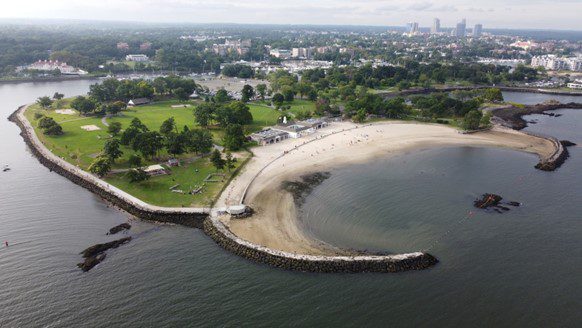
In 2023, Long Island Sound Study and Warren Pinnacle, in partnership with Westchester County and conservation groups/organizations, have developed a Plan to understand the benefits of, threats to, and recommended conservation actions for marsh ecosystems on Glen Island Park in New Rochelle, NY. The goal of the Plan is to help inform conservation and restoration efforts to maximize marsh ecosystem services under rising sea levels.
Sara Powell, slp285@cornell.edu
Case Study
Plan
In 2023, Long Island Sound Study and Warren Pinnacle, in partnership with Westchester County and conservation groups/organizations, have developed a Plan to understand the benefits of, threats to, and recommended conservation actions for marsh ecosystems on Glen Island Park in New Rochelle, NY. The goal of the Plan is to help inform conservation and restoration efforts to maximize marsh ecosystem services under rising sea levels.
Case Study
Project
Increased development and the historic construction of a dam on Sunken Meadow Creek in the 1950’s led to reduced tidal exchange, increased water levels in the creek, poor water quality, and the proliferation of invasive species. In 2008 a number of partners (NYS OPRHP, NOAA, NYSDEC, LISS, TNC, Save the Sound, USFWS, LI Botanical Society) came together to work to restore the degraded marsh habitat around Sunken Meadow Creek, increase tidal flow, improve aquatic organism passage, limit invasives, and improve water quality. A restoration feasibility study was completed in 2010. In 2012 Superstorm Sandy blew out the dam on Sunken Meadow Creek, naturally kick-starting restoration. Following Superstorm Sandy, the project partners were able to quickly capitalize on available funding and grants, due to their prior planning efforts. A bridge was built across the Creek where the dam blew out, salt marsh habitat was restored at three locations, green infrastructure was installed in one of the parking areas to capture and treat stormwater runoff, fish passage feasibility on the creek was investigated, and education and outreach was conducted to thousands of people. These projects were completed in 2019. Now, with funding through Long Island Sound Futures Fund, Audubon NY is leading a large-scale marsh restoration project at Sunken Meadow Creek to restore important high-marsh habitat for at risk species, like the Saltmarsh Sparrow, and to increase the resilience of the marsh in the face of rising sea levels. Audubon will be working to finalize the designs and secure permits over the next two years, with on-the-ground restoration expected in 2026.
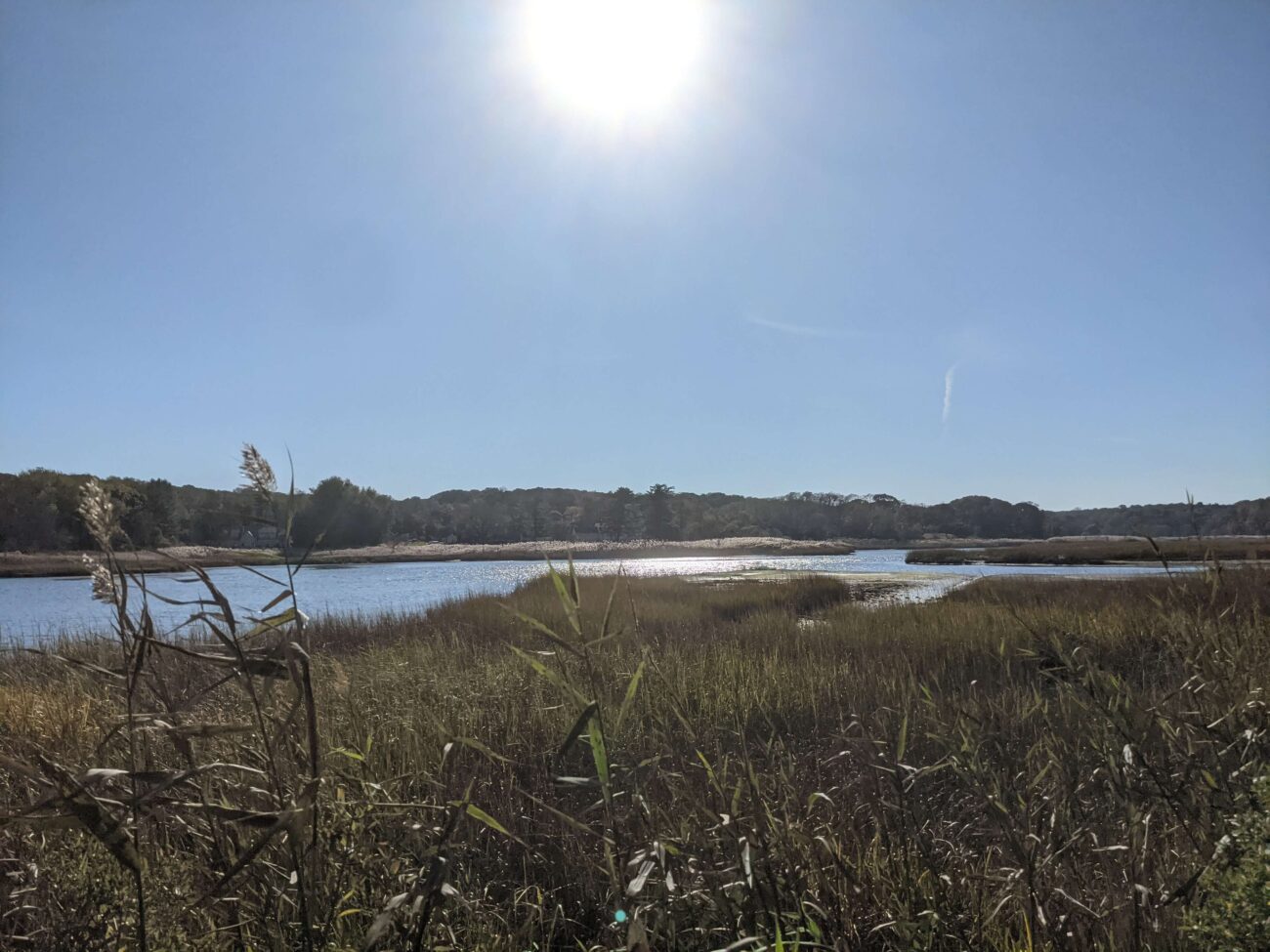


Sean Cruickshank Sean.Cruickshank@parks.ny.gov, Jon Vander Werff jvanderwerff@savethesound.org, Phoebe Clark phoebe.clark@audubon.org, Vicky O’Neill victoria.oneill@audubon.org
Case Study
Project
Increased development and the historic construction of a dam on Sunken Meadow Creek in the 1950’s led to reduced tidal exchange, increased water levels in the creek, poor water quality, and the proliferation of invasive species. In 2008 a number of partners (NYS OPRHP, NOAA, NYSDEC, LISS, TNC, Save the Sound, USFWS, LI Botanical Society) came together to work to restore the degraded marsh habitat around Sunken Meadow Creek, increase tidal flow, improve aquatic organism passage, limit invasives, and improve water quality. A restoration feasibility study was completed in 2010. In 2012 Superstorm Sandy blew out the dam on Sunken Meadow Creek, naturally kick-starting restoration. Following Superstorm Sandy, the project partners were able to quickly capitalize on available funding and grants, due to their prior planning efforts. A bridge was built across the Creek where the dam blew out, salt marsh habitat was restored at three locations, green infrastructure was installed in one of the parking areas to capture and treat stormwater runoff, fish passage feasibility on the creek was investigated, and education and outreach was conducted to thousands of people. These projects were completed in 2019. Now, with funding through Long Island Sound Futures Fund, Audubon NY is leading a large-scale marsh restoration project at Sunken Meadow Creek to restore important high-marsh habitat for at risk species, like the Saltmarsh Sparrow, and to increase the resilience of the marsh in the face of rising sea levels. Audubon will be working to finalize the designs and secure permits over the next two years, with on-the-ground restoration expected in 2026.
Case Study
Project
The Maidstone Landing Association, situated between Town of Riverhead Iron Pier Beach and Hallock State Park, wanted to take action to mitigate erosion of their bluff. First they worked with Town of Riverhead to put up signage and fencing to stop beachgoers from climbing and driving on or near the bluff, which was causing significant destruction. Next they opted for a small-scale, nature-based approach to help stabilize the bluff. They purchased snow fencing from Home Depot and native beachgrass from Long Island Natives. They engaged Riverhead Charter High School to help with putting up the snow fencing and the plantings. The Maidstone Landing Association is using their bluff as an “outdoor classroom” to teach students and the public about the importance of conserving our coastal habitats and best practices.


Tom Mohrman mustangtpm@gmail.com; Corey Humphrey corey.humphrey@suffolkcountyny.gov
Case Study
Project
The Maidstone Landing Association, situated between Town of Riverhead Iron Pier Beach and Hallock State Park, wanted to take action to mitigate erosion of their bluff. First they worked with Town of Riverhead to put up signage and fencing to stop beachgoers from climbing and driving on or near the bluff, which was causing significant destruction. Next they opted for a small-scale, nature-based approach to help stabilize the bluff. They purchased snow fencing from Home Depot and native beachgrass from Long Island Natives. They engaged Riverhead Charter High School to help with putting up the snow fencing and the plantings. The Maidstone Landing Association is using their bluff as an “outdoor classroom” to teach students and the public about the importance of conserving our coastal habitats and best practices.
Case Study
Plan
Stony Brook, Head of Harbor and Nissequogue, NY
In 2023, Long Island Sound Partnership and Warren Pinnacle, in partnership with committed municipalities and conservation groups/organizations, developed a Plan to understand the benefits, threats, and recommended conservation actions for the Stony Brook Harbor and West Meadow Creek marsh ecosystem. The goal of the Plan is to help inform conservation and restoration efforts to maximize marsh ecosystem services under rising sea levels.

Elizabeth Hornstein, eeh78@cornell.edu
Case Study
Plan
Stony Brook, Head of Harbor and Nissequogue, NY
In 2023, Long Island Sound Partnership and Warren Pinnacle, in partnership with committed municipalities and conservation groups/organizations, developed a Plan to understand the benefits, threats, and recommended conservation actions for the Stony Brook Harbor and West Meadow Creek marsh ecosystem. The goal of the Plan is to help inform conservation and restoration efforts to maximize marsh ecosystem services under rising sea levels.
Case Study
Plan
Oyster Bay, NY and Cold Spring Harbor, NY
In 2023, Long Island Sound Study, New York Sea Grant and Warren Pinnacle, in partnership with committed municipalities and marsh-conservation groups/organizations, developed a Plan to understand the benefits, threats and recommended conservation actions at seven focal areas across the harbors. The goal of the Plan is to inform local municipalities and marsh-conservation groups as to where they might focus their conservation efforts to maximize the conservation of marsh ecosystem services under sea-level rise conditions. This process brought together a diversity of stakeholders to develop a cohesive strategy for seven focal areas across Oyster Bay and Cold Spring Harbor: Frost Creek, Mill Neck Creek, West Shore Road, Bayville Bridge to Centre Island, Centre Island, Shore Road, and Lower Cold Spring Harbor. The partners will now work to implement the recommendations in the plan.
St. John’s Episcopal Church (lower Cold Spring Harbor) and Village of Lattingtown (Frost Creek) were 2024 LIS Resilience Planning Support Program awardees. Their projects will build off the Oyster Bay & Cold Spring Harbor marsh conservation plan and develop specific recommendations to enhance and restore marsh habitat in lower Cold Spring Harbor and Frost Creek.

Sarah Schaefer-Brown, scs292@cornell.edu
Case Study
Plan
Oyster Bay, NY and Cold Spring Harbor, NY
In 2023, Long Island Sound Study, New York Sea Grant and Warren Pinnacle, in partnership with committed municipalities and marsh-conservation groups/organizations, developed a Plan to understand the benefits, threats and recommended conservation actions at seven focal areas across the harbors. The goal of the Plan is to inform local municipalities and marsh-conservation groups as to where they might focus their conservation efforts to maximize the conservation of marsh ecosystem services under sea-level rise conditions. This process brought together a diversity of stakeholders to develop a cohesive strategy for seven focal areas across Oyster Bay and Cold Spring Harbor: Frost Creek, Mill Neck Creek, West Shore Road, Bayville Bridge to Centre Island, Centre Island, Shore Road, and Lower Cold Spring Harbor. The partners will now work to implement the recommendations in the plan.
St. John’s Episcopal Church (lower Cold Spring Harbor) and Village of Lattingtown (Frost Creek) were 2024 LIS Resilience Planning Support Program awardees. Their projects will build off the Oyster Bay & Cold Spring Harbor marsh conservation plan and develop specific recommendations to enhance and restore marsh habitat in lower Cold Spring Harbor and Frost Creek.
Case Study
Project
In partnership with Sands Point Preserve Conservancy, an innovative cliff face stabilization system, engineered by Long Island based company Coastal Technologies Corp (CTC), was deployed as a pilot on Oct. 30th, 2022 at a steep & loose coastal moraine bluff located at The Sands Point Preserve, NY. The pilot project was designed to test the efficacy of this system to secure and stabilize sediment under constant erosive pressure preventing vegetation from taking hold. This bluff was selected due to its very high rate of stormwater & aeolian erosion. American beach grass, bayberry, beach plum & rose plugs, all protected from erosive forces, have thrived. Slope erosion was prevented by the devices, and all plants were successfully held against the slope, exactly as designed.
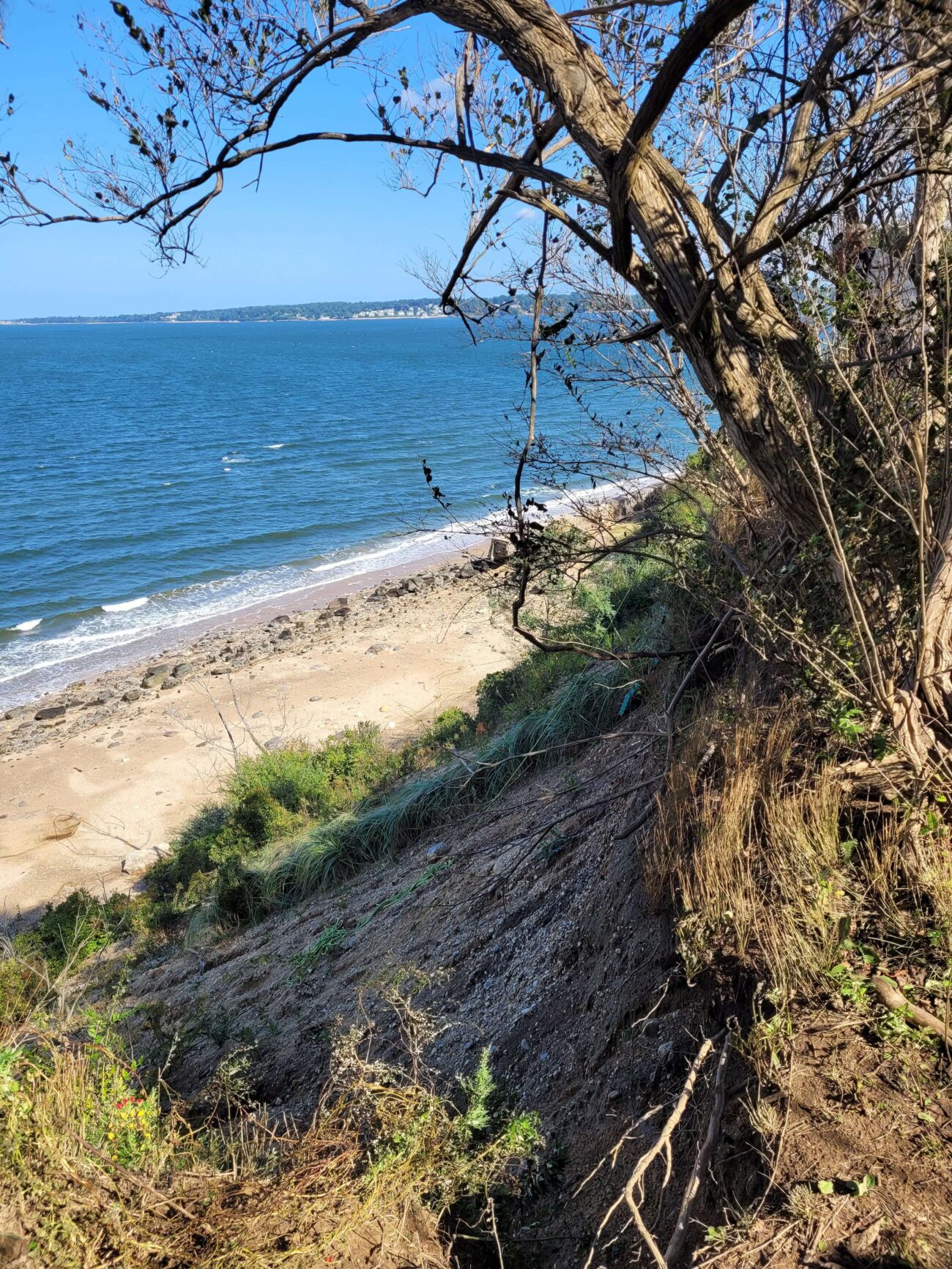
Case Study
Project
In partnership with Sands Point Preserve Conservancy, an innovative cliff face stabilization system, engineered by Long Island based company Coastal Technologies Corp (CTC), was deployed as a pilot on Oct. 30th, 2022 at a steep & loose coastal moraine bluff located at The Sands Point Preserve, NY. The pilot project was designed to test the efficacy of this system to secure and stabilize sediment under constant erosive pressure preventing vegetation from taking hold. This bluff was selected due to its very high rate of stormwater & aeolian erosion. American beach grass, bayberry, beach plum & rose plugs, all protected from erosive forces, have thrived. Slope erosion was prevented by the devices, and all plants were successfully held against the slope, exactly as designed.
Case Study
Project
Friends of the Bay installed two raingardens at the Western Waterfront, which was done in October 2021 with the help of volunteers.


Friends of the Bay, info@friendsofthebay.org
Case Study
Project
Friends of the Bay installed two raingardens at the Western Waterfront, which was done in October 2021 with the help of volunteers.
Case Study
Project
Stratford, CT
This project restored 46 acres of the Great Meadows Marsh in Connecticut that was degraded from dredge material that was dumped on site, poor drainage, and sea level rise. The marsh was also overrun with invasive plants and mosquitoes. A controlled fire was started to kill the invasive reeds growing in the marsh. Then a construction crew removed invasive plants and the dumped dredge material. Lastly, channels were carefully dug for tidal flushing which will allow the marsh to keep pace with sea level rise. Soil hummocks were constructed for Salt Marsh Sparrow habitat. Now the area continues to be monitored, assessed for resiliency, and provides a field for innovative solutions to be tested in.
Trustees: USFWS, NOAA, State of Connecticut; Project Partners: Audubon Connecticut, Town of Stratford
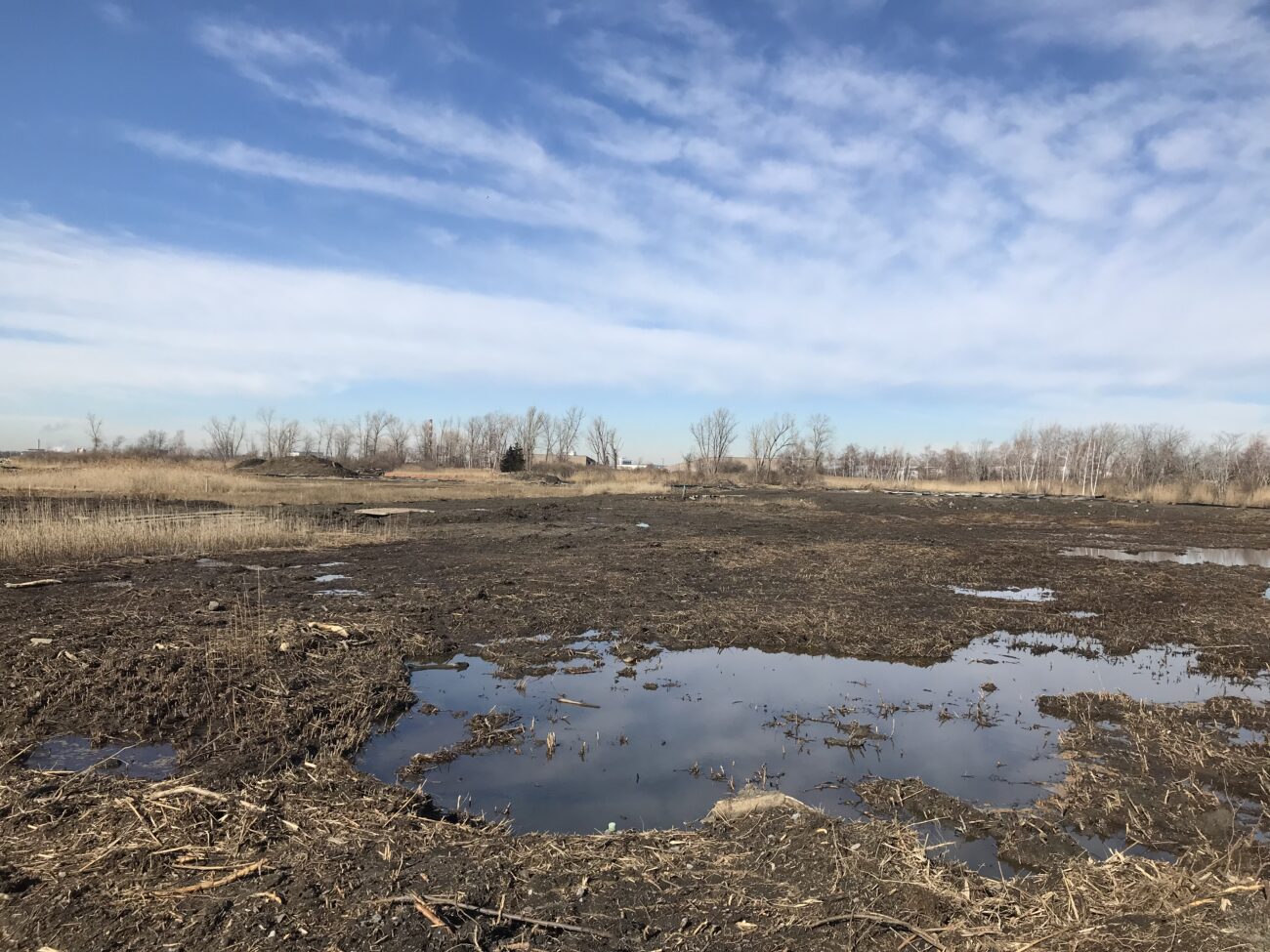


Molly Sperduto at molly_sperduto@fws.gov;
Corrie Folsom-O’Keefe cfolsom.okeefe@audubon.org;
Jack Matthias jack.matthias@audubon.org
Case Study
Project
Stratford, CT
This project restored 46 acres of the Great Meadows Marsh in Connecticut that was degraded from dredge material that was dumped on site, poor drainage, and sea level rise. The marsh was also overrun with invasive plants and mosquitoes. A controlled fire was started to kill the invasive reeds growing in the marsh. Then a construction crew removed invasive plants and the dumped dredge material. Lastly, channels were carefully dug for tidal flushing which will allow the marsh to keep pace with sea level rise. Soil hummocks were constructed for Salt Marsh Sparrow habitat. Now the area continues to be monitored, assessed for resiliency, and provides a field for innovative solutions to be tested in.
Trustees: USFWS, NOAA, State of Connecticut; Project Partners: Audubon Connecticut, Town of Stratford
Case Study
Project
Stratford, CT
This project consists of 750 feet of shoreline in Stratford, CT. The goal of the project was to protect the beach from coastal erosion and to help combat sea level rise. The steps consisted of adding a smooth cordgrass marsh, artificial shellfish reefs (reef balls), high marsh, and a coastal dune area. The site was awarded the “Best Restored Shore Area” from the American Shore and Beach Preservation Association. To adaptively manage the site, a second restoration project is being developed to extend the marsh seaward by 0.35 acres over an additional 250 feet of shore using a combination of bagged slipper shell and small, modular oyster castles near the marsh edge, along with additional cordgrass plantings in the intertidal zone.
Sacred Heart University
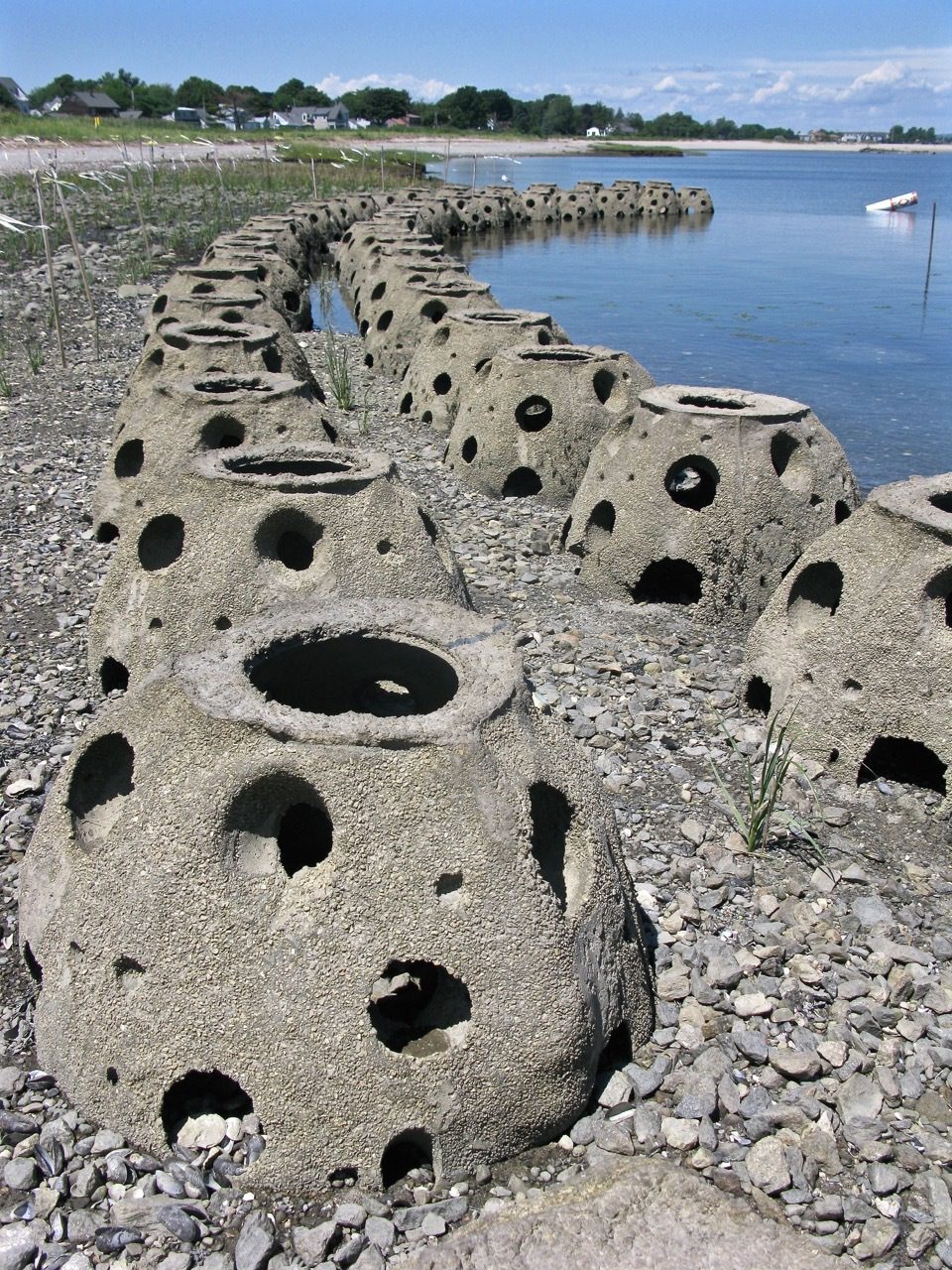
LaTina Steele
203-396-8485
steelel@sacredheart.edu
Case Study
Project
Stratford, CT
This project consists of 750 feet of shoreline in Stratford, CT. The goal of the project was to protect the beach from coastal erosion and to help combat sea level rise. The steps consisted of adding a smooth cordgrass marsh, artificial shellfish reefs (reef balls), high marsh, and a coastal dune area. The site was awarded the “Best Restored Shore Area” from the American Shore and Beach Preservation Association. To adaptively manage the site, a second restoration project is being developed to extend the marsh seaward by 0.35 acres over an additional 250 feet of shore using a combination of bagged slipper shell and small, modular oyster castles near the marsh edge, along with additional cordgrass plantings in the intertidal zone.
Sacred Heart University
Case Study
Project
Wilton, CT
Dana Dam (aka Strong Pond Dam) at Merwin Meadows Park in Wilton, CT was the first barrier to upstream fish migration from Long Island Sound on the Norwalk River. A series of dams along the Norwalk River (historically, and presently) prevented fish from reaching their historic spawning grounds, have posed safety risks, and disconnected the river from its natural floodplain. On September 11, 2023, demolition of this dam began! In addition to restoring habitat and allowing fish passage, the removal restored natural floodplain connectivity, realigned 200 feet of river channel away from an active railroad embankment, and removed a known safety hazard.


Alex Krofta, akrofta@savethesound.org
Case Study
Project
Wilton, CT
Dana Dam (aka Strong Pond Dam) at Merwin Meadows Park in Wilton, CT was the first barrier to upstream fish migration from Long Island Sound on the Norwalk River. A series of dams along the Norwalk River (historically, and presently) prevented fish from reaching their historic spawning grounds, have posed safety risks, and disconnected the river from its natural floodplain. On September 11, 2023, demolition of this dam began! In addition to restoring habitat and allowing fish passage, the removal restored natural floodplain connectivity, realigned 200 feet of river channel away from an active railroad embankment, and removed a known safety hazard.
Case Study
Project
New Haven, CT
The City of New Haven has installed 286 right-of-way bioswales throughout the city as part of a multifaceted approach to reducing flooding in the downtown area. Right-of-way bioswales are engineered planted areas that are located on sidewalks. They are designed to capture and infiltrate stormwater into the ground that would otherwise directly enter a storm drain. These bioswales were installed as the result of various partnerships and funding opportunities related to flood prevention, localized drainage solutions, combined sewer overflow mitigation, research, and traffic calming projects.
City of New Haven, Dept of Engineering
Urban Resources Initiative, EMERGE Inc., Save the Sound, Yale School of the Environment, and Quinnipiac University, among others.

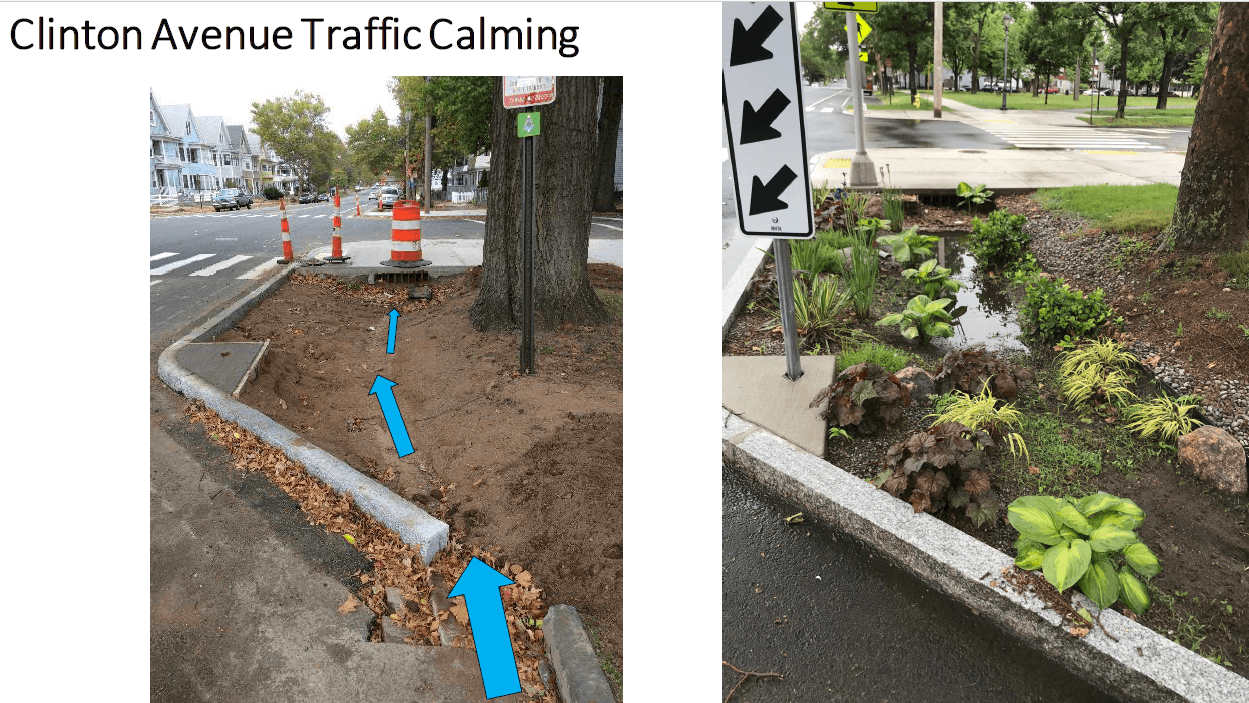

Dawn Henning
dhenning@newhavenct.gov
475-434-1643
Case Study
Project
New Haven, CT
The City of New Haven has installed 286 right-of-way bioswales throughout the city as part of a multifaceted approach to reducing flooding in the downtown area. Right-of-way bioswales are engineered planted areas that are located on sidewalks. They are designed to capture and infiltrate stormwater into the ground that would otherwise directly enter a storm drain. These bioswales were installed as the result of various partnerships and funding opportunities related to flood prevention, localized drainage solutions, combined sewer overflow mitigation, research, and traffic calming projects.
City of New Haven, Dept of Engineering
Urban Resources Initiative, EMERGE Inc., Save the Sound, Yale School of the Environment, and Quinnipiac University, among others.
Case Study
Project
Stonington, CT
This public greenspace was suffering from mosquito overpopulation, invasion from Phragmites, and poor tidal/stormwater drainage. The Wetland’s Habitat and Mosquito Management Program (WHAMM) created a new drainage area and tunnels, while also eliminating invasive plants. Then organizations and volunteers banded together to remove and replace invasive plant species with native plants.


Juliana Barrett, CT Sea Grant Extension, 860-405-9106, juliana.barrett@uconn.edu
Journal of Extension Article: Moving With the Marsh: Encouraging Property Owner Adaptation to Marsh Migration
Case Study
Project
Stonington, CT
This public greenspace was suffering from mosquito overpopulation, invasion from Phragmites, and poor tidal/stormwater drainage. The Wetland’s Habitat and Mosquito Management Program (WHAMM) created a new drainage area and tunnels, while also eliminating invasive plants. Then organizations and volunteers banded together to remove and replace invasive plant species with native plants.
Case Study
Project
This Avalonia and Sea Grant effort in Stonington, CT restored the preserve using native, well-researched plant species that would thrive in the forest and offer biodiversity. First, the area was cut down precisely to allow for new, ground-level growth. Then the preserve was seeded with plants chosen by the field team.
Juliana Barrett, CT Sea Grant Extension, 860-405-9106 & juliana.barrett@uconn.edu. Beth Sullivan, Avalonia
Case Study
Project
This Avalonia and Sea Grant effort in Stonington, CT restored the preserve using native, well-researched plant species that would thrive in the forest and offer biodiversity. First, the area was cut down precisely to allow for new, ground-level growth. Then the preserve was seeded with plants chosen by the field team.
Case Study
Project
Old Saybrook, CT
The purpose of this project was to mitigate 450 ft of coastal erosion on the Long Island Sound. A part of Crab Creek was moved further inland, thus allowing for beach and dune migration over time. New rock sills, plants, and sand sills were also positioned along the shore.
Case Study
Project
Old Saybrook, CT
The purpose of this project was to mitigate 450 ft of coastal erosion on the Long Island Sound. A part of Crab Creek was moved further inland, thus allowing for beach and dune migration over time. New rock sills, plants, and sand sills were also positioned along the shore.
Guidance Tool
Level of Effort:
The NYSDEC document is to provide guidance on the issuance of permits for living shorelines techniques in the Marine and Coastal District Waters of New York (the Marine District) and encourages the use of green or natural infrastructure.
Guidance Tool
Level of Effort:
The NYSDEC document is to provide guidance on the issuance of permits for living shorelines techniques in the Marine and Coastal District Waters of New York (the Marine District) and encourages the use of green or natural infrastructure.
Data
Level of Effort:
The Long Island Tidal Wetlands Trends Analysis measures wetlands loss and changes in marsh condition within the Long Island Sound, Peconic, and South Shore estuaries including all or parts of Westchester, Bronx, Queens, Nassau, and Suffolk Counties between 1974 and 2005/2008. The results of this project are intended for use by environmental managers, conservation advocates and elected officials across a variety of regulatory agencies, environmental organizations, and governments.
Data
Level of Effort:
The Long Island Tidal Wetlands Trends Analysis measures wetlands loss and changes in marsh condition within the Long Island Sound, Peconic, and South Shore estuaries including all or parts of Westchester, Bronx, Queens, Nassau, and Suffolk Counties between 1974 and 2005/2008. The results of this project are intended for use by environmental managers, conservation advocates and elected officials across a variety of regulatory agencies, environmental organizations, and governments.
Guidance Tool
Level of Effort:
This document developed in support of the NYS Community Risk and Resiliency Act 1) Describes natural resilience measures and how they can be used to mitigate the risks of flooding and erosion, 2) Provides definitions for different types of natural resilience measures and distinguishes among conserved, restored, nature-based and hard structural approaches, 3) Provides information on the value and benefits of using natural resilience measures, along with information on the co-benefits they provide, 4) Lists key factors to consider in the restoration, design and construction of natural resilience measures, and 5) Provides background to support the development of NYS agency guidance on natural resilience measures in the future
Guidance Tool
Level of Effort:
This document developed in support of the NYS Community Risk and Resiliency Act 1) Describes natural resilience measures and how they can be used to mitigate the risks of flooding and erosion, 2) Provides definitions for different types of natural resilience measures and distinguishes among conserved, restored, nature-based and hard structural approaches, 3) Provides information on the value and benefits of using natural resilience measures, along with information on the co-benefits they provide, 4) Lists key factors to consider in the restoration, design and construction of natural resilience measures, and 5) Provides background to support the development of NYS agency guidance on natural resilience measures in the future
Guidance Tool
Level of Effort:
This fact sheet is intended to assist landowners in understanding the various shoreline management options and considerations for their shoreline.
Guidance Tool
Level of Effort:
This fact sheet is intended to assist landowners in understanding the various shoreline management options and considerations for their shoreline.
Guidance Tool
Level of Effort:
The purpose of this fact sheet is to assist landowners in identifying and understanding the primary causes and processes responsible for erosion.
Guidance Tool
Level of Effort:
The purpose of this fact sheet is to assist landowners in identifying and understanding the primary causes and processes responsible for erosion.
Guidance Tool
Level of Effort:
This guidance document is intended for stakeholders pursuing FEMA HMA grants for nature-based solutions to mitigate risks associated with flooding (riverine and coastal) and wildfire.
Guidance Tool
Level of Effort:
This guidance document is intended for stakeholders pursuing FEMA HMA grants for nature-based solutions to mitigate risks associated with flooding (riverine and coastal) and wildfire.
Website
Level of Effort:
ReduceFloodRisk.org was developed by the Association of State Floodplain Managers to help property owners and buyers in flood prone areas identify strategies to reduce their properties risk of flooding.
Website
Level of Effort:
ReduceFloodRisk.org was developed by the Association of State Floodplain Managers to help property owners and buyers in flood prone areas identify strategies to reduce their properties risk of flooding.
Website
Sustainable CT provides a wide-ranging menu of resilience best practices, opportunities for grant funding, and a voluntary certification program that recognizes thriving and resilient CT communities. Municipalities choose Sustainable CT actions, implement them, and earn points toward certification.
Website
Sustainable CT provides a wide-ranging menu of resilience best practices, opportunities for grant funding, and a voluntary certification program that recognizes thriving and resilient CT communities. Municipalities choose Sustainable CT actions, implement them, and earn points toward certification.
Mapper
Level of Effort:
Coastal Resilience is a Connecticut-based decision support tool that provides local, regional, state and national stakeholders a step-wise process to guide decisions to reduce the ecological and socio-economic risks of coastal and inland hazards.
Mapper
Level of Effort:
Coastal Resilience is a Connecticut-based decision support tool that provides local, regional, state and national stakeholders a step-wise process to guide decisions to reduce the ecological and socio-economic risks of coastal and inland hazards.
Story Map
Level of Effort:
This story map by the by the UConn Center for Land Use Education and Research (CLEAR) and the Naugatuck Valley Council of Governments (NVCOG) shows a snapshot of Connecticut Municipalities’ Low Impact Development Policies (LID) that are included plans of conservation and development, zoning/subdivision regulations, and stormwater/LID design manuals.
Story Map
Level of Effort:
This story map by the by the UConn Center for Land Use Education and Research (CLEAR) and the Naugatuck Valley Council of Governments (NVCOG) shows a snapshot of Connecticut Municipalities’ Low Impact Development Policies (LID) that are included plans of conservation and development, zoning/subdivision regulations, and stormwater/LID design manuals.
Website
Level of Effort:
NOAA overview of living shorelines and their benefits, steps to construction. There is a good map of places where they have been constructed around the US. It is a good place to get basic info about living shorelines, with appropriate links to more specific information like how to get a permit
Website
Level of Effort:
NOAA overview of living shorelines and their benefits, steps to construction. There is a good map of places where they have been constructed around the US. It is a good place to get basic info about living shorelines, with appropriate links to more specific information like how to get a permit
Guidance Tool
Level of Effort:
CT state resource on living shorelines, with a few good fact sheets and pages about types of living shoreline techniques and permitting for our state. There is also a list of pilot projects in CT.
Guidance Tool
Level of Effort:
CT state resource on living shorelines, with a few good fact sheets and pages about types of living shoreline techniques and permitting for our state. There is also a list of pilot projects in CT.
Guidance Tool
Level of Effort:
This website provides an overview of each chapter of Connecticut’s new Stormwater Quality Manual, which includes guidance on how to design, install, and maintain these types of practices.
Guidance Tool
Level of Effort:
This website provides an overview of each chapter of Connecticut’s new Stormwater Quality Manual, which includes guidance on how to design, install, and maintain these types of practices.
Plan
Level of Effort:
An effort by Save the Sound and Earth Economics to identify opportunities for the Federal Emergency Management Agency (FEMA) and other federal agencies and funders to improve the ability of benefit-cost analysis tools to account for ecosystem-based benefits.
Plan
Level of Effort:
An effort by Save the Sound and Earth Economics to identify opportunities for the Federal Emergency Management Agency (FEMA) and other federal agencies and funders to improve the ability of benefit-cost analysis tools to account for ecosystem-based benefits.
Guidance Tool
Level of Effort:
The primary goal of this guide is to help communities identify and engage the staff and resources that can be used to implement nature-based solutions to build resilience to natural hazards, which may be exacerbated by climate change.
Guidance Tool
Level of Effort:
The primary goal of this guide is to help communities identify and engage the staff and resources that can be used to implement nature-based solutions to build resilience to natural hazards, which may be exacerbated by climate change.
Guidance Tool
Level of Effort:
This guide gives community leaders five main strategies to carry out Nature-Based Solution projects: 1) Building Strong Partnerships, 2) Engaging the Whole Community, 3) Matching Project Size with Desired Goals and Benefits, 4) Maximizing Benefits, and 5) Designing for the Future. This is not a technical guide for planning, constructing, or funding NBS. It covers the value of each strategy and suggests how to move forward with NBS projects.
Guidance Tool
Level of Effort:
This guide gives community leaders five main strategies to carry out Nature-Based Solution projects: 1) Building Strong Partnerships, 2) Engaging the Whole Community, 3) Matching Project Size with Desired Goals and Benefits, 4) Maximizing Benefits, and 5) Designing for the Future. This is not a technical guide for planning, constructing, or funding NBS. It covers the value of each strategy and suggests how to move forward with NBS projects.
Incentive Program
The Long Island Garden Rewards Program offers reimbursement of up to $500 total for making your yard more water friendly. Homeowners can be reimbursed for installing rain barrels, rain gardens, or native plantings on their properties. These actions reduce the amount of nitrogen pollution entering local waterways and helps conserve water. Funds are limited and available on a first come, first serve basis.
Due to the high participation in the program, as of May 20, 2025 the Long Island Garden Rewards Program is closed. Thank you to all who participated. Check back for when applications open again!
Incentive Program
The Long Island Garden Rewards Program offers reimbursement of up to $500 total for making your yard more water friendly. Homeowners can be reimbursed for installing rain barrels, rain gardens, or native plantings on their properties. These actions reduce the amount of nitrogen pollution entering local waterways and helps conserve water. Funds are limited and available on a first come, first serve basis.
Due to the high participation in the program, as of May 20, 2025 the Long Island Garden Rewards Program is closed. Thank you to all who participated. Check back for when applications open again!
Mapper
Level of Effort:
The purpose of the interactive viewer is to illustrate the fate of significant marsh systems on Long Island Sound under future Sea-Level Rise conditions. Model results are combined with tax-parcel information and integrated with information about marsh ecosystem services to assist municipalities and conservation groups in defining and assessing various land-management alternatives.
Mapper
Level of Effort:
The purpose of the interactive viewer is to illustrate the fate of significant marsh systems on Long Island Sound under future Sea-Level Rise conditions. Model results are combined with tax-parcel information and integrated with information about marsh ecosystem services to assist municipalities and conservation groups in defining and assessing various land-management alternatives.
Website
Level of Effort:
Learn about living shorelines and their benefits to communities. This website contains training modules, a white papers database, a database of living shoreline projects, professionals directory, and online forum.
Website
Level of Effort:
Learn about living shorelines and their benefits to communities. This website contains training modules, a white papers database, a database of living shoreline projects, professionals directory, and online forum.
Resources & Tools