

Resources for
Habitat
Mapper
Level of Effort:
Resilient Land Mapping Tool
The Resilient Land Mapping Tool, developed by The Nature Conservancy’s Center for Resilient Conservation Science, is an interactive mapping tool that helps users explore climate resilient landscapes across the United States. The tool allows users to view and analyze data on terrestrial resilience, biodiversity, connectivity, and other conservation indicators to support land protection and planning decisions. Users can explore different map layers, analyze specific areas, and download datasets for conservation research and planning. This tool is designed to support conservation efforts that protect biodiversity and maintain ecological functions in a changing climate.
Mapper
Level of Effort:
Resilient Land Mapping Tool
The Resilient Land Mapping Tool, developed by The Nature Conservancy’s Center for Resilient Conservation Science, is an interactive mapping tool that helps users explore climate resilient landscapes across the United States. The tool allows users to view and analyze data on terrestrial resilience, biodiversity, connectivity, and other conservation indicators to support land protection and planning decisions. Users can explore different map layers, analyze specific areas, and download datasets for conservation research and planning. This tool is designed to support conservation efforts that protect biodiversity and maintain ecological functions in a changing climate.
Events
2026 Connecticut Land Conservation Conference
The 2026 Connecticut Land Conservation Conference brings together land conservation advocates, municipal leaders, and environmental organizations for a full day of training, networking, and knowledge sharing. Participants will explore strategies and partnerships that support land conservation efforts across Connecticut. The conference provides opportunities to learn from experts, attend workshops, and connect with others working to protect natural landscapes. It is a space for sharing ideas and building collaborations that strengthen conservation work across the state.
A waitlist is available at the conference website:
Events
2026 Connecticut Land Conservation Conference
The 2026 Connecticut Land Conservation Conference brings together land conservation advocates, municipal leaders, and environmental organizations for a full day of training, networking, and knowledge sharing. Participants will explore strategies and partnerships that support land conservation efforts across Connecticut. The conference provides opportunities to learn from experts, attend workshops, and connect with others working to protect natural landscapes. It is a space for sharing ideas and building collaborations that strengthen conservation work across the state.
A waitlist is available at the conference website:
Funding
: Mar 25 – Apr 30, 2026
Climate-Smart Forest Stewardship Grant Program
CLCC’s Climate-Smart Forest Stewardship Grant Program is a new initiative that enables land trusts to take care of their forests. To help land trusts face these challenges, CLCC will provide funding for land trusts that integrate climate mitigation, resilience, and adaptation strategies into their long-term forest stewardship.
Applicants must be current members of CLCC. Interested applicants must have an initial conversation with CLCC to discuss project eligibility. Site visits are strongly encouraged prior to submitting an application.
Funding
: Mar 25 – Apr 30, 2026
Climate-Smart Forest Stewardship Grant Program
CLCC’s Climate-Smart Forest Stewardship Grant Program is a new initiative that enables land trusts to take care of their forests. To help land trusts face these challenges, CLCC will provide funding for land trusts that integrate climate mitigation, resilience, and adaptation strategies into their long-term forest stewardship.
SRC Events
3rd Annual SRC Regional Funding Workshop: Connecticut
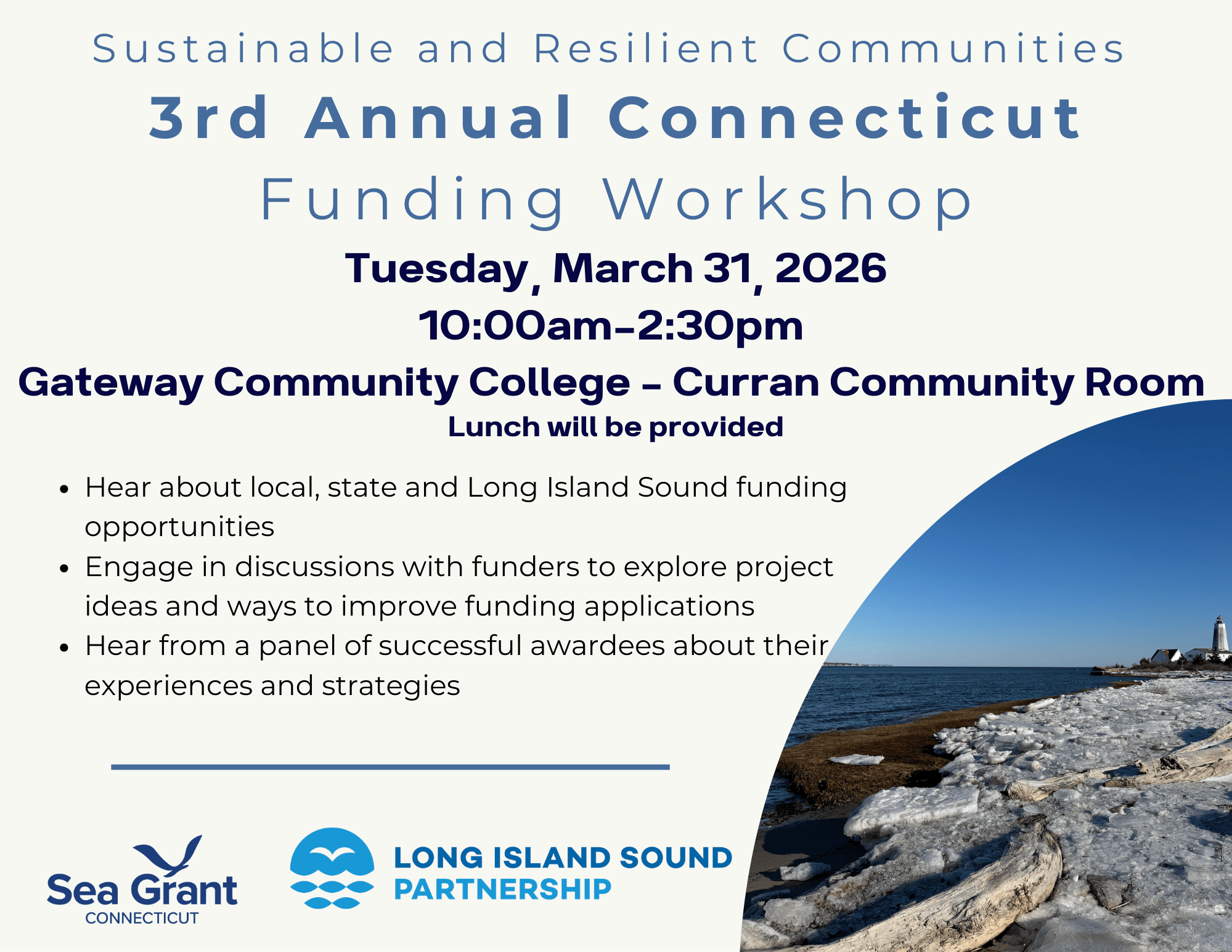
Please join the Long Island Sound Partnership and the CT Sea Grant Sustainable and Resilient Communities (SRC) team at the 3rd Annual SRC Funding Workshop for Connecticut! The event is free and lunch will be provided.
Date: Tuesday, March 31, 2026
Time: 9:30am – 2:30pm (lunch will be provided)
Location: Gateway Community College – Curran Community Room (N100), 20 Church St, New Haven, CT 06510
Registration will be required by March 26th
Attendees will hear from program officers representing various local, state, and regional funding organizations and be able to engage in discussions with funders to explore project ideas and ways to improve funding applications. Attendees will also hear from a panel of successful awardees about their experiences and strategies. The workshop is intended for municipal officials and staff, nonprofits, community organizations, and other interested groups in the Long Island Sound region.
Draft Agenda:
- Lightning Talk Presentations from Funders – local, state, federal, and Long Island Sound-focused funding opportunities
- Lunch (provided)
- Successful Awardees Panel – Hear from communities that have been successful in applying to these grant opportunities
- Roundtable Discussions – Participants encouraged to interact with funders and panelists
Featured Funding Opportunities:
- Community Foundation of Eastern Connecticut
- Congressionally Directed Spending
- CT Bipartisan Infrastructure Law Team (CTBILT) & CT Fed Funds Team
- CT DECD Community Investment Fund
- CT DECD Office of Brownfield Remediation & Development
- CT DEEP CERCLA 128(a) Brownfield Grant Program
- CT DEEP Climate Resilience Fund
- CT DEEP Open Space and Watershed Land Acquisition Grant Program
- CT DEEP Recreational Trails
- CT DEEP Section 319 Nonpoint Source Grants
- CT DEEP Urban Green & Community Gardens Grant Program
- CT Federal Funding Planning Team
- CT Land Conservation Council
- Long Island Sound Community Impact Fund
- Long Island Sound Futures Fund
- Long Island Sound Stewardship Fund
- New England Environmental Finance Center
- UConn Technical Assistance to Brownfields (TAB)
Email lisresilience@gmail.com with questions.
SRC Events
3rd Annual SRC Regional Funding Workshop: Connecticut
Please join the Long Island Sound Partnership and the CT Sea Grant Sustainable and Resilient Communities (SRC) team at the 3rd Annual SRC Funding Workshop for Connecticut! The event is free and lunch will be provided.
Date: Tuesday, March 31, 2026
Time: 9:30am – 2:30pm (lunch will be provided)
Location: Gateway Community College – Curran Community Room (N100), 20 Church St, New Haven, CT 06510
Registration will be required by March 26th
Attendees will hear from program officers representing various local, state, and regional funding organizations and be able to engage in discussions with funders to explore project ideas and ways to improve funding applications. Attendees will also hear from a panel of successful awardees about their experiences and strategies. The workshop is intended for municipal officials and staff, nonprofits, community organizations, and other interested groups in the Long Island Sound region.
Draft Agenda:
- Lightning Talk Presentations from Funders – local, state, federal, and Long Island Sound-focused funding opportunities
- Lunch (provided)
- Successful Awardees Panel – Hear from communities that have been successful in applying to these grant opportunities
- Roundtable Discussions – Participants encouraged to interact with funders and panelists
Featured Funding Opportunities:
- Community Foundation of Eastern Connecticut
- Congressionally Directed Spending
- CT Bipartisan Infrastructure Law Team (CTBILT) & CT Fed Funds Team
- CT DECD Community Investment Fund
- CT DECD Office of Brownfield Remediation & Development
- CT DEEP CERCLA 128(a) Brownfield Grant Program
- CT DEEP Climate Resilience Fund
- CT DEEP Open Space and Watershed Land Acquisition Grant Program
- CT DEEP Recreational Trails
- CT DEEP Section 319 Nonpoint Source Grants
- CT DEEP Urban Green & Community Gardens Grant Program
- CT Federal Funding Planning Team
- CT Land Conservation Council
- Long Island Sound Community Impact Fund
- Long Island Sound Futures Fund
- Long Island Sound Stewardship Fund
- New England Environmental Finance Center
- UConn Technical Assistance to Brownfields (TAB)
Email lisresilience@gmail.com with questions.
Funding
: Feb 20 – Mar 31, 2026
$100,000 - $7M
National Coastal Resilience Fund 2026
The National Coastal Resilience Fund (NCRF) is a national focused on reducing risks to coastal communities. The NCRF is now soliciting pre-proposals for coastal resilience projects that restore, increase, and strengthen natural infrastructure such as coastal marshes and wetlands, dune and beach systems, oyster and coral reefs, rivers and floodplains, coastal forest, and barrier islands that mitigate the impacts of storms and other coastal hazards to communities.
The National Coastal Resilience Fund invests in projects under four project categories: 1) Community Capacity Building and Planning, 2) Site Assessment and Preliminary Design, 3) Final Design and Permitting, 4) Restoration Implementation. Informational webinars are available to provide an overview of the NCRF funding opportunity on 2/24, 2/25, and 2/26.
Funding
: Feb 20 – Mar 31, 2026
$100,000 - $7M
National Coastal Resilience Fund 2026
The National Coastal Resilience Fund (NCRF) is a national focused on reducing risks to coastal communities. The NCRF is now soliciting pre-proposals for coastal resilience projects that restore, increase, and strengthen natural infrastructure such as coastal marshes and wetlands, dune and beach systems, oyster and coral reefs, rivers and floodplains, coastal forest, and barrier islands that mitigate the impacts of storms and other coastal hazards to communities.
Funding
: Feb 2 – Mar 13, 2026
training & technical assistance
Living Shoreline Planning Series
The Northeast Regional Ocean Council (NROC) and The Nature Conservancy (TNC) invite coastal communities, Tribes, and non-profit organizations from across New England to apply for the Living Shoreline Planning Series, which will offer free training and technical assistance to help guide you and your team through the process of identifying and developing a conceptual design for a living shoreline. These projects will be designed to reduce erosion and coastal flooding and increase resilience with co-benefits like improving habitat and public access to coastal resources. The training and technical assistance are intended to build capacity towards designing, permitting, and implementing living shoreline projects in New England and ensure your community or organization is well positioned to secure funding to advance the project beyond the conceptual design phase.
Up to 10 applicants from across New England will be selected to participate in the Living Shoreline Planning Series, which will consist of five online learning-facilitation sessions and one in-person site visit. The Living Shoreline Planning Series is open for applications from any coastal municipality, Tribe, or non-profit organization located within New England.
Funding
: Feb 2 – Mar 13, 2026
training & technical assistance
Living Shoreline Planning Series
The Northeast Regional Ocean Council (NROC) and The Nature Conservancy (TNC) invite coastal communities, Tribes, and non-profit organizations from across New England to apply for the Living Shoreline Planning Series, which will offer free training and technical assistance to help guide you and your team through the process of identifying and developing a conceptual design for a living shoreline. These projects will be designed to reduce erosion and coastal flooding and increase resilience with co-benefits like improving habitat and public access to coastal resources. The training and technical assistance are intended to build capacity towards designing, permitting, and implementing living shoreline projects in New England and ensure your community or organization is well positioned to secure funding to advance the project beyond the conceptual design phase.
Funding
: Feb 3 – Mar 26, 2026
typically $150,000-350,000
DEEP Clean Water Act Section 319 Nonpoint Source Grants
The Connecticut Department of Energy and Environmental Protection (DEEP) is now accepting proposals for fiscal year 2025 Clean Water Section 319 grants. Section 319 of the Federal Clean Water Act (Section 319) is a Federal program to control nonpoint sources (NPS) of water pollution. Connecticut receives funds from EPA for Section 319 grants that can be passed onto communities, local conservation groups, and other organizations for NPS implementation projects, plans, and statewide NPS management efforts.
Priority projects for FY26 include: Watershed Based Plan Implementation Projects, Watershed Based Plan (WBP) Development, Natural Hazards, and Advancing the Connecticut NPS Management Program Plan.
Funding
: Feb 3 – Mar 26, 2026
typically $150,000-350,000
DEEP Clean Water Act Section 319 Nonpoint Source Grants
The Connecticut Department of Energy and Environmental Protection (DEEP) is now accepting proposals for fiscal year 2025 Clean Water Section 319 grants. Section 319 of the Federal Clean Water Act (Section 319) is a Federal program to control nonpoint sources (NPS) of water pollution. Connecticut receives funds from EPA for Section 319 grants that can be passed onto communities, local conservation groups, and other organizations for NPS implementation projects, plans, and statewide NPS management efforts.
Funding
: Feb 6 – Mar 17, 2026
$1,000 - $4,000
Grow Grants Program
The New England Grassroots Environment Fund awards small grants in support of grassroots efforts and community-based environmental work in New England. The GROW GRANTS program is actively accepting applications from grassroots groups across New England. These grants fund small, volunteer-driven groups in New England working on issues including food access, immigrant support, climate resilience, youth work, mutual aid, and more. This program is geared toward groups with experience organizing in their community and have at least THREE leaders who are actively involved in group decision-making. Grants support groups to deepen their work by further developing a community vision, lowering barriers to participation, identifying new stakeholders, and working to bring more voices and lived experiences into core decision-making processes.
Grow grants prioritize support for community groups who represent a broad range of voices in their community and who are not being reached by other funders. The Grassroots Fund interprets the word 'environment' broadly and provides funding for a wide range of activities.
Funding
: Feb 6 – Mar 17, 2026
$1,000 - $4,000
Grow Grants Program
The New England Grassroots Environment Fund awards small grants in support of grassroots efforts and community-based environmental work in New England. The GROW GRANTS program is actively accepting applications from grassroots groups across New England. These grants fund small, volunteer-driven groups in New England working on issues including food access, immigrant support, climate resilience, youth work, mutual aid, and more. This program is geared toward groups with experience organizing in their community and have at least THREE leaders who are actively involved in group decision-making. Grants support groups to deepen their work by further developing a community vision, lowering barriers to participation, identifying new stakeholders, and working to bring more voices and lived experiences into core decision-making processes.
Mapper
Level of Effort:
Long Island Sound Crossing Prioritization Tool
The Long Island Sound Crossing Prioritization Tool can be used to prioritize road-stream crossings (culverts and bridges) for ecological, infrastructure, and community resilience benefits in Westchester, Nassau and Suffolk County, NY. The tool helps communities plan improvements that restore habitat for diadromous fishes, strengthen infrastructure, and keep communities connected.
Developed by Save the Sound in partnership with Seatuck Environmental Association and The Nature Conservancy, the Long Island Sound Crossing Prioritization Tool was built by CivicMapper and is hosted on ArcGIS Online. It is intended to be a resource for municipalities, especially parts of municipal government that make infrastructure or environmental decisions for their communities, by making it easier to apply for grant funding. The tool is a useful resource for agency partners and fellow environmental organizations working to accelerate river restoration and protect communities from a changing climate.
Mapper
Level of Effort:
Long Island Sound Crossing Prioritization Tool
The Long Island Sound Crossing Prioritization Tool can be used to prioritize road-stream crossings (culverts and bridges) for ecological, infrastructure, and community resilience benefits in Westchester, Nassau and Suffolk County, NY. The tool helps communities plan improvements that restore habitat for diadromous fishes, strengthen infrastructure, and keep communities connected.
Developed by Save the Sound in partnership with Seatuck Environmental Association and The Nature Conservancy, the Long Island Sound Crossing Prioritization Tool was built by CivicMapper and is hosted on ArcGIS Online. It is intended to be a resource for municipalities, especially parts of municipal government that make infrastructure or environmental decisions for their communities, by making it easier to apply for grant funding. The tool is a useful resource for agency partners and fellow environmental organizations working to accelerate river restoration and protect communities from a changing climate.
SRC Events
3rd Annual SRC Regional Funding Workshop: Long Island
Please join the Long Island Sound Partnership and NY Sea Grant Sustainable and Resilient Communities (SRC) team at the 3rd Annual Long Island Funding Workshop! The event is free and lunch will be provided.
Date: Wednesday, March 18, 2026
Time: 9:30 AM – 2:30 PM (lunch will be provided)
Location: Hyatt Regency Long Island (1717 Motor Parkway Hauppauge, NY)
Registration is required
Attendees will hear from program officers representing various local, state, and Long Island Sound funding organizations and be able to engage in discussions with funders to explore project ideas and ways to improve funding applications. Attendees will also hear from a panel of successful awardees about their experiences and strategies. The workshop is intended for municipal officials and staff, nonprofits, community organizations, and other interested parties.
View the Draft Agenda for the list of featured funding opportunities!
Email lisresilience@gmail.com with questions.
SRC Events
3rd Annual SRC Regional Funding Workshop: Long Island
Please join the Long Island Sound Partnership and NY Sea Grant Sustainable and Resilient Communities (SRC) team at the 3rd Annual Long Island Funding Workshop! The event is free and lunch will be provided.
Date: Wednesday, March 18, 2026
Time: 9:30 AM – 2:30 PM (lunch will be provided)
Location: Hyatt Regency Long Island (1717 Motor Parkway Hauppauge, NY)
Registration is required
Attendees will hear from program officers representing various local, state, and Long Island Sound funding organizations and be able to engage in discussions with funders to explore project ideas and ways to improve funding applications. Attendees will also hear from a panel of successful awardees about their experiences and strategies. The workshop is intended for municipal officials and staff, nonprofits, community organizations, and other interested parties.
View the Draft Agenda for the list of featured funding opportunities!
Email lisresilience@gmail.com with questions.
Events
LISCIF’s Annual Region-Wide Learning Exchange
The 3rd Annual Learning Exchange hosted by the Long Island Sound Community Impact Fund (LISCIF) is a collaborative, in person event designed to bring together current and past grant recipients, partners, and community stakeholders working to improve the Long Island Sound region. The event focuses on knowledge sharing, peer learning, and strengthening connections among organizations engaged in environmental justice, climate resilience, and community based solutions. Through facilitated discussions and interactive sessions, participants will have the opportunity to reflect on their work, exchange best practices, and explore shared challenges and successes.
This free event is intended specifically for LISCIF grantees and invited partners and emphasizes accessibility and inclusion, with accommodations available upon request. By fostering dialogue and collaboration across diverse organizations, the Learning Exchange aims to build capacity, encourage cross sector partnerships, and support long term, community driven impact throughout the Long Island Sound watershed.
Events
LISCIF’s Annual Region-Wide Learning Exchange
The 3rd Annual Learning Exchange hosted by the Long Island Sound Community Impact Fund (LISCIF) is a collaborative, in person event designed to bring together current and past grant recipients, partners, and community stakeholders working to improve the Long Island Sound region. The event focuses on knowledge sharing, peer learning, and strengthening connections among organizations engaged in environmental justice, climate resilience, and community based solutions. Through facilitated discussions and interactive sessions, participants will have the opportunity to reflect on their work, exchange best practices, and explore shared challenges and successes.
This free event is intended specifically for LISCIF grantees and invited partners and emphasizes accessibility and inclusion, with accommodations available upon request. By fostering dialogue and collaboration across diverse organizations, the Learning Exchange aims to build capacity, encourage cross sector partnerships, and support long term, community driven impact throughout the Long Island Sound watershed.
Guidance Tool
Level of Effort:
Forest Adaptation Workbook
Created by the Northern Institute of Applied Climate Science, the Adaptation Workbook provides a structured, five step process designed to help natural resource professionals and landowners translate broad climate trends into specific, actionable management plans. By moving from defining project goals to monitoring long term results, the workbook helps users assess local vulnerabilities and identify custom adaptation tactics. This flexible framework is applicable across diverse landscapes including forests, urban areas, and agricultural lands ensuring that climate data becomes a practical tool for protecting ecosystems rather than just a collection of abstract projections.
This resource page also offers a variety of supporting materials including: the full Forest Adaptation Resources guide, “Quick Guide” versions for rapid assessment, and a library of real-world demonstration projects that showcase successful adaptation in practice.
Guidance Tool
Level of Effort:
Forest Adaptation Workbook
Created by the Northern Institute of Applied Climate Science, the Adaptation Workbook provides a structured, five step process designed to help natural resource professionals and landowners translate broad climate trends into specific, actionable management plans. By moving from defining project goals to monitoring long term results, the workbook helps users assess local vulnerabilities and identify custom adaptation tactics. This flexible framework is applicable across diverse landscapes including forests, urban areas, and agricultural lands ensuring that climate data becomes a practical tool for protecting ecosystems rather than just a collection of abstract projections.
This resource page also offers a variety of supporting materials including: the full Forest Adaptation Resources guide, “Quick Guide” versions for rapid assessment, and a library of real-world demonstration projects that showcase successful adaptation in practice.
Funding
: Mar 25 – Apr 15, 2026
Open Space Conservation Grant Program
This is a new grant program through the Clean Water, Clean Air and Green Jobs Environmental Bond Act for land conservation partners to protect and preserve open space in New York State. Up to $25 million is available through the first round of the program and no match is required. Municipalities, not-for-profits, and Indian Nations or Tribes can apply for grants of $50,000 to a maximum of $3,500,000 to purchase land for permanent conservation. Acquired properties must align with the New York State Open Space Conservation Plan and possess at least one of the seven resources identified as priorities in the Bond Act which include: projects that possess ecological, habitat, recreational or scenic values; protect the quality of a drinking water supply; provide flood control or flood mitigation values; constitute a floodplain; provide or have the potential to provide important habitat connectivity; provide open space for the use and enjoyment of the public; or provide community gardens in urban areas. All funded projects are encouraged to allow, create, or enhance public access.
Funding
: Mar 25 – Apr 15, 2026
Open Space Conservation Grant Program
This is a new grant program through the Clean Water, Clean Air and Green Jobs Environmental Bond Act for land conservation partners to protect and preserve open space in New York State. Up to $25 million is available through the first round of the program and no match is required. Municipalities, not-for-profits, and Indian Nations or Tribes can apply for grants of $50,000 to a maximum of $3,500,000 to purchase land for permanent conservation. Acquired properties must align with the New York State Open Space Conservation Plan and possess at least one of the seven resources identified as priorities in the Bond Act which include: projects that possess ecological, habitat, recreational or scenic values; protect the quality of a drinking water supply; provide flood control or flood mitigation values; constitute a floodplain; provide or have the potential to provide important habitat connectivity; provide open space for the use and enjoyment of the public; or provide community gardens in urban areas. All funded projects are encouraged to allow, create, or enhance public access.
Funding
: Dec 18 – Jan 16, 2026
Water Resources Development Act (WRDA) 2026
This opportunity allows Connecticut communities to submit water resource project priorities for consideration in the Water Resources Development Act (WRDA) 2026. WRDA is a federal process led by the U.S. Army Corps of Engineers that authorizes studies and projects related to flood risk management, coastal and shoreline protection, dredging and navigation, and ecosystem restoration. Authorization through WRDA is an important first step toward potential federal funding, though it does not guarantee that funding will be awarded. Projects typically require a non-federal cost share and must fall within the mission of the U.S. Army Corps of Engineers. General information is available here: Water Resources Development Acts: Primer and Action in the 119th Congress | Congress.gov | Library of Congress. See the Solicitation Letter at the link for Connecticut-specific guidance.
Connecticut is looking for projects that municipal and state leaders believe are: (1) appropriate for a feasibility study, (2) a priority for the community, and (3) able to allocate a 50 percent local match of the total cost of the study. For projects that have already had a WRDA feasibility study, Connecticut is also accepting construction, operations and maintenance, and other project requests.
Funding
: Dec 18 – Jan 16, 2026
Water Resources Development Act (WRDA) 2026
This opportunity allows Connecticut communities to submit water resource project priorities for consideration in the Water Resources Development Act (WRDA) 2026. WRDA is a federal process led by the U.S. Army Corps of Engineers that authorizes studies and projects related to flood risk management, coastal and shoreline protection, dredging and navigation, and ecosystem restoration. Authorization through WRDA is an important first step toward potential federal funding, though it does not guarantee that funding will be awarded. Projects typically require a non-federal cost share and must fall within the mission of the U.S. Army Corps of Engineers. General information is available here: Water Resources Development Acts: Primer and Action in the 119th Congress | Congress.gov | Library of Congress. See the Solicitation Letter at the link for Connecticut-specific guidance.
Resource
Level of Effort:
NYSDEC Living Shoreline Map
Check out our interactive map to learn about living shoreline projects located in the marine district of New York.
More information about living shorelines and their benefits can be found on the NYSDEC Living Shorelines webpage.
Resource
Level of Effort:
NYSDEC Living Shoreline Map
Check out our interactive map to learn about living shoreline projects located in the marine district of New York.
More information about living shorelines and their benefits can be found on the NYSDEC Living Shorelines webpage.
SRC Training
4th Annual SRC Workshop: Session 3 – LIS Resilience Planning Support Program
The Long Island Sound Sustainable and Resilient Communities (SRC) Team held our 2025 Annual Workshop virtually as three sessions over two days. Session topics focused on resources and tools available to help take advantage of state resilience funds, a panel discussion on why and how to incorporate nature-based solutions into resilience planning, and an overview of our available assistance programs.
Session 3 – LIS Resilience Planning Support Program: New Round Available & Showcase of Completed Projects was held on Friday, December 5, 2025. Participants learned about the newly available 3rd round of the LIS Resilience Planning Support Program and heard from three communities who received awards through the first round of the Program. Video of the session along with supporting materials is available below.


SRC Training
4th Annual SRC Workshop: Session 3 – LIS Resilience Planning Support Program
The Long Island Sound Sustainable and Resilient Communities (SRC) Team held our 2025 Annual Workshop virtually as three sessions over two days. Session topics focused on resources and tools available to help take advantage of state resilience funds, a panel discussion on why and how to incorporate nature-based solutions into resilience planning, and an overview of our available assistance programs.
Session 3 – LIS Resilience Planning Support Program: New Round Available & Showcase of Completed Projects was held on Friday, December 5, 2025. Participants learned about the newly available 3rd round of the LIS Resilience Planning Support Program and heard from three communities who received awards through the first round of the Program. Video of the session along with supporting materials is available below.
SRC Training
4th Annual SRC Workshop: Session 2 – Using Nature-Based Solutions for Resilience
The Long Island Sound Sustainable and Resilient Communities (SRC) Team held our 2025 Annual Workshop virtually as three sessions over two days. Session topics focused on resources and tools available to help take advantage of state resilience funds, a panel discussion on why and how to incorporate nature-based solutions into resilience planning, and an overview of our available assistance programs.
Session 2 – Using Nature-Based Solutions for Resilience: A Panel Discussion on Common Challenges & Strategies for Success was held on Thursday, December 4, 2025. In this interactive session, practitioners and experts discussed techniques for integrating nature-based solutions into resilience initiatives. The panel highlighted common challenges and shared successful strategies from projects in the Long Island Sound region. Video of the session along with supporting materials is available below.
SRC Training
4th Annual SRC Workshop: Session 2 – Using Nature-Based Solutions for Resilience
The Long Island Sound Sustainable and Resilient Communities (SRC) Team held our 2025 Annual Workshop virtually as three sessions over two days. Session topics focused on resources and tools available to help take advantage of state resilience funds, a panel discussion on why and how to incorporate nature-based solutions into resilience planning, and an overview of our available assistance programs.
Session 2 – Using Nature-Based Solutions for Resilience: A Panel Discussion on Common Challenges & Strategies for Success was held on Thursday, December 4, 2025. In this interactive session, practitioners and experts discussed techniques for integrating nature-based solutions into resilience initiatives. The panel highlighted common challenges and shared successful strategies from projects in the Long Island Sound region. Video of the session along with supporting materials is available below.
SRC Training
4th Annual SRC Workshop: Session 1 – Resilience 101
The Long Island Sound Sustainable and Resilient Communities (SRC) Team held our 2025 Annual Workshop virtually as three sessions over two days. Session topics focused on resources and tools available to help take advantage of state resilience funds, a panel discussion on why and how to incorporate nature-based solutions into resilience planning, and an overview of our available assistance programs.
Session 1 – Resilience 101: Helpful Tools and Strategies for Building Community Resilience was held on Thursday, December 4, 2025. Participants learned about available resilience resources and tools and then moved into breakout rooms to hear about state climate certification programs and resilience funds in both NY and CT. Videos of the main session and both breakout rooms are available below, along with supporting materials.
SRC Training
4th Annual SRC Workshop: Session 1 – Resilience 101
The Long Island Sound Sustainable and Resilient Communities (SRC) Team held our 2025 Annual Workshop virtually as three sessions over two days. Session topics focused on resources and tools available to help take advantage of state resilience funds, a panel discussion on why and how to incorporate nature-based solutions into resilience planning, and an overview of our available assistance programs.
Session 1 – Resilience 101: Helpful Tools and Strategies for Building Community Resilience was held on Thursday, December 4, 2025. Participants learned about available resilience resources and tools and then moved into breakout rooms to hear about state climate certification programs and resilience funds in both NY and CT. Videos of the main session and both breakout rooms are available below, along with supporting materials.
Funding
: Dec 12 – Feb 5, 2026
$20K - $200K
Long Island Sound Stewardship Fund 2026
The Long Island Sound Stewardship Fund 2026 is now open and supports nonprofit work that helps protect and restore the health and living resources of Long Island Sound. Funding is available for efforts that strengthen organizations (capacity building), build new collaborations, or support piloting tools and planning that increases environmental and natural resource impact.
Grant awards range from $20,000 to $200,000. Eligible applicants must be 501(c)(3) nonprofit organizations, and projects must be located within the Long Island Sound watershed in Connecticut and New York (within the LISS National Estuary Boundary). Applicants are encouraged to review the full Request for Proposals and application instructions before submitting. An optional informational webinar is available for organizations seeking additional guidance on the application process.
Funding
: Dec 12 – Feb 5, 2026
$20K - $200K
Long Island Sound Stewardship Fund 2026
The Long Island Sound Stewardship Fund 2026 is now open and supports nonprofit work that helps protect and restore the health and living resources of Long Island Sound. Funding is available for efforts that strengthen organizations (capacity building), build new collaborations, or support piloting tools and planning that increases environmental and natural resource impact.
Funding
: Oct 23 – Nov 21, 2025
$200,000-500,000
National Estuary Program Watersheds Grant Program
The National Estuary Program (NEP) Watersheds Grant Program is a nationally competitive grants addressing the most pressing threats to estuarine health within the 28 NEP boundary areas. This program is offered through Restore America’s Estuaries, with funding from the U.S. EPA.
Program priorities include: 1) Habitat loss (wetlands, seagrass, mangroves, reefs), 2) Coastal resilience and sea level rise, 3) Nutrient pollution, 4) Stormwater impacts and erosion, and 5) Invasive species and marine mammal mortalities.
Funding
: Oct 23 – Nov 21, 2025
$200,000-500,000
National Estuary Program Watersheds Grant Program
The National Estuary Program (NEP) Watersheds Grant Program is a nationally competitive grants addressing the most pressing threats to estuarine health within the 28 NEP boundary areas. This program is offered through Restore America’s Estuaries, with funding from the U.S. EPA.
Funding
: Nov 1 – Feb 13, 2026
Partnering for Climate-Resilient Land Protection Technical Assistance from The Nature Conservancy in New York
The Nature Conservancy is piloting a new program for land trusts across New York to receive tailored technical assistance aimed at accelerating the protection of lands vital to freshwater and coastal ecosystems, climate adaptation, and landscape connectivity. There is no cost to the land trust and no application is required to access this program.
Eligibility and Cost This opportunity is currently available to land trusts operating in New York. While we are limiting eligibility in this first year, we welcome interest from other conservation organizations and may consider expanding the program in the future. Importantly, there is no requirement to submit a Climate Resilience Grant Program (CRGP) application, and there is no cost to participate—TNC is offering staff time and data resources free of charge. How to Request Assistance The deadline for submitting this expression of interest is February 13, 2026. After receiving your expression of interest, we will follow up within a week to schedule a one-on-one conversation. These conversations help us understand your context and determine how our expertise aligns with your needs. Once we have an understanding of need and how our capacity can best provide support, we will determine which interested land trusts we can work with in the March-April timeframe.
Funding
: Nov 1 – Feb 13, 2026
Partnering for Climate-Resilient Land Protection Technical Assistance from The Nature Conservancy in New York
The Nature Conservancy is piloting a new program for land trusts across New York to receive tailored technical assistance aimed at accelerating the protection of lands vital to freshwater and coastal ecosystems, climate adaptation, and landscape connectivity. There is no cost to the land trust and no application is required to access this program.
Emergency Watershed Protection (EWP) & EWP Floodplain Easement Programs
The USDA Emergency Watershed Protection (EWP) and Floodplain Easement Programs provide post-disaster assistance to reduce risks to life and property in damaged watersheds. These programs fund immediate and long-term recovery actions such as debris removal, streambank stabilization, drainage system repair, levee restoration, and floodplain easements. Assistance is available to help communities recover after natural disasters and strengthen resilience against future flooding impacts. Grant Fact Sheet.
Eligible entities must submit applications within 60 days of the disaster event. Funding supports activities including debris removal, erosion reduction, vegetative restoration, repair of damaged infrastructure, and voluntary property buyouts or easements to restore natural floodplain function. The 60-day deadline may be waived for property acquisitions in NRCS-designated limited-resource areas. Applicants must work with a local sponsor, and most projects include a local cost-share component. These programs are administered by the USDA Natural Resources Conservation Service (NRCS) to reduce watershed hazards and improve long-term resilience.
Emergency Watershed Protection (EWP) & EWP Floodplain Easement Programs
The USDA Emergency Watershed Protection (EWP) and Floodplain Easement Programs provide post-disaster assistance to reduce risks to life and property in damaged watersheds. These programs fund immediate and long-term recovery actions such as debris removal, streambank stabilization, drainage system repair, levee restoration, and floodplain easements. Assistance is available to help communities recover after natural disasters and strengthen resilience against future flooding impacts. Grant Fact Sheet.
Mapper
Level of Effort:
Resilience and Adaptation in New England (RAINE) Database
Explore a range of tools and guidance to support climate adaptation planning through EPA New England’s Resilience and Adaptation in New England (RAINE) initiative, which supports users in exploring climate resilience planning across the New England. These resources include more than 1,200 climate adaptation plans. Practitioners can use the Featured Locations Interactive Map to view climate action examples or explore additional climate visualization platforms through the Mapping Climate Change Impacts Tools page. The database also highlights Tribal Climate Adaptation Resources, featuring plans from federally recognized tribes in New England. Users can view recorded webinars and trainings for technical guidance.
Mapper
Level of Effort:
Resilience and Adaptation in New England (RAINE) Database
Explore a range of tools and guidance to support climate adaptation planning through EPA New England’s Resilience and Adaptation in New England (RAINE) initiative, which supports users in exploring climate resilience planning across the New England. These resources include more than 1,200 climate adaptation plans. Practitioners can use the Featured Locations Interactive Map to view climate action examples or explore additional climate visualization platforms through the Mapping Climate Change Impacts Tools page. The database also highlights Tribal Climate Adaptation Resources, featuring plans from federally recognized tribes in New England. Users can view recorded webinars and trainings for technical guidance.
SRC Events
4th Annual SRC Workshop – Session 3
LIS Resilience Planning Support Program: New Round Available & Showcase of Completed Projects
The Long Island Sound Sustainable and Resilient Communities Team is excited to announce that for our 2025 Annual Workshop we are holding a series of three virtual sessions over two days focused on resources and tools available to help in taking advantage of state resilience funds, a panel discussion on why and how to incorporate nature-based solutions into resilience planning, and an overview of our available assistance programs.
Join us on Friday, December 5 from 10-11:30 AM to learn about the Long Island Sound Resilience Planning Support Program. This assistance opportunity has been available to communities on a yearly basis since Fall 2023, and the next round will open on December 1, 2025 – so this is your chance to get all the details! This session will also feature communities who received support through the first round, who will share about their experience and planned next steps.
More information, including panelist bios, will be provided to all registrants closer to the Workshop.
SRC Events
4th Annual SRC Workshop – Session 3
LIS Resilience Planning Support Program: New Round Available & Showcase of Completed Projects
The Long Island Sound Sustainable and Resilient Communities Team is excited to announce that for our 2025 Annual Workshop we are holding a series of three virtual sessions over two days focused on resources and tools available to help in taking advantage of state resilience funds, a panel discussion on why and how to incorporate nature-based solutions into resilience planning, and an overview of our available assistance programs.
Join us on Friday, December 5 from 10-11:30 AM to learn about the Long Island Sound Resilience Planning Support Program. This assistance opportunity has been available to communities on a yearly basis since Fall 2023, and the next round will open on December 1, 2025 – so this is your chance to get all the details! This session will also feature communities who received support through the first round, who will share about their experience and planned next steps.
More information, including panelist bios, will be provided to all registrants closer to the Workshop.
SRC Events
4th Annual SRC Workshop – Session 2
Using Nature-Based Solutions for Resilience: A Panel Discussion on Common Challenges & Strategies for Success
The Long Island Sound Sustainable and Resilient Communities Team is excited to announce that for our 2025 Annual Workshop we are holding a series of three virtual sessions over two days focused on resources and tools available to help in taking advantage of state resilience funds, a panel discussion on why and how to incorporate nature-based solutions into resilience planning, and an overview of our available assistance programs.
Join us on Thursday, December 4 from 1-3 PM to learn why and how to incorporate nature-based solutions into resilience planning and projects. This interactive session will feature communities and practitioners who have encountered challenges and found success using nature-based solutions in the Long Island Sound region.
More information, including panelist bios, will be provided to all registrants closer to the Workshop.
SRC Events
4th Annual SRC Workshop – Session 2
Using Nature-Based Solutions for Resilience: A Panel Discussion on Common Challenges & Strategies for Success
The Long Island Sound Sustainable and Resilient Communities Team is excited to announce that for our 2025 Annual Workshop we are holding a series of three virtual sessions over two days focused on resources and tools available to help in taking advantage of state resilience funds, a panel discussion on why and how to incorporate nature-based solutions into resilience planning, and an overview of our available assistance programs.
Join us on Thursday, December 4 from 1-3 PM to learn why and how to incorporate nature-based solutions into resilience planning and projects. This interactive session will feature communities and practitioners who have encountered challenges and found success using nature-based solutions in the Long Island Sound region.
More information, including panelist bios, will be provided to all registrants closer to the Workshop.
SRC Events
4th Annual SRC Workshop – Session 1
Resilience 101: Helpful Tools & Strategies for Building Community Resilience
The Long Island Sound Sustainable and Resilient Communities Team is excited to announce that for our 2025 Annual Workshop we are holding a series of three virtual sessions over two days focused on resources and tools available to help in taking advantage of state resilience funds, a panel discussion on why and how to incorporate nature-based solutions into resilience planning, and an overview of our available assistance programs.
Join us on Thursday, December 4 from 10 AM-12 PM to learn more about resilience planning basics, including local climate impacts and projections, state climate certification programs, and available tools & resources.
More information, including panelist bios, will be provided to all registrants closer to the Workshop.
SRC Events
4th Annual SRC Workshop – Session 1
Resilience 101: Helpful Tools & Strategies for Building Community Resilience
The Long Island Sound Sustainable and Resilient Communities Team is excited to announce that for our 2025 Annual Workshop we are holding a series of three virtual sessions over two days focused on resources and tools available to help in taking advantage of state resilience funds, a panel discussion on why and how to incorporate nature-based solutions into resilience planning, and an overview of our available assistance programs.
Join us on Thursday, December 4 from 10 AM-12 PM to learn more about resilience planning basics, including local climate impacts and projections, state climate certification programs, and available tools & resources.
More information, including panelist bios, will be provided to all registrants closer to the Workshop.
Resource
Long Island Watershed Action Agenda
The Long Island Watershed Action Agenda is a clear-cut blueprint for water quality improvements, aquatic habitat conservation, groundwater protection, and the public engagement necessary to ensure success for the surface, coastal, and ground waters of Nassau and Suffolk counties. The Long Island Watershed Action Agenda is an evolution of the success of the Long Island Nitrogen Action Plan (LINAP) and will expand the scope of its work beyond nitrogen reduction.
Resource
Long Island Watershed Action Agenda
The Long Island Watershed Action Agenda is a clear-cut blueprint for water quality improvements, aquatic habitat conservation, groundwater protection, and the public engagement necessary to ensure success for the surface, coastal, and ground waters of Nassau and Suffolk counties. The Long Island Watershed Action Agenda is an evolution of the success of the Long Island Nitrogen Action Plan (LINAP) and will expand the scope of its work beyond nitrogen reduction.
Mapper
Level of Effort:
Coastal Barrier Resources System Mapper
Signed into law on November 25, 2024, the bipartisan BEACH Act (BEACH Act; Pub. L. 118-117) reauthorizes the Coastal Barrier Resources Act (CBRA) and updates maps for 454 coastal units across 13 U.S. states, including Connecticut. The revised Coastal Barrier Resources System (CBRS) maps are now effective and available through the CBRS Mapper
The BEACH Act expands eligibility for federal flood insurance and financial assistance in areas removed from the CBRS, while limiting new federal funding in areas added to the system. It also introduces new requirements for CBRA disclosures during real estate transactions, guidance for emergency coastal projects, and research initiatives on coastal barrier ecosystem dynamics.
Agencies involved:
U.S. Fish and Wildlife Service (FWS), Department of Housing and Urban Development, U.S. Army Corps of Engineers, and U.S. Geological Survey.
Mapper
Level of Effort:
Coastal Barrier Resources System Mapper
Signed into law on November 25, 2024, the bipartisan BEACH Act (BEACH Act; Pub. L. 118-117) reauthorizes the Coastal Barrier Resources Act (CBRA) and updates maps for 454 coastal units across 13 U.S. states, including Connecticut. The revised Coastal Barrier Resources System (CBRS) maps are now effective and available through the CBRS Mapper
The BEACH Act expands eligibility for federal flood insurance and financial assistance in areas removed from the CBRS, while limiting new federal funding in areas added to the system. It also introduces new requirements for CBRA disclosures during real estate transactions, guidance for emergency coastal projects, and research initiatives on coastal barrier ecosystem dynamics.
Agencies involved:
U.S. Fish and Wildlife Service (FWS), Department of Housing and Urban Development, U.S. Army Corps of Engineers, and U.S. Geological Survey.
Training
Dodge Paddock & Beal Preserve Marsh Restoration Field Trip and Workshop
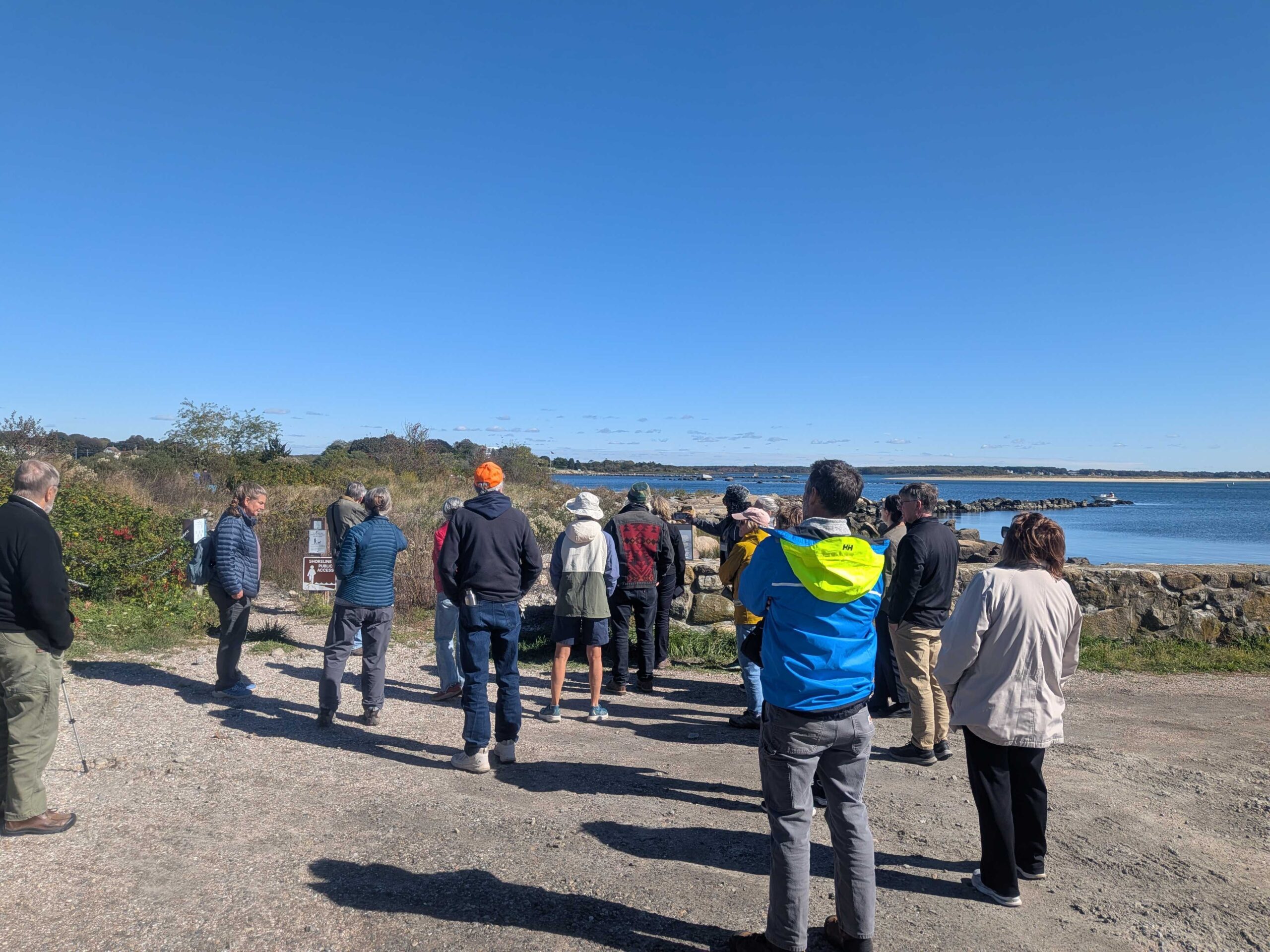
On October 16, 2025, the Sustainable and Resilient Communities (SRC) team of the Long Island Sound Partnership hosted a field trip featuring the Dodge Paddock and Beal Preserve Marsh Restoration Project in Stonington Borough. The day started with a presentation outlining the history and current state of the site, followed by a walk to Dodge Paddock and Beal Preserve where there was a guided tour led by Connecticut Sea Grant, Avalonia Land Conservancy, and local volunteers. The day included a deep dive into the invasive species removal process, plantings to accommodate marsh migration, and a close up look at what has grown since then. Special thanks to our partners with Avalonia Land Conservancy, Connecticut Sea Grant, and the Stonington Community.

Training
Dodge Paddock & Beal Preserve Marsh Restoration Field Trip and Workshop
On October 16, 2025, the Sustainable and Resilient Communities (SRC) team of the Long Island Sound Partnership hosted a field trip featuring the Dodge Paddock and Beal Preserve Marsh Restoration Project in Stonington Borough. The day started with a presentation outlining the history and current state of the site, followed by a walk to Dodge Paddock and Beal Preserve where there was a guided tour led by Connecticut Sea Grant, Avalonia Land Conservancy, and local volunteers. The day included a deep dive into the invasive species removal process, plantings to accommodate marsh migration, and a close up look at what has grown since then. Special thanks to our partners with Avalonia Land Conservancy, Connecticut Sea Grant, and the Stonington Community.
Funding
: Sep 25 – Dec 18, 2025
< $1M
Connecticut Recreational Trails Program
This year, Connecticut Department of Energy and Environmental Protection (DEEP)’s Recreational Trails Program will make up to $1 million available for trail projects. All projects utilizing CT Recreational Trails Grant funds must be accessible to the public. Grant amounts vary and will depend upon the availability of currently uncommitted state funds.
Connecticut Recreational Trails Program funds may be requested for uses including: 1) Planning, design and construction of new trails (motorized and non-motorized); 2) Maintenance and restoration of existing trails (motorized and non-motorized); 3) Access to trails by persons with disabilities; 4) Purchase and lease of trail construction and maintenance equipment; 5) Acquisition of land or easements for a trail, or for trail corridors; and 6) Operation of educational programs to promote safety and environmental protection as related to recreational trails.
Funding
: Sep 25 – Dec 18, 2025
< $1M
Connecticut Recreational Trails Program
This year, Connecticut Department of Energy and Environmental Protection (DEEP)’s Recreational Trails Program will make up to $1 million available for trail projects. All projects utilizing CT Recreational Trails Grant funds must be accessible to the public. Grant amounts vary and will depend upon the availability of currently uncommitted state funds.
Funding
: Oct 1 – Dec 16, 2025
$100K - $1.5M
CT DEEP Long Island Sound Ecosystems Grant
The Connecticut Department of Energy and Environmental Protection’s (DEEP’s) Land and Water Resources Division requests proposals for the new CT DEEP Long Island Sound Ecosystems Grant, made possible by financial support provided by the Long Island Sound Partnership from the U.S. EPA. There are two primary goals of the program: 1) to promote large-scale habitat restoration and enhance restoration planning, while also helping coastal communities and ecosystems adapt to changing environmental conditions; and 2) to further promote the application of green stormwater infrastructure techniques to reduce nonpoint source pollution, improving water resource quality.
There is approximately $7 million available, and no match is required. Eligible projects include: 1) Habitat Restoration (planning/engineering/design and construction for habitat restoration projects); and 2) Green Stormwater Infrastructure (planning/engineering/design and construction for green stormwater infrastructure projects).
Funding
: Oct 1 – Dec 16, 2025
$100K - $1.5M
CT DEEP Long Island Sound Ecosystems Grant
The Connecticut Department of Energy and Environmental Protection’s (DEEP’s) Land and Water Resources Division requests proposals for the new CT DEEP Long Island Sound Ecosystems Grant, made possible by financial support provided by the Long Island Sound Partnership from the U.S. EPA. There are two primary goals of the program: 1) to promote large-scale habitat restoration and enhance restoration planning, while also helping coastal communities and ecosystems adapt to changing environmental conditions; and 2) to further promote the application of green stormwater infrastructure techniques to reduce nonpoint source pollution, improving water resource quality.
Case Study
Project
Rye, NY
Edith G. Read Wildlife Sanctuary Living Shoreline
Shoreline erosion problems had been noted at Edith G. Read Wildlife Sanctuary in Rye, NY in the early 2000s, and after the devastation caused by Hurricane Sandy in 2012 and subsequent storms, it was clear there was a need for restoration. Westchester County decided to create a 900 foot living shoreline in order to restore the shoreline, reduce erosion, and support aquatic life in Long Island Sound. The project, designed by SLR, used two types of structures – boulder sills and reef balls – to slow wave action and provide aquatic habitat. A total of 43 reef balls were installed along with 40 types of native grasses, shrubs, and trees to further stabilize the shoreline. Additional native ecotype-specific plantings will be added periodically throughout the next five years of monitoring (2025-2030).



This is the only Long Island Sound living shoreline project in Westchester County and it serves as a model for other communities - in Westchester, Long Island Sound, and beyond.
Suzette Lopane, PLA, ASLA, sbl1@westchestergov.com
Matthew Castro, mvc1@westchestercountyny.gov
Case Study
Project
Rye, NY
Edith G. Read Wildlife Sanctuary Living Shoreline
Shoreline erosion problems had been noted at Edith G. Read Wildlife Sanctuary in Rye, NY in the early 2000s, and after the devastation caused by Hurricane Sandy in 2012 and subsequent storms, it was clear there was a need for restoration. Westchester County decided to create a 900 foot living shoreline in order to restore the shoreline, reduce erosion, and support aquatic life in Long Island Sound. The project, designed by SLR, used two types of structures – boulder sills and reef balls – to slow wave action and provide aquatic habitat. A total of 43 reef balls were installed along with 40 types of native grasses, shrubs, and trees to further stabilize the shoreline. Additional native ecotype-specific plantings will be added periodically throughout the next five years of monitoring (2025-2030).
Mapper
Level of Effort:
Sensitive Inshore Essential Fish Habitat of New England
This NOAA Fisheries ArcGIS StoryMap aids project applicants and Federal action agency partners in using relevant, sensitive habitats data to develop comprehensive Essential Fish Habitat (EFH) assessments. The tool also supports Federal action agencies and project proponents in determining when an updated habitat survey for sensitive resources (including tidal marsh, shellfish habitat, hard seafloor, submerged aquatic vegetation, rocky habitats, and mudflats) may be required for a complete EFH consultation.
Mapper
Level of Effort:
Sensitive Inshore Essential Fish Habitat of New England
This NOAA Fisheries ArcGIS StoryMap aids project applicants and Federal action agency partners in using relevant, sensitive habitats data to develop comprehensive Essential Fish Habitat (EFH) assessments. The tool also supports Federal action agencies and project proponents in determining when an updated habitat survey for sensitive resources (including tidal marsh, shellfish habitat, hard seafloor, submerged aquatic vegetation, rocky habitats, and mudflats) may be required for a complete EFH consultation.
Guidance Tool
Level of Effort:
CT DEEP Grants Database
CT DEEP recently released a new tool allowing users to search for DEEP financial assistance programs based on a variety of parameters such as eligibility requirements, grant cycle status, project types, and more. This resource and offers “one-stop shopping” for many DEEP funding opportunities.
Guidance Tool
Level of Effort:
CT DEEP Grants Database
CT DEEP recently released a new tool allowing users to search for DEEP financial assistance programs based on a variety of parameters such as eligibility requirements, grant cycle status, project types, and more. This resource and offers “one-stop shopping” for many DEEP funding opportunities.
Funding
: Sep 2 – Nov 21, 2025
$5K-100K
Long Island Sound Community Impact Fund (LISCIF)
Restore America’s Estuaries is excited to announce the third round of funding for the Long Island Sound Community Impact Fund. Up to $1,200,000 in competitive funding will be awarded to support projects in New York and Connecticut in 2026. The Long Island Sound Community Impact Fund (LISCIF) is a partnership among Restore America’s Estuaries, the U.S. Environmental Protection Agency, and the Long Island Sound Partnership. The purpose of LISCIF is to provide technical and financial assistance to communities for addressing environmental issues and to improve the quality and accessibility of the Long Island Sound.
The Long Island Sound Community Impact Fund aims to build capacity for organizations located in communities affected by environmental and human health risks. The Fund seeks to provide technical assistance for communities and support proposals which ultimately improve access to the Long Island Sound, while reducing overall environmental health risks. Eligible projects and activities will be community-driven and address one of the funding priorities below: 1) Projects that result in quantifiable pollutant prevention or reduction; 2) Restoring habitat within the Important Coastal Habitat Types targeted by LIS Partnership; 3) Projects that foster a diverse balance and abundant populations of fish, birds, and wildlife; 4) Public engagement, knowledge, and stewardship; 5) Projects that enhance community resilience and sustainability; 6) Planning and design that set-the-stage for implementation of water quality projects, eligible habitat restoration projects and resilience projects; 7) Community-based science projects; 8) Data management and integration projects; 9) Other similar activities that the applicant proposes, and EPA approves, that are consistent with Section 119 of the Clean Water Act.
Funding
: Sep 2 – Nov 21, 2025
$5K-100K
Long Island Sound Community Impact Fund (LISCIF)
Restore America’s Estuaries is excited to announce the third round of funding for the Long Island Sound Community Impact Fund. Up to $1,200,000 in competitive funding will be awarded to support projects in New York and Connecticut in 2026. The Long Island Sound Community Impact Fund (LISCIF) is a partnership among Restore America’s Estuaries, the U.S. Environmental Protection Agency, and the Long Island Sound Partnership. The purpose of LISCIF is to provide technical and financial assistance to communities for addressing environmental issues and to improve the quality and accessibility of the Long Island Sound.
Events
RAE 2025 Living Shorelines Tech Transfer Workshop
Join Restore America’s Estuaries (RAE) for the 2025 Living Shorelines Tech Transfer Workshop taking place from October 29 – 30 in New Haven, Connecticut. This event, hosted by Restore America’s Estuaries and Doherty Climate and Resilience Institute at Save the Sound, will present a unique platform to learn, engage, and exchange knowledge with professionals, experts, and stakeholders in the field of coastal and estuarine habitat restoration. Our focus will be on Living Shorelines – an innovative and nature-based solution to shoreline stabilization and ecosystem conservation.
Events
RAE 2025 Living Shorelines Tech Transfer Workshop
Join Restore America’s Estuaries (RAE) for the 2025 Living Shorelines Tech Transfer Workshop taking place from October 29 – 30 in New Haven, Connecticut. This event, hosted by Restore America’s Estuaries and Doherty Climate and Resilience Institute at Save the Sound, will present a unique platform to learn, engage, and exchange knowledge with professionals, experts, and stakeholders in the field of coastal and estuarine habitat restoration. Our focus will be on Living Shorelines – an innovative and nature-based solution to shoreline stabilization and ecosystem conservation.
SRC Events
Suffolk County Coastal Resilience Forum and Field Trip
Join us at the Long Island Sound Suffolk County Coastal Resilience Forum for an opportunity to connect, learn and be inspired!
Date: Wednesday, October 8, 2025 (rain or shine)
Time: 9:30 AM – 3:30 PM
Location: Port Jefferson Village Center (101-A East Broadway, Port Jefferson , NY 11777)
Register by September 30. Contact elizabeth.hornstein@cornell.edu for more information.
This forum will bring together state and local decision makers, municipal staff, and other interested parties working to address coastal issues to share information on best practices, identify opportunities to increase resilience, and enhance coordination across communities. Participants will hear from NY state, regional, and local partners about resilience initiatives and learn about new tools and resources. We will end the forum with a walking tour of Port Jefferson Village to hear about the Village’s resilience initiatives, successes, and challenges.
The event is free. Refreshments and lunch will be provided.
Please note, most parking lots in the Village have metered parking. We can reimburse travel expenses and parking fees, up to $150/person (for those that do not have travel budgets through their employers) on a first come first serve basis.
This event is hosted by Long Island Sound Partnership and New York Sea Grant, in partnership with Nassau & Suffolk Soil and Water Conservation District.
*The event is intended as a learning experience for adults 18 years of age or older.
Click here to register for the Nassau County Coastal Resilience Forum (October 9, 2025) or other events happening during Long Island Sound Coastal Resilience Month!
SRC Events
Suffolk County Coastal Resilience Forum and Field Trip
Join us at the Long Island Sound Suffolk County Coastal Resilience Forum for an opportunity to connect, learn and be inspired!
Date: Wednesday, October 8, 2025 (rain or shine)
Time: 9:30 AM – 3:30 PM
Location: Port Jefferson Village Center (101-A East Broadway, Port Jefferson , NY 11777)
Register by September 30. Contact elizabeth.hornstein@cornell.edu for more information.
This forum will bring together state and local decision makers, municipal staff, and other interested parties working to address coastal issues to share information on best practices, identify opportunities to increase resilience, and enhance coordination across communities. Participants will hear from NY state, regional, and local partners about resilience initiatives and learn about new tools and resources. We will end the forum with a walking tour of Port Jefferson Village to hear about the Village’s resilience initiatives, successes, and challenges.
The event is free. Refreshments and lunch will be provided.
Please note, most parking lots in the Village have metered parking. We can reimburse travel expenses and parking fees, up to $150/person (for those that do not have travel budgets through their employers) on a first come first serve basis.
This event is hosted by Long Island Sound Partnership and New York Sea Grant, in partnership with Nassau & Suffolk Soil and Water Conservation District.
*The event is intended as a learning experience for adults 18 years of age or older.
Click here to register for the Nassau County Coastal Resilience Forum (October 9, 2025) or other events happening during Long Island Sound Coastal Resilience Month!
Training
Nassau County Coastal Resilience Forum & Field Trip – 2025
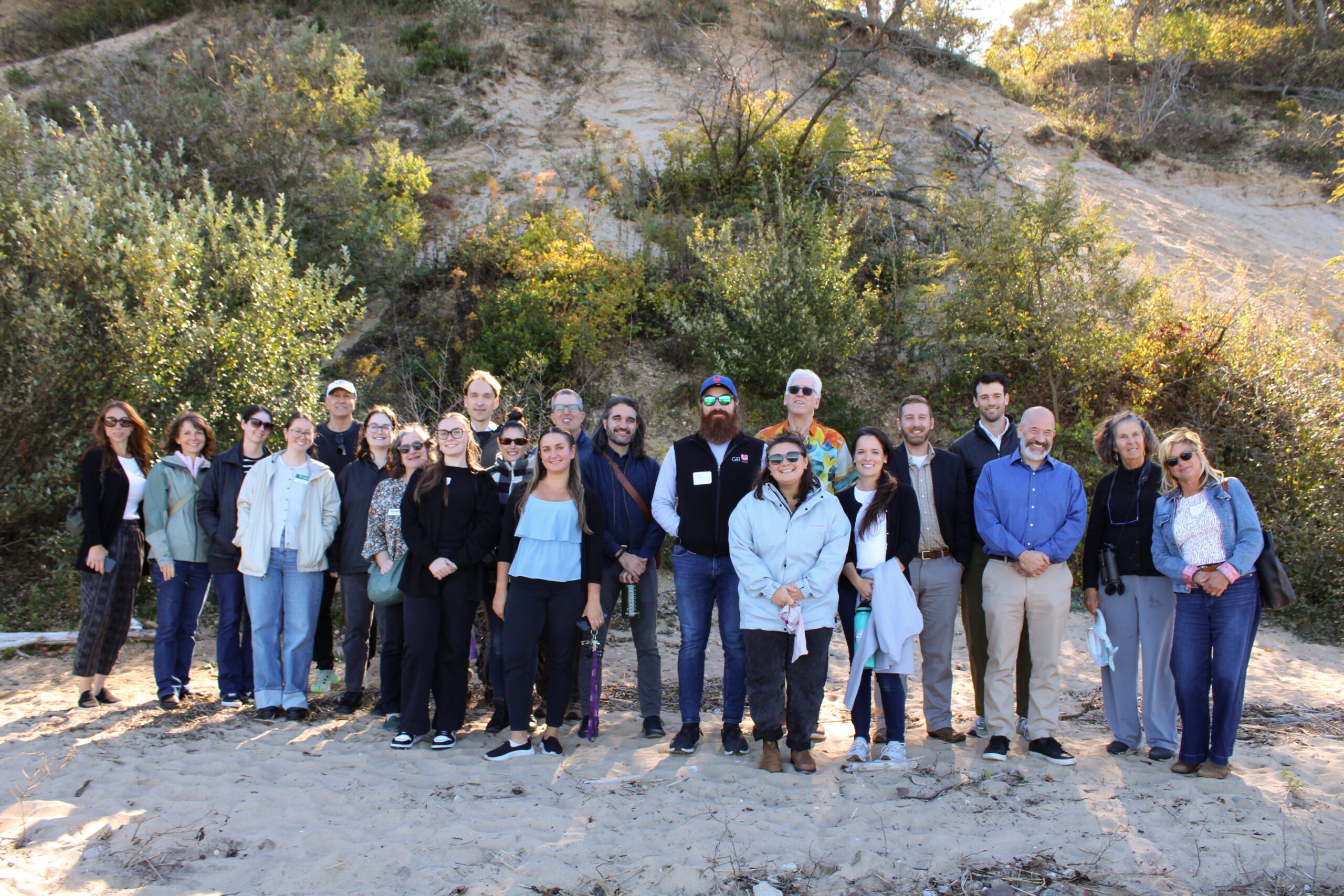
2025 Nassau Coastal Resilience Forum field trip to Sands Point Preserve. Credit: Sumayyah Uddin / NYSG
On October 9, 2025 state and local decision makers, municipal staff, and other interested parties working to address flooding, shoreline erosion and other coastal issues gathered at the Sands Point Preserve Conservancy in Sands Point, NY for the 3rd Annual Nassau County Coastal Resilience Forum. The Forum provided a chance to share information on best practices, discuss challenges, identify opportunities to increase resilience, and enhance coordination across communities. Forum attendees heard updates on State resilience initiatives from agencies like the NYS Department of Environmental Conservation and NYS Division of Homeland Security and Emergency Services, as well as presentations on new resilience tools and resources from Seatuck Environmental Association, the U.S. Geological Survey, New York Sea Grant, Cornell Cooperative Extension of Nassau County, and Nassau County Soil and Water Conservation District. In the afternoon, Forum attendees were given a guided tour of the recent expansions to the bluff stabilization project at the Preserve.
The event was hosted by Long Island Sound Partnership and New York Sea Grant, in partnership with the Sands Point Preserve Conservancy and Nassau and Suffolk County Soil and Water Conservation Districts.

Training
Nassau County Coastal Resilience Forum & Field Trip – 2025
2025 Nassau Coastal Resilience Forum field trip to Sands Point Preserve. Credit: Sumayyah Uddin / NYSG
On October 9, 2025 state and local decision makers, municipal staff, and other interested parties working to address flooding, shoreline erosion and other coastal issues gathered at the Sands Point Preserve Conservancy in Sands Point, NY for the 3rd Annual Nassau County Coastal Resilience Forum. The Forum provided a chance to share information on best practices, discuss challenges, identify opportunities to increase resilience, and enhance coordination across communities. Forum attendees heard updates on State resilience initiatives from agencies like the NYS Department of Environmental Conservation and NYS Division of Homeland Security and Emergency Services, as well as presentations on new resilience tools and resources from Seatuck Environmental Association, the U.S. Geological Survey, New York Sea Grant, Cornell Cooperative Extension of Nassau County, and Nassau County Soil and Water Conservation District. In the afternoon, Forum attendees were given a guided tour of the recent expansions to the bluff stabilization project at the Preserve.
The event was hosted by Long Island Sound Partnership and New York Sea Grant, in partnership with the Sands Point Preserve Conservancy and Nassau and Suffolk County Soil and Water Conservation Districts.
Data
Level of Effort:
NYSDEC Division of Water Grants Data Portal
This portal contains the comprehensive dataset of awarded projects for the Water Quality Improvement Project Program (WQIP) and the Non-Agricultural Nonpoint Source Planning and MS4 Mapping Grant (NPG). Data is displayed simultaneously on a map and data table and can be filtered by Grant Program, Applicant, County, Project Type, and Funding Source.
Data
Level of Effort:
NYSDEC Division of Water Grants Data Portal
This portal contains the comprehensive dataset of awarded projects for the Water Quality Improvement Project Program (WQIP) and the Non-Agricultural Nonpoint Source Planning and MS4 Mapping Grant (NPG). Data is displayed simultaneously on a map and data table and can be filtered by Grant Program, Applicant, County, Project Type, and Funding Source.
Mapper
Level of Effort:
The Long Island Sound and Watershed Metadata Map Application
The Long Island Sound watershed is home to nearly 9 million people in parts of Connecticut, Massachusetts, New Hampshire, New York, Rhode Island, Vermont, and Canada. Government agencies, nonprofits, and Tribal Nations have overseen numerous projects to monitor and protect the water resources of this watershed and the sound. Although there is an abundance of data, there is no easy way to search them or a central place to manage this information. To help, the U.S. Geological Survey, the U.S. Environmental Protection Agency, and the Long Island Sound Study have created an interactive map to help users find and understand data about the water resources of the Long Island Sound and its watershed.
This mapping tool does not host data or maintain data repositories. Instead, it compiles and presents metadata from publicly accessible databases managed by State and other organizations.
Refer to this fact sheet for details about the application and its data sources: The Long Island Sound and Watershed Metadata map application
Mapper
Level of Effort:
The Long Island Sound and Watershed Metadata Map Application
The Long Island Sound watershed is home to nearly 9 million people in parts of Connecticut, Massachusetts, New Hampshire, New York, Rhode Island, Vermont, and Canada. Government agencies, nonprofits, and Tribal Nations have overseen numerous projects to monitor and protect the water resources of this watershed and the sound. Although there is an abundance of data, there is no easy way to search them or a central place to manage this information. To help, the U.S. Geological Survey, the U.S. Environmental Protection Agency, and the Long Island Sound Study have created an interactive map to help users find and understand data about the water resources of the Long Island Sound and its watershed.
This mapping tool does not host data or maintain data repositories. Instead, it compiles and presents metadata from publicly accessible databases managed by State and other organizations.
Refer to this fact sheet for details about the application and its data sources: The Long Island Sound and Watershed Metadata map application
Funding
: Jul 17 – Nov 3, 2025
up to 65-75% of fair market value
Open Space and Watershed Land Acquisition Grant Program
The Open Space and Watershed Land Acquisition (OSWA) Grant Program provides financial assistance to municipalities and nonprofit land conservation organizations to acquire land for open space, and to water companies to acquire land to be classified as Class I or Class II water supply property.
Awards are granted to projects that offer the highest conservation and recreational value and that leverage the greatest percentage of private and municipal funding. Grants are awarded for the purchase of land that is: 1) Valuable for recreation, forestry, fishing, conservation of wildlife or natural resources; 2) A prime natural feature of the state's landscape; 3) Habitat for native plant or animal species listed as threatened, endangered or of special concern; 4) A relatively undisturbed outstanding example of an uncommon native ecological community; 5) Important for enhancing and conserving water quality; 6) Valuable for preserving local agricultural heritage; or 7) Eligible to be classified as Class I or Class II watershed land. Land acquired will be preserved in perpetuity predominately in its natural scenic and open condition, for the protection or provision of potable water, or for agriculture. For questions on OSWA, contact Allyson Clarke: Allyson.clarke@ct.gov
Funding
: Jul 17 – Nov 3, 2025
up to 65-75% of fair market value
Open Space and Watershed Land Acquisition Grant Program
The Open Space and Watershed Land Acquisition (OSWA) Grant Program provides financial assistance to municipalities and nonprofit land conservation organizations to acquire land for open space, and to water companies to acquire land to be classified as Class I or Class II water supply property.
Funding
: Jun 16 – Jul 25, 2025
Over $2.3M available, divided by region
Connecticut Wetland In-Lieu Fee Program Grant
The Connecticut Wetland In-Lieu Fee (ILF) Program has accrued sufficient funds that are now available for the preservation, restoration, and enhancement of wetland and watercourse resources and associated upland buffers in the State of Connecticut. The National Audubon Society, Inc., through its state office, Audubon Connecticut, is the “sponsor” of Connecticut’s ILF program. The program allows permittees to pay a fee in lieu of taking on mitigation themselves. Instead, local organizations like land trusts, and other environmental nonprofits, are given the opportunity to apply for and receive grant funding for the preservation, restoration, and enhancement of wetland and watercourse resources and associated upland buffers in the State of Connecticut.
Restoration and enhancement projects are strongly encouraged and will likely score and rank higher than preservation projects. For restoration and enhancement projects, consultation with qualified professionals is recommended. See the Request for Letters of Intent at the link for details.
Funding
: Jun 16 – Jul 25, 2025
Over $2.3M available, divided by region
Connecticut Wetland In-Lieu Fee Program Grant
The Connecticut Wetland In-Lieu Fee (ILF) Program has accrued sufficient funds that are now available for the preservation, restoration, and enhancement of wetland and watercourse resources and associated upland buffers in the State of Connecticut. The National Audubon Society, Inc., through its state office, Audubon Connecticut, is the “sponsor” of Connecticut’s ILF program. The program allows permittees to pay a fee in lieu of taking on mitigation themselves. Instead, local organizations like land trusts, and other environmental nonprofits, are given the opportunity to apply for and receive grant funding for the preservation, restoration, and enhancement of wetland and watercourse resources and associated upland buffers in the State of Connecticut.
Resource
Level of Effort:
Culverts and Climate Resilience Fact Sheet
This fact sheet produced by the Connecticut Institute for Resilience and Climate Adaptation (CIRCA) reviews how culverts are defined in Connecticut, explains their connection to climate resilience, provides examples of how Connecticut towns are addressing needs for upgraded culverts, and highlights related resources.
Resource
Level of Effort:
Culverts and Climate Resilience Fact Sheet
This fact sheet produced by the Connecticut Institute for Resilience and Climate Adaptation (CIRCA) reviews how culverts are defined in Connecticut, explains their connection to climate resilience, provides examples of how Connecticut towns are addressing needs for upgraded culverts, and highlights related resources.
Funding
: Jun 25 – Sep 23, 2024
National Culvert Removal, Replacement, & Restoration Grants – FY24 (Year 3)
The Bipartisan Infrastructure Law established the National Culvert Removal, Replacement, and Restoration Grant program (Culvert Aquatic Organism Passage Program) to provide funding for projects that would meaningfully improve or restore passage for anadromous fish (anadromous fish species are born in freshwater such as streams and rivers, spend most of their lives in the marine environment, and migrate back to freshwater to spawn).
Eligible projects include projects to replace, remove, or repair culverts or weirs that would meaningfully improve or restore fish passage for anadromous fish. With respect to weirs, the project may include—infrastructure to facilitate fish passage around or over the weir; and weir improvements.
Funding
: Jun 25 – Sep 23, 2024
National Culvert Removal, Replacement, & Restoration Grants – FY24 (Year 3)
The Bipartisan Infrastructure Law established the National Culvert Removal, Replacement, and Restoration Grant program (Culvert Aquatic Organism Passage Program) to provide funding for projects that would meaningfully improve or restore passage for anadromous fish (anadromous fish species are born in freshwater such as streams and rivers, spend most of their lives in the marine environment, and migrate back to freshwater to spawn).
Funding
: Jun 9 – Aug 31, 2025
up to $200,000
Trees for Communities Grant Program
The Trees for Communities Grant Program supports urban forestry projects that will increase tree cover or contribute to other urban forestry objectives such as improvement of forest health or utilization of urban wood in communities of need. Recent awardee projects can be found here: Urban and Community Forestry Grant Accomplishments.
Potential projects include but are not limited to: (1) Tree planting, stewardship, and maintenance; (2) Planning projects (e.g. tree inventories and forest management plans); (3) Workforce development; (4) Invasive species management; and (5) Urban wood utilization.
Funding
: Jun 9 – Aug 31, 2025
up to $200,000
Trees for Communities Grant Program
The Trees for Communities Grant Program supports urban forestry projects that will increase tree cover or contribute to other urban forestry objectives such as improvement of forest health or utilization of urban wood in communities of need. Recent awardee projects can be found here: Urban and Community Forestry Grant Accomplishments.
Events
Community Science LI: Bioblitz at Blydenburgh!
The Long Island Coastal Bioblitz will take place August 10-16. Start your week off logging plants and animals with experts and friends at Blydenburgh County Park.
Community Science LI (CSLI) is an annual educational webinar series that highlights various community science opportunities around Long Island, and the importance of those projects in supporting local wildlife conservation efforts. CSLI is hosted by Seatuck together with partners in the Long Island Sound Study, NY Sea Grant, Peconic Estuary Partnership, South Shore Estuary Reserve, and the Long Island Invasive Species Management Area.
Events
Community Science LI: Bioblitz at Blydenburgh!
The Long Island Coastal Bioblitz will take place August 10-16. Start your week off logging plants and animals with experts and friends at Blydenburgh County Park.
Community Science LI (CSLI) is an annual educational webinar series that highlights various community science opportunities around Long Island, and the importance of those projects in supporting local wildlife conservation efforts. CSLI is hosted by Seatuck together with partners in the Long Island Sound Study, NY Sea Grant, Peconic Estuary Partnership, South Shore Estuary Reserve, and the Long Island Invasive Species Management Area.
Events
Community Science LI: Nature Walk/Invasives Pull at Coindre Hall!
Join us for a nature walk at beautiful Coindre Hall Park and help us look out for invasive species! The event will kick off with a walk led by expert naturalists who will share information about the park, some of the invasive species found there, and how everyone can help manage invasives to protect these habitats just while going out for a stroll. During the walk, we’ll point out some species along the way, so we recommend having the apps iMap Invasives and Seek on your phone! After the walk, we will conduct an invasive species pull where attendees are invited to help us remove invasive plants from the park.
Community Science LI (CSLI) is an annual educational webinar series that highlights various community science opportunities around Long Island, and the importance of those projects in supporting local wildlife conservation efforts. CSLI is hosted by Seatuck together with partners in the Long Island Sound Study, NY Sea Grant, Peconic Estuary Partnership, South Shore Estuary Reserve, and the Long Island Invasive Species Management Area.
Events
Community Science LI: Nature Walk/Invasives Pull at Coindre Hall!
Join us for a nature walk at beautiful Coindre Hall Park and help us look out for invasive species! The event will kick off with a walk led by expert naturalists who will share information about the park, some of the invasive species found there, and how everyone can help manage invasives to protect these habitats just while going out for a stroll. During the walk, we’ll point out some species along the way, so we recommend having the apps iMap Invasives and Seek on your phone! After the walk, we will conduct an invasive species pull where attendees are invited to help us remove invasive plants from the park.
Community Science LI (CSLI) is an annual educational webinar series that highlights various community science opportunities around Long Island, and the importance of those projects in supporting local wildlife conservation efforts. CSLI is hosted by Seatuck together with partners in the Long Island Sound Study, NY Sea Grant, Peconic Estuary Partnership, South Shore Estuary Reserve, and the Long Island Invasive Species Management Area.
Events
Community Science LI: Long Island Coastal Bioblitz! Webinar
Learn how to identify and document local species, spot invasives, and support conservation efforts!
Community Science LI (CSLI) is an annual educational webinar series that highlights various community science opportunities around Long Island, and the importance of those projects in supporting local wildlife conservation efforts. CSLI is hosted by Seatuck together with partners in the Long Island Sound Study, NY Sea Grant, Peconic Estuary Partnership, South Shore Estuary Reserve, and the Long Island Invasive Species Management Area.
Events
Community Science LI: Long Island Coastal Bioblitz! Webinar
Learn how to identify and document local species, spot invasives, and support conservation efforts!
Community Science LI (CSLI) is an annual educational webinar series that highlights various community science opportunities around Long Island, and the importance of those projects in supporting local wildlife conservation efforts. CSLI is hosted by Seatuck together with partners in the Long Island Sound Study, NY Sea Grant, Peconic Estuary Partnership, South Shore Estuary Reserve, and the Long Island Invasive Species Management Area.
Events
Community Science LI: Emerging Invasives! Webinar
Emerging invasive plants are spreading across Long Island, threatening native ecosystems. Discover key species and how to report them.
Community Science LI (CSLI) is an annual educational webinar series that highlights various community science opportunities around Long Island, and the importance of those projects in supporting local wildlife conservation efforts. CSLI is hosted by Seatuck together with partners in the Long Island Sound Study, NY Sea Grant, Peconic Estuary Partnership, South Shore Estuary Reserve, and the Long Island Invasive Species Management Area.
Events
Community Science LI: Emerging Invasives! Webinar
Emerging invasive plants are spreading across Long Island, threatening native ecosystems. Discover key species and how to report them.
Community Science LI (CSLI) is an annual educational webinar series that highlights various community science opportunities around Long Island, and the importance of those projects in supporting local wildlife conservation efforts. CSLI is hosted by Seatuck together with partners in the Long Island Sound Study, NY Sea Grant, Peconic Estuary Partnership, South Shore Estuary Reserve, and the Long Island Invasive Species Management Area.
Events
Community Science LI: Water Chestnut Webinar
Water Chestnut is an invasive aquatic plant that spreads rapidly, choking waterways, and harming native species. Join this webinar to learn about management efforts.
Community Science LI (CSLI) is an annual educational webinar series that highlights various community science opportunities around Long Island, and the importance of those projects in supporting local wildlife conservation efforts. CSLI is hosted by Seatuck together with partners in the Long Island Sound Study, NY Sea Grant, Peconic Estuary Partnership, South Shore Estuary Reserve, and the Long Island Invasive Species Management Area.
Events
Community Science LI: Water Chestnut Webinar
Water Chestnut is an invasive aquatic plant that spreads rapidly, choking waterways, and harming native species. Join this webinar to learn about management efforts.
Community Science LI (CSLI) is an annual educational webinar series that highlights various community science opportunities around Long Island, and the importance of those projects in supporting local wildlife conservation efforts. CSLI is hosted by Seatuck together with partners in the Long Island Sound Study, NY Sea Grant, Peconic Estuary Partnership, South Shore Estuary Reserve, and the Long Island Invasive Species Management Area.
Case Study
Project
Halesite, NY
Halesite Park Shoreline Restoration
With support from the Long Island Sound Resilience Grant Writing Assistance Program, in December 2024 1653 Foundation was awarded $549,955 from the NYSDEC Water Quality Improvement Project (WQIP) Program to fund the Final design and implementation of habitat improvements and green infrastructure at Halesite Park, NY.
1653 Foundation Inc. will restore degrading shoreline at Halesite Park on the eastern shore of Huntington Harbor. The project will remove a failing seawall to expand shallow water habitat, install an offshore rock sill and oyster reef, and expand salt marsh vegetation, and upland plantings.
LIS Resilience Grant Writing Assistance Program Details:
Grant Writing Consultant: DLB Planning, LLC.
Grant Writing Assistance Award: $9,900
Case Study
Project
Halesite, NY
Halesite Park Shoreline Restoration
With support from the Long Island Sound Resilience Grant Writing Assistance Program, in December 2024 1653 Foundation was awarded $549,955 from the NYSDEC Water Quality Improvement Project (WQIP) Program to fund the Final design and implementation of habitat improvements and green infrastructure at Halesite Park, NY.
1653 Foundation Inc. will restore degrading shoreline at Halesite Park on the eastern shore of Huntington Harbor. The project will remove a failing seawall to expand shallow water habitat, install an offshore rock sill and oyster reef, and expand salt marsh vegetation, and upland plantings.
LIS Resilience Grant Writing Assistance Program Details:
Grant Writing Consultant: DLB Planning, LLC.
Grant Writing Assistance Award: $9,900
Case Study
Project
Old Saybrook, CT
Planning to Restore Chalker and Chapman Beach Marshes and Mitigate Marsh-Associated Flooding
With support from the Long Island Sound Resilience Grant Writing Assistance (GWA) Program, in December 2024 the Town of Old Saybrook was awarded $323,400 from the Long Island Sound Futures Fund to support the project: Planning to Restore Chalker and Chapman Beach Marshes and Mitigate Marsh-Associated Flooding (CT).
The project will conduct a feasibility analysis for restoring the degraded Chalker Beach Marsh and mitigate erosion of Cold Spring Brook marsh, examine potential residential neighborhood flood mitigation strategies and evaluate alternative concepts to restore the Cold Spring Brook marsh. Project will provide Chalker Beach marsh restoration plan and design alternatives, concept-level neighborhood-scale flood mitigation strategies and a concept-level Cold Spring Brook marsh erosion control/restoration practices.
LIS Resilience Grant Writing Assistance Program Details:
Grant Writing Consultant: David Kozak
Grant Writing Assistance Award: $6,375
Christina M. Costa, CZEO, CFM, Zoning Enforcement Officer/Town Planner, Town of Old Saybrook, Chris.Costa@OldSaybrookCT.gov
Case Study
Project
Old Saybrook, CT
Planning to Restore Chalker and Chapman Beach Marshes and Mitigate Marsh-Associated Flooding
With support from the Long Island Sound Resilience Grant Writing Assistance (GWA) Program, in December 2024 the Town of Old Saybrook was awarded $323,400 from the Long Island Sound Futures Fund to support the project: Planning to Restore Chalker and Chapman Beach Marshes and Mitigate Marsh-Associated Flooding (CT).
The project will conduct a feasibility analysis for restoring the degraded Chalker Beach Marsh and mitigate erosion of Cold Spring Brook marsh, examine potential residential neighborhood flood mitigation strategies and evaluate alternative concepts to restore the Cold Spring Brook marsh. Project will provide Chalker Beach marsh restoration plan and design alternatives, concept-level neighborhood-scale flood mitigation strategies and a concept-level Cold Spring Brook marsh erosion control/restoration practices.
LIS Resilience Grant Writing Assistance Program Details:
Grant Writing Consultant: David Kozak
Grant Writing Assistance Award: $6,375
GWA Case Study
Project
Mystic, CT
Mystic River Watershed Resilience Action Plan
With support from the Long Island Sound Resilience Grant Writing Assistance (GWA) Program, in December 2024 the Alliance for the Mystic River Watershed was awarded $419,900 from the Long Island Sound Futures Fund to support the project: Developing a Mystic River Watershed Resilience Action Plan Using Equitable Community Engagement, CT.
The project will launch a robust engagement effort and planning process throughout four municipalities and two Tribal Nations within Mystic, Connecticut, in order to initiate efforts to improve the watershed health along the 30.6-square-mile Mystic River Watershed. The project will develop a community- and stakeholder-supported EPA Nine Element watershed-based plan, which will strive to address water quality impairments, community inequities and resilience challenges in the watershed.
LIS Resilience Grant Writing Assistance Program Details:
Grant Writing Consultant: Resilient Land and Water, LLC.
Grant Writing Assistance Award: $9,950

Maggie Favretti, President & Chair Board of Directors, Alliance for the Mystic River Watershed, info@alliancemrw.org
GWA Case Study
Project
Mystic, CT
Mystic River Watershed Resilience Action Plan
With support from the Long Island Sound Resilience Grant Writing Assistance (GWA) Program, in December 2024 the Alliance for the Mystic River Watershed was awarded $419,900 from the Long Island Sound Futures Fund to support the project: Developing a Mystic River Watershed Resilience Action Plan Using Equitable Community Engagement, CT.
The project will launch a robust engagement effort and planning process throughout four municipalities and two Tribal Nations within Mystic, Connecticut, in order to initiate efforts to improve the watershed health along the 30.6-square-mile Mystic River Watershed. The project will develop a community- and stakeholder-supported EPA Nine Element watershed-based plan, which will strive to address water quality impairments, community inequities and resilience challenges in the watershed.
LIS Resilience Grant Writing Assistance Program Details:
Grant Writing Consultant: Resilient Land and Water, LLC.
Grant Writing Assistance Award: $9,950
Case Study
Project
Fairfield, CT
Mill River Wetland Committee’s River-Lab programs in Bridgeport, CT
With support from the Long Island Sound Resilience Grant Writing Assistance (GWA) Program, in 2024 the Mill River Wetland Committee (MRWC) was awarded $26,987 from the Long Island Sound Community Impact Fund to support MRWC to lead the 5th Grade classes (2) at Barnum School in Bridgeport, CT through the Groundwater Study Trip in the fall of 2024 and Water Monitoring training in the spring of 2025.
LIS Resilience Grant Writing Assistance Program Details:
Grant Writing Consultant: CT Grant Writers
Grant Writing Assistance Award: $1,912.50

Case Study
Project
Fairfield, CT
Mill River Wetland Committee’s River-Lab programs in Bridgeport, CT
With support from the Long Island Sound Resilience Grant Writing Assistance (GWA) Program, in 2024 the Mill River Wetland Committee (MRWC) was awarded $26,987 from the Long Island Sound Community Impact Fund to support MRWC to lead the 5th Grade classes (2) at Barnum School in Bridgeport, CT through the Groundwater Study Trip in the fall of 2024 and Water Monitoring training in the spring of 2025.
LIS Resilience Grant Writing Assistance Program Details:
Grant Writing Consultant: CT Grant Writers
Grant Writing Assistance Award: $1,912.50
Case Study
Project
Nassau & Suffolk County, NY
ReWild Long Island Community Gardens Program
With support from the Long Island Sound Resilience Grant Writing Assistance (GWA) Program, in December 2023 ReWild Long Island was awarded $230,300 from the Long Island Sound Futures Fund to fund the project – ReWild Gardens for Long Island Sound: Implementation of an expanded community garden program Long Island within the LISS watershed.
The Community Gardens Program installs native plant gardens with community partners who plant & maintain them. The Summer Program to Fight Hunger and Climate Change supports high school students to plant & tend gardens with local nonprofit partners.
LIS Resilience Grant Writing Assistance Program Details:
Grant Writing Consultant: Elizabeth Skolnick
Grant Writing Assistance Award: $7,500
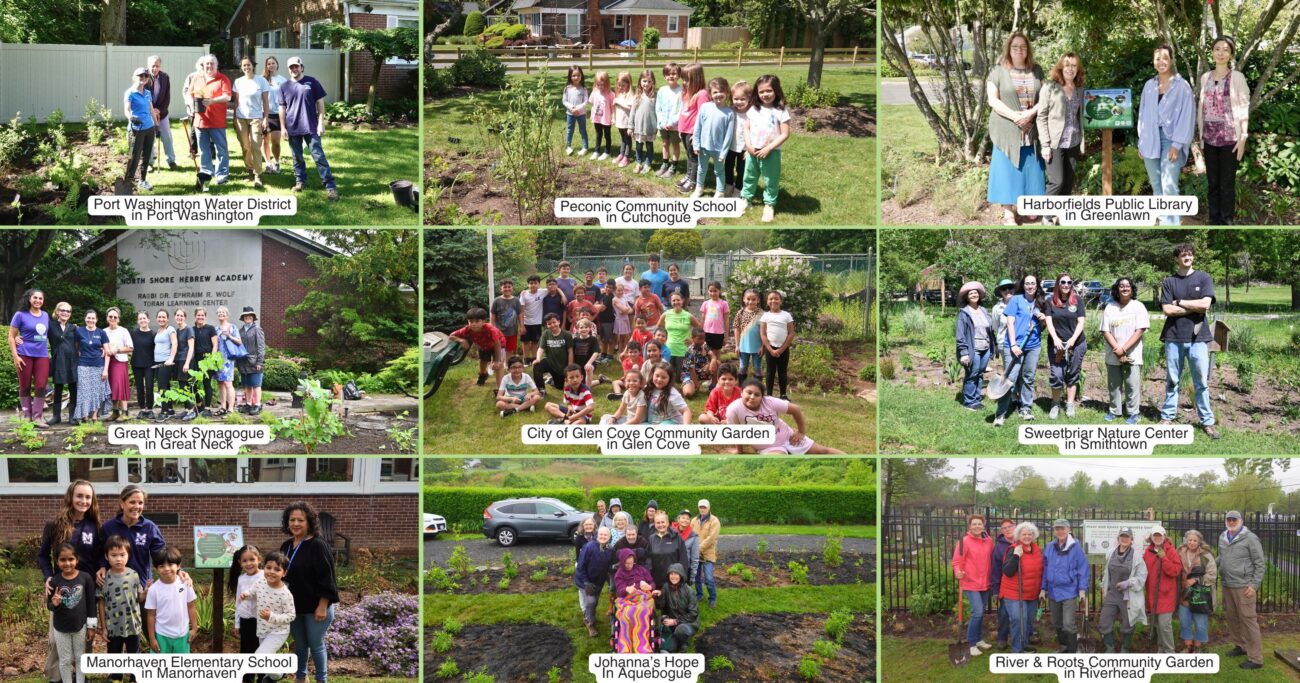
Case Study
Project
Nassau & Suffolk County, NY
ReWild Long Island Community Gardens Program
With support from the Long Island Sound Resilience Grant Writing Assistance (GWA) Program, in December 2023 ReWild Long Island was awarded $230,300 from the Long Island Sound Futures Fund to fund the project – ReWild Gardens for Long Island Sound: Implementation of an expanded community garden program Long Island within the LISS watershed.
The Community Gardens Program installs native plant gardens with community partners who plant & maintain them. The Summer Program to Fight Hunger and Climate Change supports high school students to plant & tend gardens with local nonprofit partners.
LIS Resilience Grant Writing Assistance Program Details:
Grant Writing Consultant: Elizabeth Skolnick
Grant Writing Assistance Award: $7,500
Case Study
Project
Cold Spring Harbor, NY
North Shore Land Alliance Shore Road Sanctuary Habitat Restoration Project
With support from the Long Island Sound Resilience Grant Writing Assistance (GWA) Program, in December 2023, North Shore Land Alliance was awarded $192,969 from the NYSDEC Water Quality Improvement Project (WQIP) Program to fund the implementation of green infrastructure at the North Shore Land Alliance Shore Road Sanctuary in Cold Spring Harbor, NY. The North Shore Land Alliance will install an upland infiltration system to reduce the volume and velocity of stormwater on a 40-acre parcel and replace invasive plants along the shoreline with a native plant community. The project will restore habitat and reduce the amount stormwater and pollutants entering Cold Spring Harbor and Long Island Sound.
LIS Resilience Grant Writing Assistance Program Details:
Grant Writing Consultant: Nelson Pope & Voorhis
Grant Writing Assistance Award: $9,900

Jane Jackson, Director of Stewardship, North Shore Land Alliance, jjackson@northshorelandalliance.org
Case Study
Project
Cold Spring Harbor, NY
North Shore Land Alliance Shore Road Sanctuary Habitat Restoration Project
With support from the Long Island Sound Resilience Grant Writing Assistance (GWA) Program, in December 2023, North Shore Land Alliance was awarded $192,969 from the NYSDEC Water Quality Improvement Project (WQIP) Program to fund the implementation of green infrastructure at the North Shore Land Alliance Shore Road Sanctuary in Cold Spring Harbor, NY. The North Shore Land Alliance will install an upland infiltration system to reduce the volume and velocity of stormwater on a 40-acre parcel and replace invasive plants along the shoreline with a native plant community. The project will restore habitat and reduce the amount stormwater and pollutants entering Cold Spring Harbor and Long Island Sound.
LIS Resilience Grant Writing Assistance Program Details:
Grant Writing Consultant: Nelson Pope & Voorhis
Grant Writing Assistance Award: $9,900
Case Study
Project
Port Washington, NY
Building Volunteer-Driven Oyster Restoration on Long Island Sound
With support from the Long Island Sound Resilience Grant Writing Assistance (GWA) Program, in December 2023 Cornell Cooperative Extension of Nassau County was awarded $250,000 from the Long Island Sound Futures Fund to fund the project – Building Volunteer-Driven Oyster Restoration on Long Island Sound: Implementation and development of a framework for a community Oyster Gardening Program.
The program aims to develop a volunteer training program to engage people to cultivate oyster gardens for reef restoration; source and procure spat-on-shell oysters for gardening; conduct a pilot project in Manhasset Bay; and deliver an education campaign to teach 500 residents at 15 events about shellfish restoration in Manhasset Bay, Town of North Hempstead, New York. Project will provide a framework to contribute to restoration of oyster reefs an Important Coastal Habitat of Long Island Sound.
LIS Resilience Grant Writing Assistance Program Details:
Grant Writing Consultant: Ken Schlather Consulting; Grant Writing Assistance Award: $3,000
Grant Writing Consultant: Richard Eisendorf; Grant Writing Assistance Award: $6,800

In the 2024 pilot year of the Program Nassau CCE produced more than 20,000 oysters back to Manhasset Bay and an anticipate over 50,000 oysters back to the Bay from the 2025 growing season. In April 2025 Nassau CCE did a reef assessment to determine reef survival and growth. Growth of the oysters were observed with an 87% survival. In the pilot year more than 80 volunteers were involved in the oyster gardening program and in 2025 that number is anticipated to grown to more than 150 volunteers.
Michael Fiorentino, Cornell University Cooperative Extension Nassau County, mf628@cornell.edu
Case Study
Project
Port Washington, NY
Building Volunteer-Driven Oyster Restoration on Long Island Sound
With support from the Long Island Sound Resilience Grant Writing Assistance (GWA) Program, in December 2023 Cornell Cooperative Extension of Nassau County was awarded $250,000 from the Long Island Sound Futures Fund to fund the project – Building Volunteer-Driven Oyster Restoration on Long Island Sound: Implementation and development of a framework for a community Oyster Gardening Program.
The program aims to develop a volunteer training program to engage people to cultivate oyster gardens for reef restoration; source and procure spat-on-shell oysters for gardening; conduct a pilot project in Manhasset Bay; and deliver an education campaign to teach 500 residents at 15 events about shellfish restoration in Manhasset Bay, Town of North Hempstead, New York. Project will provide a framework to contribute to restoration of oyster reefs an Important Coastal Habitat of Long Island Sound.
LIS Resilience Grant Writing Assistance Program Details:
Grant Writing Consultant: Ken Schlather Consulting; Grant Writing Assistance Award: $3,000
Grant Writing Consultant: Richard Eisendorf; Grant Writing Assistance Award: $6,800
Funding
: Apr 25 – Jun 26, 2025
$75,000 - $300,000
Northeast Forest and Rivers Fund 2025 Request for Proposals
NFWF is soliciting proposals for the Northeast Forests and Rivers Fund to restore and sustain healthy rivers, forests, and grasslands that provide habitat for diverse fish and wildlife populations.
Within the Long Island Sound and Connecticut River watershed, NEFRF will only consider projects to sustain and restore healthy forests, grasslands and fish passage projects. All other projects should apply to the Long Island Sound Futures Fund (LISFF).
Funding
: Apr 25 – Jun 26, 2025
$75,000 - $300,000
Northeast Forest and Rivers Fund 2025 Request for Proposals
NFWF is soliciting proposals for the Northeast Forests and Rivers Fund to restore and sustain healthy rivers, forests, and grasslands that provide habitat for diverse fish and wildlife populations.
Events
Long Island Sound Study Stewardship Strategy Public Meeting
The Long Island Sound Study will host a series of public meetings to discuss and finalize the Stewardship Strategy. The Strategy aims to provide a framework in support of the 33 Stewardship Areas of the Initiative. The draft of the Strategy will be shared for public comment March 10 – May 9. View the Draft Strategy here. Comments can be submitted to Cayla Sullivan at Sullivan.Cayla@epa.gov.
The last meeting in the series will be held on June 4th 11 am – 1 pm and will summarize the input and ideas for advancing the Stewardship Strategy!
Events
Long Island Sound Study Stewardship Strategy Public Meeting
The Long Island Sound Study will host a series of public meetings to discuss and finalize the Stewardship Strategy. The Strategy aims to provide a framework in support of the 33 Stewardship Areas of the Initiative. The draft of the Strategy will be shared for public comment March 10 – May 9. View the Draft Strategy here. Comments can be submitted to Cayla Sullivan at Sullivan.Cayla@epa.gov.
The last meeting in the series will be held on June 4th 11 am – 1 pm and will summarize the input and ideas for advancing the Stewardship Strategy!
Funding
: Oct 1, 2025
$1,000 - $20,000
The Quinnipiac River Fund
The Quinnipiac River Fund, a component fund of The Community Foundation for Greater New Haven, makes grants for projects designed to benefit the environmental quality of the Quinnipiac River, the New Haven Harbor, and surrounding watersheds.
The Quinnipiac River Fund improves the health of the Quinnipiac River by funding projects that provide research, conservation, and advocacy for the river and its surrounding watersheds.
Funding
: Oct 1, 2025
$1,000 - $20,000
The Quinnipiac River Fund
The Quinnipiac River Fund, a component fund of The Community Foundation for Greater New Haven, makes grants for projects designed to benefit the environmental quality of the Quinnipiac River, the New Haven Harbor, and surrounding watersheds.
Funding
: Apr 17 – Apr 27, 2025
FY26 Congressionally Directed Spending / Community Project Funding (Sen. Blumenthal & Sen. Murphy)
Congressionally Directed Spending requests, also known as Community Project Funding or Earmarks, are funding requests for high-impact, Connecticut-based projects that can be completed with assistance from the federal government. The project must meet the eligibility requirements for at least one of the accounts listed.
Please note, you only need to submit one application for each project and it will be sent to both offices. Requests may be made for the following bills: 1) Agriculture, Rural Development, Food and Drug Administration, and Related Agencies; 2) Commerce, Justice, Science and Related Agencies; 3) Energy and Water Development, and Related Agencies; 4) Financial Services and General Government; 5) Homeland Security; 6) Interior, Environment, and Related Agencies; 7) Labor, Health, and Human Services, Education, and Related Agencies; 8) Transportation, Housing and Urban Development, and Related Agencies; 9) Military Construction and Veteran Affairs.
Funding
: Apr 17 – Apr 27, 2025
FY26 Congressionally Directed Spending / Community Project Funding (Sen. Blumenthal & Sen. Murphy)
Congressionally Directed Spending requests, also known as Community Project Funding or Earmarks, are funding requests for high-impact, Connecticut-based projects that can be completed with assistance from the federal government. The project must meet the eligibility requirements for at least one of the accounts listed.
Events
LISCIF 2025 Annual Learning Exchange
The 2nd Annual Learning Exchange will bring together current and new grant recipients to highlight completed projects benefiting the Long Island Sound estuary. Organizations will share their work, challenges, and successes via breakout sessions. Attendees will also have opportunities to participate in workshops, network, strengthen ties, and build community. This annual event aims to be a knowledge and tech share of projects within a collaborative framework.
The Target Audience includes:
- 2024 and 2025 Long Island Sound Community Impact Fund Subawardees
- Tribal Groups, Organizations, Institutions, and Municipalities located in Connecticut and New York focused on environmental projects in the Long Island Sound estuary
- Coastal conservation, restoration professionals, students, and early career professionals working in environmentally distressed communities
Events
LISCIF 2025 Annual Learning Exchange
The 2nd Annual Learning Exchange will bring together current and new grant recipients to highlight completed projects benefiting the Long Island Sound estuary. Organizations will share their work, challenges, and successes via breakout sessions. Attendees will also have opportunities to participate in workshops, network, strengthen ties, and build community. This annual event aims to be a knowledge and tech share of projects within a collaborative framework.
The Target Audience includes:
- 2024 and 2025 Long Island Sound Community Impact Fund Subawardees
- Tribal Groups, Organizations, Institutions, and Municipalities located in Connecticut and New York focused on environmental projects in the Long Island Sound estuary
- Coastal conservation, restoration professionals, students, and early career professionals working in environmentally distressed communities
Events
Living Shoreline Learning Session
Northeast Regional Ocean Council, The Nature Conservancy, and Consensus Building Institute invite you to join us for a lunch-and-learn Living Shorelines Webinar. We look forward to sharing key insights from our recent living shorelines training workshops in Connecticut, Maine and Massachusetts, where we explored how site suitability, design, regulatory considerations, community outreach, and adaptation all contribute to the success of living shorelines in New England. This webinar is geared towards planners, engineers, consultants, and coastal practitioners.
Events
Living Shoreline Learning Session
Northeast Regional Ocean Council, The Nature Conservancy, and Consensus Building Institute invite you to join us for a lunch-and-learn Living Shorelines Webinar. We look forward to sharing key insights from our recent living shorelines training workshops in Connecticut, Maine and Massachusetts, where we explored how site suitability, design, regulatory considerations, community outreach, and adaptation all contribute to the success of living shorelines in New England. This webinar is geared towards planners, engineers, consultants, and coastal practitioners.
Mapper
Level of Effort:
High Resolution Marsh Mapping
The Connecticut Department of Energy and Environmental Protection (DEEP) and their contractor Whiteout Solutions have released a groundbreaking high-resolution dataset capturing over 12,000 acres of coastal saltmarsh and adjoining upland buffer in the state of Connecticut. The new dataset, available to the public via Whiteout’s web-based geospatial application geoSAP, includes:
- Topobathymetric LiDAR data, capable of capturing elevation points even below the water’s surface.
- Multispectral and RGB imagery detailing the complex structure of marshland vegetation and terrain.
- Landcover classification of the seven most common saltmarsh plant species derived from multiple overlapping datasets to aid in habitat monitoring and planning.
All data layers can be viewed and downloaded through geoSAP.
Mapper
Level of Effort:
High Resolution Marsh Mapping
The Connecticut Department of Energy and Environmental Protection (DEEP) and their contractor Whiteout Solutions have released a groundbreaking high-resolution dataset capturing over 12,000 acres of coastal saltmarsh and adjoining upland buffer in the state of Connecticut. The new dataset, available to the public via Whiteout’s web-based geospatial application geoSAP, includes:
- Topobathymetric LiDAR data, capable of capturing elevation points even below the water’s surface.
- Multispectral and RGB imagery detailing the complex structure of marshland vegetation and terrain.
- Landcover classification of the seven most common saltmarsh plant species derived from multiple overlapping datasets to aid in habitat monitoring and planning.
All data layers can be viewed and downloaded through geoSAP.
Funding
: Mar 27 – May 6, 2025
$100,000 - $10M
National Coastal Resilience Fund 2025
The National Coastal Resilience Fund (NCRF) is a national program focused on reducing risks to coastal communities. The NCRF is now soliciting pre-proposals for projects that will create and/or restore natural systems in order to increase protection for communities from coastal hazards, such as storms, sea- and lake-level changes, inundation, and coastal erosion, while improving habitats for fish and wildlife species.
NCRF program priorities include: nature-based solutions, community risk reduction benefits, fish and wildlife benefits, community impact and engagement, and transferability and sustainability. The National Coastal Resilience Fund invests in projects under four project categories: 1) Community Capacity Building and Planning, 2) Site Assessment and Preliminary Design, 3) Final Design and Permitting, 4) Restoration Implementation.
Funding
: Mar 27 – May 6, 2025
$100,000 - $10M
National Coastal Resilience Fund 2025
The National Coastal Resilience Fund (NCRF) is a national program focused on reducing risks to coastal communities. The NCRF is now soliciting pre-proposals for projects that will create and/or restore natural systems in order to increase protection for communities from coastal hazards, such as storms, sea- and lake-level changes, inundation, and coastal erosion, while improving habitats for fish and wildlife species.
Resource
Level of Effort:
How vegetated buffers protect water quality, and a whole lot more
Use this fact sheet to learn about riparian buffers and how they can be a tool for filtering excess nutrients and sediment from runoff, reducing flood impacts, and providing habitat. Learn more about buffers using this fact sheet. Details include what buffers are, why they are important, best practice recommendations, and design considerations.
Resource
Level of Effort:
How vegetated buffers protect water quality, and a whole lot more
Use this fact sheet to learn about riparian buffers and how they can be a tool for filtering excess nutrients and sediment from runoff, reducing flood impacts, and providing habitat. Learn more about buffers using this fact sheet. Details include what buffers are, why they are important, best practice recommendations, and design considerations.
Funding
: Dec 13 – May 12, 2025
$75,000-$2M
NOAA Coastal Habitat Restoration and Resilience Grants for Tribes and Underserved Communities
$20 million in funding is available under the Bipartisan Infrastructure Law for projects that will advance the coastal habitat restoration and climate resilience priorities of tribes and underserved communities. Through this funding, NOAA will help support community-driven habitat restoration and build the capacity of tribes and underserved communities to more fully participate in restoration activities.
Projects that are most responsive to the program priorities will be more competitive. Potential activities include: 1) Capacity building, which may include (but is not limited to) participation in municipal or regional-scale resilience planning, project planning and feasibility studies, stakeholder engagement, proposal development for future funding, and outreach and education, as well as hiring of staff to increase capacity to support the planning, design and implementation of restoration actions, as well as capacity to support overall award management including tracking, reporting, and project coordination/development; 2) meaningful engagement, which may include (but is not limited to) engaging the community through educational opportunities, community discussions, and/or paid experiences that support the successful execution of the proposed project activities; 3) restoration project activities, including for demonstration projects, which may include engineering and design, permitting, on-the-ground restoration, and pre- and post-project implementation monitoring.
Funding
: Dec 13 – May 12, 2025
$75,000-$2M
NOAA Coastal Habitat Restoration and Resilience Grants for Tribes and Underserved Communities
$20 million in funding is available under the Bipartisan Infrastructure Law for projects that will advance the coastal habitat restoration and climate resilience priorities of tribes and underserved communities. Through this funding, NOAA will help support community-driven habitat restoration and build the capacity of tribes and underserved communities to more fully participate in restoration activities.
Funding
: Apr 2 – Oct 1, 2025
$4,000 - $40,000
The Claire C. Bennitt Watershed Fund
This fund of the South Central Connecticut Regional Water Authority aims to protect water quality by acquiring watershed land and promoting environmental education. The fund partners with local land trusts, municipalities, state agencies and others to protect threatened watershed lands and protect water quality while adding value to a community’s quality of life by protecting open spaces. There are grants available for land acquisition and environmental education programs.
Projects must benefit or have a meaningful relation to the residents of the South Central Connecticut Regional Water District. The District is comprised of: Ansonia, Beacon Falls, Bethany, Branford, Cheshire, Derby. East Haven, Guilford, Hamden, Killingworth, Madison, Milford, New Haven, North Branford, North Haven, Orange, Prospect, Seymour, West Haven and Woodbridge. Land Acquisition Grants: for the acquisition of title, conservation easements, and/or development rights to watershed land for the purpose of protecting, preserving, and enhancing water quality now and for future generations throughout the region. Environmental Education Program Grants: for organizations providing education in the appreciation of and preservation of our environment, with particular emphasis on the understanding of our water resources, the negative impacts of development and other activities on water quality, and the benefits to water quality and the environment of preserving watershed land as open space.
Funding
: Apr 2 – Oct 1, 2025
$4,000 - $40,000
The Claire C. Bennitt Watershed Fund
This fund of the South Central Connecticut Regional Water Authority aims to protect water quality by acquiring watershed land and promoting environmental education. The fund partners with local land trusts, municipalities, state agencies and others to protect threatened watershed lands and protect water quality while adding value to a community’s quality of life by protecting open spaces. There are grants available for land acquisition and environmental education programs.
Funding
: Oct 2 – Apr 1, 2025
$4,000 - $40,000
The Claire C. Bennitt Watershed Fund
This fund of the South Central Connecticut Regional Water Authority aims to protect water quality by acquiring watershed land and promoting environmental education. The fund partners with local land trusts, municipalities, state agencies and others to protect threatened watershed lands and protect water quality while adding value to a community’s quality of life by protecting open spaces. There are grants available for land acquisition and environmental education programs.
Projects must benefit or have a meaningful relation to the residents of the South Central Connecticut Regional Water District. The District is comprised of: Ansonia, Beacon Falls, Bethany, Branford, Cheshire, Derby. East Haven, Guilford, Hamden, Killingworth, Madison, Milford, New Haven, North Branford, North Haven, Orange, Prospect, Seymour, West Haven and Woodbridge. Land Acquisition Grants: for the acquisition of title, conservation easements, and/or development rights to watershed land for the purpose of protecting, preserving, and enhancing water quality now and for future generations throughout the region. Environmental Education Program Grants: for organizations providing education in the appreciation of and preservation of our environment, with particular emphasis on the understanding of our water resources, the negative impacts of development and other activities on water quality, and the benefits to water quality and the environment of preserving watershed land as open space.
Funding
: Oct 2 – Apr 1, 2025
$4,000 - $40,000
The Claire C. Bennitt Watershed Fund
This fund of the South Central Connecticut Regional Water Authority aims to protect water quality by acquiring watershed land and promoting environmental education. The fund partners with local land trusts, municipalities, state agencies and others to protect threatened watershed lands and protect water quality while adding value to a community’s quality of life by protecting open spaces. There are grants available for land acquisition and environmental education programs.
Funding
: Mar 25 – Mar 31, 2025
$10,000-$50,000
Suffolk County Soil & Water Conservation District (SCSWCD) Municipal and Community Assistance Programs
This grant opportunity is open to municipalities and non-governmental organizations interested in partnering with SCSWCD to implement a variety of projects focused on improving Suffolk County and its environment. These projects focus on revitalizing and protecting Long Islands ecosystems, waterbodies, ground water and habitats. The goal of this grant is to attract new partners to develop and implement innovative and sustainable solutions for environmental issues.
Any municipality within Suffolk County may apply for up to $50,000 total. This includes townships, villages, or government agencies; joint applicants are encouraged. Non-government agencies such as not for profit organizations, civic associations or community groups are eligible to apply for a $10,000 total award.
Funding
: Mar 25 – Mar 31, 2025
$10,000-$50,000
Suffolk County Soil & Water Conservation District (SCSWCD) Municipal and Community Assistance Programs
This grant opportunity is open to municipalities and non-governmental organizations interested in partnering with SCSWCD to implement a variety of projects focused on improving Suffolk County and its environment. These projects focus on revitalizing and protecting Long Islands ecosystems, waterbodies, ground water and habitats. The goal of this grant is to attract new partners to develop and implement innovative and sustainable solutions for environmental issues.
Funding
: Feb 26 – Jun 6, 2025
Minimum grant amount $150,000
Inland Flooding and Local Waterfront Revitalization Program (LWRP) Implementation Projects
Through New York State’s Clean Energy, Clean Water & Green Jobs Bond Act, the Department of State (DOS) is making $15 million available for implementation projects that improve waterfront and watershed resiliency and reduce climate impacts, particularly flooding. Projects should implement a complete or substantially complete LWRP or a complete or substantially complete relevant LWRP Component (including a watershed management plan funded by Department of State). The program prioritizes projects using natural solutions to enhance community resilience while also delivering environmental, economic and social benefits. Eligible applicants are: 1) A village, town, or city located along New York’s coasts or inland waterways 2) A county with the consent and acting on behalf of one or more eligible villages, towns or cities.
Applications must be submitted through the web-based NYS Consolidated Funding Application http://regionalcouncils.ny.gov/.
Funding
: Feb 26 – Jun 6, 2025
Minimum grant amount $150,000
Inland Flooding and Local Waterfront Revitalization Program (LWRP) Implementation Projects
Through New York State’s Clean Energy, Clean Water & Green Jobs Bond Act, the Department of State (DOS) is making $15 million available for implementation projects that improve waterfront and watershed resiliency and reduce climate impacts, particularly flooding. Projects should implement a complete or substantially complete LWRP or a complete or substantially complete relevant LWRP Component (including a watershed management plan funded by Department of State). The program prioritizes projects using natural solutions to enhance community resilience while also delivering environmental, economic and social benefits. Eligible applicants are: 1) A village, town, or city located along New York’s coasts or inland waterways 2) A county with the consent and acting on behalf of one or more eligible villages, towns or cities.
Funding
: Feb 26 – Jun 6, 2025
Minimum grant amount $300,000
Coastal Rehabilitation and Resilience Projects
Through New York State’s Clean Energy, Clean Water & Green Jobs Bond Act, the Department of State (DOS) is making $20 million available for habitat restoration, climate resiliency and risk reduction, and stormwater management projects located within the New York State Coastal areas, areas draining into the New York State Coastal area, and/or areas within the Coastal Nonpoint Source boundary (see map). Projects must be identified or implement goals outlined in state, regional, or local management plans/programs/studies. The program prioritizes projects using natural solutions to enhance community resilience while also delivering environmental, economic and social benefits. Eligible applicants include Municipalities (counties, cities, towns, villages, Indian Nations or Tribes recognized by the state or United States), Not-for-Profits, Soil and Water Conservation Districts, and New York State Agencies and Authorities. Projects may include design and construction, or construction.
Applications must be submitted through the web-based NYS Consolidated Funding Application http://regionalcouncils.ny.gov/.
Funding
: Feb 26 – Jun 6, 2025
Minimum grant amount $300,000
Coastal Rehabilitation and Resilience Projects
Through New York State’s Clean Energy, Clean Water & Green Jobs Bond Act, the Department of State (DOS) is making $20 million available for habitat restoration, climate resiliency and risk reduction, and stormwater management projects located within the New York State Coastal areas, areas draining into the New York State Coastal area, and/or areas within the Coastal Nonpoint Source boundary (see map). Projects must be identified or implement goals outlined in state, regional, or local management plans/programs/studies. The program prioritizes projects using natural solutions to enhance community resilience while also delivering environmental, economic and social benefits. Eligible applicants include Municipalities (counties, cities, towns, villages, Indian Nations or Tribes recognized by the state or United States), Not-for-Profits, Soil and Water Conservation Districts, and New York State Agencies and Authorities. Projects may include design and construction, or construction.
Funding
: Feb 26 – Jun 6, 2025
$150,000-$10,000,000
Resilient Watersheds Grant (RWG) Program
$45 million will be made available through the NYSDEC for the RWG Program. The program seeks to build on the success of the Resilient NY program and advance the State’s goal of strengthening water infrastructure and protecting New Yorkers from the impacts of extreme weather. The overall goal of the RWG program is to implement projects that build community resilience to extreme weather events, promote flood risk and ice jam reduction and/or restoration, enhance flood and climate resilience, implement natural and nature-based feature construction, or ecologically sustainable projects while supporting healthy riparian habitats. This funding is for the construction/implementation of projects, not projects exclusively for planning and/or design. The RWG program is open to local governments, Indian Nations, County Soil and Water Conservation Districts, State agencies, and not-for-profit corporations.
The RWG program primarily focuses on implementing projects specifically identified and recommended through flood studies completed through DEC’s Resilient NY program. However, the RWG program will consider flood mitigation projects recommended in other flood studies, if evaluated in a similar manner to those undertaken through the Resilient NY program.
Funding
: Feb 26 – Jun 6, 2025
$150,000-$10,000,000
Resilient Watersheds Grant (RWG) Program
$45 million will be made available through the NYSDEC for the RWG Program. The program seeks to build on the success of the Resilient NY program and advance the State’s goal of strengthening water infrastructure and protecting New Yorkers from the impacts of extreme weather. The overall goal of the RWG program is to implement projects that build community resilience to extreme weather events, promote flood risk and ice jam reduction and/or restoration, enhance flood and climate resilience, implement natural and nature-based feature construction, or ecologically sustainable projects while supporting healthy riparian habitats. This funding is for the construction/implementation of projects, not projects exclusively for planning and/or design. The RWG program is open to local governments, Indian Nations, County Soil and Water Conservation Districts, State agencies, and not-for-profit corporations.
Mapper
Level of Effort:
New England District Beneficial Use Planning Tool
The US Army Corps of Engineers New England District Disposal Area Monitoring System (DAMOS) Program developed an online mapping tool to facilitate the identification of beneficial use opportunities for dredged material in New England. The tool includes all Federal Navigation Projects that the District anticipates dredging in the next five years as well as beneficial use sites that were catalogued from federal, state, and non-government sources. The tool is an interactive map to allow project proponents and stakeholders to match projects in need of sediment with a local source of available dredged material.
Mapper
Level of Effort:
New England District Beneficial Use Planning Tool
The US Army Corps of Engineers New England District Disposal Area Monitoring System (DAMOS) Program developed an online mapping tool to facilitate the identification of beneficial use opportunities for dredged material in New England. The tool includes all Federal Navigation Projects that the District anticipates dredging in the next five years as well as beneficial use sites that were catalogued from federal, state, and non-government sources. The tool is an interactive map to allow project proponents and stakeholders to match projects in need of sediment with a local source of available dredged material.
Report
A Regional Needs Assessment to Help Build a Sustainable & Resilient Long Island Sound
This factsheet summarizes the findings of a 2022 informal needs assessment of coastal Long Island Sound communities conducted by the Long Island Sound Study’s Sustainable & Resilient Communities (SRC) Working Group Extension Professionals Team. The goal of the needs assessment was to guide future SRC work and to understand: 1) which environmental threats communities are most concerned about, 2) what communities are already doing to address these threats (including their goals and priority projects), 3) what barriers are preventing actions, and 4) what support is needed to overcome those barriers.
Report
A Regional Needs Assessment to Help Build a Sustainable & Resilient Long Island Sound
This factsheet summarizes the findings of a 2022 informal needs assessment of coastal Long Island Sound communities conducted by the Long Island Sound Study’s Sustainable & Resilient Communities (SRC) Working Group Extension Professionals Team. The goal of the needs assessment was to guide future SRC work and to understand: 1) which environmental threats communities are most concerned about, 2) what communities are already doing to address these threats (including their goals and priority projects), 3) what barriers are preventing actions, and 4) what support is needed to overcome those barriers.
Funding
: Sep 1 – Nov 1, 2025
$50K - $500K (or 30% of appraised value)
The Land & Easement Acquisition Program – Round 5
The Land & Easement Acquisition Program (LEAP) is designed to bridge funding gaps and accelerate the protection of valuable conservation lands. CLCC will prioritize projects that:
- Have a closing time frame of 12 months or less.
- Demonstrate a strong commitment to conservation.
- Align with statewide land conservation goals.
- Have leveraged and/or exhausted other public and private funding sources.
Applications are accepted by invitation only. Potential applicants are required to contact Yaw Darko, CLCC’s Director of Grants and Programs, to discuss their project and determine eligibility.
Funding
: Sep 1 – Nov 1, 2025
$50K - $500K (or 30% of appraised value)
The Land & Easement Acquisition Program – Round 5
The Land & Easement Acquisition Program (LEAP) is designed to bridge funding gaps and accelerate the protection of valuable conservation lands. CLCC will prioritize projects that:
- Have a closing time frame of 12 months or less.
- Demonstrate a strong commitment to conservation.
- Align with statewide land conservation goals.
- Have leveraged and/or exhausted other public and private funding sources.
Funding
: Jul 1 – Sep 1, 2025
$50K - $500K (or 30% of appraised value)
The Land Capital Grant Program – Round 4
The Land Capital Grant Program (LCG) is designed to bridge funding gaps and accelerate the protection of valuable conservation lands. CLCC will prioritize projects that:
- Have a closing time frame of 12 months or less.
- Demonstrate a strong commitment to conservation.
- Align with statewide land conservation goals.
- Have leveraged and/or exhausted other public and private funding sources.
Applications are accepted by invitation only. Potential applicants are required to contact Yaw Darko, CLCC’s Director of Grants and Programs, to discuss their project and determine eligibility.
Funding
: Jul 1 – Sep 1, 2025
$50K - $500K (or 30% of appraised value)
The Land Capital Grant Program – Round 4
The Land Capital Grant Program (LCG) is designed to bridge funding gaps and accelerate the protection of valuable conservation lands. CLCC will prioritize projects that:
- Have a closing time frame of 12 months or less.
- Demonstrate a strong commitment to conservation.
- Align with statewide land conservation goals.
- Have leveraged and/or exhausted other public and private funding sources.
Funding
: May 1 – Jul 1, 2025
$50K - $500K (or 30% of appraised value)
The Land Capital Grant Program – Round 3
The Land Capital Grant Program (LCG) is designed to bridge funding gaps and accelerate the protection of valuable conservation lands. CLCC will prioritize projects that:
- Have a closing time frame of 12 months or less.
- Demonstrate a strong commitment to conservation.
- Align with statewide land conservation goals.
- Have leveraged and/or exhausted other public and private funding sources.
Applications are accepted by invitation only. Potential applicants are required to contact Yaw Darko, CLCC’s Director of Grants and Programs, to discuss their project and determine eligibility.
Funding
: May 1 – Jul 1, 2025
$50K - $500K (or 30% of appraised value)
The Land Capital Grant Program – Round 3
The Land Capital Grant Program (LCG) is designed to bridge funding gaps and accelerate the protection of valuable conservation lands. CLCC will prioritize projects that:
- Have a closing time frame of 12 months or less.
- Demonstrate a strong commitment to conservation.
- Align with statewide land conservation goals.
- Have leveraged and/or exhausted other public and private funding sources.
Funding
: Mar 1 – May 1, 2025
$50K - $500K (or 30% of appraised value)
The Land Capital Grant Program – Round 2
The Land Capital Grant Program (LCG) is designed to bridge funding gaps and accelerate the protection of valuable conservation lands. CLCC will prioritize projects that:
- Have a closing time frame of 12 months or less.
- Demonstrate a strong commitment to conservation.
- Align with statewide land conservation goals.
- Have leveraged and/or exhausted other public and private funding sources.
Applications are accepted by invitation only. Potential applicants are required to contact Yaw Darko, CLCC’s Director of Grants and Programs, to discuss their project and determine eligibility.
Funding
: Mar 1 – May 1, 2025
$50K - $500K (or 30% of appraised value)
The Land Capital Grant Program – Round 2
The Land Capital Grant Program (LCG) is designed to bridge funding gaps and accelerate the protection of valuable conservation lands. CLCC will prioritize projects that:
- Have a closing time frame of 12 months or less.
- Demonstrate a strong commitment to conservation.
- Align with statewide land conservation goals.
- Have leveraged and/or exhausted other public and private funding sources.
Funding
: Jan 1 – Mar 1, 2025
$50K - $500K (or 30% of appraised value)
The Land Capital Grant Program – Round 1
The Land Capital Grant Program (LCG) is designed to bridge funding gaps and accelerate the protection of valuable conservation lands. CLCC will prioritize projects that:
- Have a closing time frame of 12 months or less.
- Demonstrate a strong commitment to conservation.
- Align with statewide land conservation goals.
- Have leveraged and/or exhausted other public and private funding sources.
Applications are accepted by invitation only. Potential applicants are required to contact Yaw Darko, CLCC’s Director of Grants and Programs, to discuss their project and determine eligibility.
Funding
: Jan 1 – Mar 1, 2025
$50K - $500K (or 30% of appraised value)
The Land Capital Grant Program – Round 1
The Land Capital Grant Program (LCG) is designed to bridge funding gaps and accelerate the protection of valuable conservation lands. CLCC will prioritize projects that:
- Have a closing time frame of 12 months or less.
- Demonstrate a strong commitment to conservation.
- Align with statewide land conservation goals.
- Have leveraged and/or exhausted other public and private funding sources.
Mapper
Level of Effort:
Long Island Sound Coastal Zone Soil Survey
Connecticut shoreline data is now available via USDA’s Web Soil Survey mapping tool. This includes detailed aspects of the shallow subaqueous, submerged soils, and adjacent nearshore areas such as tidal marshes and beaches. This information will help inventory resources, plan for hazard mitigation, guide restoration efforts, and track environmental changes. The next phase of the project will map the New York side of the shoreline. See the Coastal Zone Soil Survey Fact Sheet to learn more about the process for collecting and documenting these data.
Mapper
Level of Effort:
Long Island Sound Coastal Zone Soil Survey
Connecticut shoreline data is now available via USDA’s Web Soil Survey mapping tool. This includes detailed aspects of the shallow subaqueous, submerged soils, and adjacent nearshore areas such as tidal marshes and beaches. This information will help inventory resources, plan for hazard mitigation, guide restoration efforts, and track environmental changes. The next phase of the project will map the New York side of the shoreline. See the Coastal Zone Soil Survey Fact Sheet to learn more about the process for collecting and documenting these data.
Funding
: Mar 25 – Mar 12, 2025
$150,000 - $3 million
Community Reforestation (CoRe) Grants
$15 million is available for municipalities, nonprofits, and State agencies through the Community Reforestation (CoRe) Grant program for tree planting projects that expand, restore and create forested natural areas that serve urban populations. This competitive reimbursement grant program contributes to New York State’s goal to plant 25 million trees by 2033, which will mitigate climate change impacts like extreme heat.
CoRe grant applications are due by Wednesday March 12, 2025 at 2 p.m.
Funding
: Mar 25 – Mar 12, 2025
$150,000 - $3 million
Community Reforestation (CoRe) Grants
$15 million is available for municipalities, nonprofits, and State agencies through the Community Reforestation (CoRe) Grant program for tree planting projects that expand, restore and create forested natural areas that serve urban populations. This competitive reimbursement grant program contributes to New York State’s goal to plant 25 million trees by 2033, which will mitigate climate change impacts like extreme heat.
$1.5 million
The Long Island Sound Eelgrass Restoration Program RFP
NEIWPCC, in cooperation with the Long Island Sound Study (LISS) National Estuary Program and its partners, is inviting proposals to develop and initiate a long-term and large-scale eelgrass seed dispersal restoration program. Eelgrass meadows are identified as a priority habitat for conservation and restoration in the LISS Comprehensive Conservation and Management Plan for their wide-ranging ecosystem benefits.
The purpose of this program is to advance the restoration of eelgrass meadow habitat in Long Island Sound by employing a long-term, large-scale, and evidence-based approach that is adaptable in the face of a changing climate. The program aims to increase eelgrass meadow extent and density by expanding acreage adjacent to well-established meadows as well as explore establishing new meadows where suitability is high. A priority of the project is to increase gene flow and genetic diversity by using seeds from multiple populations in the restoration areas. Proposals should also incorporate capacity building efforts for seed-based restoration work by forging collaborative partnerships in both New York and Connecticut.
There is approximately $1,500,000 available for this project and it is anticipated that one successful project will be chosen. Applicants must submit proposals no later than 12 p.m. EST (noon) on February 14, 2025.
$1.5 million
The Long Island Sound Eelgrass Restoration Program RFP
NEIWPCC, in cooperation with the Long Island Sound Study (LISS) National Estuary Program and its partners, is inviting proposals to develop and initiate a long-term and large-scale eelgrass seed dispersal restoration program. Eelgrass meadows are identified as a priority habitat for conservation and restoration in the LISS Comprehensive Conservation and Management Plan for their wide-ranging ecosystem benefits.
The purpose of this program is to advance the restoration of eelgrass meadow habitat in Long Island Sound by employing a long-term, large-scale, and evidence-based approach that is adaptable in the face of a changing climate. The program aims to increase eelgrass meadow extent and density by expanding acreage adjacent to well-established meadows as well as explore establishing new meadows where suitability is high. A priority of the project is to increase gene flow and genetic diversity by using seeds from multiple populations in the restoration areas. Proposals should also incorporate capacity building efforts for seed-based restoration work by forging collaborative partnerships in both New York and Connecticut.
Training
3rd Annual SRC Workshop: Session 3 – Planning for Inundation
The Long Island Sound Sustainable and Resilient Communities (SRC) Team held our 2024 Annual Workshop virtually as three sessions over two days. Session topics focused on our assistance programs, new regional resilience resources and tools, and a discussion on planning for inundation and different considerations communities may face.
Session 3 – Planning for Inundation was held on Wednesday, December 11th from 10 AM-12 PM. Participants heard from communities and regional entities that are using or considering different aspects of planning for inundation, including buyout programs, land use policies, and community perspectives on retreat/relocation.
Training
3rd Annual SRC Workshop: Session 3 – Planning for Inundation
The Long Island Sound Sustainable and Resilient Communities (SRC) Team held our 2024 Annual Workshop virtually as three sessions over two days. Session topics focused on our assistance programs, new regional resilience resources and tools, and a discussion on planning for inundation and different considerations communities may face.
Session 3 – Planning for Inundation was held on Wednesday, December 11th from 10 AM-12 PM. Participants heard from communities and regional entities that are using or considering different aspects of planning for inundation, including buyout programs, land use policies, and community perspectives on retreat/relocation.
Training
3rd Annual SRC Workshop: Session 2 – Resilience Tools
The Long Island Sound Sustainable and Resilient Communities (SRC) Team held our 2024 Annual Workshop virtually as three sessions over two days. Session topics focused on our assistance programs, new regional resilience resources and tools, and a discussion on planning for inundation and different considerations communities may face.
Session 2 – Resilience Tools was held on Tuesday, December 10th from 1:30-3:30 PM. Participants learned about new Resilience Tools being developed and used throughout coastal Long Island Sound.
Training
3rd Annual SRC Workshop: Session 2 – Resilience Tools
The Long Island Sound Sustainable and Resilient Communities (SRC) Team held our 2024 Annual Workshop virtually as three sessions over two days. Session topics focused on our assistance programs, new regional resilience resources and tools, and a discussion on planning for inundation and different considerations communities may face.
Session 2 – Resilience Tools was held on Tuesday, December 10th from 1:30-3:30 PM. Participants learned about new Resilience Tools being developed and used throughout coastal Long Island Sound.
Training
3rd Annual SRC Workshop: Session 1 – SRC Resilience Assistance Programs
The Long Island Sound Sustainable and Resilient Communities (SRC) Team held our 2024 Annual Workshop virtually as three sessions over two days. Session topics focused on our assistance programs, new regional resilience resources and tools, and a discussion on planning for inundation and different considerations communities may face.
Session 1 – SRC Resilience Assistance Programs was held on Tuesday, December 10th from 10-11:30 AM. Participants learned about our Sustainable and Resilient Communities resilience assistance programs and heard from communities who have successfully utilized them to advance resilience project plans, build capacity, and secure competitive grant funding!
Training
3rd Annual SRC Workshop: Session 1 – SRC Resilience Assistance Programs
The Long Island Sound Sustainable and Resilient Communities (SRC) Team held our 2024 Annual Workshop virtually as three sessions over two days. Session topics focused on our assistance programs, new regional resilience resources and tools, and a discussion on planning for inundation and different considerations communities may face.
Session 1 – SRC Resilience Assistance Programs was held on Tuesday, December 10th from 10-11:30 AM. Participants learned about our Sustainable and Resilient Communities resilience assistance programs and heard from communities who have successfully utilized them to advance resilience project plans, build capacity, and secure competitive grant funding!
$200,000-500,000
National Estuary Program Watersheds Grant Program
The NEP Coastal Watersheds Grant Program is a nationally competitive grants program designed to support projects that address urgent and challenging issues threatening the well-being of estuaries within the 28 NEP boundary areas.
This grant program funds projects aimed at addressing the following Congressionally-set priorities: • Loss of key habitats resulting in significant impacts on fisheries and water quality such as seagrass, mangroves, tidal and freshwater wetlands, forested wetlands, kelp beds, shellfish beds, and coral reefs; • Coastal resilience and extreme weather events including flooding and coastal erosion related to sea level rise, changing precipitation, warmer waters, or salt marsh, seagrass, or wetland degradation or loss and accelerated land loss; • Impacts of nutrients and warmer water temperatures on aquatic life and ecosystems, including low dissolved oxygen conditions in estuarine waters; • Stormwater runoff which not only can erode stream banks but can carry nutrients, sediment, and trash into rivers and streams that flow into estuaries; • Recurring harmful algae blooms; • Unusual or unexplained marine mammal mortalities; and • Proliferation or invasion of species that limit recreational uses, threaten wastewater systems, or cause other ecosystem damage.
$200,000-500,000
National Estuary Program Watersheds Grant Program
The NEP Coastal Watersheds Grant Program is a nationally competitive grants program designed to support projects that address urgent and challenging issues threatening the well-being of estuaries within the 28 NEP boundary areas.
Training
Nassau County Coastal Resilience Forum & Field Trip – 2024
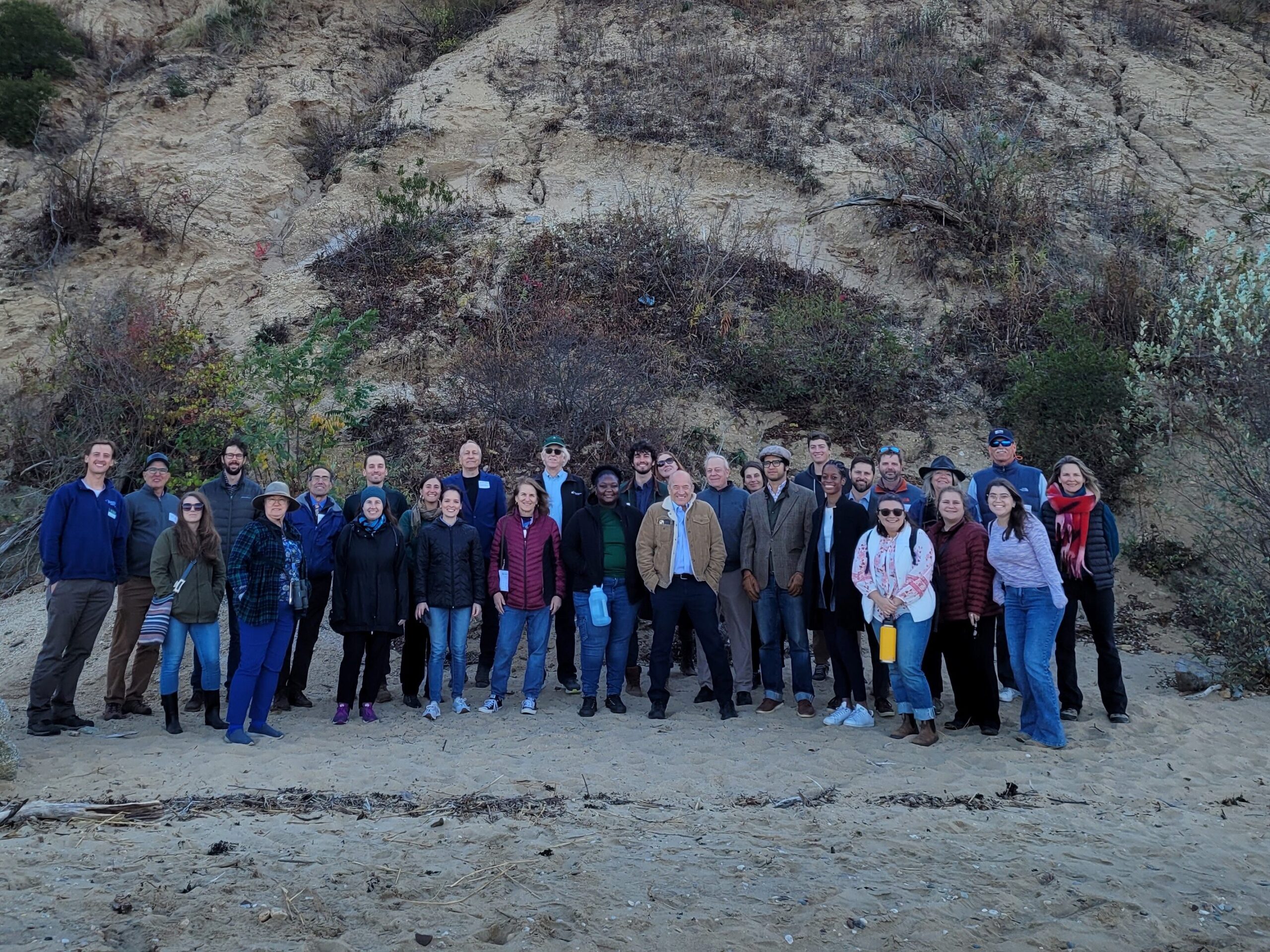
2024 Nassau Coastal Resilience Forum field trip to Sands Point Preserve. Credit: NYSG
On October 28, 2024, state and local decision makers, municipal staff, and other interested parties working to address coastal issues gathered at the Sands Point Preserve Conservancy in Sands Point, NY for the 2nd Annual Nassau County Coastal Resilience Forum to identify opportunities to increase resilience, learn about best practices, and enhance coordination across communities. There were presentations on the Long Island Sound Resilience Resource Hub & Assistance Programs, NYSDEC Office of Climate Change updates, marsh conservation planning, bluff management and restoration, and nature-based solutions to increase shoreline resilience. There was also a guided walking tour of the resilience projects at Sands Point Preserve.
The event is hosted by Long Island Sound Study and New York Sea Grant, in partnership with the Sands Point Preserve Conservancy and Nassau and Suffolk Soil and Water Conservation Districts.
Training
Nassau County Coastal Resilience Forum & Field Trip – 2024
2024 Nassau Coastal Resilience Forum field trip to Sands Point Preserve. Credit: NYSG
On October 28, 2024, state and local decision makers, municipal staff, and other interested parties working to address coastal issues gathered at the Sands Point Preserve Conservancy in Sands Point, NY for the 2nd Annual Nassau County Coastal Resilience Forum to identify opportunities to increase resilience, learn about best practices, and enhance coordination across communities. There were presentations on the Long Island Sound Resilience Resource Hub & Assistance Programs, NYSDEC Office of Climate Change updates, marsh conservation planning, bluff management and restoration, and nature-based solutions to increase shoreline resilience. There was also a guided walking tour of the resilience projects at Sands Point Preserve.
The event is hosted by Long Island Sound Study and New York Sea Grant, in partnership with the Sands Point Preserve Conservancy and Nassau and Suffolk Soil and Water Conservation Districts.
RAISE Grant Program
Rebuilding American Infrastructure with Sustainability and Equity (RAISE) program provides grants for surface transportation infrastructure projects with significant local or regional impact. The eligibility requirements of RAISE allow project sponsors, including state and local governments, counties, Tribal governments, transit agencies, and port authorities, to pursue multi-modal and multi-jurisdictional projects that are more difficult to fund through other grant programs. The RAISE program was previously known as the Better Utilizing Investments to Leverage Development (BUILD) and Transportation Investment Generating Economic Recovery (TIGER) discretionary grants.
Eligible projects for RAISE grants are capital projects including but not limited to: * highway, bridge, or other road projects eligible under title 23, United States Code; * public transportation projects eligible under chapter 53 of title 49, United States Code; * passenger and freight rail transportation projects; * port infrastructure investments; * the surface transportation components of eligible airport projects; * projects to replace or rehabilitate a culvert or prevent stormwater runoff for the purpose of improving habitat for aquatic species while advancing the goals of the RAISE program; * projects investing in surface transportation facilities that are located on Tribal land; and * any other surface transportation infrastructure project that the Secretary considers to be necessary to advance the goals of the program. Planning projects which include planning, preparation, or design (for example - environmental analysis, equity analysis, community engagement, feasibility studies, benefit cost analysis (BCA), and other pre-construction activities) of eligible surface transportation capital projects that will not result in construction with this funding.
RAISE Grant Program
Rebuilding American Infrastructure with Sustainability and Equity (RAISE) program provides grants for surface transportation infrastructure projects with significant local or regional impact. The eligibility requirements of RAISE allow project sponsors, including state and local governments, counties, Tribal governments, transit agencies, and port authorities, to pursue multi-modal and multi-jurisdictional projects that are more difficult to fund through other grant programs. The RAISE program was previously known as the Better Utilizing Investments to Leverage Development (BUILD) and Transportation Investment Generating Economic Recovery (TIGER) discretionary grants.
Events
3rd Annual SRC Workshop: Session 3 – Planning for Inundation
The Long Island Sound Sustainable and Resilient Communities (SRC) Team is excited to announce that for our 2024 Annual Workshop we are holding a series of virtual sessions over two days focused on our assistance programs, new regional resilience resources and tools, and a discussion on planning for inundation and different considerations communities may face.
Session 3 – Planning for Inundation
Join us on Wednesday, December 11th from 10 AM-12 PM to hear from communities and regional entities that are considering different aspects of planning for inundation, including buyout programs, land use policies, and community perspectives on retreat/relocation.
Events
3rd Annual SRC Workshop: Session 3 – Planning for Inundation
The Long Island Sound Sustainable and Resilient Communities (SRC) Team is excited to announce that for our 2024 Annual Workshop we are holding a series of virtual sessions over two days focused on our assistance programs, new regional resilience resources and tools, and a discussion on planning for inundation and different considerations communities may face.
Session 3 – Planning for Inundation
Join us on Wednesday, December 11th from 10 AM-12 PM to hear from communities and regional entities that are considering different aspects of planning for inundation, including buyout programs, land use policies, and community perspectives on retreat/relocation.
Events
3rd Annual SRC Workshop: Session 2 – Resilience Tools
The Long Island Sound Sustainable and Resilient Communities (SRC) Team is excited to announce that for our 2024 Annual Workshop we are holding a series of virtual sessions over two days focused on our assistance programs, new regional resilience resources and tools, and a discussion on planning for inundation and different considerations communities may face.
Session 2 – Resilience Tools
Join us on Tuesday, December 10th from 1:30-3:30 PM to learn about new Resilience Tools being developed and used throughout coastal Long Island Sound!
Events
3rd Annual SRC Workshop: Session 2 – Resilience Tools
The Long Island Sound Sustainable and Resilient Communities (SRC) Team is excited to announce that for our 2024 Annual Workshop we are holding a series of virtual sessions over two days focused on our assistance programs, new regional resilience resources and tools, and a discussion on planning for inundation and different considerations communities may face.
Session 2 – Resilience Tools
Join us on Tuesday, December 10th from 1:30-3:30 PM to learn about new Resilience Tools being developed and used throughout coastal Long Island Sound!
Events
3rd Annual SRC Workshop: Session 1 – SRC Resilience Assistance Programs
The Long Island Sound Sustainable and Resilient Communities (SRC) Team is excited to announce that for our 2024 Annual Workshop we are holding a series of virtual sessions over two days focused on our assistance programs, new regional resilience resources and tools, and a discussion on planning for inundation and different considerations communities may face.
Session 1 – SRC Resilience Assistance Programs
Join us on Tuesday, December 10th from 10-11:30 AM to learn about our Sustainable and Resilient Communities resilience assistance programs and hear from communities who have successfully utilized them to advance resilience project plans, build capacity, and/or secure competitive grant funding!
Events
3rd Annual SRC Workshop: Session 1 – SRC Resilience Assistance Programs
The Long Island Sound Sustainable and Resilient Communities (SRC) Team is excited to announce that for our 2024 Annual Workshop we are holding a series of virtual sessions over two days focused on our assistance programs, new regional resilience resources and tools, and a discussion on planning for inundation and different considerations communities may face.
Session 1 – SRC Resilience Assistance Programs
Join us on Tuesday, December 10th from 10-11:30 AM to learn about our Sustainable and Resilient Communities resilience assistance programs and hear from communities who have successfully utilized them to advance resilience project plans, build capacity, and/or secure competitive grant funding!
Funding
: Aug 26 – Oct 23, 2024
Rooting Resilience: Funding and Technical Assistance for Urban and Community Forestry Projects
The Rooting Resilience Program will provide funding and technical assistance to community-based projects that build resilience and enhance communities’ abilities to plan and carry out forestry projects. This opportunity is available for projects located in federally designated disadvantaged communities, including urban, suburban, and rural communities in the United States and its territories. Special priority will be given to community-led groups that are seeking federal funding for the first time.
This opportunity is for urban and community forestry projects led by: Federally recognized Tribes, Alaska Native Corporations/villages, Tribal organizations, organizations working in Tribal communities, or Community-based non-profits. The Rooting Resilience program will prioritize: (1) Work rooted in community. This includes work proposed by and with support from Tribal or disadvantaged community members who understand, based on lived experience, what approaches will work best for their area; (2) Entities or organizations that are seeking federal pass-through funding for the first time and/or have limited experience receiving charitable funds or grants; (3) Projects that clearly demonstrate the benefits of their proposed activities to their community and their local trees.
Funding
: Aug 26 – Oct 23, 2024
Rooting Resilience: Funding and Technical Assistance for Urban and Community Forestry Projects
The Rooting Resilience Program will provide funding and technical assistance to community-based projects that build resilience and enhance communities’ abilities to plan and carry out forestry projects. This opportunity is available for projects located in federally designated disadvantaged communities, including urban, suburban, and rural communities in the United States and its territories. Special priority will be given to community-led groups that are seeking federal funding for the first time.
Training
Suffolk County Coastal Resilience Forum & Field Trip
On October 29, 2024, state and local decision makers, municipal staff, and other interested parties working to address coastal issues gathered at the Dorothy P. Flint 4-H Camp in Riverhead, NY to identify opportunities to increase resilience, learn about best practices, and enhance coordination across communities. There were presentations on the Long Island Sound Resilience Resource Hub, NYSDEC Climate Office updates, marsh conservation planning, bluff management and restoration, and nature-based solutions to increase shoreline resilience. There was also a field trip to Iron Pier Beach/Maidstone Landing to view and learn about a community bluff restoration project.
This event was hosted by Long Island Sound Study and New York Sea Grant, in partnership with Nassau and Suffolk Soil and Water Conservation Districts, Nassau CCE, and Maidstone Landing.

Training
Suffolk County Coastal Resilience Forum & Field Trip
On October 29, 2024, state and local decision makers, municipal staff, and other interested parties working to address coastal issues gathered at the Dorothy P. Flint 4-H Camp in Riverhead, NY to identify opportunities to increase resilience, learn about best practices, and enhance coordination across communities. There were presentations on the Long Island Sound Resilience Resource Hub, NYSDEC Climate Office updates, marsh conservation planning, bluff management and restoration, and nature-based solutions to increase shoreline resilience. There was also a field trip to Iron Pier Beach/Maidstone Landing to view and learn about a community bluff restoration project.
This event was hosted by Long Island Sound Study and New York Sea Grant, in partnership with Nassau and Suffolk Soil and Water Conservation Districts, Nassau CCE, and Maidstone Landing.
Funding
: Jul 1 – Jul 31, 2024
up to $20,000
Transaction Assistance Grant (TAG) Program
The Connecticut Land Conservation Council’s Transaction Assistance Grant (TAG) Program seeks to accelerate the pace of land conservation by providing financial assistance to land trusts for transaction-related project costs. TAG responds to immediate conservation needs and is designed to get funding on the ground efficiently and effectively. Applications for TAG grants are accepted monthly, with applications due on the last day of a given month as long as funds are available.
Eligible transaction costs may include: Appraisal Work (Appraisal, Appraisal Review, Appraisal Update), Title Work (Title Search, Title Certificate, Title Insurance), Environmental Site Assessments (Phase I and Phase II ESAs), Surveys, and Record Fees. Applications must be submitted by a 501(c)3 nonprofit organization with a mission dedicated to land conservation in CT. Projects must be located within CT and can be a purchase, bargain-sale, or donation of any conservation easement or fee property, to be held by the applicant and protected in perpetuity. Applicant must be a current member of CLCC.
Funding
: Jul 1 – Jul 31, 2024
up to $20,000
Transaction Assistance Grant (TAG) Program
The Connecticut Land Conservation Council’s Transaction Assistance Grant (TAG) Program seeks to accelerate the pace of land conservation by providing financial assistance to land trusts for transaction-related project costs. TAG responds to immediate conservation needs and is designed to get funding on the ground efficiently and effectively. Applications for TAG grants are accepted monthly, with applications due on the last day of a given month as long as funds are available.
The New York Community Trust: Westchester Ongoing Competitive Grants
The New York Community Trust, which brings together the New York Community Trust, The Long Island Community Foundation, and Westchester Community Foundation offers competitive grants to nonprofits to support projects in a number of areas across New York City, Westchester, Long Island and beyond. For work on Westchester, proposals are accepted from nonprofits during the specified timeframes.
The New York Community Trust: Westchester Ongoing Competitive Grants
The New York Community Trust, which brings together the New York Community Trust, The Long Island Community Foundation, and Westchester Community Foundation offers competitive grants to nonprofits to support projects in a number of areas across New York City, Westchester, Long Island and beyond. For work on Westchester, proposals are accepted from nonprofits during the specified timeframes.
The New York Community Trust: Long Island Ongoing Competitive Grants
The New York Community Trust, which brings together the New York Community Trust, The Long Island Community Foundation, and Westchester Community Foundation offers competitive grants to nonprofits to support projects in a number of areas across New York City, Westchester, Long Island and beyond. For work on Long Island, proposals are accepted from nonprofits during the specified timeframes.
The New York Community Trust: Long Island Ongoing Competitive Grants
The New York Community Trust, which brings together the New York Community Trust, The Long Island Community Foundation, and Westchester Community Foundation offers competitive grants to nonprofits to support projects in a number of areas across New York City, Westchester, Long Island and beyond. For work on Long Island, proposals are accepted from nonprofits during the specified timeframes.
Resource
Level of Effort:
Conservation Commissions and Natural Resource Resilience
This fact sheet for Conservation Commissions in Connecticut reviews the role of these commissions for enhancing the climate resilience of their communities. The resource was developed by CIRCA and covers the authority and duties of conservation commissions as well as detailing specific strategies and approaches.
Resource
Level of Effort:
Conservation Commissions and Natural Resource Resilience
This fact sheet for Conservation Commissions in Connecticut reviews the role of these commissions for enhancing the climate resilience of their communities. The resource was developed by CIRCA and covers the authority and duties of conservation commissions as well as detailing specific strategies and approaches.
Guidance Tool
Level of Effort:
A Guide to Permitting Shoreline Modification Projects in New York’s Tidal Waters
The permitting process for shoreline modification projects is complex and it can be daunting to know where to begin. Check out New York Sea Grant’s NEW Guide to Permitting Shoreline Modification Projects in New York’s Tidal Waters for an overview of the process informed by federal, state, and local perspectives. It is intended for permit applicants using the New York State Joint Application for shoreline construction or modification, ranging from major to minor projects such as construction of floating docks, installing natural and nature-based features, bulkhead repair, development near a wetland, dredging, and invasive species removal.
Guidance Tool
Level of Effort:
A Guide to Permitting Shoreline Modification Projects in New York’s Tidal Waters
The permitting process for shoreline modification projects is complex and it can be daunting to know where to begin. Check out New York Sea Grant’s NEW Guide to Permitting Shoreline Modification Projects in New York’s Tidal Waters for an overview of the process informed by federal, state, and local perspectives. It is intended for permit applicants using the New York State Joint Application for shoreline construction or modification, ranging from major to minor projects such as construction of floating docks, installing natural and nature-based features, bulkhead repair, development near a wetland, dredging, and invasive species removal.
Funding
: Mar 25, 2026
$500 - $1,000
Seed Grants Program
Awards small grants in support of grassroots efforts and community-based environmental work in New England. The Grassroots Fund utilizes participatory grantmaking to move resources to New England grassroots groups working at the intersections of Environmental Justice. The program is geared toward groups who have some experience implementing a project in their community. Grants support groups to deepen their work by further developing a community vision, lowering barriers to participation, identifying new stakeholders, and working to bring more voices and lived experiences into core decision-making processes.
The Seed grant program is geared towards groups launching new projects or starting to significantly change the direction of an existing project. Most often, groups have been working on the project less than a year and usually don't yet have much direct experience with implementing the idea. The Grassroots Fund interprets the word 'environment' broadly and provides funding for a wide range of activities.
Funding
: Mar 25, 2026
$500 - $1,000
Seed Grants Program
Awards small grants in support of grassroots efforts and community-based environmental work in New England. The Grassroots Fund utilizes participatory grantmaking to move resources to New England grassroots groups working at the intersections of Environmental Justice. The program is geared toward groups who have some experience implementing a project in their community. Grants support groups to deepen their work by further developing a community vision, lowering barriers to participation, identifying new stakeholders, and working to bring more voices and lived experiences into core decision-making processes.